
Results
-
 £29.50
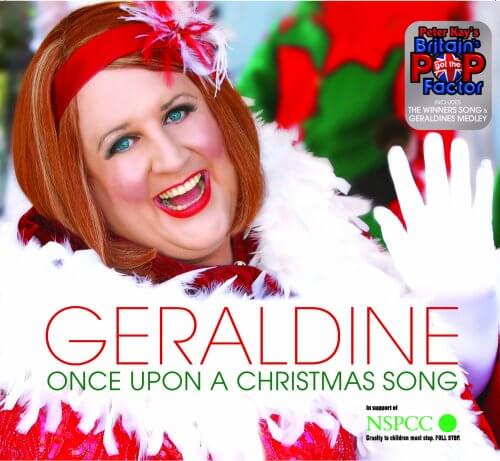
Once Upon A Christmas Song - Peter Kay & Gary Barlow - Gavin Somerset
They just don't write Christmas songs like they used to! Enter, Geraldine McQueen (AKA Peter Kay) who set to put all that right with her (his!) spoof Christmas song, 'Once Upon A Christmas Song', co-written by Gary Barlow. The proceeds from the single were donated to the NSPCC and at its peak, reached number 5 in the UK charts. The song's memorable video and hook which tells of them singing Christmas songs 'Over & Over & Over again' made the melody an instant hit. Now your band can inject some humour into your festive concerts with this great little number. Is there a hidden Geraldine in your band?!
In Stock: Estimated dispatch 1-3 working days
-
 £79.95
Amundsen - Jonathan Bates
DURATION: 14'00". DIFFICULTY: 1st+. 'Amundsen' was commissioned by rskog Brass, Norway for their winning performance at the 2020 Norwegian National Championships held at the Grieghallen in Bergen. In December 1911, Norwegian Roald Amundsen gained global fame by becoming the first explorer to lead a team to the geographic South Pole. Amundsen and 4 other members of his team arrived 5 weeks ahead of a rival team from the UK led by Robert Falcon Scott, all of which perished on their attempted return from the pole. Initially when Amundsen's team set out in 1910, they were under the impression that they would be making the far shorter journey to the arctic drift to attempt to reach the North Pole, but Amundsen had received news that American explorers Peary and Cook had beaten them to this goal, and so Amundsen's focus changed southward. 'Fram, Forward' - 'Fram' (translating to English as "forward") was the name of the ship Amundsen used for this particular polar expedition. Amundsen had only informed 2 people of his real intentions of conquering the South Pole when the ship first left port in Kristiansand before heading south to the Portuguese island of Madeira in the Atlantic Ocean. After weeks at sea - causing the uninformed members of the crew to raise a number of questions and produce a general feel of uncertainty and low spirits - it was here that Amundsen announced his true plans to the rest of his crew. They were asked whether they wished to continue with their expedition, to which all - some begrudgingly - agreed to sail on to the South Pole, through the great Ice Barrier before docking in the Bay of Whales on the Ross Ice Shelf. 'Ross Ice Shelf' - Upon Amundsen's arrival in the Bay of Whales, the team were greeted by the sight of the enormous ice plateau's and glaciers, towering into the Antarctic sky. In 1907, Ernest Shackleton had attempted - and failed - to reach the South Pole, but his route and mapping was by now well documented. Scott and the UK team were to follow this route, whereas Amundsen and his men forged their own way to the pole through unchartered territory and deadly terrain littered with deep crevasses and canyons. The music here though, is a picture of tranquility. The eerie silence of total emptiness with only the heavy snow falling around Amundsen as Fram and the Bay of Whales disappears into the distance, faced by the maginute of the expedition ahead. 'Advance to Polheim' - The first new challenge Amundsen discovered on this route was a rough, sharp and extremely steep glacier (which was later named the Axel heiberg Glacier after the Norwegian monarch who funded much of the expedition), which would take his team up from sea level to an altitude of over 9,000ft in just 20 miles, with most of this over just 7 miles. Once scaled, only the vast Antarctic Plateau stood between Amundsen and the pole. Here the race began, with only one aim - victory for himself, his team, and for the whole of Norway. .
In Stock: Estimated dispatch 1-3 working days
-
 £59.77
Avifauna (Brass Band) Joshua Tyler Jameson
This highly descriptive work was commissioned by the National Youth Brass Band of America and will be a terrific concert or entertainment contest item. The music paints the picture of the lives of a variety of different birds. The composer writes: 'When I began thinking about this project I was sitting in my office in the early morning, the sun having just risen. There was a gentle breeze and the only thing that I could hear (aside from my hungry whining cats) was the gentle song of the birds outside my open window. As much of my work is programmatic, almost like symphonic poems, this immediately gave me the image of a majestic sunrise with all types of birds fluttering about, almost as if out of an episode of Planet Earth. When I was commissioned by the National Youth Brass Band of America, I knew the project had to be something the ensemble could grab onto. Something they could see. Something they could relate to. There being so many types of birds in North America, I selected a handful to help tell my story... The scene where I came up with this idea seemed to be the perfect starting point. Sunrise, tiny chirps of Morning Birds floating around the twilight of dawn, swiftly moving towards the majesty of the sun cresting the horizon. A new day, the beginning of a story. As the sun rises higher in the sky, animal activity stirs, becoming lively and wild. The flowers have opened up to drink in the sun's rays, leaving them open to nectar-seeking Hummingbirds. Whizzing by at lightning speed, the hummingbirds journey from flower to flower, drinking their fill until the sun begins to set back over the horizon. When daylight fades, the enigmatic Owl floats silently through the sky. The wonder of these creatures comes not just from their beauty, but also from their mystery and their ferocity. We see images in pop culture of majestic white owls and marvel in their beauty... but to a mouse roaming the forest floor in the dark of the night, the terror of suddenly being dropped upon by a silent predator is anything but peaceful. In the dead of night, soft rolling clouds thicken as a storm begins to brew. With the ensuing rain also emerges the grotesque scavenging Vulture; marching along from carcass to carcass, tearing into the rotting leftovers of another predator's kill, gorging themselves until over-full. However, from this nightmare fuel of a bird, a new day awaits... As the dawn of another day approaches, you begin to hear the same morning birds you heard the previous day. When the light finally breaks the horizon, the soaring majesty of the Eagle drives us to the end of our story; an exciting journey told through the eyes of the winged creatures that paint the skies of North America. This is Avifauna.' To view a follow-the-score video please visit: www.youtube.com/watch?v=J2bhBpx9KvM Sheet music available from: UK - www.brassband.co.uk USA - www.solidbrassmusic.com Difficulty Level: 2nd Section + Instrumentation: Soprano Cornet Eb Solo Cornet Bb Repiano Cornet Bb 2nd Cornet Bb 3rd Cornet Bb Flugel Horn Bb Solo Horn Eb 1st Horn Eb 2nd Horn Eb 1st Baritone Bb 2nd Baritone Bb 1st Trombone Bb 2nd Trombone Bb Bass Trombone Euphonium Bb Bass Eb Bass Bb Percussion 1-4
In Stock: Estimated dispatch 1-3 working days
-
 £37.35
Whodunnit? Murder Mystery for Brass & Percussion (Brass Band) Karl Whelan
The composer writes: 'One of my all time favourite films is Clue (1985) based on the board game of the same name (Cluedo, if you're from the UK). Clue follows the night of six guests who are invited to a mansion for dinner. The host, Mr. Boddy is murdered, and the guests must work together to find the killer before any more lives are lost. I implore you to give it a watch if you haven't already, even if it's just for Tim Curry's magical performance as The Butler. Running at 82 minutes, the film is over before you know it. I wanted to create a similar story here with Whodunnit?, which like it's inspiration, Clue, moves at an incredible pace as it follows a dinner party, to which our guests have been invited. This work is rather dark throughout and full of intentional cliches, for which, I make no apology!' To view a rolling score video please visit www.youtube.com/watch?v=hdviJUrCvOE Sheet music available from: UK - www.brassband.co.uk USA - https://satradecentral.org Difficulty Level: 2nd Section + Length: 6.00 minutes Instrumentation: Soprano Cornet Eb Solo Cornet Bb Repiano Cornet Bb 2nd Cornet Bb 3rd Cornet Bb Flugel Horn Bb Solo Horn Eb 1st Horn Eb 2nd Horn Eb 1st Baritone Bb 2nd Baritone Bb 1st Trombone Bb 2nd Trombone Bb Bass Trombone Euphonium Bb Bass Eb Bass Bb Timpani Percussion 1 (Suspended Cymbal**, Shaker, Drum Kit, Vibraslap) Percussion 2 (Bass Drum, Suspended Cymbal**, Wood Blocks, Tam-tam) Percussion 3 (Glockenspiel, Xylophone, Tubular Bells, Vibraphone) * Doubling on Trumpet (if possible) ** Shared
In Stock: Estimated dispatch 1-3 working days
-
 £33.62
Do you Recall? (Trombone Solo with Brass Band) Rob Wiffin
A slow, bluesy solo for trombone with band accompaniment. Composer Rob Wiffin wrote this piece after sorting through old paperwork during the Covid lockdown of Spring 2020, rediscovering songs from years earlier that had been written with just melody and chord symbols. 'Do you Recall?' developed from one such song into a trombone solo, and has since proved popular with trombonists, having already been recorded by Brett Baker. It is not intrinsically difficult but calls for an appropriate slow swing style and good control throughout the range. Audio demo: https://soundcloud.com/user-565396545/do-you-recall-trombone-solo Duration: Approx. 4.20 minutes Difficulty Level (Band): Easy Soloist: Medium This PDF download includes the full score and parts. Sheet music available at www.brassband.co.uk (UK) or https://satradecentral.org (USA)
In Stock: Estimated dispatch 1-3 working days
-
 £41.09
Saltarello from 'Italian Symphony' (Brass Band) Mendelssohn arr. Phil Lawrence
This tour de force will be ideal for bands looking for a barnstorming finale to their concert. The 'Italian' was really Mendelssohn's 3rd Symphony at the time it was completed in 1833. The 'Italian' is certainly a youthful work, not in its technique, since it shows a perfect mastery of symphonic composition, but in its spirit. He had begun it two years earlier on a visit to Italy, where the vivid sights and sounds had impressed him immensely, just as the visit to Scotland had the year before. The atmosphere of Italy impelled him to translate his impressions into another symphony. The dazzling finale, the Saltarello, conjures up a picture of Italian peasants dancing frantically in a wild and whirling fashion, not unlike the tarantella. The arranger writes: 'It was noted by some players of the day that the orchestral parts were somewhat virtuosic for the time, and this virtuosic style inspired me to arrange this for brass band.' To view a follow-the-score video of the work featuring the Fairey Band please visit https://www.youtube.com/watch?v=BvcuwwJQrR8 PDF download includes score and parts. Sheet music available from: UK - www.brassband.co.uk USA - www.solidbrassmusic.com Difficulty Level: 1st Section + Instrumentation: Soprano Cornet Eb Solo Cornet Bb Repiano Cornet Bb 2nd Cornet Bb 3rd Cornet Bb Flugel Horn Bb Solo Horn Eb 1st Horn Eb 2nd Horn Eb 1st Baritone Bb 2nd Baritone Bb 1st Trombone Bb 2nd Trombone Bb Bass Trombone Euphonium Bb Bass Eb Bass Bb Timpani
In Stock: Estimated dispatch 1-3 working days
-
 £33.62
Song of Peace (Cornet Duet or Bb Instrument Solo with Brass Band) Rob Wiffin
A reflective piece featuring two cornets and band, but also playable as a solo for cornet, trombone or euphonium. Song of Peace was written just after a close friend of the composer died suddenly - a cathartic piece, reflecting the release from pain to peace. It fits the expressive style and power of the solo brass instruments. Audio demo: https://soundcloud.com/user-565396545/song-of-peace-cornet-duet-or Duration: Approx. 3.40 minutes Difficulty Level (Band): Easy Soloist(s): Medium This PDF download includes the full score and parts. Sheet music available at www.brassband.co.uk (UK) or https://satradecentral.org (USA)
In Stock: Estimated dispatch 1-3 working days
-
 £44.83
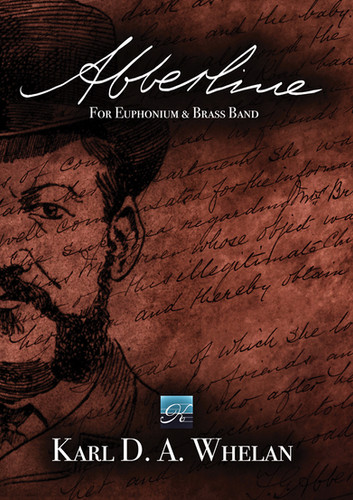
Abberline (Euphonium Solo with Brass Band) Karl Whelan
Inspired by the infamous investigation into Jack the Ripper, Abberline follows Detective Inspector Frederick Abberline through the mist-shrouded streets of Victorian London in his desperate pursuit of a killer who remains forever just out of reach. Scored for brass band and solo euphonium, the piece blends atmospheric textures, shifting musical identities, and virtuosic demands to capture a narrative that is as haunting as it is unresolved. The piece opens in a world of shadows - the foggy alleys of Whitechapel - where tension simmers beneath the surface. The euphonium enters cautiously, as if stalking unseen figures, echoing the danger and uncertainty that cloaked the city in fear. This eerie calm is broken suddenly: the Ripper strikes. The moment is brief but brutal, leaving only silence and horror in its wake. From here, the music shifts into an uneasy, angular waltz: the figure of Abberline takes center stage, portrayed by the soloist as he investigates the aftermath. The waltz is melodically off-kilter and harmonically unstable, capturing both the grotesque nature of the crime and the detective's mental burden. The scene then returns to the streets - but this time, the musical material is more intricate, fragmented, and tense. The threat has deepened, and again the silence is shattered by violence. A second, slightly altered waltz follows, further reflecting Abberline's obsessive descent into the case. In the final section, the chase begins in earnest. Themes from earlier return in quick succession, intensified and overlapping as time runs out. The ancient Dies Irae chant is woven into the texture, evoking fate and judgment. In a final, erratic surge, the euphonium and band race toward an ending that is breathless and unresolved - a reflection of history's unanswered questions and the ghost that always stayed one step ahead. To view a rolling score video of the work please visit https://www.youtube.com/watch?v=i59xYzJRMaI Duration: approx. 7.30 minutes This PDF download includes parts and score. Sheet music available at www.brassband.co.uk (UK) or https://satradecentral.org (USA) Instrumentation: Euphonium Soloist Bb Soprano Cornet Eb Solo Cornet 1-2 & 3-4 Bb Repiano Cornet Bb 2nd Cornet Bb 3rd Cornet Bb Flugel Horn Bb Solo Horn Eb 1st Horn Eb 2nd Horn Eb 1st Baritone Bb 2nd Baritone Bb 1st Trombone Bb 2nd Trombone Bb Bass Trombone Euphonium (tutti) Bb Bass Eb Bass Bb Timpani Percussion 1-3
In Stock: Estimated dispatch 1-3 working days
-
 £48.56
Peace in Our Time (Brass Band) Andrew Wainwright
Commissioned by Armonico Consort to mark the 85th anniversary of the Coventry Blitz, Peace in Our Time is a profoundly moving reflection on humanity's enduring quest for reconciliation amidst turmoil. Originally scored for choir, orchestra, and organ, this masterful brass band transcription beautifully captures the emotional weight of John Oxenham's evocative poetry and the timeless plea of Psalm 122. The work opens in hushed reverence, where distant muted cornets, a dark bass pedal, and a fragile, militaristic snare drum set a shadowed, contemplative scene. Out of this delicate landscape emerges a poignant cornet solo that yields to the expressive voice of the solo flugel horn, carrying the opening text with quiet conviction before introducing the solemn reminder: "O pray for peace, peace in Jerusalem." As the piece progresses, the setting turns darker and more restless. Harmonic tension builds through rich brass textures to reflect the fears, divisions, and heavy costs of historical and modern conflict. From this emotional turbulence rises a bold, ceremonial fanfare that marks a dramatic turning point, ushering in a glorious, expansive setting of the poem's final verse. Yet rather than ending in simple triumph, the music gently recedes into a serene and tender stillness. The final bars leave performers and audiences alike with a quiet, lingering echo - a persistent hope for peace that resonates just as deeply today as it did 85 years ago. This substantial work is an extraordinary addition to any brass band library, serving as an ideal centerpiece for Remembrance Sunday, historical commemorations, church services or serious concert programming. To view a multimedia presentation of the piece with audio please visit www.youtube.com/watch?v=Y2BKI_GCegw The multimedia presentation is available on request withe purchase of this work - please email [email protected] to receive a link to download it. To view a video performance of the original work for choir, orchestra and organ please visit www.youtube.com/watch?v=m6o6PJJVKCo Duration: approx. 8.45 minutes Difficulty Level: 2nd Section + This PDF download includes the full score and parts. Sheet music available at www.brassband.co.uk (UK) or https://satradecentral.org (USA) Instrumentation: Soprano Cornet Eb Solo Cornet Bb Repiano Cornet Bb 2nd Cornet Bb 3rd Cornet Bb Flugel Horn Bb Solo Horn Eb 1st Horn Eb 2nd Horn Eb 1st Baritone Bb 2nd Baritone Bb 1st Trombone Bb 2nd Trombone Bb Bass Trombone Euphonium Bb Bass Eb Bass Bb Timpani Percussion 1-2
In Stock: Estimated dispatch 1-3 working days
-
 £37.35
Simply Carols - 45 Favourite Christmas Carols - Brass Band Set
VIEW SCORE PDF This resource features 45 Favourite Christmas Carols aimed at Intermediate Ensemble and above. All arranged by Kevin Larsson, who has over 20 years' experience working with youth ensembles, they are designed to be flexible and playable by a wide range of different groups, including brass, winds and strings. The arrangements use limited ranges, keys and rhythms and fingerings and slide positions are included for accidentals on the brass parts. PDF parts come in both march card an A4 size. Scored for quartet, the arrangements will work just as well with larger groups. Promotional videos for this product can be viewed at: www.youtube.com/watch?v=dTwB-Zy-c08 (short version) www.youtube.com/watch?v=g4IsIM8x7NU (extended version) Sheet music available at www.brassband.co.uk (UK) or https://satradecentral.org (USA). At Solid Brass Music parts, score and piano reduction can be purchased individually. Included in Brass Band Set: Full Score 1st Part Eb1st Part Bb2nd Part Bb2nd Part Eb 3rd Part Eb 3rd Part Baritone Bb3rd Part Trombone Bb4th Part Eb4th Part Bb 4th Part Bass ClefPercussion (optional) Full Set available at www.brookwrightmusic.com/product-page/simply-carols-45-favourite-christmas-carols-for-intermediate-ensemble and includes Piano Reduction Wind Band Set available at www.brookwrightmusic.com/product-page/simply-carols-45-favourite-christmas-carols-wind-band-set Full Score available at www.brookwrightmusic.com/product-page/simply-carols-45-favourite-christmas-carols-full-score
In Stock: Estimated dispatch 1-3 working days
 View Music