
Results
-
 £12.00
Of Men and Mountains (Brass Band Study Score)
Of Men and Mountains was commissioned by the Netherlands Brass Band Championships for their 10th Anniversary Contest, held in Drachten in December 1990.The title of the work and its genesis came about as a result of a train journey the composer took in July 1989 across Canada from Toronto to Vancouver. The awe-inspiring journey through the Rocky Mountains, with its high peaks and shafts of sunlight breaking through the clouds, with its canyons and ferocious rapids, made the composer understand a little more about the majesty of nature and the fragility of humanity. The eternal struggle between man and nature was personified in the building of this incredible railway, hence the title (after Blake).The work is dedicated to the memory of Eric Ball, who died shortly before the writing of the work commenced.Of Men and Mountains is in one continuous movement and lasts about 17 mins. Its form is difficult to describe because of its motivic and accumulative nature, but it is essentially a symphonic tone poem in search of a theme, which eventually comes in its final and complete state in the majestic ending after an ever-increasing paced scherzo.Duration: 17.00
Estimated dispatch 7-14 working days
-
 £49.95
Of Men and Mountains (Brass Band - Score Only)
Of Men and Mountains was commissioned by the Netherlands Brass Band Championships for their 10th Anniversary Contest, held in Drachten in December 1990.The title of the work and its genesis came about as a result of a train journey the composer took in July 1989 across Canada from Toronto to Vancouver. The awe-inspiring journey through the Rocky Mountains, with its high peaks and shafts of sunlight breaking through the clouds, with its canyons and ferocious rapids, made the composer understand a little more about the majesty of nature and the fragility of humanity. The eternal struggle between man and nature was personified in the building of this incredible railway, hence the title (after Blake).The work is dedicated to the memory of Eric Ball, who died shortly before the writing of the work commenced.Of Men and Mountains is in one continuous movement and lasts about 17 mins. Its form is difficult to describe because of its motivic and accumulative nature, but it is essentially a symphonic tone poem in search of a theme, which eventually comes in its final and complete state in the majestic ending after an ever-increasing paced scherzo.Duration: 17.00
Estimated dispatch 7-14 working days
-
 £94.95
Of Men and Mountains (Brass Band - Score and Parts)
Of Men and Mountains was commissioned by the Netherlands Brass Band Championships for their 10th Anniversary Contest, held in Drachten in December 1990.The title of the work and its genesis came about as a result of a train journey the composer took in July 1989 across Canada from Toronto to Vancouver. The awe-inspiring journey through the Rocky Mountains, with its high peaks and shafts of sunlight breaking through the clouds, with its canyons and ferocious rapids, made the composer understand a little more about the majesty of nature and the fragility of humanity. The eternal struggle between man and nature was personified in the building of this incredible railway, hence the title (after Blake).The work is dedicated to the memory of Eric Ball, who died shortly before the writing of the work commenced.Of Men and Mountains is in one continuous movement and lasts about 17 mins. Its form is difficult to describe because of its motivic and accumulative nature, but it is essentially a symphonic tone poem in search of a theme, which eventually comes in its final and complete state in the majestic ending after an ever-increasing paced scherzo.Duration: 17.00
Estimated dispatch 7-14 working days
-
 £29.95
Hinemoa (Score Only)
Hinemoa, the beautiful daughter of Amukaria, a great Maori chief, had seen Tutanekai, a chief and brave warrior from the island of Mokoia, only once, during a tribal gathering; yet she knew she loved him dearly. Amukaria counselled his daughter to forget this man, whose flute-playing Hinemoa heard as it came, soft but clear, across the lake which separated them.At night she went to the shore and listened. The sound of the flute spoke to Hinemoa, giving her courage. When Tutanekai managed to get a message to Hinemoa, her mind was made up.On the next moonless night she entered the dark, cold waters of the lake, using empty gourds as floats. She was determined to swim the long distance to her lover. Tutanekai's flute-playing kept her going, until at last she reached the shores of Mokoia.Great was the joy when the lovers at last met, the rocks echoing Tutanekai's cry - 'HINEMOA'.
Estimated dispatch 7-14 working days
-
 £79.99
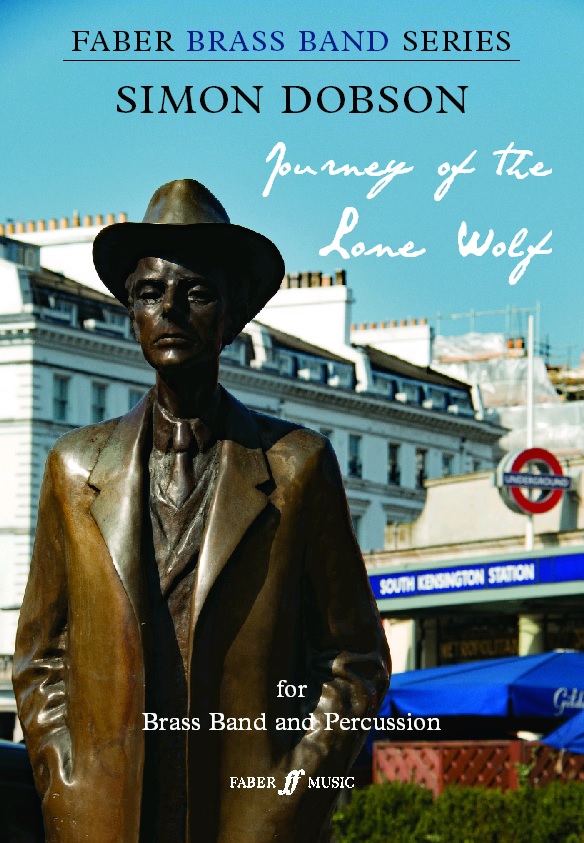
Journey of the Lone Wolf (Score and Parts)
Championship Section Finals Test Piece for National Brass Band Championships of Great Britain 2016Journey of the Lone Wolf tells the story of the hungarian composer Bla Bartk. It was commissioned by Dr. Nicholas Childs for Black Dyke Band, who gave the first performance on Sunday 26 January 2014 at the Bridgewater Hall, Manchester as part of the Royal Northern College of Music Festival of Brass.The composer's programme notes for each movement:1. Capturing the Peasants' SongAfter the upheaval of moving to Budapest the young Bla Bartk meets Zoltn Kodly and the pair embark on summertime adventures throughout the Hungarian countryside to collect and catalogue the astonishing variety (both harmonically and rhythmically) of gypsy and folk music heard in the Balkans. The arrival of WW1 plunges Bartk's beloved Hungary into chaos.2. Night MusicBartk was at times a cold man, aloof and lonely. The odd moments of tenderness he showed are portrayed here in a series of evocative solos. His brief but intense affairs speak of a love he could only long for. Jazz is my night music and here there are hints of what Bartk may have heard in the USA later in his life.3. Flight and FightHaving been forced by the world's evils to leave his homeland of Hungary for America, Bartk, the anti-fascist, felt isolated and angry. In this movement we hear his longing for a simpler time of gypsy folk dances as well as his maturity and depth as a composer finally exploring deeper colours and darker themes.
Estimated dispatch 7-14 working days
-
 £29.95
Prayer to St Michael - Jonathan Bates
DURATION: 4'00". DIFFICULTY: Moderate. 'Prayer to Saint Michael' is a solo for Euphonium, composed for the Wantage Band and inspired by the life of a young Johann Sebastian Bach, who following the death of both parents by the age of only 10 moved to live with his older brother - Johann Christoph Bach - who was the church organist at St Michael's Church in Ohrdruf. It was in this church where Bach spent many hours studying and performing, being instructed by Johann Christoff on the clavichord. Within 6 years, the young Bach had been enrolled in the prestigious St Michael's School in Luneberg. . "St. Michael the Archangel, illustrious leader of the heavenly army, . defend us in the battle against principalities and powers, . against the rulers of the world of darkness and the spirit of wickedness in high places. Come to the rescue of mankind, . whom God has made in His own image and likeness, . and purchased from Satan's tyranny at so great a price. The Holy Church venerates you as her patron and guardian. The Lord has entrusted to you the task of leading the souls of the redeemed to heavenly blessedness. Entreat the Lord of peace to cast Satan down under our feet, . so as to keep him from further holding man captive and doing harm to the Church. Carry our prayers up to God's throne, . that the mercy of the Lord may quickly come and lay hold of the beast, . the serpent of old, Satan . and his demons, casting him in chains into the abyss, . so that he can no longer seduce the nations. Amen.". .
In Stock: Estimated dispatch 1-3 working days
-
 £34.95
Vissi d'arte - Christopher Bond
Vissi d'arte is a soprano aria from act 2 of the opera Tosca, by Giacomo Puccini. It is sung by Floria Tosca in total anguish, in the form of a prayer to God, asking 'why he rewards her thus?'. Just before the aria is performed (and the reason for its presence) Baron Scarpia, the chief of police, tells Tosca that in order to save her lover Cavaradossi's life, she must sleep with him. Vissi d'arte is Tosca's cry of anguish; she reasons that although she has never done anything wrong, she is still being faced with an impossible choice: either way, she will have to betray Cavaradossi, in the form of sleeping with another man, or not doing everything she could to save his life. This arrangement was made for Rose Hancock and City of Cardiff (Melingriffith) Brass Band for their performance at the 2020 Welsh Open Entertainment Contest.
Estimated dispatch 10-14 working days
-
 £87.00
Mr. Bojangles - Jerry Jeff Walker/Henk Ummels
'Mr. Bojangles' is a popular song written and initially recorded by Jerry Jeff Walker in 1968 and covered since by many other artists. The song was inspired by an encounter with a street performer in the New Orleans first precinct jail. Although this man could tap dance, the inspiration for the song was the famous stage and movie dancer Bill 'Bojangles' Robinson. Robbie Williams recorded it on it's bigband CD 'Swing When You're Winning'.
Estimated dispatch 10-14 working days
-
 £30.00
O Mio Babbino Caro (from Gianni Schicchi) (Cornet Solo with Brass Band - Score and Parts) - Puccini, Giacomo - Littlemore, Phillip
O Mio Babbino Caro (Oh My Dear Papa) is taken from the opera Gianni Schicchi by Giacomo Puccini. It is sung by Lauretta after tensions between Schicchi and his prospective in-laws have reached a breaking point that threatens to separate her from Rinuccio, the boy she loves. It provides a contrasting interlude expressing lyrical simplicity and single-hearted love in the atmosphere of hypocrisy, jealousy, double-dealing and feuding in medieval Florence. The story of Gianni Schicchi concerns a rich old man who dies leaving all his possessions to the local monastery. His outraged relatives persuade Gianni Schicchi to impersonate the dead man and to dictate a new will. It is the second opera of Puccini's operatic triptych, which also includes?Il Tabarro?and?Suor Angelica. Duration: 2:00
Estimated dispatch 7-14 working days
-
 £30.00
O Mio Babbino Caro (from Gianni Schicchi) (Vocal Solo (Soprano) with Brass Band - Score and Parts) - Puccini, Giacomo - Littlemore, Phillip
O Mio Babbino Caro (Oh My Dear Papa) is taken from the opera Gianni Schicchi by Giacomo Puccini. It is sung by Lauretta after tensions between Schicchi and his prospective in-laws have reached a breaking point that threatens to separate her from Rinuccio, the boy she loves. It provides a contrasting interlude expressing lyrical simplicity and single-hearted love in the atmosphere of hypocrisy, jealousy, double-dealing and feuding in medieval Florence. The story of Gianni Schicchi concerns a rich old man who dies leaving all his possessions to the local monastery. His outraged relatives persuade Gianni Schicchi to impersonate the dead man and to dictate a new will. It is the second opera of Puccini's operatic triptych, which also includes?Il Tabarro?and?Suor Angelica. Duration: 2:00
Estimated dispatch 7-14 working days
 View Music