
Results
-
£29.50
So Amazing - Traditional - Jonathan Mead
'So Amazing', is a beautiful new hymn tune arrangement from the pen of Welsh Composer Jonathan Mead. The music would create a lovely moment in a concert, where the audience would have time for reflection. The title comes from the words that are often associated with this tune, 'Love so amazing, so divine,'. The tune used, is also well known in the brass band world as, 'The Water is wide'. The music is lovely to play as well as listen to. A must for any Concert Programme.
In Stock: Estimated dispatch 1-3 working days
-
 £29.50
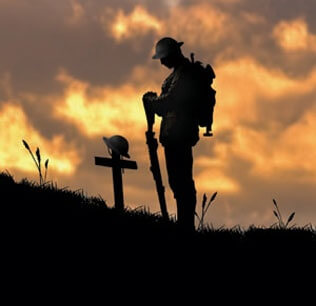
A Quiet Moment - Darrol Barry
There is a place in every concert programme for a piece of music that allows both the band and audience a moment to reflect. This composition by Darrol Barry is suitable for all bands and will make a perfect addition to your repertoire as bands look to commemorate the several anniversaries taking place over the next few years in relation to WWI and WWII. A lovely moving work that makes a great alternative to a hymn tune.
In Stock: Estimated dispatch 1-3 working days
-
 £87.99
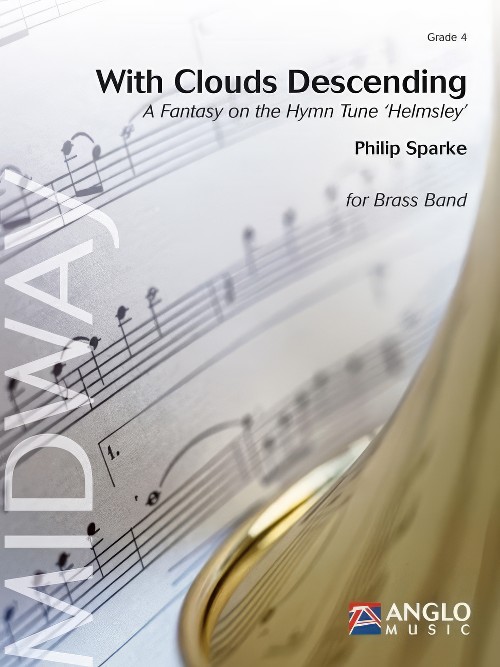
With Clouds Descending (Brass Band - Score and Parts) - Sparke, Philip
A Fantasy on the Hymn Tune HelmsleyWith Clouds Descending is a fantasy on the powerful Advent hymn Helmsley which is long associated with another Advent hymn - Wesley's Lo! He Comes with Clouds Descending. The hymn tune is divided into an introduction and three complete verses of Helmsley, which surround a slower central section, whose melody is derived from the last line of the hymn tune. Philip Sparke's grade 4 arrangement of this majestic piece for Brass Band is equally suitable as a concert opener or a main concert piece.Duration: 6:30
Estimated dispatch 7-14 working days
-
 £54.99
Hymnus Antverpiae (Brass Band - Score and Parts) - Van der Roost, Jan
This hymn was commissioned by "Antwerpen 93". And this city, on the banks of the river Schelde has been nominated "Cultural Capital of Europe" for 1993. The work-group "animatie" took the initiative and commissioned a hymn, which -as the finale to a grand open-air event on 27th March- was premired by hundreds of musicians from all over Europe. Philippe Langlet (France) was the conductor at this majestic occasion. Musically speaking the piece can no doubt be labelled easy. Indeed it is meant to represent a hymn, playable by all in different instrumental combinations. Consequently a variable instrumentation was chosen and a type of music, which by native is easily accessible and uncomplicated. The conductor is free -in the instrumentation- to score this piece according to his own taste. It is perhaps advisable to use the sharp brass in the forte parts, in order to make the range in the sound of the orchestra as colourful as possible. The percussion parts are not absolutely essential, so that the hymn can also be performed without percussion.Duration: 4:00
Estimated dispatch 7-14 working days
-
 £72.99
Prelude and Chorale (Brass Band - Score and Parts) - Roels, Stijn
Prelude and Chorale is a scintillating, dynamic opening piece based on the brilliant finale from the earlier concert work Aureus. The latter work is built around a magnificent hymn, which also forms the common thread running through this overture.As the title suggests, the work begins with a modern 'prelude': a prologue to the actual hymn. The beginning of the hymn, especially, serves as the source of the thematic material. The hymn melody itself is immediately embellished by a counter-melody and supported by a rhythm section of bass and drums. This all leads to an energetic passage in which the proverbial stops are pulled out once more.Duration: 3:00
Estimated dispatch 7-14 working days
-
 £29.95
Lead, Kindly Light (Brass Band - Score and Parts) - Broughton, Bruce
This beautiful hymn is one of trust and faith, building in confidence 'till the night is gone.' This arrangement follows that line of confidence. The melody begins unaccompanied, which is to say 'alone', and the eventual accompanying voices enter sombrely. Instead of a traditional final cadence, the 'leading of the light' continues, using the first four notes of the hymn as a motif that leads to a second, more positive statement of the melody, underscored by a walking motion. The positivity grows and lasts through a final grand statement of the hymn. A short meditative coda follows, and the arrangement ends with a solo note of reflection.
Estimated dispatch 7-14 working days
-
 £59.95
Swedish Festival Music (Brass Band - Score and Parts) - Downie, Kenneth
This three-movement suite was commissioned by the Swedish Brass Band Association as the test piece for the Championship Section of their 2008 National Contest. The first movement is inspired by the magnificent Swedish hymn 'How Great Thou Art'. Indeed the influence of that hymn can be traced in all three movements. The declamatory style of the opening gives way to other, more reflective expressions of awe and wonder. A more animated section develops before a final, triumphant statement of the 'How Great' idea returns to finish the movement. The slow second movement features another much-loved Swedish hymn. The music provides plenty of scope for expressive playing, and a feeling of intimacy should be created by the use of several short solo passages. The third movement Allegro brings a totally different, dance-like mood with frequent references to a reel from the region of Uppland. This eventually brings a return to the opening subject and a final, triumphant reference to 'How Great Thou Art'.
Estimated dispatch 7-14 working days
-
£29.95
Swedish Festival Music (Brass Band - Score Only) - Downie, Kenneth
This three-movement suite was commissioned by the Swedish Brass Band Association as the test piece for the Championship Section of their 2008 National Contest. The first movement is inspired by the magnificent Swedish hymn 'How Great Thou Art'. Indeed the influence of that hymn can be traced in all three movements. The declamatory style of the opening gives way to other, more reflective expressions of awe and wonder. A more animated section develops before a final, triumphant statement of the 'How Great' idea returns to finish the movement. The slow second movement features another much-loved Swedish hymn. The music provides plenty of scope for expressive playing, and a feeling of intimacy should be created by the use of several short solo passages. The third movement Allegro brings a totally different, dance-like mood with frequent references to a reel from the region of Uppland. This eventually brings a return to the opening subject and a final, triumphant reference to 'How Great Thou Art'.
Estimated dispatch 7-14 working days
-
 £59.95
Blazon (Brass Band - Score and Parts) - Graham, Peter
This work was written for the centenary of The International Staff Band in 1991 and contains five variations around the hymn tune Theodora. The hymn 'Let us with a gladsome mind' is normally associated with this tune. Verse two of the hymn begins 'Let us blaze his name abroad' hence the title, Blazon.
Estimated dispatch 7-14 working days
-
£29.95
Blazon (Brass Band - Score only) - Graham, Peter
This work was written for the centenary of The International Staff Band in 1991 and contains five variations around the hymn tune Theodora. The hymn 'Let us with a gladsome mind' is normally associated with this tune. Verse two of the hymn begins 'Let us blaze his name abroad' hence the title, Blazon.
Estimated dispatch 7-14 working days
 Listen to MP3
 View Music