
Results
-
 £42.00
Patapan. Arranged for brass band by Lynda Nicholson
Arranged for brass band by Lynda Nicholson Patapan is a French Christmas Carol written by the French composer, Bernard de la Monnoye (1641-1720). The words are written from the perspective of the Shepherds in Bethlehem, playing their drums and flutes at the birth of Jesus. " Patapan" mimics the sound of the drums and the scale passages on the the flutes. Patapan begins with a solo side drummer playing a punchy rhythm in 2/2 with a tambourine being added before this rhythm underpins the melody played by the full band. A section featuring the trombones follows before the main theme returns after which a short duet for Euphonium and flugal leads into a rousing final section with a Rock feel. This final section has the full band playing with the tunes in the cornets, a fast quaver movement in the middle of the band and cleverly, the melody in counterpoint in augmentation played by the trombones. This arrangement is part of the Lynda Nicholson Collection To hear a sound file of Patapan scroll down.
-
 £30.00
Introduction and Allegro Spiritoso - Senaille
Euphonium Solo with brass band accompaniment.Jean Baptiste Senaille was a French born Baroque composer and violin virtuoso. Senaille studied under Tomaso Antonio Vitali and imported Italian musical techniques and pieces into the French court. He wrote around 50 violin sonatas and this arrangement of his most well known offers the soloist a perfect opportunity to showcase their style and technical ability.
In Stock: Estimated dispatch 3-5 working days
-
 £35.00
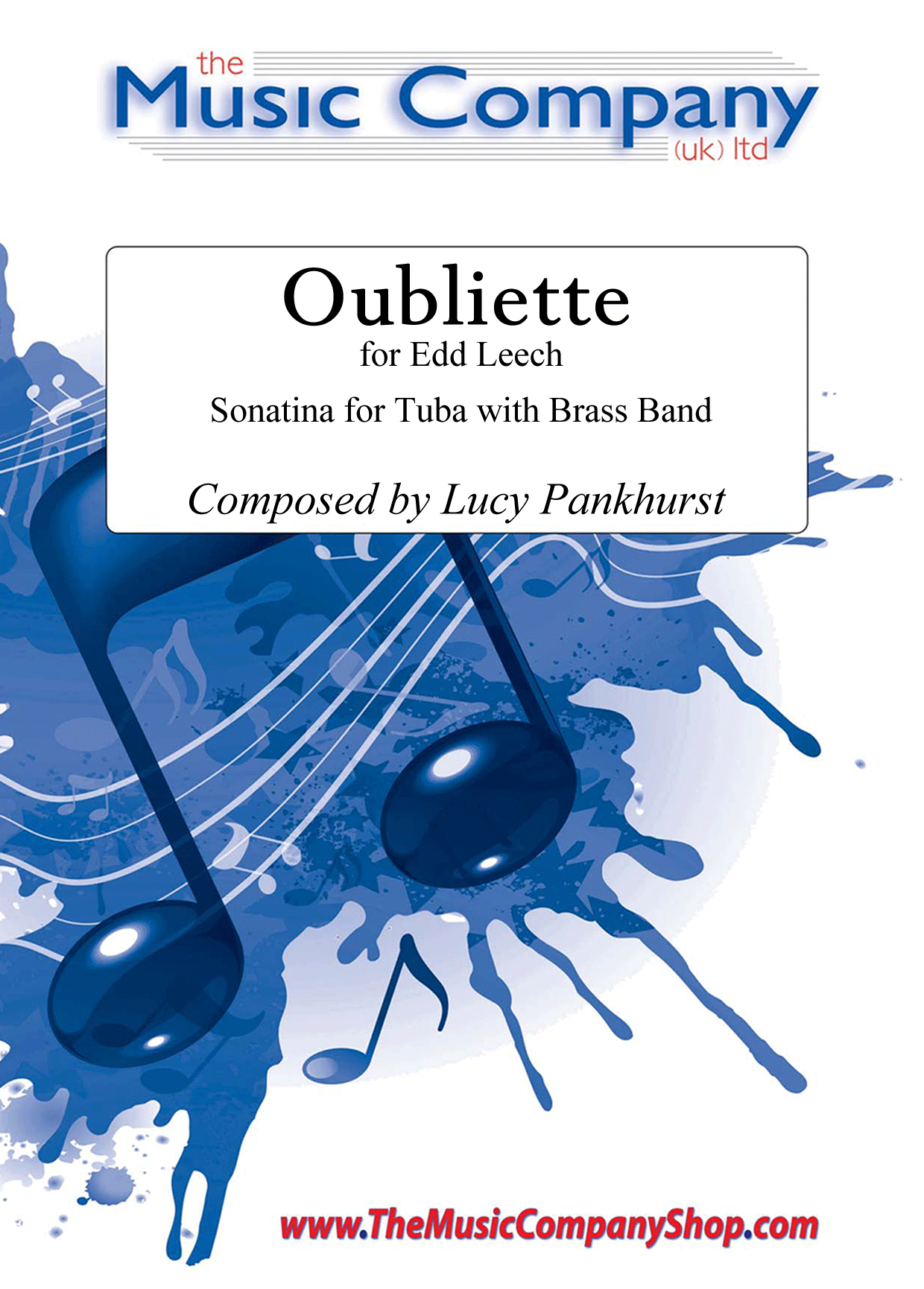
Oubliette - Lucy Pankhurst
Lucy Pankhurst has created a highly immersive solo for Tuba/Eb Bass with brass band accompaniment, aiming and succeeding in showing the lyrical and technical diversity of the tuba, demanding virtuoso brilliance and clarity in performance.Dedicated to tuba player Edd Leech, Oubliette raises the bar for tuba repertoire.Set includes score, brass band parts and solo parts for Eb Bass (TC) and Tuba (BC). Solo with piano accompaniment available separately.Programme notes from the composer, Lucy Pankhurst:From the French word oublier, meaning 'to forget', an oubliette was a form of dungeon used in the 14th century. A small, windowless room where someone is locked away to be forgotten and left to go mad.I initially chose this title for the piece as the Tuba is often forgotten as a solo instrument, when its versatility in performance should be celebrated. Oubliette showsThe work begins with desolate and sparse accompaniment with lamenting solo lines. The soloist has already been cast into the oubliette at this point and is beginning to wake from a somnolent state. Reality is blurred through the darkness of the chamber - the only entrance is a hatch in the ceiling, far out of reach.Memories are confused by countless hours of solitude - hallucinations and paranoia tainting reality. Gradually, the soloist remembers images from the past and gains confidence and strength. Long forgotten by the captors, or presumed dead in the chamber, the entrance hatch suddenly opens to allow another prisoner inside. The soloist seizes the opportunity for escape and a short battle ensues. Sword and fist fighting, perilous leaps over the entrances to more dungeons and fierce battle cries are futile, as the soloist suddenly realises they are alone in the oubliette once more and the skirmish was nothing but another dream.The piece concludes with unaccompanied soloist in the low register, sinking deeper into the shadows of the windowless prison; are they accepting their fate, or merely lying in wait for another chance of escape, if one will ever come . . .
In Stock: Estimated dispatch 3-5 working days
-
 £33.62
Je te veux (Brass Band) Satie arr. Rob Bushnell
Je te veux, or I Want You, is a valse chantee (sung waltz) by the French composer Erik Satie, with lyrics by Henry Pacory. It was written for Paulette Darty, who first sang it in 1903 at La Scala, Paris, with Satie accompanying. There are various versions that Satie produced, the original for piano and voice, a version for brass 'orchestra', for full orchestra (where a trio section was added), and a version for solo piano (but including the new trio section). This arrangement is for the UK-style brass band, with alternative parts for horns in F and bass-clef lower brass, and is of the longer version (with the trio section). As a result, it lends itself to being performed in a various of ways, with the ensemble has the option of selecting the part of it compound ternary form to play: (A-B-A)(C-D-C)(A-B-A). A recording of the original composition can be found here: www.youtube.com/watch?v=FA3JJdmwJU8 Difficulty Level: 4th Section + Duration: 4 or 5 minutes (depending on tempo and without any cuts) PDF download includes parts and score. Sheet music available at www.brassband.co.uk (UK) or https://satradecentral.org (USA) Instrumentation: Soprano Cornet Eb Solo Cornet Bb Repiano Cornet Bb 2nd Cornet Bb 3rd Cornet Bb Flugel Horn Bb Solo Horn Eb 1st Horn Eb 2nd Horn Eb 1st Baritone Bb 2nd Baritone Bb 1st Trombone Bb 2nd Trombone Bb Bass Trombone Euphonium Bb Bass Eb Bass Bb Timpani Drum Kit Auxiliary Percussion (Glockenspiel, Cymbal & Triangle)
In Stock: Estimated dispatch 1-3 working days
-
 £33.62
Menuet (Brass Band) Ravel arr. Rob Bushnell
Le Tombeau de Couperin (The Grave of Couperin) was written by Maurice Ravel between 1914 and 1917, originally a suite of piece for solo piano. Based on what was considered a traditional Baroque suite, Ravel wanted to pay homage to Baroque French keyboard music, whilst retaining his 20th-century chromaticism, making the work neoclassicist. Each movement is dedicated to the memory of a friend of the composer who died fighting in World War I. Ravel produced an orchestral version in 1919, omitting two of the original six movements. The Menuet was written in memory of Jean Dreyfus; Ravel had recuperated at his home. This arrangement is for the British-style brass band, with alternative parts for horns in F and bass-clef lower brass. A recording of the original composition can be found here: www.youtube.com/watch?v=jnNwEcBTSmk. Duration: Approx. 4 minutes Difficulty Level: 2nd Section + Duration: 4 minutes (depending on tempo and without any cuts) PDF download includes parts and score. Sheet music available at www.brassband.co.uk (UK) or https://satradecentral.org (USA) Instrumentation: Soprano Cornet Eb Solo Cornet Bb Repiano Cornet Bb 2nd Cornet Bb 3rd Cornet Bb Flugel Horn Bb Solo Horn Eb 1st Horn Eb 2nd Horn Eb 1st Baritone Bb 2nd Baritone Bb 1st Trombone Bb 2nd Trombone Bb Bass Trombone Euphonium Bb Bass Eb Bass Bb Timpani Percussion - Vibraphone & Glockenspiel
In Stock: Estimated dispatch 1-3 working days
-
 £30.00
Blue Bombazine - Terry Johns
The word Bombazine is derived from the obsolete French word Bombasin. Largely made in the Norwich area, Bombazine is a twilled fabric made of silk used mainly in dress making and popular in England in the reign of Elizabeth I. The image and feel of warm, smooth, opulent silk is aptly suited to a solo feature for tuba. Wing Commander Duncan Stubbs and the RAF Music Service commissioned Blue Bombazine for solo tuba and brass in 2014, for Senior Aircraftman Jonathan Gawn and the RAF Central Band. It was first performed at The Royal Northern College of Music in Manchester, on the 11th April 2015 at the British Festival of Wind Bands. The music is written in the jazz idiom with a testing solo part. It is available with brass band accompaniment or brass dectet. There is also a "recital" version available for tuba and piano.
-
 £67.24
Armistice at Flanders Fields (Brass Band) Dwayne Bloomfield
This poignant and powerful work for brass band by Dwayne Bloomfield describes the day peace was announced to end World War I. The piece was written in 2023 to be played by bands around the world to mark Armistice Day. The composer writes: 'Unless you were there, it's impossible to imagine what it must have been like the day peace was announced ending World War I. The feelings soldiers experienced, who after years of fighting and suffering, to know it was over and they would return home to see family and loved ones again. This piece tries to tell their story. The work begins by approaching the front, distant artillery and battle sounds heard while the carnage and loss of lives was already known to the world. The band builds as we enter the thick of battle, the death and destruction, the conditions faced and the loss of hope of ever surviving. The next section, in 7/8 time, reflects the two sides fighting - both sides attacking and defending with mostly little result, but for the loss of more lives. Two euphoniums then depict the news and hope of peace talks. However, fighting did continue right up to the very end and on the last day there would be another 2,738 casualties. The Canadians were still battling to capture the town of Mons that morning. A song is sung in reflection of the estimated 5.5 million allied soldiers who lost their lives during World War I, then a clock ticks down the final minutes. The last three known casualties are depicted with French soldier Augustin Trebuchon, killed at 10:45am by a single shot as he rushed down the trenches to spread the news of coming peace; Canadian George Lawrence Price killed by a sniper round at 10:58am at the battle of Mons, and lastly a machine gun burst that killed American Henry Gunther, who is believed to have fallen on the 11th hour. Bells then toll ringing around the world announcing the end of the war. After years of war, it must have been jubilation for the families at home knowing their loved ones would be returning to them. The band builds with a hymn for peace as a final tribute to those who fought, before the piece resides with one of the most dreaded sounds at that time, the knock on the door from a telegram delivery boy or better known then as the Angels of Death. It wasn't just the 2,738 families from the casualties of the last day who would receive such a knock, but many more who expected their loved ones to be returning home would instead find out they were instead killed in the last weeks. So close. Driving around the battlefields today one comes across many intersections in the countryside which have cemetery signposts pointing in every direction. While the last post sounds in ceremonies today, this last bugle call instead depicts the horrors, devastation and death the soldiers faced during the war and right up the 11th hour of the 11th day of the 11th month, Armistice at Flanders Fields.' To view a video of Dallas Brass Band performing the work please visit https://www.youtube.com/watch?v=ljfyVz3cMgk Duration: Approx. 15.00 minutes Difficulty Level: 2nd Section + PDF download includes parts and score. Sheet music available from www.brassband.co.uk Instrumentation: Soprano Cornet Eb Solo Cornet Bb Repiano Cornet Bb 2nd Cornet Bb 3rd Cornet Bb Flugel Horn Bb Solo Horn Eb 1st Horn Eb 2nd Horn Eb 1st Baritone Bb 2nd Baritone Bb 1st Trombone Bb 2nd Trombone Bb Bass Trombone Euphonium Bb Bass Eb Bass Bb Percussion 1-3
In Stock: Estimated dispatch 1-3 working days
-
 £37.35
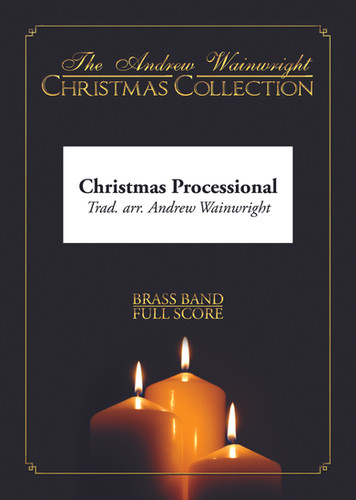
Christmas Processional - Brass Band & opt. Organ (Trad. arr. Andrew Wainwright)
An effective opener to any Christmas concert, based on the French carol, 'Bring a torch, Jeanette, Isabella'. It tells the story of a group of children in medieval Provence, dressed up as shepherds and milkmaids, carrying torches and candles as they proceed to the stable. As they draw closer and their excitement increases, they are constantly reminded by their parents to keep the noise down so that they don't wake up the baby Jesus. The music begins quietly and builds to a majestic conclusion. "If I were still conducting bands regularly, this would certainly be on my list as a Christmas concert opener - it sets the energy and mood most effectively. The scoring is terrific." Paul Hindmarsh, British Bandsman magazine This arrangement also includes optional Organ and Hand bells parts. For a follow-the-score video of Virtuosi GUS Band performing the work, please visit: https://www.youtube.com/watch?v=2GasDfecnyY Sheet music available exclusively from World of Brass - www.worldofbrass.com Includes score and full set of parts. Alternative parts for Horns in F, and Baritones, Trombones, Euphonium and Tubas in Bass Clef are available here. Difficulty Level: 2nd Section + Instrumentation: Soprano Cornet Eb Solo Cornet Bb Repiano Cornet Bb 2nd Cornet Bb 3rd Cornet Bb Flugel Horn Bb Solo Horn Eb 1st Horn Eb 2nd Horn Eb 1st Baritone Bb 2nd Baritone Bb 1st Trombone Bb 2nd Trombone Bb Bass Trombone Euphonium Bb Bass Eb Bass Bb Timpani Percussion 1-3 Organ (optional) Hand bells (optional)
In Stock: Estimated dispatch 1-3 working days
-
 £29.88
Ding Dong Merrily on High (Brass Band) Trad. arr. Stephen Tighe
VIEW SCORE PDF This arrangement of the popular carol Ding Dong Merrily on High is the first published work by BrookWright Music of English arranger Stephen Tighe. This accessible setting receives a fresh, rhythmic treatment, aided by the use of sleigh bells and tubular bells. The tune itself first appeared as a secular dance tune known under the title Branle de l'Official in Orchesographie, a dance book written by the French cleric, composer and writer Jehan Tabourot (1519-1593). The carol was first published in 1924 in his The Cambridge Carol-Book: Being Fifty-two Songs for Christmas, Easter, and Other Seasons. Woodward took an interest in church bell ringing, which no doubt aided him in writing it. The macaronic style is characteristic of Woodward's delight in archaic poetry. Sheet music available from: UK - www.brassband.co.uk USA - www.solidbrassmusic.com Difficulty Level: 4th Section + Instrumentation: Soprano Cornet Eb Solo Cornet Bb Repiano Cornet Bb 2nd Cornet Bb 3rd Cornet Bb Flugel Horn Bb Solo Horn Eb 1st Horn Eb 2nd Horn Eb 1st Baritone Bb 2nd Baritone Bb 1st Trombone Bb 2nd Trombone Bb Bass Trombone Euphonium Bb Bass Eb Bass Bb Timpani Sleigh Bells Drum Kit Tubular Bells (or Glockenspiel)
In Stock: Estimated dispatch 1-3 working days
-
 £48.56
Euryanthe Overture (Brass Band) von Weber arr. Barrie Gott
This expert arrangement for brass band by Barrie Gott of Carl Maria von Weber's popular overture, 'Euryanthe' will be a terrific addition to concert programmes.'Euryanthe' is acknowledged as one of Weber's most important operas and is based on the 13th-century French romance L'Histoire du tres-noble et chevalereux prince Gerard, comte de Nevers et la tres-virtueuse et tres chaste princesse Euriant de Savoye, sa mye.Only the overture, an outstanding example of the early German Romantic style (heralding Richard Wagner), is regularly played today.This transcription for brass band attempts to realise the orchestral score as closely as possible. There are many technical challenges that will provide opportunities for the expert level of player and ensemble. It will be and exciting addition to a concert programme. To view a follow-the-score video of the work please visit https://www.youtube.com/watch?v=wMePX1rVigk PDF download includes score and parts. Sheet music available from: UK - www.brassband.co.uk USA - www.solidbrassmusic.com Difficulty Level: 1st Section + Instrumentation: Soprano Cornet Eb Solo Cornet Bb Repiano Cornet Bb 2nd Cornet Bb 3rd Cornet Bb Flugel Horn Bb Solo Horn Eb 1st Horn Eb 2nd Horn Eb 1st Baritone Bb 2nd Baritone Bb 1st Trombone Bb 2nd Trombone Bb Bass Trombone Euphonium Bb Bass Eb Bass Bb Timpani
In Stock: Estimated dispatch 1-3 working days
 View Music
 Watch video