
Results
-
 £81.66
All Tuned Up - 120 Famous Tunes for All Occasions (Brass Band Set-US Sizes) PDFs
This unique new resource from BrookWright Music will be an essential part of every band's library! All Tuned Up is designed to cater for ensembles for occasions throughout the year. Tunes are drawn from genres including Classical, Hymns, Folk and Patriotic amongst many others to form a comprehensive book that will cover a wide variety of events such as Weddings, Funerals, Graduation Ceremonies, Parties, Proms, Remembrance, Street Playing and Thanksgiving. Playable by as few as five players but also designed to work for full brass band or wind band, it features flexible parts in a wide variety of transpositions. These excellent arrangements have been expertly created by Andrew Wainwright, David E. Jones, Dean H. Jones and Steven Ponsford. The general harmonic format of All Tuned Up is in five parts, although additional notes have been included to thicken the harmony where more players are available. Therefore, the book will work equally well with larger groups, including full brass bands and wind bands. To view a promotional video please visit www.youtube.com/watch?v=nmodRrXQRRs At the end of the Part 1 Bb book are four a capela tunes for Remembrance/Memorial occasions. This PDF download is for US sizes: Full Score - Letter Size - 11" x 8.5" Band Parts - 7" x 5" Physical copies of the books available from: UK - Individual Books Full Set Brass Band Set USA - www.solidbrassmusic.com/product/all-tuned-up-ensemble-books The Brass Band set includes: Full Score Part 1 Eb (optional) - Soprano Cornet Eb Part 1 Bb - Cornet Bb, Flugel Part 2 Bb - Cornet Bb, Flugel Part 2 Eb - Tenor Horn Part 3 Bb - Baritone, Trombone, Euphonium Part 3 Eb - Tenor Horn Part 4 Bb - Euphonium, Baritone Part 5 C (Bass Clef) - Bass Trombone Part 5 Eb - Bass Eb Part 5 Bb - Bass Bb Percussion (optional) - Various
In Stock: Estimated dispatch 1-3 working days
-
£111.36
All Tuned Up - 120 Famous Tunes for All Occasions (Full Set - US Sizes) PDFs
This unique new resource from BrookWright Music will be an essential part of every band's library! All Tuned Up is designed to cater for ensembles for occasions throughout the year. Tunes are drawn from genres including Classical, Hymns, Folk and Patriotic amongst many others to form a comprehensive book that will cover a wide variety of events such as Weddings, Funerals, Graduation Ceremonies, Parties, Proms, Remembrance, Street Playing and Thanksgiving. Playable by as few as five players but also designed to work for full brass band or wind band, it features flexible parts in a wide variety of transpositions. These excellent arrangements have been expertly created by Andrew Wainwright, David E. Jones, Dean H. Jones and Steven Ponsford. The general harmonic format of All Tuned Up is in five parts, although additional notes have been included to thicken the harmony where more players are available. Therefore, the book will work equally well with larger groups, including full brass bands and wind bands. At the end of the Part 1 Bb book are four a capela tunes for Remembrance/Memorial occasions. To view a promotional video please visit https://www.youtube.com/watch?v=nmodRrXQRRs This PDF download is for US sizes: Full Score - Letter Size - 11" x 8.5" Band Parts - 7" x 5" Physical copies of the books available from: UK - Individual Books Full Set Brass Band Set USA - www.solidbrassmusic.com/product/all-tuned-up-ensemble-books The full set includes: Full Score Part 1 Eb (optional) - Soprano Cornet/Trumpet Eb, Clarinet Eb Part 1 Bb - Cornet/Trumpet Bb, Clarinet Bb, Flugel, Soprano Saxophone Part 1 C - Piccolo, Flute, Oboe, Part 2 Bb - Cornet/Trumpet, Clarinet Bb, Flugel Part 2 Eb - Tenor Horn, Alto Saxophone, Alto Clarinet Eb Part 2 F - Horn, Cor Anglais Part 3 Bb - Baritone, Trombone, Euphonium, Tenor Saxophone, Part 3 C (Bass clef) - Baritone, Trombone, Euphonium Part 3 Eb - Tenor Horn, Alto Saxophone, Alto Clarinet Eb Part 3 F - Horn, Cor Anglais Part 4 Bb - Euphonium, Baritone, Tenor Saxophone Part 4 C (Bass clef) - Euphonium, Baritone, Bassoon Part 5 Eb - Bass Eb, Baritone Saxophone Part 5 Bb - Bass Bb, Bass Clarinet Part 5 C (Bass clef) - Tuba, Bassoon, String Bass Percussion (optional) - Various
In Stock: Estimated dispatch 1-3 working days
-
 £127.95
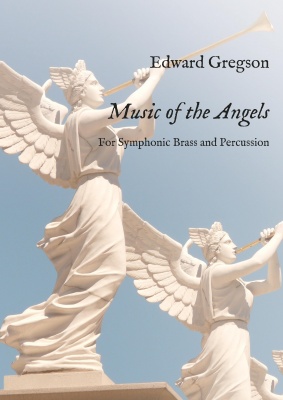
Music of the Angels (Symphonic Brass Ensemble - Score and Parts)
In 1998 Gregson was commissioned by conductor Martyn Brabbins to write a short concert opener with choir to mark his debut as Music Director of the Huddersfield Choral Society. Entitled ...and the seven trumpets... this ten minute flourish is founded on a verse from Chapter 8 of the Revelation To John (The Apocalypse), the last book in the Bible: 'and I saw the seven Angels which stood before God: and to them were given seven trumpets'. The performance employed the full power of the Huddersfield Town Hall organ and the brass section of the BBC Philharmonic, including seven trumpets and four horns placed strategically around hall.The following year, when Gregson received a commission from the Cheshire-based Foden's Brass Band (conducted at that time by Nicholas Childs) for a work to mark its centenary in 2000, he turned to the first portion of ...and the seven trumpets... as the basis for an ambitious celebratory work entitled The Trumpets of the Angels. "The opportunity to create an extended work which would break out of the brass band mould was an important milestone for me," the composer says. In 2015 he was asked by Nicholas Childs to create a new performing edition without organ for the Black Dyke Band. This received its first performance in April 2016 at the European Brass Band Festival in Lille. In 2018, Gregson revisited the music for a third time, returning the opening fanfares to orchestral brass and transforming substantial portions of the 'Black Dyke' version to create Music of the Angels, a dramatic canvas for symphonic brass and percussion.An array of bells and gongs offer an unmistakable key to the source of Gregson's inspiration. Inscribed In tribute to Olivier Messiaen, the work's principal material and its sound world, but crucially not the underlying musical processes, are influenced by Messiaen's masterpiece for wind and percussion, Et exspecto ressurectionem mortuorum (1964). Music of the Angels begins with braying of horns suggestive of the start of an ancient ritual. Six 'angel' trumpeters, set behind the ensemble, answer in sequence, with the evocative sound of tam-tams creating the Messiaen-like aura. Once the horns have reached the performing space, four of the trumpeters deliver highly contrasting fanfare cadenzas. At the climax of this episode, the individual fanfares are presented together, as if, perhaps, to reflect the Biblical writer's apocalyptic visions of hail, fire, seas of blood and the cataclysmic destruction of man and beast.This powerful vision of death and destruction gives way to a prayerful lament, re-imagining a sung Kyrie Eleison from the 'Black Dyke' edition, with flugel horn and euphonium obligati. The hushed atmosphere is broken by tenor and side drums, and trumpets five and six, which gallop away like the Horsemen of the Apocalypse. In the biblical account their steeds had 'heads like lions with fire and smoke and sulphur issuing from their mouths'.As the reverberation of a dramatic climax dies we hear the entry of the seventh trumpet, from 'on high', blazing forth with a version of the main that extends across the entire compass of the instrument - almost three octaves. Supported by a 'holy trinity' of gongs, an 'epic' final cadenza introduces new material which is further developed in a frenetic final section. This is announced by two sets of timpani, to the left and right. Braying brass (euphoniums and horns) once more adds an air of foreboding. As the music builds towards a magisterial conclusion, the Messiaen-inspired tritones of the principal motif are smoothed out into perfect 5ths and combined with the earlier material in a full-voiced chorale, over which the seventh trumpet blazes in triumph.- Programme note by Paul HindmarshScored for1 Trumpet in E flat (Trumpet 5)6 Trumpets in B flat (Trumpet 4 doubling Flugel Horn)4 Horns in F3 Tenor Trombones1 Bass TromboneEuphonium2 Tubas2 Timpani (Percussion 3 doubles Timpani 2)Percussion (3 players): 3 Tam-tams, 3 Suspended Cymbals, Bass Drum, Tenor Drum, Snare Drum, Tubular Bells.Duration: 16.00
Estimated dispatch 7-14 working days
-
£95.00
A Symphony Of Colours - Simon Dobson
A Symphony Of Colours contains four movements, which merge seamlessly together; Joy; Chroma (a journey through the composer's perception of synesthesia); Endless Time (where tuned percussion features alongside extended solos for the euphonium); and the final, climactic Ascent. This virtuoso score won a BASCA British Composer Award in the Brass & Wind Band category for its composer, Simon Dobson.Brass Band Grade 6: Championship.Duration: 17 Minutes.Large format scores are available on request.
In Stock: Estimated dispatch 1-3 working days
-
£109.00
Fire (Bra) - Pimpanit Karoonyavanich
Fire is one of the four great elements; earth, water, wind and fire, which create the universe in buddhistic aspect. Fire creates living beings, fire gives world warmth and fire can be the symbol of romance. However, fire can also destroy the world when human uses it out of their angriness, hatred and jealousy. This piece begins with the creation of the world and living beings. The slow movement in the middle of the piece defines fire as the symbol of warmth and romance. After the warm moment of fire has gone, the theme of war begins. It is caused by the misuse of fire from human which brings the world and humanity to the end. The strong ending of this piece represents the end of world and humanity.
Estimated dispatch 7-14 working days
-
 £39.95
Wild Horses (Score and Parts) - William Rimmer Realised by Elgar Howarth
Taken from William Rimmer's The Artistic Soloist - a volume of character melodies for solo cornet - Elgar Howarth has furnished four of the tunes with full accompaniment for brass band. Wind Horses demands a firm straight delivery of the tongue and a steady tempo with a full sound throughout, although the trio section is more flexible.
Estimated dispatch 7-9 working days
-
 £89.99
A Symphony of Colours (Brass Band - Score and Parts)
A Symphony Of Colours contains four movements, which merge seamlessly together; Joy; Chroma (a journey through the composers perception of synesthesia); Endless Time (where tuned percussion features alongside extended solos for the euphonium); and the final, climactic Ascent. This virtuoso score won a BASCA British Composer Award in the Brass & Wind Band category for its composer, Simon Dobson. Suitable for Championship Section Bands. Duration: 17.00
Estimated dispatch 7-14 working days
-
 £80.00
The Unfortunate Traveller (Brass Band - Score and Parts)
Imogen Holst (1907-1984) submitted The Unfortunate Traveller (1929) as her final work as a student portfolio at the Royal College of Music, where her composition teacher was Gordon Jacob. The title was taken from Thomas Nashe's famous 1594 picaresque novel of the same title. The Suite was first performed on 12 February 1933 at her Majesty's Theatre, Carlisle, by the St. Stephen's Band, with the composer conducting. Te concert was given in memory of Holst's uncle, Dr. H.A. Lediard. Holst had been impressed with the band's performance of his A Moorside Suite at the 1928 National Brass Band Championships (The Crystal Palace, South London) and was keen to work with them. Writing in Imogen Holst, a life in music, Christopher Grogan indicates that it was Gustav Holst's suggestion to include his daughter's work in the programme, quoting Imogen Holst's remarks made in interview to The Daily Mail as follows: "....it is the first time, so far as I know, that a woman has conducted a brass band at a public concert....It has been a delight to rehearse the St. Stephen's Band. It was their performance at the Crystal Palace Festival that inspired me to write this Suite, which I have dedicated to them."Imogen Holst accompanied her father to the Crystal Palace in 1928 to hear the performances of A Moorside Suite, and was so excited by the played and, audibly, by her father's music that she decided to write a brass band piece for her final examination. Te result was The Unfortunate Traveller (1929). However, it was not possible for her to present a brass band work for examination. She arranged it for string orchestra so that it could be played before she left the RCM in July 1930. Following the premiere of the original in 1933, the manuscripts did not resurface until 1969 Imogen found them among her late mother's effects. Although she requested score and parts be destroyed, they ended up in the possession of Manchester composer John Golland, who marked up the score presumably with the intention of creating a new performing edition. The original scoring reveals a lack of experience with what can be a tricky medium.With the agreement of the Holst Foundation, a revised edition, with additional percussion, was prepared in 2011 since when the work has been fortunate to travel round the world as a concert and contest piece. The original includes drums in the March only. The title was taken from Tomas Nashe's famous 1594 picaresque novel of the same title. Several Morris Dance tunes are introduced during the course of the four short movements, including Bonnie Green Garters, Shepherd's Hey, The Rose and The Wind Blaws Cauld. Quirky twists and turns of harmony and spirited rhythms that remind us how much Imogen Holst loved tradition English dance music.In September 2025, I made a performing edition of the composer's arrangement for string orchestra. The manuscript lacks the final movement, which I arranged in a similar style, ie. without extending the upper ranges. Making this edition raised some issues regarding the accuracy of my band version and some of the solutions I used to smooth out the voicing. I have used the composer's second thoughts to refine my performing edition and to correct a textual errors.- Paul HindmarshDuration: 10.00
Estimated dispatch 7-14 working days
-
£40.00
The Unfortunate Traveller (Brass Band - Score only)
Imogen Holst (1907-1984) submitted The Unfortunate Traveller (1929) as her final work as a student portfolio at the Royal College of Music, where her composition teacher was Gordon Jacob. The title was taken from Thomas Nashe's famous 1594 picaresque novel of the same title. The Suite was first performed on 12 February 1933 at her Majesty's Theatre, Carlisle, by the St. Stephen's Band, with the composer conducting. Te concert was given in memory of Holst's uncle, Dr. H.A. Lediard. Holst had been impressed with the band's performance of his A Moorside Suite at the 1928 National Brass Band Championships (The Crystal Palace, South London) and was keen to work with them. Writing in Imogen Holst, a life in music, Christopher Grogan indicates that it was Gustav Holst's suggestion to include his daughter's work in the programme, quoting Imogen Holst's remarks made in interview to The Daily Mail as follows: "....it is the first time, so far as I know, that a woman has conducted a brass band at a public concert....It has been a delight to rehearse the St. Stephen's Band. It was their performance at the Crystal Palace Festival that inspired me to write this Suite, which I have dedicated to them."Imogen Holst accompanied her father to the Crystal Palace in 1928 to hear the performances of A Moorside Suite, and was so excited by the played and, audibly, by her father's music that she decided to write a brass band piece for her final examination. Te result was The Unfortunate Traveller (1929). However, it was not possible for her to present a brass band work for examination. She arranged it for string orchestra so that it could be played before she left the RCM in July 1930. Following the premiere of the original in 1933, the manuscripts did not resurface until 1969 Imogen found them among her late mother's effects. Although she requested score and parts be destroyed, they ended up in the possession of Manchester composer John Golland, who marked up the score presumably with the intention of creating a new performing edition. The original scoring reveals a lack of experience with what can be a tricky medium.With the agreement of the Holst Foundation, a revised edition, with additional percussion, was prepared in 2011 since when the work has been fortunate to travel round the world as a concert and contest piece. The original includes drums in the March only. The title was taken from Tomas Nashe's famous 1594 picaresque novel of the same title. Several Morris Dance tunes are introduced during the course of the four short movements, including Bonnie Green Garters, Shepherd's Hey, The Rose and The Wind Blaws Cauld. Quirky twists and turns of harmony and spirited rhythms that remind us how much Imogen Holst loved tradition English dance music.In September 2025, I made a performing edition of the composer's arrangement for string orchestra. The manuscript lacks the final movement, which I arranged in a similar style, ie. without extending the upper ranges. Making this edition raised some issues regarding the accuracy of my band version and some of the solutions I used to smooth out the voicing. I have used the composer's second thoughts to refine my performing edition and to correct a textual errors.- Paul HindmarshDuration: 10.00
Estimated dispatch 7-14 working days
-
 £89.99
A Symphony of Colours (Brass Band - Score and Parts)
A Symphony Of Colours contains four movements, which merge seamlessly together; Joy; Chroma (a journey through the composer's perception of synesthesia); Endless Time (where tuned percussion features alongside extended solos for the euphonium); and the final, climactic Ascent. This virtuoso score won a BASCA British Composer Award in the Brass & Wind Band category for its composer, Simon Dobson. Suitable for Championship Section Bands. Duration: 17.00
Estimated dispatch 7-14 working days

 View Music