
Results
-
 £49.95
Malcolm Arnold Variations (Score Only)
MALCOLM ARNOLD VARIATIONS was commissioned by Philip Biggs and Richard Franklin for the 20th All England Masters International Brass Band Championship held in the Corn Exchange, Cambridge on 25 May 2008. The work is dedicated to Anthony Day, long time carer of Sir Malcolm Arnold in his final years. I first met Malcolm and Anthony in 1990 and remained in constant touch until Malcolm's passing in 2006. Anthony, of course, remains a friend and plays his own role subliminally in this piece. The work is not based on any of Malcolm Arnold's own themes, rather it is a portrait of him (and by association Anthony Day) through my eyes and as a result of my friendship with both parties over some 18 years. If there is any theme as such it is the personalities of the players, the protagonist and his carer placed together by my own efforts coloured and influenced by aspects of Arnold's style and technique without recourse to direct quotation but through allusion and parody. It is of course designed as a brass band test piece but in my eyes is first and foremost a musical challenge. The pyrotechnical elements are there but always secondary to the musical thrust of the work's structure. I have long beforehand submerged myself in Malcolm Arnold's music and ultimately delivered this tribute. Music Directors will be advised to acquaint themselves with the composer's personal music, particularly the film scores, symphonies, concertos and ballets: the solutions towards a successful interpretation of my piece are all in there - and YES, I want, and sanction, this piece to be interpreted, and therein lies the challenge for those of you 'up front'! The challenge for players is that of virtuosity, ensemble and careful attention to where they are individually in relation to their colleagues - a question of balance, taste and insight. With regard to tempi, as is my usual custom, I have indicated all metronome marks with the prefix circa. I would suggest that the fast music is played at these tempos but that the more rubato moments can be allowed some freedom in expression and fluidity of line. With regard to the type of mutes to be employed - this decision I leave to the discretion of players and conductors. Structurally the work is cast as an Introduction, 20 Variations and a Finale. Some variations are self contained, others run into each other as sequences in the same tempo. In other variations, segments are repeated and developed. I could describe the overall concept as a miniature ballet or a condensed film score - there is much drama and character and the repeated elements assist this in driving the action forward. I have deliberately avoided the more extremely dark qualities of Malcolm's own music in this, my celebration of this master-composer, as I have always viewed (and evidenced by my previous Masters scores Tristan Encounters and Chivalry) that the Cambridge contest is a 'sunshine- affair' and firmly believe that Malcolm Arnold would have had it no other way too!
Estimated dispatch 7-14 working days
-
 £45.00
Aurora Awakes
Aurora Awakes was composed in 2020 for Youth Brass 2000. Sometimes referred to as the Northern Lights, Aurora Borealis is a natural light phenomenon in the Earth's s ky. Predominantly seen in high-latitude regions, they are a result of magnetosphere disturbances caused by solar wind. The resulting ionisation (the process of a molecule acquiring positive or negative charge) of atmospheric components emit light of varying colour and complexity. For those of you familiar with the composer's other space inspired works , Aurora Awakes is a slow alternative, exploring the tonal colour and lyricism of the brass band rather than its raw energy. An effective contrast if you choose to programme it following either Starburst or Andromeda . Duration : 00:03:10 Grade : 3 Flexi-Score
Estimated dispatch 5-7 working days
-
 £25.00
Prelude 1946
For seventy years, the North West Area Brass Bands Association has been representing bands in the North West of England and surrounding areas. Their members come from Cheshire, Derbyshire, Greater Manchester, Isle of Man, Lancashire, North Wales, Staffordshire and Yorkshire. Prelude 1946 was commissioned to mark this special land-mark year. Taking inspiration from John Williams 1988 Olympic Spirit, the work opens with a heraldic fanfare before moving into its stately main theme, which gradually builds into a triumphant climax. An ideal concert opener for those of you who want to start off a concert with some American-style flair. Duration: 00:03:45 Grade : 3
Estimated dispatch 5-7 working days
-
 £49.00
Happy Go Lucky - Willy Hautvast
The public love the xylophone, so for all you xylophonists out there, here is a fresh and fun new composition for those of you who want a piece that doesn't require a top level of technique.
Estimated dispatch 10-14 working days
-
The Giddy Goat - Traditional Swiss - Daniel von Siebenthal
The Giddy Goat is a silly folk song that everyone knows in Switzerland. It is about a white goat that does not want to get milked, so she kicks the milker. Thinking that this is because the goat is white, the owner decides that he will buy a brown one instead. From there on, people make up their own verses in which the goat is often replaced with past loves, enemies, and anyone or anything worthy of ridicule. Daniel, the arranger, lives in Gstaad in the Saanen district and the "Saanen goat" is a breed of white goat known throughout the world. As a farm boy, he did his share of goat milking and received the occasional hoof under his chin for his trouble. So, this piece is a tribute to a local breed that became world-famous, especially in America where the tune also meets its counterpart Billy Grogan's Goat (a similar silly song). The Giddy Goat should always be played as a "silly song" reflecting the goat's nature; capricious and cantankerous. The low bass line is important in Swiss folk music and should approximate to a plucked string-bass whose strings are dampened, to give it a pulsating feel. For those who would like to yodel we include the following Swiss tongue twister:- Holeduli duliduli, holeduli duli duli duuli, Holeduli duliduli, holeduli duli duli duu
-
Paint It Black - Mick Jagger & Keith Richards - Len Jenkins
"Paint It Black" (originally released as "Paint It, Black") was written by Mick Jagger and Keith Richards, and first released as a single on 6 May 1966. It became the Rolling Stones' sixth number one in the UK and has remained influential as the first number one hit featuring a sitar. The song came at a pivotal period in The Rolling Stones' recording history, a time that saw the song-writing collaboration of Jagger and Richards assert itself as the principal composers of the band's original material. Its lyrics are for the most part meant to describe bleakness and depression and describe the extreme grief suffered by one stunned by the sudden and unexpected loss of wife, lover or partner. It famously plays during the end credits of the film Full Metal Jacket. Beginning in the style of an ironic minuet, which can be by-passed by starting at bar 54 where the heavy rock beat takes over, the piece is interesting and within the capabilities of 3rd or 4th section bands. For those bands with a drummer and one percussionist, an alternative percussion part is provided.
-
£35.00
The Pohutukawa Stands - Peter Meechan
The earthquake that hit Christchurch in February 2011 took the lives of 181 people. Being asked to write this work in their memory was an honour, but I didnat want it to simply be performed as a memorial. I wanted to compose a work that conveyed the sadness and grief for those lost - a work of remembrance - but also a piece of music that represented peace, hope and strength.The title and dedication come direct from the commissioners of the work, Woolston Brass Band. The Pohutukawa Trees stay standing and secure, defiant of the earthquake, in Christchurchas aGarden Citya, and the Pohutukawa tree also has special significance beyond their physical appearance.According to Maori mythology, the spirits of the dead travel to Cape Reinga on their journey to the afterlife to leap off the headland and climb the roots of the 800 year old Pohutukawa tree and descend to the underworld to return to their traditional homeland of Hawaiiki-a-nui, using the Te Ara Wairua, the 'Spirits' pathway'.The Pohutukawa Stands is dedicated to the lives lost in the Christchurch earthquake.
Estimated dispatch 12-14 working days
-
£65.00
Macchia - Harper, P
For those who enjoyed 'In Gardens of Peace' you will love this new lyrical and singing extended euphonium solo from Philip Harper which will have your audiences purring with satisfaction!3rd section + (solo part 1st section)Duration 7 mins Listen to Brass Band Limburg play Macchia
In Stock: Estimated dispatch 1-3 working days
-
£40.00
Macchia (Score) - Harper, P
For those who enjoyed 'In Gardens of Peace' you will love this new lyrical and singing extended euphonium solo from Philip Harper which will have your audiences purring with satisfaction!3rd Section (solo part 1st Section)Duration 7 minsListen to Brass Band Limburg play Macchia
In Stock: Estimated dispatch 1-3 working days
-
 £24.50
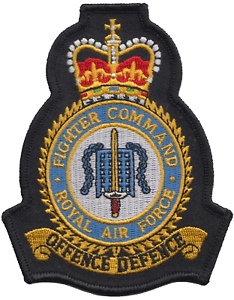
RAF Fighter Command - Stephen Hague - Stephen Hague
2010 saw the 70th anniversary of the Battle of Britain. This great little March was written to commemorate the occasion along with another march 'RAF Fighter Command'. Composed with those brave men and women in mind, this is a perfect March for all occasions, especially those concerning Remembrance Day parades and concerts.
In Stock: Estimated dispatch 1-3 working days
 View Music