
Results
-
 £59.99
David of the White Rock (Brass Band - Score and Parts) - Sparke, Philip
This is an ancient Welsh air that was first published in Relics of the Welsh Bards in 1794. Dafydd (David) Owain was a famous Welsh bard who lived on a farm called Gareg Wen (The White Rock) in Eifionydd, Carnarnvonshire, North Wales. Tradition has it that on his deathbed he called for his harp and composed this lovely melody, requesting that it be played at his funeral. Accordingly, it was later played at the parish church of Ynys-Cynhaiarn. Lyrics were later added by Ceiriog Hughes, which describe the melody's inspiration. This version for brass band retains all the beauty and simplicity of the original.Duration: 2:45
Estimated dispatch 7-14 working days
-
 £99.95
HEART OF THE HIDDEN FLAME (Brass Band - Score and Parts) - Mealor, Paul
I saw the Weaver of Dreams, an immortalshape of star-eyed Silence; and the Weaver of Death, a lovelyDusk with a heart of hidden flame; and each wove with theshuttles of beauty and Wonder and mystery... Come unto me,O Lovely Dusk, though that has the heart of hidden flame.Fiona MacLeond, 'The silence of Amor'.This work is written for standard brass band instrumentation plus timpani and two percussionists.Duration: 15:00
Estimated dispatch 7-14 working days
-
£44.95
HEART OF THE HIDDEN FLAME (Brass Band - Score only) - Mealor, Paul
I saw the Weaver of Dreams, an immortalshape of star-eyed Silence; and the Weaver of Death, a lovelyDusk with a heart of hidden flame; and each wove with theshuttles of beauty and Wonder and mystery... Come unto me,O Lovely Dusk, though that has the heart of hidden flame.Fiona MacLeond, 'The silence of Amor'.This work is written for standard brass band instrumentation plus timpani and two percussionists.Duration: 15:00
Estimated dispatch 7-14 working days
-
 £47.50
Prelude on a Hymn of Praise (Brass Band - Score and Parts) - Curnow, James
For the Beauty of the EarthDuration: 4.00
Estimated dispatch 7-14 working days
-
 £69.99
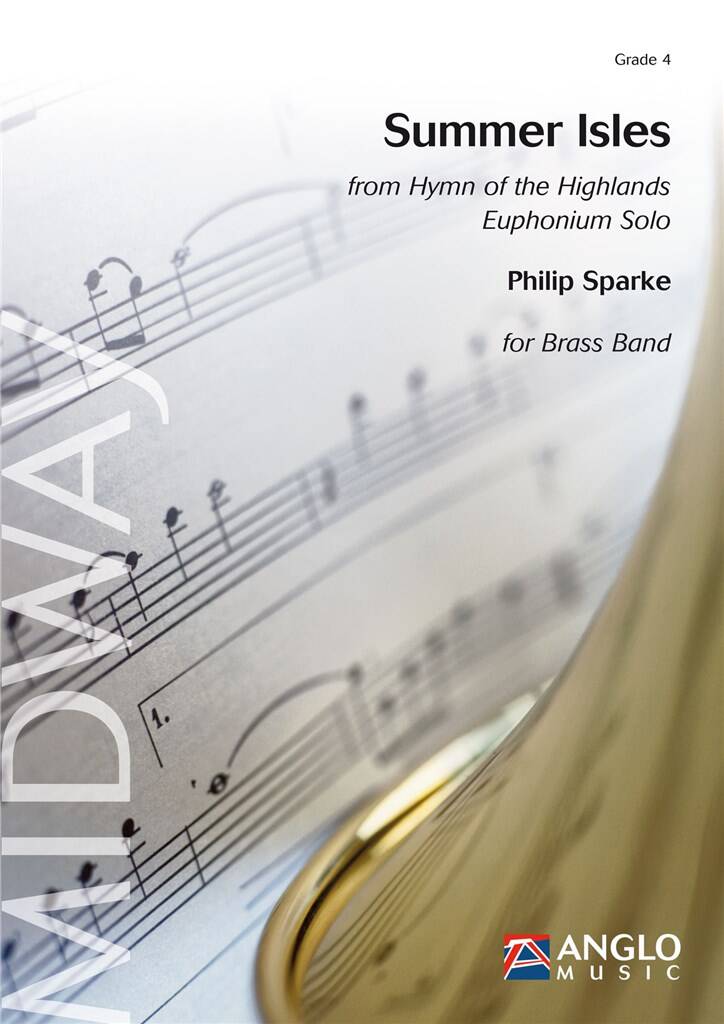
Summer Isles From 'Hymn Of The Highlands' - Philip Sparke
The Summer Isles are a group of islands located off the North West coast of Scotland which are famous for their wildlife. This piece, written for solo Euphonium and Brass Band, reflects the natural beauty and relaxing atmosphere of the islands. The wonderful melodious nature of the Euphonium is displayed in this piece and the opening theme is followed by melodic interplay between the soloist and cornets. This piece will surely be enjoyed by any audience.
Estimated dispatch 5-14 working days
-
 £26.00
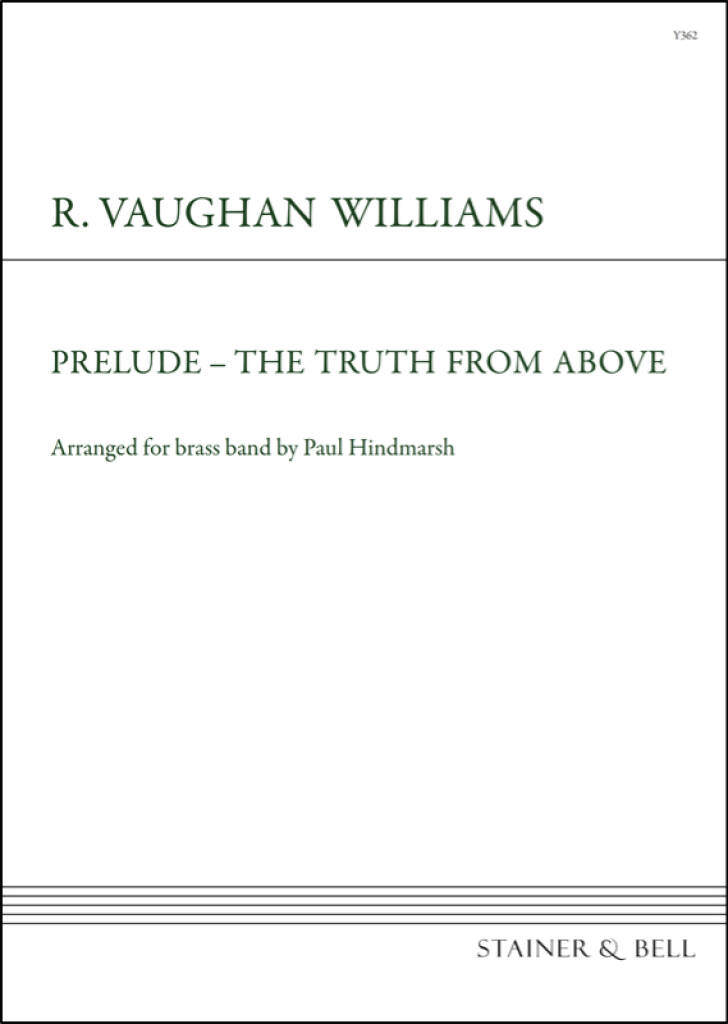
Prelude- The truth from above - Ralph Vaughan Williams - Paul Hindmarsh
In hisPrelude - The Truth from Above, outstanding arranger and curator Paul Hindmarsh has distilled the essence of a timeless Christmas classic by Ralph Vaughan Williams into five minutes of ravishingly unforgettable music for brass band. The variants of the Herefordshire tune popular from theFantasia on Christmas CarolsandThe Oxford Book of Carolsare skilfully and stylishly woven together, from an evocative opening to an ecstatic, multi-layered coda. Unerringly true to the timeless spirit of the original, with the added beauty of the brass-band sound at its most sonorously grave and haunting,Prelude - The Truth from Abovemay be performed separately, or as the first of two preludes, preceding Paul's arrangement ofRhosymedre from the Three Preludes Founded on Welsh Hymn Tunes, also available from Stainer & Bell.
Estimated dispatch 5-14 working days
-
 £30.00
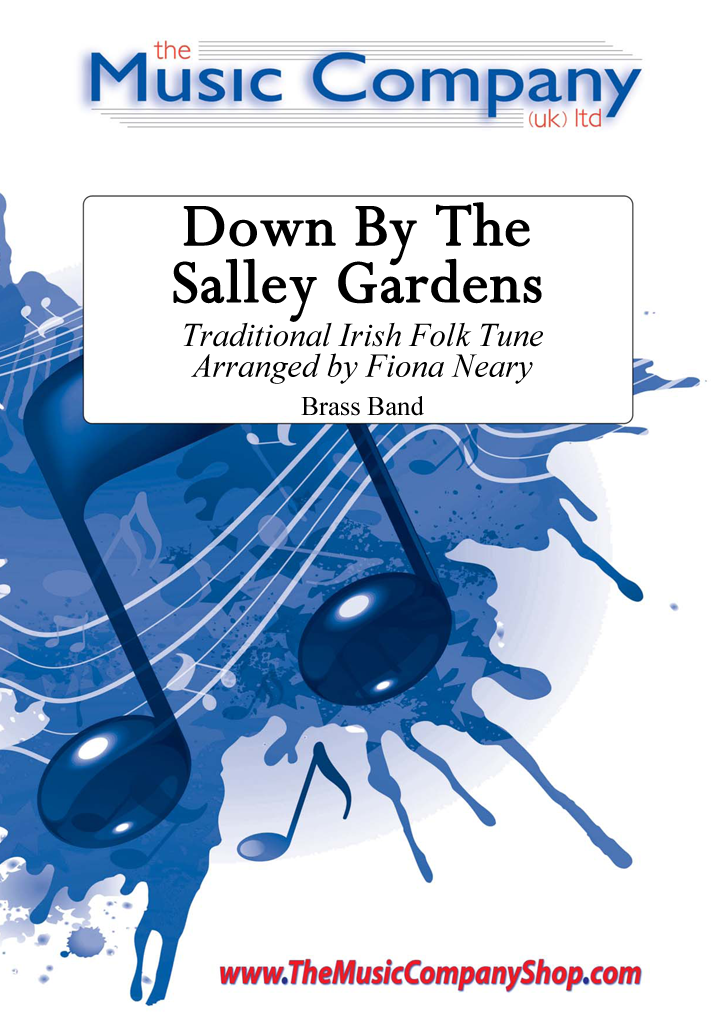
Down By The Salley Gardens
A new brass band release for 2023 which also welcomes Fiona Neary as a new member of our ever-growing family of writers!This traditional Irish folk tune has been beautifully arranged for brass band, offering a tranquil moment to your programme with a memorable jaunty jig section to keep your listeners on their toes!Every concert needs that 'Aaahhhh' element, and Down By The Salley Gardens certainly brings all the qualities required to meet that need.This original traditional Irish melody has been referred to by a variety of titles: 'Mourne Shore', 'Moorlough Shore' and 'The Maids of Mourne Shore', and is believed to have dated back to the 17th-18th century.In 1889, William Butler Yeats had his poem 'Down By The Salley Gardens' published in The Wanderings of Oisin and Other Poems. The verse was then later set to the Irish melody by Herbert Hughes in 1909. Since this combining, the music has become synonymous with the poem and naturally adopted the poem's title.Due to the beauty of the melody and the emotive words of the associated poem, both elements of this work has been embraced by a variety of artistes, including recordings by The Corrs and Sinead O'Connor; John Ireland (1879-1962) set the words to an original melody in his song cycle Songs Sacred and Profane, written in 1929-31; there is a vocal setting by the poet and composer Ivor Gurney, which was published in 1938; and Benjamin Britten published a setting of the poem in 1943.
In Stock: Estimated dispatch 3-5 working days
-
 £64.99
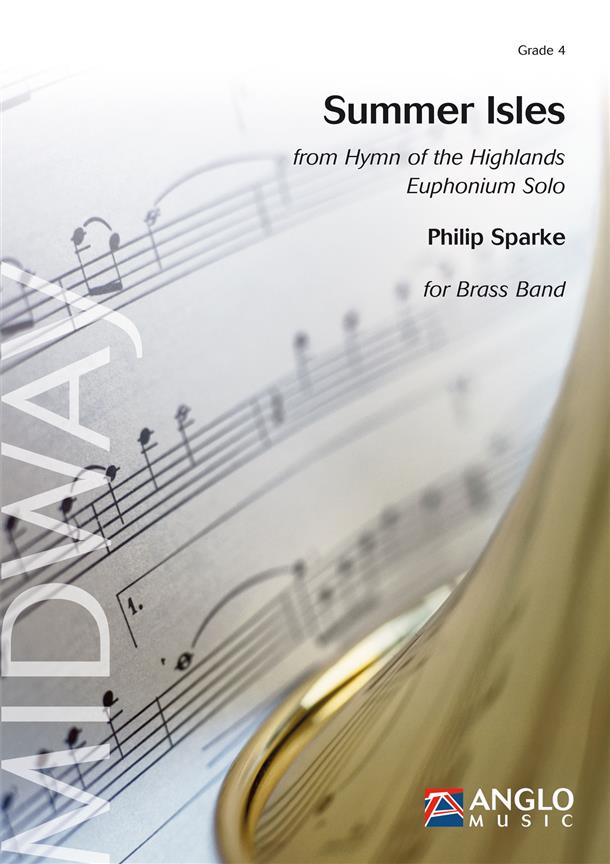
Summer Isles (from Hymn of the Highlands) (Euphonium Solo with Brass Band - Score and Parts)
The Summer Isles are a group of islands located off the North West coast of Scotland which are famous for their wildlife. This piece, written for solo euphonium and brass band, reflects the natural beauty and relaxing atmosphere of the islands. The wonderful melodious nature of the euphonium is displayed in this piece and the opening theme is followed by melodic interplay between the soloist and cornets. This piece will surely be enjoyed by any audience.Duration: 4:10
Estimated dispatch 7-14 working days
-
 £64.95
The Dark Side Of The Moon (Score and Parts)
This piece was commissioned by Dr. Nicholas Childs and Black Dyke Band on behalf of Rotary International and received its world premire performance at St. David's Hall, Cardiff on Saturday 27th January 2007. It is dedicated to the composer's father, Harry Cooper.The music was selected by the National Contesting Council as the 3rd section test piece for the 2008 Regional Brass Band Championships of Great Britain. A Note from the Composer...Have you ever thought of a holiday destination, tourist attraction, event, place, site or period in history and thought 'I wonder what it would be like?' - somwhere you have never been and can only let your imagination run wild on. What would the place be like, and all the things surrounding it such as the mood, feelings you get experiencing it, the temperature? Who would be there and what you would see? This piece is my musical imagination of the dark side of the moon. I know from news reports, the internet and other footage that the moon is a very desolate place, very barren and rugged. So from the start the piece gives the listener a musical picture of the rugged landscape with little light and warmth.However, the one place that has had me thinking about is the side of the moon that we don't see in our night skies, the side of the moon with no sun and no light pollution from civilisation. I can only imagine the eeriness one would feel being stood in complete darkness on the moon's surface looking around.As you slowly explore the surroundings and your eyes drift up to the night sky, there is an awesome sight unfolding in front of you - countless stars and galaxies, planets and different solar systems and all right in front of you glistening from the light of the sun beaming from the other side of the moon. The Dark Side of the Moon portrays a musical picture of the whole experience as seen in my imagination taking the listener from the rugged landscape to the awesome beauty that sits endlessly in front of you.Paul Lovatt-Cooper, September 2007
Estimated dispatch 7-14 working days
-
 £31.95
The Dark Side Of The Moon (Score Only)
This piece was commissioned by Dr. Nicholas Childs and Black Dyke Band on behalf of Rotary International and received its world premire performance at St. David's Hall, Cardiff on Saturday 27th January 2007. It is dedicated to the composer's father, Harry Cooper.The music was selected by the National Contesting Council as the 3rd section test piece for the 2008 Regional Brass Band Championships of Great Britain. A Note from the Composer...Have you ever thought of a holiday destination, tourist attraction, event, place, site or period in history and thought 'I wonder what it would be like?' - somwhere you have never been and can only let your imagination run wild on. What would the place be like, and all the things surrounding it such as the mood, feelings you get experiencing it, the temperature? Who would be there and what you would see? This piece is my musical imagination of the dark side of the moon. I know from news reports, the internet and other footage that the moon is a very desolate place, very barren and rugged. So from the start the piece gives the listener a musical picture of the rugged landscape with little light and warmth.However, the one place that has had me thinking about is the side of the moon that we don't see in our night skies, the side of the moon with no sun and no light pollution from civilisation. I can only imagine the eeriness one would feel being stood in complete darkness on the moon's surface looking around.As you slowly explore the surroundings and your eyes drift up to the night sky, there is an awesome sight unfolding in front of you - countless stars and galaxies, planets and different solar systems and all right in front of you glistening from the light of the sun beaming from the other side of the moon. The Dark Side of the Moon portrays a musical picture of the whole experience as seen in my imagination taking the listener from the rugged landscape to the awesome beauty that sits endlessly in front of you.Paul Lovatt-Cooper, September 2007
Estimated dispatch 7-14 working days
 View Music