
Results
-
 £29.50
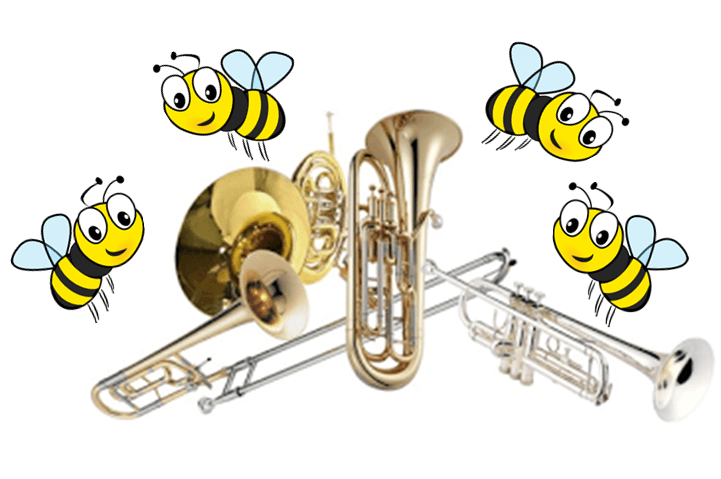
Flight of The Bumblebee - Rimsky-Korsakov - Adrian Horn
This famous work Rimsky-Korsakov has been wonderfully arranged by Adrian Horn as a real showcase feature for quartet and brass band. The quartet features your band's Cornet, Tenor Horn, Euphonium & Eb Bass players, all taking a pivotal role in this face paced and virtuosic piece. Originally written for an opera, The Tale of Tsar Saltan; this work whilst incidental in the opera, has become one of the most famous classical pieces of all time. A sure hit with your audiences and a great way show off your band's players. Free soloist parts are available to download.
In Stock: Estimated dispatch 1-3 working days
-
£24.50
RONDO from "ABDELAZAR" - Henry Purcell - Wilfried Weiland
Used as the opening theme from Britten's 'Young Person's Guide to the Orchestra', The RONDO is part of the ABELAZAR-Suite which the English composer Henry Purcell wrote for the drama of the same name by Aphra Behn in 1695. This is a 6-piece arrangement for 2 cornets/trumpets, horn/flugel , baritone/trombone, euphonium and bass with timpani and drumset accompaniment.
In Stock: Estimated dispatch 1-3 working days
-
£29.50
Celtic Romance - Peter Boris Koval
This arrangement of my piece is for solo euphonium and band. The solo part features lyricism with a Celtic feel, almost modal, with successive reappearances of the main theme more ornamented. The band provides rhythmic support, countermelodies, strong bass lines and variety of harmony. There are no extremes of range and the solo part's upper limit is B above the stave. Duration is 4:14 minutes. The overall mood is of introspection and emotion, yet with a foot-tapping beat.
In Stock: Estimated dispatch 1-3 working days
-
£24.50
Triumphant - Bill Willis
TriumphantThis is a bright concert march in a traditional style and should pose no problems for the majority of bands.The first half of the march moves between the related keys of A min and C majThe march starts with a bold opening 2 bar statement in A min. At B the rhythm from the middle of the band should not be allowed to slow the pace of the march. C sees a majestic bass melody from Baritones downwards moving to D where a repeat of the original theme is presented before moving to the TRIO section. This moves between the related keys of F maj and D min. The melody heard at E is repeated at G with a florid counter-melody heard from 1st Baritone and Euphonium leading to the finish.
In Stock: Estimated dispatch 1-3 working days
-
£29.50
Baking Day - Naomi Styles
Baking Day is a fast, foot-tapping duet which will challenge your Euphonium and Eb bass players. It also features 'kitchen percussion' - the percussion section is invited to raid the kitchen for things that thud and clang, although parts for ordinary instruments are provided! There are opportunities for your percussion section to ad-lib in the middle section between E and F, to show off their capabilities. There are also places where banter between conductor and players can take place, making this a fun-filled entertainment piece that both shows off your duetists' talents and raises a smile.This work forms part of a series inspired by Christopher Lloyd's book 'What on earth Evolved?' which ranks the species that have had the biggest impact on the history of Earth and humankind. The series thus makes up a modern 'Carnival of the Animals'. Baking Day celebrates Yeast, a microscopic fungus which brings us bread, buns, wine, Marmite and even biofuel.
In Stock: Estimated dispatch 1-3 working days
-
 £80.00
St. Magnus - Kenneth Downie
Dedicated to Alastair Massey, an inspirational music teacher. Commissioned by the Scottish Brass Band Association for the 2004 European Brass Band Championships in Glasgow. This music is a set of variations on the tune known as St Magnus, which is attributed to Jeremiah Clarke. Most people will associate it with Thomas Kelly's hymn which begins: "The Head that once was crowned with thorns is crowned with glory now". The tune is very simple, consisting of just two, four-bar phrases. Neither is there much in the way of rhythmic variety, every note being a crotchet with the exception of two quavers, and the last note in each phrase. Within such a simple structure, however, lies considerable strength. THEME The listener is given the opportunity of hearing it twice, in full, at the beginning, starting with one player but soon taken up by the full ensemble. It returns in the middle of the music and is stated again near the end. This has been done quite deliberately in the hope that there will be an appreciation of what material is being developed, by the listener as well as by those with access to the score, who are able to see the visual connections. VARIATION 1 This takes the rhythm of the last part of the theme and also uses the shape of the opening as a recurring figure. The mood is whimsical and skittish, with short, teasing rhythmic figures tossed around the band, and quick interplay with percussion, at a fast tempo. An energetic flourish finishes this variation before the Andante espress. VARIATION 2 This commences with chords related to the opening of Variation 1. The cantabile on solo comets establishes a new, lyrical mood and there is scope for expressive playing in a series of short solo passages. The theme works its way unobtrusively into the texture before a reprise of the solo cornet melody and some more lyrical interchanges between Eb bass, euphonium, flugel horn and comets. The variation ends serenely with clear references to the last phrase of the theme. VARIATION 3 The first idea to dominate is clearly linked to the shape of the theme's first phrase. There is a frenetic feel to much of this variation, with considerable energy and instability created by extensive use of cross-rhythms. A thinning-out of the score marks a clear change to development of the start of the second phrase of the theme. This proves to be short-lived however, and the opening material returns leading to a restatement of the theme, "Maestoso," after which a euphonium cadenza links to Variation 4. VARIATION 4 Here we have some solos for euphonium, cornet, trombone and Eb bass set against a background of horns and baritones presenting a pensive statement of the theme's opening. VARIATION 5 This commences Allegro, with lively work for cornet and euphonium spreading to the whole band before attention focuses on the beginning of the second phrase of the theme which is initially presented in diminution, then in regular rhythm, then in inversion. An increase in tempo coupled with a decrease in volume, requires dexterity and control, with several metrical challenges thrown in for good measure. The same fragment of phrase becomes an ostinato which generates a frenzied climax, punctuated by short, dramatic silence, before the opening figure returns and the music gradually winds down. The tubular bells herald the final return of the theme, in augmentation, marking the start of the Finale. FINALE This features the running semiquavers of the previous variation sounding in counterpoint. A fast, furious coda speeds the work to a conclusion while references to the opening of the theme are still trying to break into the texture of the music. Kenneth Downie
Estimated dispatch 5-14 working days
-
 £45.00
Rhapsody in Blue - George Gershwin
Arranged by Steve Sykes : Soprano Cornet Eb, Solo Cornet Bb, Repiano Cornet Bb, 2nd Cornet Bb, 3rd Cornet Bb, Flugelhorn, Solo Horn Eb, 1st Horn Eb, 2nd Horn Eb, 1st Baritone Bb, 2nd Baritone Bb, 1st Trombone Bb, 2nd TromboneBb, Bass trombone, Euphonium Bb, Bass Eb, Bass Bb, Drums, Timpani, Glockenspiel.
Estimated dispatch 5-14 working days
-
 £59.99
Marcho Brioso - Philip Sparke
Marcho Brioso was commissioned by The Brioso Brass, a British-style brass band from Hokkaido, Japan. They gave the first performance in January 2012.The commission was for a bright and breezy march that the band could use as their theme tune, so Marcho Brioso falls into the composer's series of Broadway-style marches, which includes Slipstream, The Bandwagon and Jubiloso.After a short introduction a solo cornet plays the main theme, accompanied by a euphonium counter-melody. A secondary phrase from the horns and baritones leads to a tuttiversion of the main theme which is followed by the traditional 'bass' strain. A change of key heralds the trio section, which features a cantabile melody on euphonium; this is then taken up by the full band after a short bridge passage and further change of key.This takes us back to the home key which sees a quiet staccato version of the main theme lead to a recapitulation and a short coda which brings the march to a close.
Estimated dispatch 5-14 working days
-
 £107.80
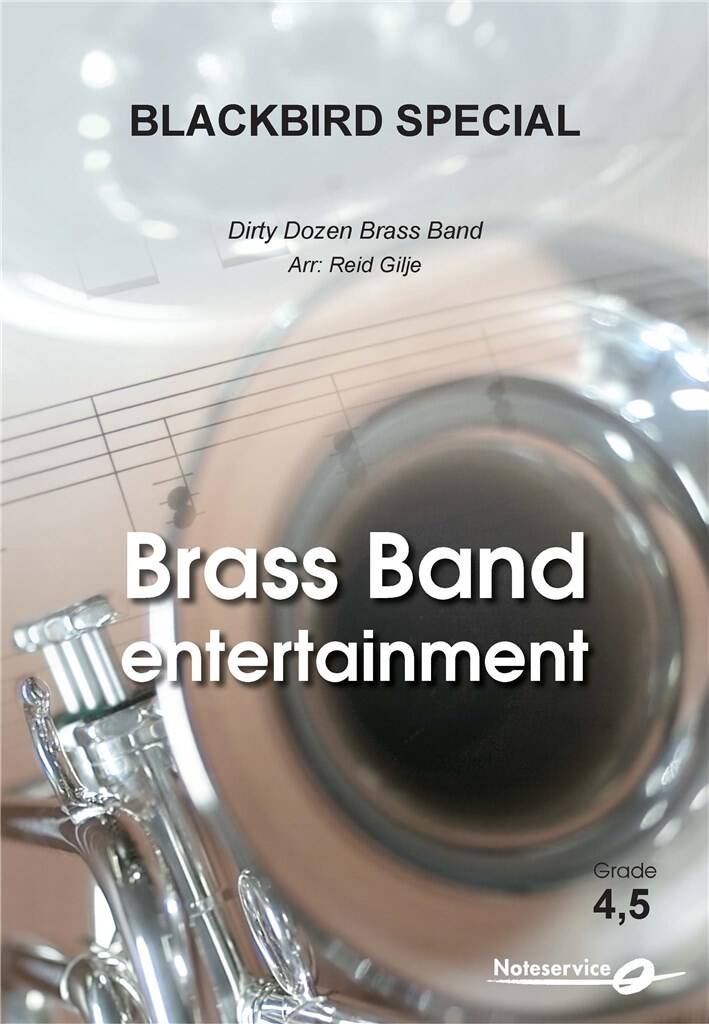
Blackbird Special - Davis - Reid Gilje
Blackbird Special" is a song by American band Dirty Dozen Brass Band. The song is an entertainment piece, a good concert opener or encore. When used as a concert opener one may let the different sections of the band enter the stage one by one playing in order of appearance. Percussion section may play their parts ad lib. The most important is the groove of the piece. Please pay attention to strict articulation from bar 17. Be aware of the marcatos at 33. The last note of the slurs at 41 must be not be too short. It's important to hold the note values, especially in bars 49, 51, 53 and 55. From 57 and throughout the piece, the percussion may invite the audience to join forhandclaps. As an extra effect, the Bass Tubas may stand at 57, the Horns at 59, backrow Cornets and Trombones at 61 and Euphonium/Baritone/Solo Cornets at 63. ||||||
Estimated dispatch 5-14 working days
-
 £52.70
Far Eastern Dream - Paul Voet
The longest trip we make is to the Far East. Japan, China, Tibet,... all countries with an enormous cultural background and history. Percussion is very important here to give a rich dimension to this Japanese 'Black Bamboo' theme. Tam-tam, Chinese cymbals, Tibetan gong and a kododrum (if not possible, large floor tom) together with marimba and glockenspiel are used all the time in a carefulway. A solo cornet presents the main theme that is answered by the whole lower brass section. While this theme develops now and then the sounds of the impressive 'dung' is heard. (dung is the Tibetan very large trumpet-like instrument with loud and very deep sounds) In a quicker tempo Eb bass, euphonium and solo cornet start with the theme and even the counter theme. The whole group joins the party but everything ends very silently with mute.
Estimated dispatch 5-14 working days
 View Music
 Listen to MP3