
Results
-
 £95.00
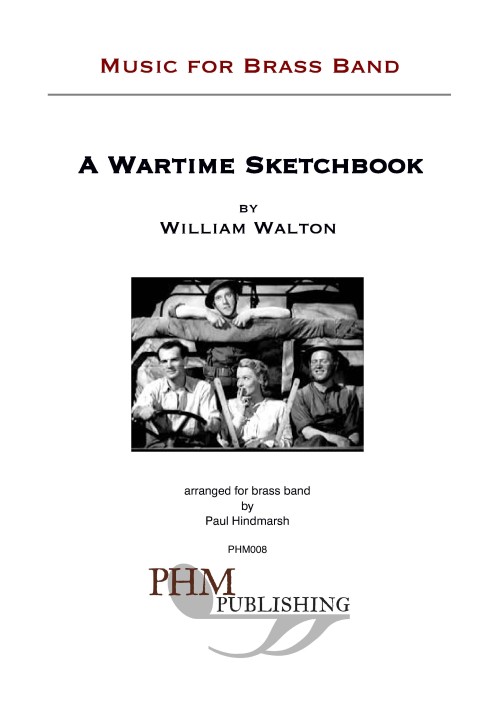
A Wartime Sketchbook (Brass Band - Score and Parts) - Walton, William - Hindmarsh, Paul
Early in 1941 William Walton, 39, received his call-up papers. He was by then one of the most eminent of British composers and was exempted from military service on condition that he provided music for films deemed to be of 'national importance'. Scoring Lawrence Olivier's Shakespeare epic Henry V in 1943 was the most substantial of these wartime projects. His role in patriotic films from 1941 and 42 like The Foreman went to France, Next of Kin, Went the day Well and The First of the Few was to provide appropriate title music and some underscoring at key moments. Walton extracted the most substantial portions of the latter as the popular Spitfire Prelude and Fugue for orchestra. The remaining music remained unpublished until 1990, when Christopher Palmer assembled the highlights into A Wartime Sketchbook. I was intrigued to hear these examples of Walton's wartime music and having discovered that they would fit naturally and idiomatically onto the brass band, I arranged six of the numbers into a suite for Besses o' th' Barn Band, which I was conducting at the time.In 1995 the brass band suite was recorded by the famous Black Dyke Mills Band as part of an all Walton album which I produced for the ASV label (ASV CD WHL 2093). This award- winning CD also included Walton's First Shoot, in the edition by Elgar Howarth, my transcription of movements from Music for Children and two substantial brass versions by Edward Watson of the suite from Henry V (with narrator) and the March and Siegfried Music from The Battle of Britain music.Prologue: This is the stirring title music from Went the day Well, a screen play by Graham Greene about a German airborne invasion of an English village. The main theme leads toBicycle Chase: Characteristic musical high-jinks for J.B.Priestley's The Foreman went to France.Refugees: From the same film, this is a poignant accompaniment to the long march of refugees. As Ernest Irving, the film's musical director, put it, "this really makes your feet sore and your knees sag."Young Siegfrieds: This lively movement comes from the music that Walton composed for The Battle of Britain in 1968, with the assistance of Malcolm Arnold, but which the film's producer rejected. It portrays first the Berliners, cheerfully ignoring the black-out and then, in the trio, the Young Siegfrieds of the Luftwaffe, courtesy of a parody of Siegfried's horn call from Wagner's opera.Romance: A soldier and a Dutch refugee snatch a few tender moments together in Next of Kin.Epilogue: At the end of The Foreman went to France, the French look forward with hope and optimism to eventual liberation.- Paul HindmarshDuration: 14.00
Estimated dispatch 7-14 working days
-
£40.00
A Wartime Sketchbook (Brass Band - Score only) - Walton, William - Hindmarsh, Paul
Early in 1941 William Walton, 39, received his call-up papers. He was by then one of the most eminent of British composers and was exempted from military service on condition that he provided music for films deemed to be of 'national importance'. Scoring Lawrence Olivier's Shakespeare epic Henry V in 1943 was the most substantial of these wartime projects. His role in patriotic films from 1941 and 42 like The Foreman went to France, Next of Kin, Went the day Well and The First of the Few was to provide appropriate title music and some underscoring at key moments. Walton extracted the most substantial portions of the latter as the popular Spitfire Prelude and Fugue for orchestra. The remaining music remained unpublished until 1990, when Christopher Palmer assembled the highlights into A Wartime Sketchbook. I was intrigued to hear these examples of Walton's wartime music and having discovered that they would fit naturally and idiomatically onto the brass band, I arranged six of the numbers into a suite for Besses o' th' Barn Band, which I was conducting at the time.In 1995 the brass band suite was recorded by the famous Black Dyke Mills Band as part of an all Walton album which I produced for the ASV label (ASV CD WHL 2093). This award- winning CD also included Walton's First Shoot, in the edition by Elgar Howarth, my transcription of movements from Music for Children and two substantial brass versions by Edward Watson of the suite from Henry V (with narrator) and the March and Siegfried Music from The Battle of Britain music.Prologue: This is the stirring title music from Went the day Well, a screen play by Graham Greene about a German airborne invasion of an English village. The main theme leads toBicycle Chase: Characteristic musical high-jinks for J.B.Priestley's The Foreman went to France.Refugees: From the same film, this is a poignant accompaniment to the long march of refugees. As Ernest Irving, the film's musical director, put it, "this really makes your feet sore and your knees sag."Young Siegfrieds: This lively movement comes from the music that Walton composed for The Battle of Britain in 1968, with the assistance of Malcolm Arnold, but which the film's producer rejected. It portrays first the Berliners, cheerfully ignoring the black-out and then, in the trio, the Young Siegfrieds of the Luftwaffe, courtesy of a parody of Siegfried's horn call from Wagner's opera.Romance: A soldier and a Dutch refugee snatch a few tender moments together in Next of Kin.Epilogue: At the end of The Foreman went to France, the French look forward with hope and optimism to eventual liberation.- Paul HindmarshDuration: 14.00
Estimated dispatch 7-14 working days
-
 £90.00
Hobbits (from Symphony No.1: The Lord of the Rings) (Brass Band - Score and Parts) - De Meij, Johan
Johan de Meij's first symphony The Lord of the Rings is based on the trilogy of that name by J.R.R. Tolkien. This book has fascinated many millions of readers since its publication in 1955. The symphony consists of five separate movements, each illustrating a personage or an important episode from the book. This transcription for brass band has been arranged by the composer. The symphony was written in the period between March 1984 and December 1987, and had its premiere in Brussels on 15th March 1988, performed by the The Royal Band ofthe Belgian Guides under the baton of Norbert Nozy. In 1989, the symphony The Lord of the Rings was awarded a first prize in the Sudler International Wind Band Composition Competition in Chicago, and a year later, the symphony was awarded a grant by the Dutch Composers Fund. In 2001, the orchestral version was premiered by the Rotterdam Philharmonic Orchestra and recorded by the London Symphony Orchestra. Duration: 9.00
Estimated dispatch 7-14 working days
-
 £90.00
Journey in the Dark (from Symphony No.1: The Lord of the Rings) (Brass Band - Score and Parts) - De Meij, Johan
Johan de Meij's first symphony The Lord of the Rings is based on the trilogy of that name by J.R.R. Tolkien. This book has fascinated many millions of readers since its publication in 1955. The symphony consists of five separate movements, each illustrating a personage or an important episode from the book. This transcription for brass band has been arranged by the composer. The symphony was written in the period between March 1984 and December 1987, and had its premiere in Brussels on 15th March 1988, performed by the The Royal Band ofthe Belgian Guides under the baton of Norbert Nozy. In 1989, the symphony The Lord of the Rings was awarded a first prize in the Sudler International Wind Band Composition Competition in Chicago, and a year later, the symphony was awarded a grant by the Dutch Composers Fund. In 2001, the orchestral version was premiered by the Rotterdam Philharmonic Orchestra and recorded by the London Symphony Orchestra. Duration: 9.00
Estimated dispatch 7-14 working days
-
 £83.00
Gandalf (from Symphony No.1: The Lord of the Rings) (Brass Band - Score and Parts) - De Meij, Johan
Johan de Meij's first symphony The Lord of the Rings is based on the trilogy of that name by J.R.R. Tolkien. This book has fascinated many millions of readers since its publication in 1955. The symphony consists of five separate movements, each illustrating a personage or an important episode from the book. This transcription for brass band has been arranged by the composer. The symphony was written in the period between March 1984 and December 1987, and had its premiere in Brussels on 15th March 1988, performed by the The Royal Band ofthe Belgian Guides under the baton of Norbert Nozy. In 1989, the symphony The Lord of the Rings was awarded a first prize in the Sudler International Wind Band Composition Competition in Chicago, and a year later, the symphony was awarded a grant by the Dutch Composers Fund. In 2001, the orchestral version was premiered by the Rotterdam Philharmonic Orchestra and recorded by the London Symphony Orchestra. Duration: 6.30
Estimated dispatch 7-14 working days
-
 £119.99
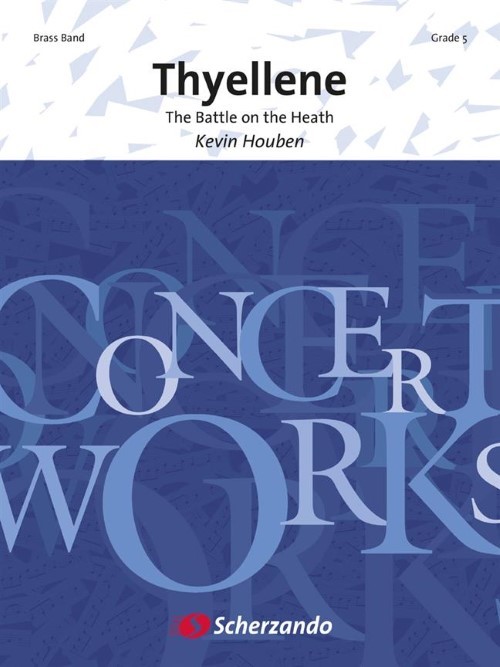
Thyellene (Brass Band - Score and Parts) - Houben, Kevin
Thyellene depicts of a battle that took place on the 'Tielenheide' - a stretch of moorland near the Belgian village of Tielen in 1597. In that memorable battle Prince Maurice of Nassau, commander of the Dutch army, defeated Count Varax, a general of the Spanish army - with a considerably smaller troop than the enemy. This great heroic subject has been transformed into this equally great work for brass band, which won the third prize at the 2009 European Composers Competition.Duration: 9.00
Estimated dispatch 7-14 working days
-
 £54.99
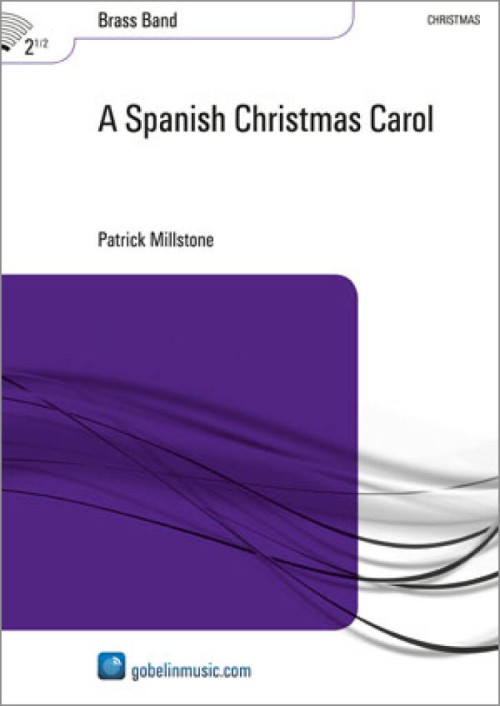
A Spanish Christmas Carol (Brass Band - Score and Parts) - Millstone, Patrick
Rondeau of the Shepherds is the historical title associated with the well'known Dutch Christmas carol "Midden in de winternacht." The modern Dutch text was written in 1948 by the poet and writer Harry Prenen. The melody, however, has a much older heritage. It appears in the works of 17th' and 18th'century French organ composers such as Louis-Claude Daquin, Claude Balbastre, and Jean-Franois Dandrieu, who often included it in their Christmas suites and nols.The tune itself is believed to originate from a late'medieval Spanish (likely Catalan) Christmas song, traditionally identified as "El Desembre Congelat." Its imagery--shepherds, flutes, and drums--reflects a deep familiarity with biblical narratives while offering a vivid glimpse into the festive, folk-influenced Christmas celebrations of the Middle Ages.Energetic and joyful, this carol works beautifully as an uplifting, up-tempo intermezzo within a church service or seasonal concert program.Duration: 3.00
Estimated dispatch 7-14 working days
-
 £84.99
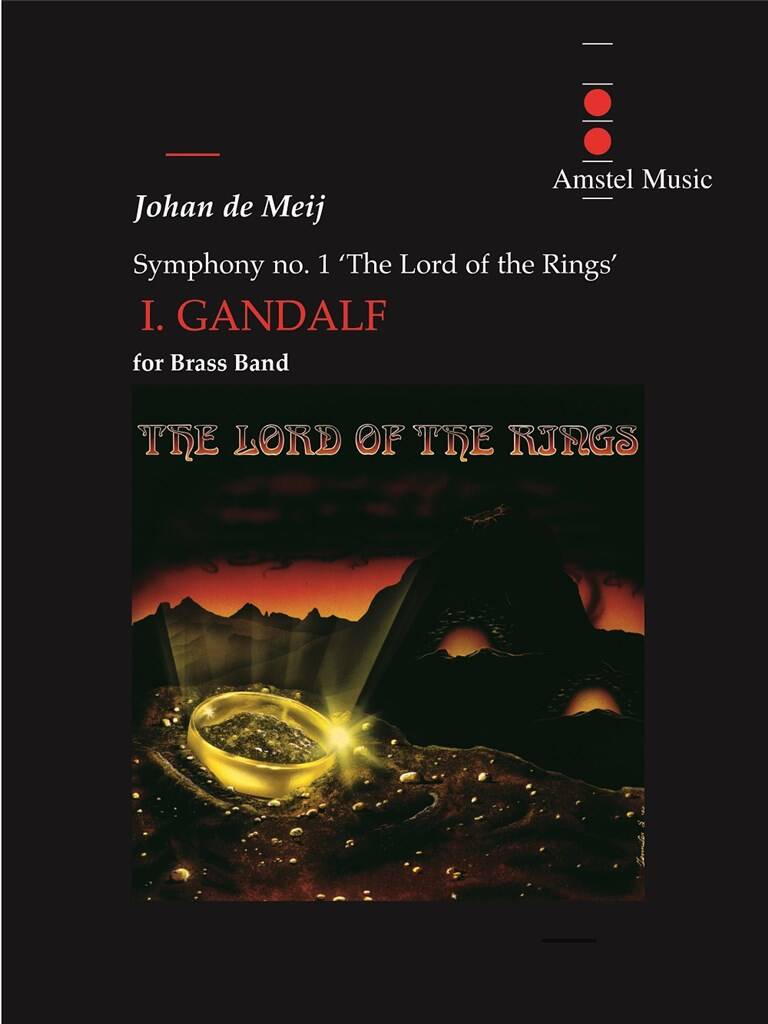
Gandalf the Wizard - Johan de Meij
Johan de Meij's first symphony The Lord of the Rings is based on the trilogy of that name by J.R.R. Tolkien. This book has fascinated many millions of readers since its publication in 1955. The symphony consists of five separate movements, each illustrating a personage or an important episode from the book. This transcription for brass band, arranged by the composer has the following movements: I. GANDALF (The Wizard), IV. JOURNEY IN THE DARK (The Mines of Moria and The Bridge of Khazad-D m), V. HOBBITS. The symphony was written in the period between March 1984 and December 1987, and had its premiere in Brussels on 15th March 1988, performed by the The Royal Band ofthe Belgian Guides under the baton of Norbert Nozy. In 1989, the symphony The Lord of the Rings was awarded a first prize in the Sudler International Wind Band Composition Competition in Chicago, and a year later, the symphony was awarded a grant by the Dutch Composers Fund. In 2001, the orchestral version was premiered by the Rotterdam Philharmonic Orchestra and recorded by the London Symphony Orchestra.
Estimated dispatch 5-14 working days
-
 £89.99
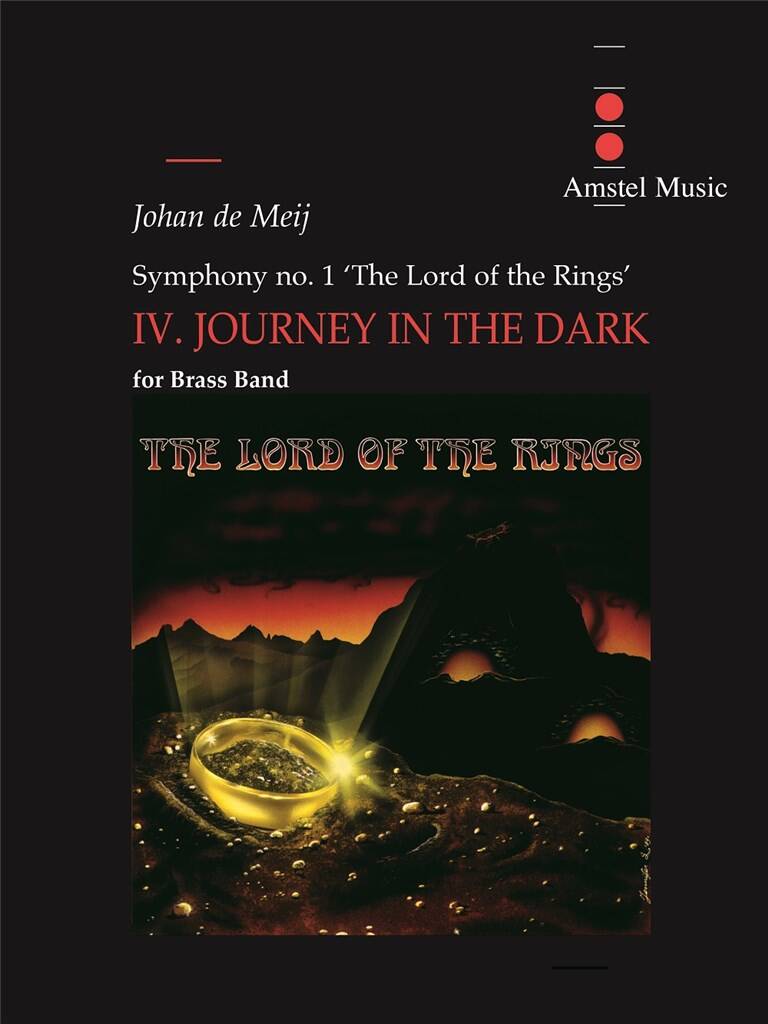
Journey in the Dark - Johan de Meij
Johan de Meij's first symphony The Lord of the Rings is based on the trilogy of that name by J.R.R. Tolkien. This book has fascinated many millions of readers since its publication in 1955. The symphony consists of five separate movements, each illustrating a personage or an important episode from the book. This transcription for brass band, arranged by the composer has the following movements: I. GANDALF (The Wizard), IV. JOURNEY IN THE DARK (The Mines of Moria and The Bridge of Khazad-D m), V. HOBBITS. The symphony was written in the period between March 1984 and December 1987, and had its premiere in Brussels on 15th March 1988, performed by the The Royal Band ofthe Belgian Guides under the baton of Norbert Nozy. In 1989, the symphony The Lord of the Rings was awarded a first prize in the Sudler International Wind Band Composition Competition in Chicago, and a year later, the symphony was awarded a grant by the Dutch Composers Fund. In 2001, the orchestral version was premiered by the Rotterdam Philharmonic Orchestra and recorded by the London Symphony Orchestra.
Estimated dispatch 5-14 working days
-
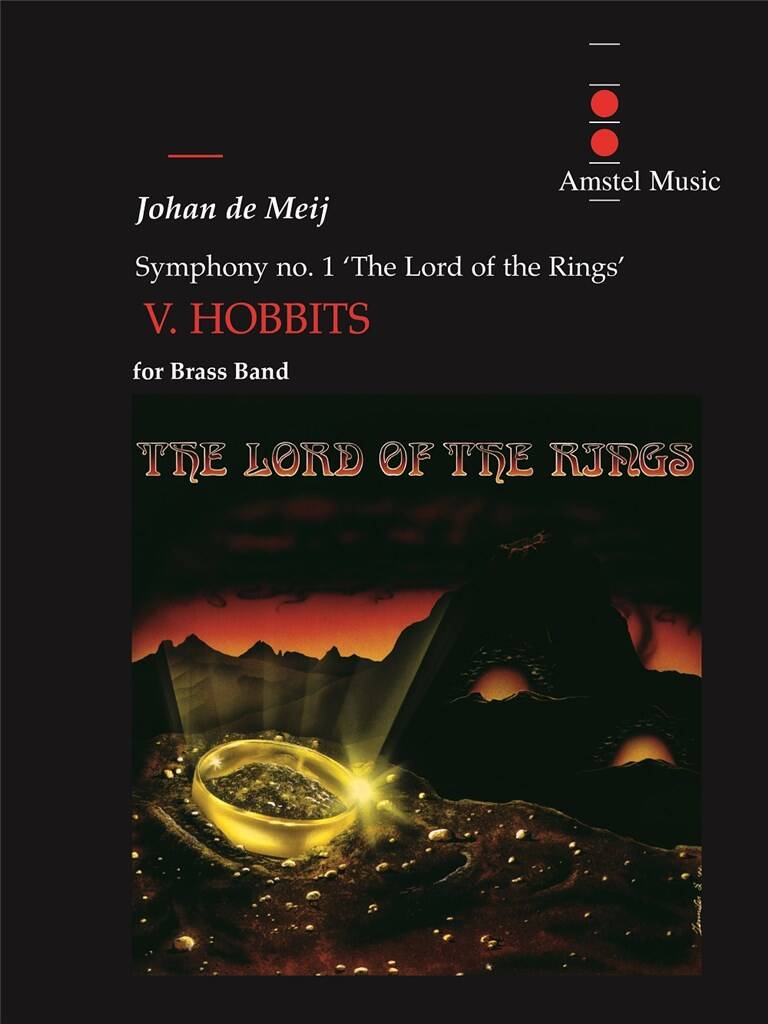 £89.99
Hobbits - Johan de Meij
Johan de Meij's first symphony The Lord of the Rings is based on the trilogy of that name by J.R.R. Tolkien. This book has fascinated many millions of readers since its publication in 1955. The symphony consists of five separate movements, each illustrating a personage or an important episode from the book. This transcription for brass band, arranged by the composer has the following movements: I. GANDALF (The Wizard), IV. JOURNEY IN THE DARK (The Mines of Moria and The Bridge of Khazad-D m), V. HOBBITS. The symphony was written in the period between March 1984 and December 1987, and had its premiere in Brussels on 15th March 1988, performed by the The Royal Band ofthe Belgian Guides under the baton of Norbert Nozy. In 1989, the symphony The Lord of the Rings was awarded a first prize in the Sudler International Wind Band Composition Competition in Chicago, and a year later, the symphony was awarded a grant by the Dutch Composers Fund. In 2001, the orchestral version was premiered by the Rotterdam Philharmonic Orchestra and recorded by the London Symphony Orchestra.
Estimated dispatch 5-14 working days
 View Music