Searching for Wind Band Music? Visit the Wind Band Music Shop
We've found 139 matches for your search. Order by

Results

  • £54.99

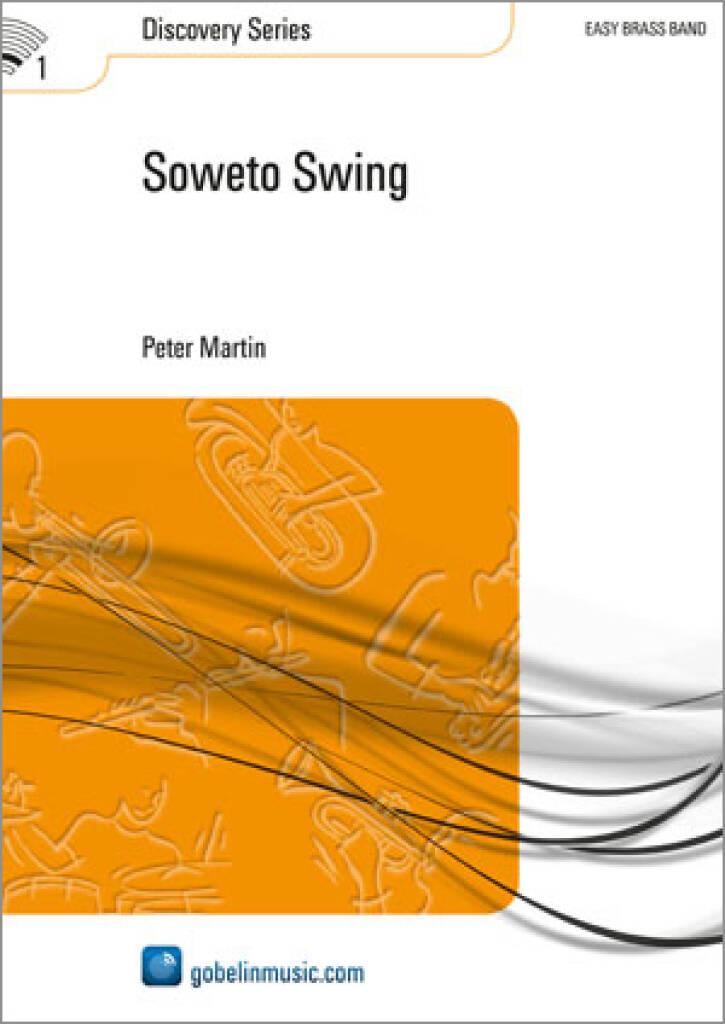
    Soweto Swing - Peter Martin

    The sparkling music from Soweto (South Africa) has a long history. The rhythmic dances of Kwela, the 'syncopated guitars' of Mbaqanga, the saxophones and trumpets with their supple African jazz sounds as well as the infectious and sometimes gripping choir singing. All these elements can be recognized when listening to the 'Soweto String Quartet', which in its turn inspired Peter Martin to write 'Soweto Swing'.

    Estimated dispatch 5-14 working days

     PDF View Music

  • £60.99

    Brazilian Bay Dance - Harm Evers

    This piece, by the Dutch composer Harm Evers, takes you and your musicians to the hot atmosphere of a Brazilian beach party. Everyone celebrates until late at night and dances to the cheerful sounds of Latin American music.

    Estimated dispatch 5-14 working days

     PDF View Music

  • £54.99

    The Dance Club - Peter Kleine Schaars

    After the success of Dance Starters, a follow-up in the Flexible 4 Series was a must. Again, Peter Kleine Schaars composed four dances, in which he, by means of refreshing chords, uncomplicated rhythms and simple melody lines, takes youthful musicians to The Dance Club. There, they learn the cha-cha-cha, the rumba, disco dancing and an actual Oriental belly dance. Great fun for everyone.

    Estimated dispatch 5-14 working days

     PDF View Music

  • £54.99

    Dance Starters - Peter Kleine Schaars

    Using themes based on semi-quavers Peter Kleine Schaars has carefully crafted these four contrasting dances for the De Haske Flexible 4 Series. Each of the parts take a turn to play the melody so no player feels left out. Take your players on a musical dance lesson in which you'll hear a paso doble, a slow waltz, a tango and a swinging jive as a closing. Fantastic fun for the smaller ensemble.

    Estimated dispatch 5-14 working days

     PDF View Music

  • £154.99

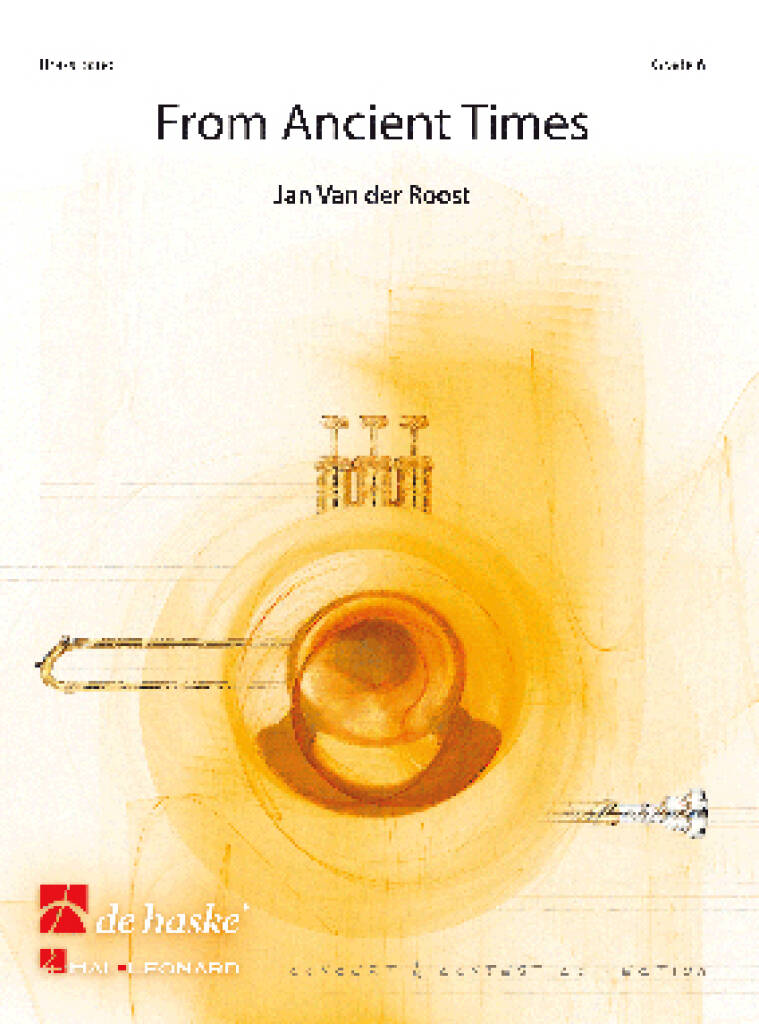
    From Ancient Times - Jan Van der Roost

    From Ancient Times is a major work for brass band, inspired largely by the music of the Franco-Flemish School of the Renaissance. Hints of Gregorian chant and middle age dances pay tribute to music from even earlier times. The foundation of this spectacular work rests on truly 'ancient times' while the tonal language is of a much more modern nature!

    Estimated dispatch 5-14 working days

     PDF View Music

  • £36.00

    Ungarsk dans - Trad. - Scott Rogers

    The piece's minor key melody and beat-afterbeat accompagniment give associations to other well-known dances from Hungary, like Czardas and Brahm's famous Hungarian Dances. A lively tempo is an important element to create the energy and excitement we have come to expect in these dances!

    Estimated dispatch 7-14 working days
  • £105.00

    Danceries (Set II) - Kenneth Hesketh

    Danceries Set II, arranged for brass band, was first commission by Keith Allen for the Birmingham Symphonic Winds. This second set of Danceries continues the format, established in the popular Danceries (Set I), of using tunes and dances from Playford's Dancing Master (17th century) to form the basis of an extended dancesuite. In this set, the melodies have become more abstracted and project only a distant echo of their original forms. As before, each movement is self-contained, colourful and direct, with its own distinct mood.The outer movements - Jennie's Bawbee and Peascod's Galliarda - share driving percussion with a military air. Tom Tinker's Toye and Heart's Ease (movements two and three) are both settings of original melodies. All movements are more extended than in the first set, with a freer use and approach to the material; melodies now occur in various keys and are supported by a greater variety of harmonic colouring. The result is a richer, even more exhilarating set of dances.

    In Stock: Estimated dispatch 1-3 working days
  • £72.00

    Norwegian Dance No. 2 - Edvard Grieg - Morten Wensberg

    Edvard Grieg composed his "Four Norwegian Dances, op. 35" during the summer of 1881. The second of these four dances is by far the most popular and recognizable. This short piece in ABA form has become a staple of Norwegian music and practically all Norwegians will immediately recognize this tune.

    Estimated dispatch 7-14 working days
  • £29.95

    Adam Zero, Suite from (Brass Band - Score only) - Bliss, Arthur - Childs, Robert

    Selected as the Section 2 test piece for the National Brass Band Championships of Great Britain 2025Following his ballet Checkmate, Bliss composed another score for the, by then, Sadler's Wells Ballet, Miracle in the Gorbals, which was choreographed by Robert Helpmann, to a scenario by Michael Benthall. Premired in 1944, the ballet made a considerable impact and was a box-office success. It was followed in turn by a further collaboration with Helpmann and Benthall, Adam Zero. This would serve Helpmann, in the eponymous role, as a vehicle in two respects: demonstrating his gifts as a dancer-actor and as a choreographer. First performed at the Royal Opera House, Covent Garden, on 8 April 1946, Adam Zero was conducted by Constant Lambert, the work's dedicatee. Bliss considered it 'his most varied and exciting ballet score'. Benthall provided a synopsis for the programme:There is a philosophy that life moves in an endless series of timeless cycles. As Nature passes through Spring, Summer, Autumn and Winter, so man is born, makes a success in his own particular sphere, loses his position to a younger generation, sees his world crumble before his eyes and only finds peace in death. This age-old story is told in terms of a Company creating a ballet and calling on the resources of the theatre to do so. Lighting, stage mechanism, dance conventions, musical forms and costumes and scenery of all periods are used to symbolize the world of 'Adam Zero'.Apart from Adam, as the Principal Dancer, other main roles included the Stage Director (representing Omnipotence), and Adam's Fates (Designer, Wardrobe Mistress, and Dresser). 'The Woman in this allegory', wrote Bliss, 'under the symbol of the Choreographer, was both the creator and destroyer of Adam: his first love, his wife, his mistress, and finally the figure of beneficent Death.' When the curtain rose, the 'audience saw the Covent Garden stage right back to the wall, completely empty except for the protagonists, 'the Company poised, still and expectant, as they await the birth of... Adam Zero.'Unfortunately, soon after the premire, Helpmann injured himself and had to withdraw from the remaining performances. Despite generally positive reviews, the ballet did not capture the imagination of audiences and, to Bliss's considerable disappointment, was not revived. Seventy years would elapse before its first major return to the stage, in 2016, performed by the ballet company of Stadttheater Bremerhaven with choreography by Sergei Vanaev.Bliss extracted a concert suite from the ballet, conducting its first performance with the City of Birmingham Symphony Orchestra on 28 October 1948. For his own suite, arranged for brass band in 2023, Dr Robert Childs chose three dances linked to the seasons, book-ending them with the ebullient 'Fanfare Overture' and 'Fanfare Coda'. After Adam has grown to manhood, his Fates clothe him in a costume synonymous with confident youth, appropriate for the virile, ardent 'Dance of Spring'. In the 'Approach of Autumn', Adam, now wearing a sombre costume, has grown older: his Fates have streaked grey in his hair and put lines on his face. But they had earlier raised Adam to the zenith of his power, and the 'Dance of Summer' depicts him in the prime of life, in music of sweeping grandeur. The 'Fanfare Coda' signals that the next cycle of life is about to begin.Duration: 10.30

    Estimated dispatch 7-14 working days
  • £19.65

    Adam Zero, Suite from (Brass Band - Study Score) - Bliss, Arthur - Childs, Robert

    Selected as the Section 2 test piece for the National Brass Band Championships of Great Britain 2025Following his ballet Checkmate, Bliss composed another score for the, by then, Sadler's Wells Ballet, Miracle in the Gorbals, which was choreographed by Robert Helpmann, to a scenario by Michael Benthall. Premired in 1944, the ballet made a considerable impact and was a box-office success. It was followed in turn by a further collaboration with Helpmann and Benthall, Adam Zero. This would serve Helpmann, in the eponymous role, as a vehicle in two respects: demonstrating his gifts as a dancer-actor and as a choreographer. First performed at the Royal Opera House, Covent Garden, on 8 April 1946, Adam Zero was conducted by Constant Lambert, the work's dedicatee. Bliss considered it 'his most varied and exciting ballet score'. Benthall provided a synopsis for the programme:There is a philosophy that life moves in an endless series of timeless cycles. As Nature passes through Spring, Summer, Autumn and Winter, so man is born, makes a success in his own particular sphere, loses his position to a younger generation, sees his world crumble before his eyes and only finds peace in death. This age-old story is told in terms of a Company creating a ballet and calling on the resources of the theatre to do so. Lighting, stage mechanism, dance conventions, musical forms and costumes and scenery of all periods are used to symbolize the world of 'Adam Zero'.Apart from Adam, as the Principal Dancer, other main roles included the Stage Director (representing Omnipotence), and Adam's Fates (Designer, Wardrobe Mistress, and Dresser). 'The Woman in this allegory', wrote Bliss, 'under the symbol of the Choreographer, was both the creator and destroyer of Adam: his first love, his wife, his mistress, and finally the figure of beneficent Death.' When the curtain rose, the 'audience saw the Covent Garden stage right back to the wall, completely empty except for the protagonists, 'the Company poised, still and expectant, as they await the birth of... Adam Zero.'Unfortunately, soon after the premire, Helpmann injured himself and had to withdraw from the remaining performances. Despite generally positive reviews, the ballet did not capture the imagination of audiences and, to Bliss's considerable disappointment, was not revived. Seventy years would elapse before its first major return to the stage, in 2016, performed by the ballet company of Stadttheater Bremerhaven with choreography by Sergei Vanaev.Bliss extracted a concert suite from the ballet, conducting its first performance with the City of Birmingham Symphony Orchestra on 28 October 1948. For his own suite, arranged for brass band in 2023, Dr Robert Childs chose three dances linked to the seasons, book-ending them with the ebullient 'Fanfare Overture' and 'Fanfare Coda'. After Adam has grown to manhood, his Fates clothe him in a costume synonymous with confident youth, appropriate for the virile, ardent 'Dance of Spring'. In the 'Approach of Autumn', Adam, now wearing a sombre costume, has grown older: his Fates have streaked grey in his hair and put lines on his face. But they had earlier raised Adam to the zenith of his power, and the 'Dance of Summer' depicts him in the prime of life, in music of sweeping grandeur. The 'Fanfare Coda' signals that the next cycle of life is about to begin.Duration: 10.30

    Estimated dispatch 7-14 working days