
Results
-
 £72.99
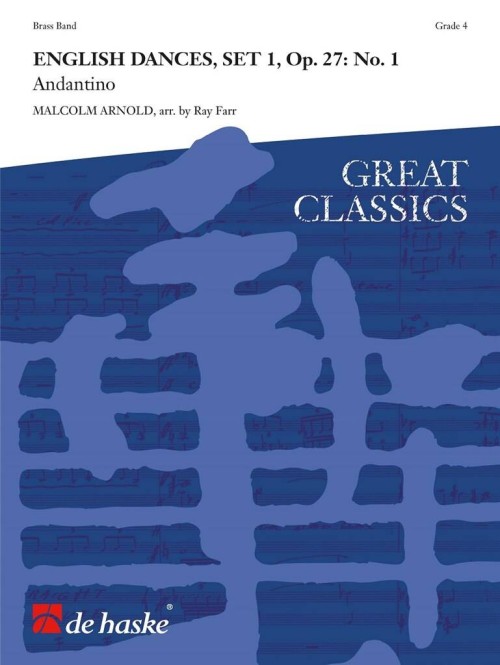
English Dances, Set 1, Op.27: No.1, Andantino (Brass Band - Score and Parts) - Arnold, Malcolm - Farr, Ray
English Dances, Set I, opus 27, is a light classic composition that was written for orchestra by the British composer Malcolm Arnold in 1950. The set contains four dances that continue without pause: the individual movements are indicated by the tempo markings. The work came about at the request of Bernard de Nevers, at the time the head of publisher Alfred Lengnick & Co., who asked Arnold to write a suite of dances as an English counterpart to Dvovk's Slavonic Dances and Bartk's Romanian Folk Dances. The premire took place in the spring of 1951, played by the London Philharmonic Orchestra, conducted by Sir Adrian Boult. Following the success of the first set, DeNevers asked the composer to write a second one, which Arnold completed the next year (Op. 33). The Andantino from the first set has been skilfully arranged and orchestrated for brass band by Ray Farr.Duration: 2.45
Estimated dispatch 7-14 working days
-
 £120.00
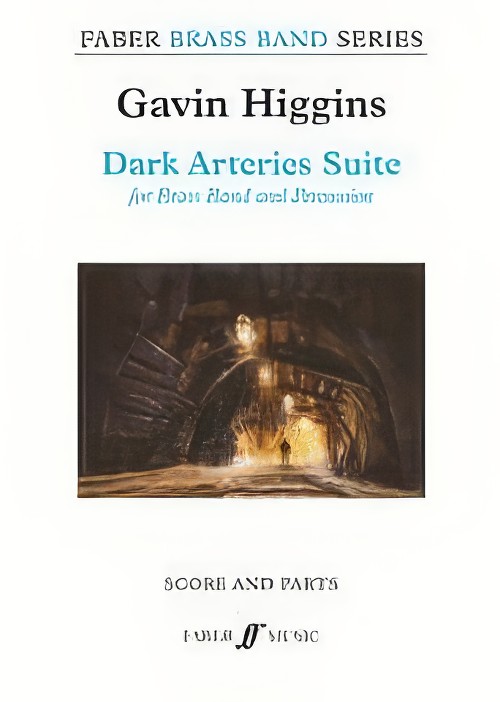
Dark Arteries Suite (Brass Band - Score and Parts) - Higgins, Gavin
Dark Arteries was commissioned by Rambert Dance Company and first performed in May 2015 with the Tredegar Town Band sharing the stage with Rambert dancers. Dark Arteries is a personal and at times highly wrought response to the Miners Strike and its aftermath. It is in three movements, the first and last are expansive, with widely contrasting sound worlds, from dark, brooding melodies and the haunting sounds of solo flugel horn to wild syncopations on cornets, suggestive of an imposing, but often bleak mining landscape. Suitable for 1st Section Bands and above. Duration: 16.00
Estimated dispatch 7-14 working days
-
 £18.99
GRACES OF LOVE (Le Gratie d'Amore) (Brass Band Extra Score) - Waespi, Oliver
2015 National Championships Finals Testpiece - Third Section - Extra Score only. The Graces of Love (Le Gratie d'Amore) is the title of a book published in 1602 by Cesare Negri, the famous dance master of the Milan court in the Renaissance. It contains numerous dance tunes and precise descriptions of courtly dances. It also includes the tune Il bianco fior (The White Flower) on which the first movement of the present piece is based. A vigorous dance in three-four, it leads to an acceleration and a sudden shift to an even meter towards the end. The second movement, calm and contemplative in character, features the tune Vaghe bellezze ... (Veiled Beauty ...). Widely spaced melodic parts surround two solos during which the tune is varied and developed. Finally, the third movement contains a saltarello with a hypnotic rhythm, ending the work with flair and gusto. Duration: 11:30
Estimated dispatch 7-14 working days
-
£118.99
GRACES OF LOVE (Le Gratie d'Amore) (Brass Band Set) - Waespi, Oliver
2015 National Championships Finals Testpiece - Third Section. The Graces of Love (Le Gratie d'Amore) is the title of a book published in 1602 by Cesare Negri, the famous dance master of the Milan court in the Renaissance. It contains numerous dance tunes and precise descriptions of courtly dances. It also includes the tune Il bianco fior (The White Flower) on which the first movement of the present piece is based. A vigorous dance in three-four, it leads to an acceleration and a sudden shift to an even meter towards the end. The second movement, calm and contemplative in character, features the tune Vaghe bellezze ... (Veiled Beauty ...). Widely spaced melodic parts surround two solos during which the tune is varied and developed. Finally, the third movement contains a saltarello with a hypnotic rhythm, ending the work with flair and gusto. Duration: 11:30
Estimated dispatch 7-14 working days
-
 £30.00
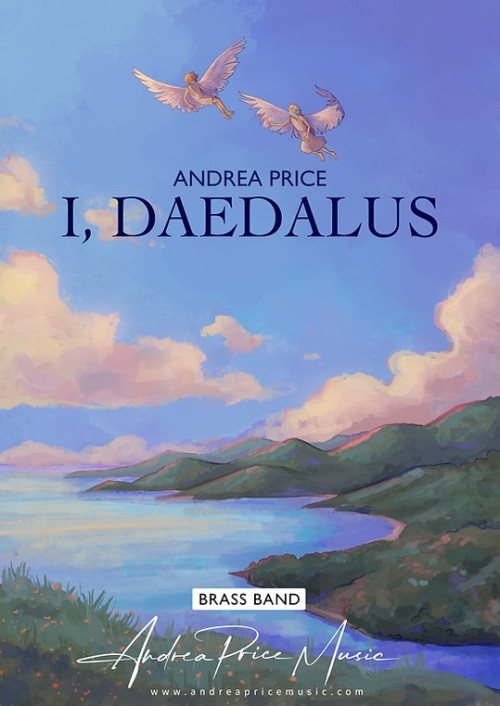
I, Daedalus (Brass Band - Score only) - Price, Andrea
This title is now digital download only - November 2025 Daedalus (pronounced day-da-luss) is a prominent figure in Greek mythology, renowned for his exceptional skills as an inventor, craftsman, and architect. The story of Daedalus symbolises human ingenuity, and epitomises the complex relationship between human creativity and its consequences. His myths explore themes of innovation, pride, and the perilous balance between human ambition and natural limits. After designing the labyrinth for King Minos, Daedalus and his son, Icarus, were imprisoned in a tower in Crete. Daedalus fashioned wings from feathers and wax, and father and son set out on their ill-fated escape. The music is through-composed, with a short introduction leading to five main sections:I - Inventor in the TowerII - Father and SonIII - Flight and FallIV - LamentV - Seeker of KnowledgeDuration: c. 10 minutes
Estimated dispatch 7-14 working days
-
 £40.00
Symphonic Dance No.3 (Brass Band - Score and Parts) - Rachmaninoff, Sergei - Littlemore, Phillip
Completed in 1940, the set of?Symphonic Dances?was Sergei Rachmaninov's last composition. The work is fully representative of the composer's late style with its curious, shifting harmonies, the almost Prokofiev-like grotesquerie of the outer movements and the focus on individual instrumental tone colours throughout.?Rachmaninov composed the Symphonic Dances four years after his Third Symphony, mostly at the Honeyman Estate, 'Orchard Point', in Centerport, New York, overlooking Long Island Sound. The three-movement work's original name was Fantastic Dances, with movement titles of 'Noon', 'Twilight' and 'Midnight'. When the composer wrote to the conductor Eugene Ormandy in late August, he said that the piece was finished and needed only to be orchestrated, but the manuscript for the full score actually bears completion dates of September and October 1940. It was premiered by Ormandy and the Philadelphia Orchestra, to whom it is dedicated, on 3rd January, 1941. This arrangement is of the last dance and is a kind of struggle between the?Dies Iraetheme, representing Death, and a quotation from Rachmaninov's own?Vespers?(also known as the All-night Vigil, 1915), representing Resurrection. The Resurrection theme proves victorious in the end as the composer actually wrote the word 'Hallelujah' at the relevant place the score (one bar after Fig. 16 in this arrangement).?Duration: 3:45
Estimated dispatch 7-14 working days
-
£75.00
I, Daedalus (Brass Band - Score and Parts) - Price, Andrea
Unfortunately this title is now only available as a digital downloadDaedalus (pronounced day-da-luss) is a prominent figure in Greek mythology, renowned for his exceptional skills as an inventor, craftsman, and architect. The story of Daedalus symbolises human ingenuity, and epitomises the complex relationship between human creativity and its consequences. His myths explore themes of innovation, pride, and the perilous balance between human ambition and natural limits. After designing the labyrinth for King Minos, Daedalus and his son, Icarus, were imprisoned in a tower in Crete. Daedalus fashioned wings from feathers and wax, and father and son set out on their ill-fated escape. The music is through-composed, with a short introduction leading to five main sections:I - Inventor in the TowerII - Father and SonIII - Flight and FallIV - LamentV - Seeker of KnowledgeDuration: c. 10 minutes
Estimated dispatch 7-14 working days
-
 £48.00
Tientos y Danzas (Brass Band - Score and Parts) - Wood, Gareth
Tientos y Danzas is a suite in four movements and was written especially for Superbrass. It is not literally descriptive, but conjures up a breezy, festive atmosphere. The title "Tientos" stems from the fact that a lot of the brass writing is reminiscent of virtuosic Renaissance keyboard finger-work (a "Tiento" is the Spanish equivalent of a toccata). Only later did we discover that the word is also the name of a style of flamenco dancing, which links nicely with Danzas (dances). The first movement is an extended fanfare, with military rhythms on the tenor drums and dramatic cornet and horn calls. Next comes a witty waltz featuring the horn. The music builds in complexity; the main horn theme returns before a playful coda. The following Andante makes effective use of the mutes, both in the haunting opening "pyramid" chords, and in the elaborate, recurrent cornet duets; the two cornets have the last word. After a couple of false starts, the finale sets off at a cracking pace, with dislocated accents creating an irregular rhythmic pulse. There are opportunities for every instrument to shine (metaphorically) and the music gets even faster for a thrilling conclusion. Duration: 10.30. Suitable for 1st Section Bands and above.
Estimated dispatch 7-14 working days
-
 £69.95
Dance Music (Brass Band - Score and Parts) - Downie, Kenneth
This music takes the form of a suite in four movements. The ever-changing spirit of the dance is reflected in the contrasting styles of each movement, ranging from the gentle lullaby to more boisterous and lively moods. Careful listeners will identify references to dance-associated tunes in each movement, concluding with the Christmas carol, 'Tomorrow shall be my dancing day'. The music is planned to be versatile and any one movement could be performed as a stand-alone item if required.
Estimated dispatch 7-14 working days
-
£34.95
Dance Music (Brass Band - Score only) - Downie, Kenneth
This music takes the form of a suite in four movements. The ever-changing spirit of the dance is reflected in the contrasting styles of each movement, ranging from the gentle lullaby to more boisterous and lively moods. Careful listeners will identify references to dance-associated tunes in each movement, concluding with the Christmas carol, 'Tomorrow shall be my dancing day'. The music is planned to be versatile and any one movement could be performed as a stand-alone item if required.
Estimated dispatch 7-14 working days
 View Music