
Results
-
 £110.40
Three Inventions - Pi Scheffer
Dr. J (Pi) Scheffer was the leader of the famous Dutch AVRO Radio Big Band 'The Skymasters' in the 50's, as well as also being an English teacher. He also had a huge success with his composition for wind band 'Three Inventions', not only in Europe but also in the USA. At the time of publication (1971) there was no promotion with sound sample of this work, so for this reason now Molenaar Edition has a complete new score and parts available in their 'Creative Compositions' (c) series. The work is in the movements. 'Flippant', 'Whimsical' and 'Sorta Mixed Up'. A recent edition of the American magazine publication 'The School Musician' even compared Scheffer with Leonard Bernstein.
Estimated dispatch 5-14 working days
-
 £56.90
Samba Sensation - Kees Vlak
A solo for alto saxophone or flugelhorn. Recommended for beginners. A good percussion performance will create a certain tension. The solo part does not require a developed technique, but rather a good sound.
Estimated dispatch 5-14 working days
-
 £116.40
Decennium - Eric Swiggers
'Decennium' was composed in 2003 as a commission by the municipality of Berheze for its tenth anniversary. The composition describes the history of this town in the Province of Brabant, consisting of 6 different villages: Heesch, Heeswijk, Dinther, Nistelrode, Loosbroek and Vorstenbosch. The composition starts with a slow introduction, Adagio Misterioso, suggesting the atmosphere in long-ago days when the area consisted mainly of swamps, meres and low woods. (The word 'Bern' is a synonym of 'Born' meaning source or water, whereas 'Hese' is derived from 'Haisjo' meaning brushwood ). Above the dark sounds we hear far away trumpet signals announcing the Middle Ages. After a piercing crescendo, we hear the full sound of festive trumpets. A medieval dance, as was to be heard in the Heeswijk castle, follows. This dance gets a more and more stirring character and finally turns into a merry popular dance ending with a burst of laughter reproduced by descending scales with the muted trombones and trumpets. A slow transition with a quotation from a Gregorian plainsong (Domine Deus) and church bell ringing, referring to the Abbey of Berne, brings us to a romantic Larghetto. This part describes the quiet rural life in a beautiful natural surrounding. The last dying note contrasts with the threatening ostinato, referring to the rise of the industrialization, which provoked quite some resistance with the local people. Once more we hear the 'Domine Deus' but much more powerful this time. When the resistance calms down, the work concludes with an Alla Marcia. The first notes of the main theme could be heard all through the composition and now we hear the complete main theme again. The new town is born. A festive conclusion refers both to the tenth anniversary and the optimism and confidence as to the future.
Estimated dispatch 5-14 working days
-
 £52.70
Casta Diva - Vincenzo Bellini - Willy Hautvast
Casta Diva is possibly the most famous aria by Bellini. This is Norma's prayer to the moon goddess, and shows Bellini's high craftsmanship with melodies. The most famous version of this aria, was sung by Maria Callas in the 1950's, and a recording of this is still available. This is possibly the first arrangement of this tune for wind band, and will no doubt make a good impression.
Estimated dispatch 5-14 working days
-
 £88.10
Bolero De Concert - Louis Jaime Alfred Lefebure-Wely - Feike van Tuinen
After having heard this piece for the first time at an organ recital, Feike van Tuinen was convinced that an orchestral version would be fantastic and would work very well. This piece has a stimulating character and the use of castanets will create a Spanish atmosphere at your next concert. Strongly recommended!
Estimated dispatch 5-14 working days
-
 £69.90
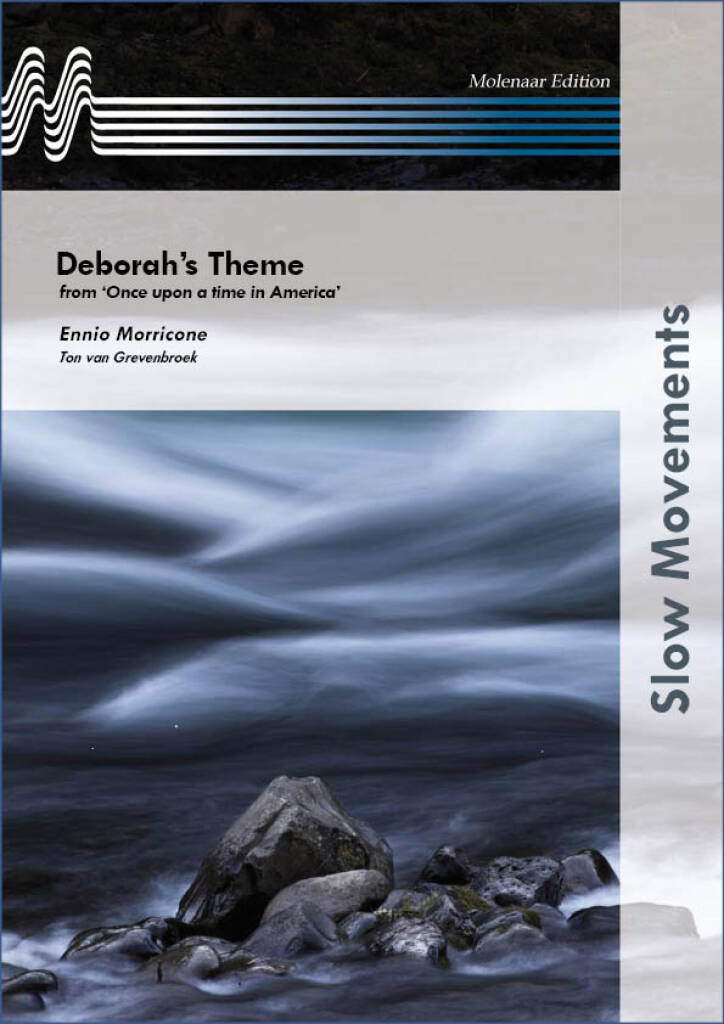
Deborah's Theme - Ennio Morricone - Ton van Grevenbroek
Yet another classic from master film composer Ennio Morricone. This is an arrangement of the title song from the film "Once Upon A Time in America". This film is an Italian-American crime film from 1984 directed by Sergio Leone. This very playable arrangement is from the pen of Ton van Grevenbroek, and is of medium difficulty.
Estimated dispatch 5-14 working days
-
 £69.60
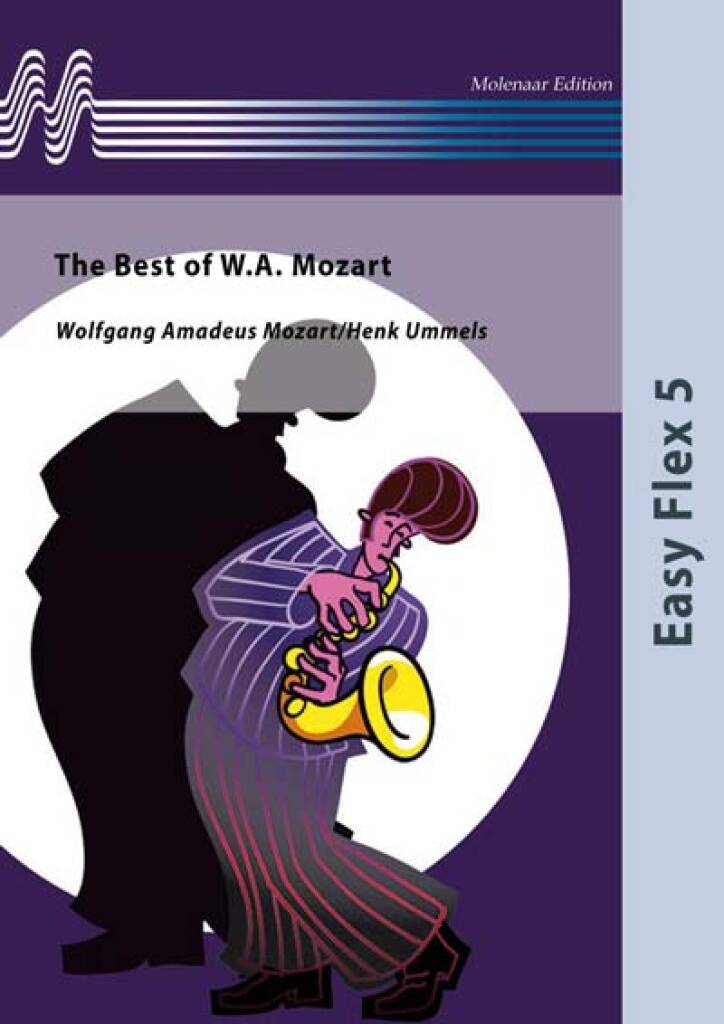
The Best of W.A. Mozart - Wolfgang Amadeus Mozart - Henk Ummels
Now the masterful music of the most influential composer of all time, Wolfgang Amadeus Mozart, is also available for your student orchestra. This arrangement includes highlights from the classics 'The Magic Flute', 'Symphony #40', 'Concerto for Clarinet', 'Elvira Madigan' and 'Eine Kleine Nachtmusik'. This work was written for Molenaar's 'Flexible Winds' Series. It uses a 5 part flexible setting, whereby any student orchestra can quickly create a full, rich sound.
Estimated dispatch 5-14 working days
-
 £112.90
Validus Deus - Dean Jones
With Validus Deus ('Almighty God') that is built on the contemporary Christian hymn 'How Great is our God', Dean Jones has created a work of substance. At The Great American Brassband Festival 2012 this piece got a standing ovation!
Estimated dispatch 5-14 working days
-
 £45.60
Adventure Island - Andrew Pearce
A family enters the gates into a magical theme park with exciting rides and attractions. The swashbuckling Pirate theme is up-tempo and memorable with plenty of excitement for the brass and percussion sections, a perfect opener for any concert! For intermediate bands (level C).Also available with virtual conductor video on YouTube to create a virtual orchestra!! Video to be viewed here:copy this link into your browser:Https://www.youtube.com/watch?v=dsg04rZwmqU
Estimated dispatch 5-14 working days
-
 £95.50
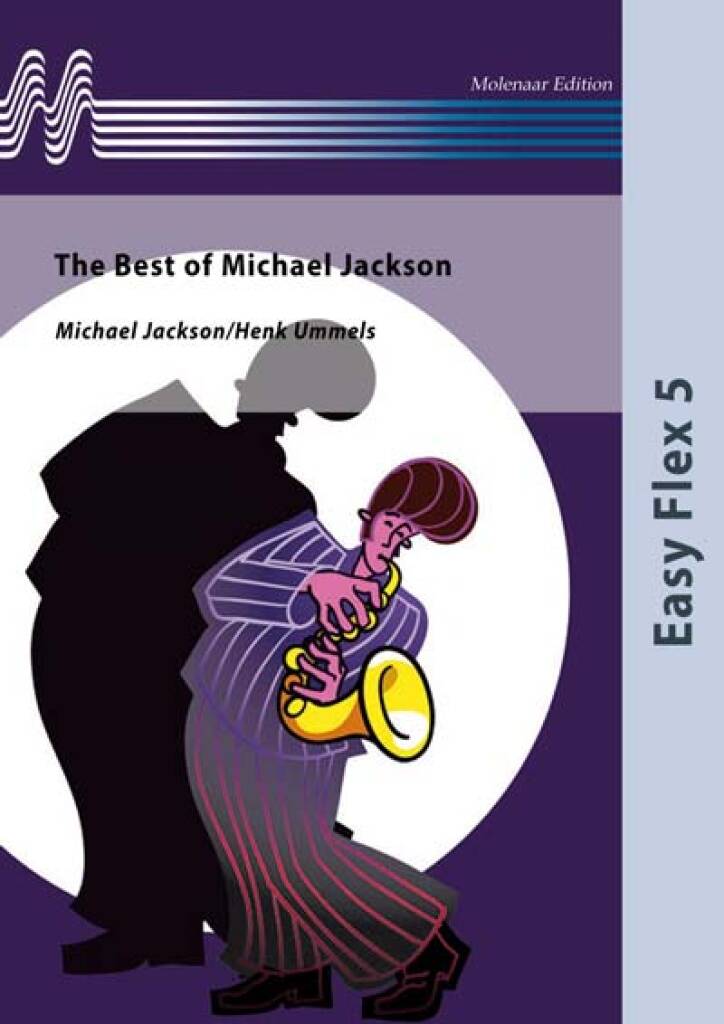
The Best of Michael Jackson - Michael Jackson - Henk Ummels
By popular demand, there is now in The Best Of series for 5 part flexible setting, a selection of some of the best songs of Michael Jackson. Henk Ummels has selected and made a balanced and very playable selection out of Jackson's wide repertoire. The Best of Michael Jackson includes the smash hits; Beat it, Smooth Criminal, Heal The World, Another Part Of Me and Don't Stop 'till You Get Enough.
Estimated dispatch 5-14 working days
 View Music