
Results
-
 £29.88
March - His Royal Banner (Brass Band) Jonathan Mead
This upbeat, foot-tapping march by Welsh composer Jonathan Mead features the two well known Welsh tunes of Aberystwyth and God Bless The Prince of Wales. Aberystwyth is set as a big bold bass solo and careful attention will need to be paid to make sure that it sounds clean and together. God Bless The Prince of Wales first appears as a traditional hymn tune, before returning in a more vibrant, lively style, with florid scalic passages for the solo cornets and euphoniums. The march was written with St David's Day in mind, although will be an appropriate addition to concert programme throughout the year as either an opener or finisher. Difficulty Level: 3rd Section + Sheet music available from: UK - www.brassband.co.uk USA - www.solidbrassmusic.com Instrumentation: Soprano Cornet Eb Solo Cornet Bb Repiano Cornet Bb 2nd Cornet Bb 3rd Cornet Bb Flugel Horn Bb Solo Horn Eb 1st Horn Eb 2nd Horn Eb 1st Baritone Bb 2nd Baritone Bb 1st Trombone Bb 2nd Trombone Bb Bass Trombone Euphonium Bb Bass Eb Bass Bb Percussion Clash Cymbals Glockenspiel
In Stock: Estimated dispatch 1-3 working days
-
 £22.41
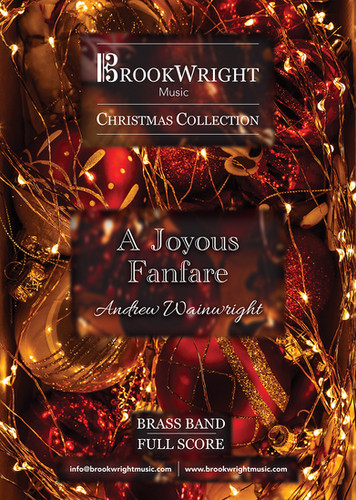
A Joyous Fanfare (Brass Band) Andrew Wainwright
A Joyous Fanfare is a short majestic concert prelude that captures the essence of celebration and festive spirit. Derived from the original Fanfare of Joy, commissioned by the Burbage Band (Buxton) and conductor Steven Critchlow in 2017, this piece takes inspiration from the beloved carol Joy to the World. Duration: 1.20 minutes Difficulty Level: 3rd Section + This PDF download includes the full score and parts. Sheet music available at www.brassband.co.uk (UK) or https://satradecentral.org (USA) Instrumentation: Soprano Cornet Eb Solo Cornet 1&2 Bb Solo Cornet 3&4 Bb Repiano Cornet Bb 2nd Cornet Bb 3rd Cornet Bb Flugel Horn Bb Solo Horn Eb 1st Horn Eb 2nd Horn Eb 1st Baritone Bb 2nd Baritone Bb 1st Trombone Bb 2nd Trombone Bb Bass Trombone Euphonium Bb Bass Eb Bass Bb Timpani Snare Cymbals
In Stock: Estimated dispatch 1-3 working days
-
 £33.62
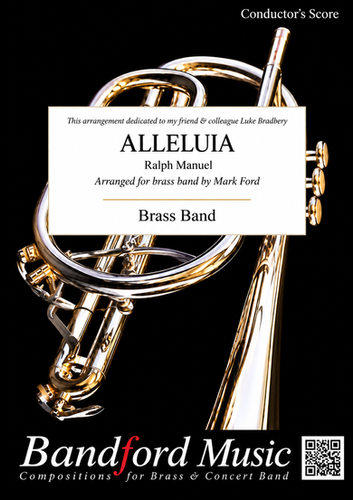
Alleluia (Brass Band) Ralph Manuel arr. Mark Ford
In composing Alleluia, Ralph Manuel created a masterwork for a capella choir. Through its melodic simplicity and warm harmonic textures, it beautifully expresses the sentiments of "Alleluia," its only word of text. The numerous timbral possibilities of brass and percussion provides an exciting palette of sound for this arrangement. This arrangement for brass band is from the pen of Mark Ford in a delightful setting sure to be popular with audiences. To view a rolling score video of the work please visit www.youtube.com/watch?v=Cg4MDGVBpns Duration: 5.00 minutes Difficulty Level: 3rd Section + This PDF download includes the full score and parts. Sheet music available at www.brassband.co.uk (UK) or https://satradecentral.org (USA) Instrumentation: Soprano Cornet Eb Solo Cornet 1&2 Bb Solo Cornet 3&4 Bb Repiano Cornet Bb 2nd Cornet Bb 3rd Cornet Bb Flugel Horn Bb Solo Horn Eb 1st Horn Eb 2nd Horn Eb 1st Baritone Bb 2nd Baritone Bb 1st Trombone Bb 2nd Trombone Bb Bass Trombone Euphonium Bb Bass Eb Bass Bb Timpani Percussion 1-2 Tuned Percussion
In Stock: Estimated dispatch 1-3 working days
-
 £41.09
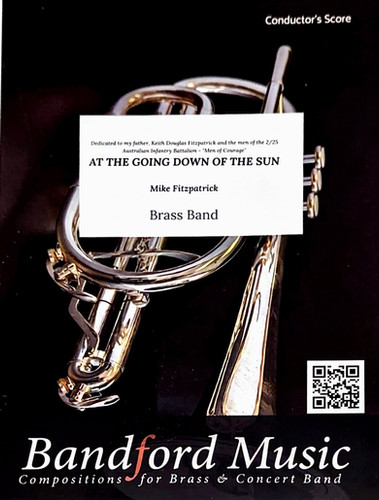
At the Going Down of the Sun (Brass Band) Mike Fitzpatrick
At The Going Down Of The Sun is a deeply moving musical tribute dedicated to the courage, resilience, and ultimate sacrifice of those who have defended the nation of Australia. Inspired by the heroic legacy of the 2/25th Battalion and their storied defense of the Kokoda Track during World War II, this composition serves as a solemn reminder of the immense gratitude owed to its fallen heroes. This piece is born from a legacy of service. It was composed in honor of Keith Fitzpatrick, who enlisted in the AIF on November 28, 1941. Keith served two tours in New Guinea, spending 359 days on the treacherous Kokoda Track. Keith Fitzpatrick lived to celebrate his 100th birthday in 2023, leaving behind a profound legacy through his wife of 67 years, Valda, and three generations of descendants. At The Going Down Of The Sun captures this spirit of endurance and devotion. It is an ideal addition to any program focused on: Anzac Day & Remembrance Day services Military Commemorations Historical Tributes To view a rolling score video of the work please visit www.youtube.com/watch?v=ydO9PKOKTpk Duration: 7.00 minutes Difficulty Level: 3rd Section + This PDF download includes the full score and parts. Sheet music available at www.brassband.co.uk (UK) or https://satradecentral.org (USA) Instrumentation: Soprano Cornet Eb Solo Cornet 1&2 Bb Solo Cornet 3&4 Bb Repiano Cornet Bb 2nd Cornet Bb 3rd Cornet Bb Flugel Horn Bb Solo Horn Eb 1st Horn Eb 2nd Horn Eb 1st Baritone Bb 2nd Baritone Bb 1st Trombone Bb 2nd Trombone Bb Bass Trombone Euphonium Bb Bass Eb Bass Bb Percussion Tubular Bells
In Stock: Estimated dispatch 1-3 working days
-
 £29.88
Beaufort Fanfare (Brass Band) Friedrich Gattermann
Beaufort Fanfare, by German composer Friedrich Gattermann, is a dynamic and vibrant musical work inspired by the Beaufort scale, a system for estimating wind speeds. Originally composed for brass ensemble and percussion, it was created to showcase Orchestral Tools' Beaufort Brass sample library, recorded at the iconic AIR Studios in London. Here it has been set for brass band. A central element of Beaufort Fanfare is its exploration of musical density. The piece begins with a single motif and gradually builds in complexity and richness, reflecting the increasing strength of the wind. As it progresses, the music intensifies, with the development of density playing a crucial role in conveying the evolving character of the elements. Through intricate brass harmonies and rhythmic drive, Beaufort Fanfare captures both the awe-inspiring beauty and raw power of nature. More than just an auditory experience, this composition takes the listener on a journey through the elements, celebrating the force of wind in all its forms. To view a rolling score video of the work please visit www.youtube.com/watch?v=vdiIIERMSDY Duration: 2.15 minutes approx. Difficulty Level: 1st Section + PDF download includes parts and score. Sheet music available from www.brassband.co.uk Instrumentation: Soprano Cornet Eb Solo Cornet 1-3 Bb Solo Cornet 2-4 Bb Repiano Cornet Bb 2nd Cornet Bb 3rd Cornet Bb Flugel Horn Bb Solo Horn Eb 1st Horn Eb 2nd Horn Eb 1st Baritone Bb 2nd Baritone Bb 1st Trombone Bb 2nd Trombone Bb Bass Trombone Euphonium Bb Bass Eb Bass BbTimpani Percussion 1-3
In Stock: Estimated dispatch 1-3 working days
-
 £59.77
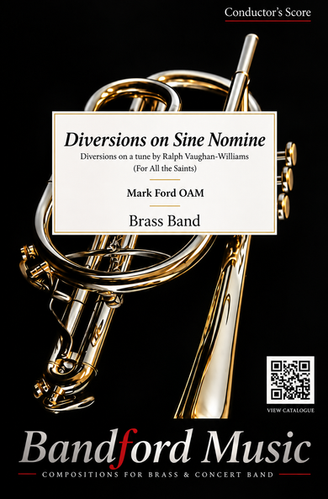
Diversions on Sine Nomine (Brass Band) Vaughan Williams arr. Mark Ford
Diversions on Sine Nomine is a substantial concert work for brass band, derived entirely from Ralph Vaughan Williams' celebrated hymn tune For All the Saints. Rather than a conventional set of variations, the work unfolds as a sequence of contrasting diversions, each reimagining aspects of the melody's character, harmony, and rhythmic potential. The opening establishes the noble and timeless quality of Sine Nomine before leading into episodes that explore a wide expressive range - from reflective and lyrical writing to passages of rhythmic energy and grandeur. Fragments of the hymn are continually transformed and re-contextualised, allowing the music to progress with clarity and purpose while maintaining a strong sense of structural coherence. Scored specifically with 3rd and 4th Section bands in mind, the work combines musical substance with practical playability. Idiomatic brass writing, transparent textures, and effective use of traditional band colours ensure musical impact without excessive technical demand. The final section brings the work to a broad and affirmative conclusion, reaffirming the dignity and enduring strength of Vaughan Williams' original melody. To view a rolling score video of the work please visit www.youtube.com/watch?v=Sth69ate-Cs Duration: 11.00 minutes Difficulty Level: 4th Section + This PDF download includes the full score and parts. Sheet music available at www.brassband.co.uk (UK) or https://satradecentral.org(USA) Instrumentation: Soprano Cornet Eb Solo Cornet 1&2 Bb Solo Cornet 3&4 Bb Repiano Cornet Bb 2nd Cornet Bb 3rd Cornet Bb Flugel Horn Bb Solo Horn Eb 1st Horn Eb 2nd Horn Eb 1st Baritone Bb 2nd Baritone Bb 1st Trombone Bb 2nd Trombone Bb Bass Trombone Euphonium Bb Bass Eb Bass Bb Timpani Percussion 1-2 Tuned Percussion
In Stock: Estimated dispatch 1-3 working days
-
 £37.35
March - The Stewards (Brass Band) Dave Collins
This rousing march by Dave Collins is a dedication to the remarkable group of volunteers - the unsung heroes - who, each year, organise and run the iconic Whit Friday brass band contests. They ensure that the heritage and tradition of this uniquely special event is not lost, preserving its ongoing and continued success. BrookWright is offering a 25% discount for bands who perform this march at the Whit Friday Contest. To claim the discount, please send a scan or photo of your band's adjudication card after the event to [email protected] Whit Friday, 'The Greatest Free Show on Earth', is synonymous with the brass band tradition. Its importance in the annual calendar to the players, supporters and spectators is vital to the Tameside and Saddleworth community. However, this mighty contest simply could not take place without the willing volunteers who dedicate their services year after year to keep this unique banding tradition going.Traditionally, on Whit Friday Morning, Hail! Smiling Morn (Roud #1346), also known as Praise Ye the Lord, is heard across the Saddleworth villages. This is where I have taken my inspiration, and the entire march is built upon quotes and references of this joyous work.The Stewards has many traditional elements drawing on the vast repertory of well-known marches, as well as some untraditional techniques and harmonies. The work aims to be a good test for the bands in its performance, but also fun and entertaining for the players and audiences alike - featuring a cheeky cornet solo, thunderous bass feature, and lyrical euphonium melodies, before concluding with a triumphant quote from the original source material.To you all who perform or hear this work, the stewards of the brass band tradition, HAIL! To view a follow-the-score video featuring Tredegar Town Band performing the work please visit www.youtube.com/watch?v=-CNgqvc534s PDF download includes score and parts, and comes in both A4 size and A5 landscape parts for marching purposes. A single page A5 conductor reduced score is also included. Sheet music available from: UK - www.brassband.co.uk USA - www.solidbrassmusic.com Difficulty Level: 3rd Section + Instrumentation: Soprano Cornet Eb Solo Cornet Bb Repiano Cornet Bb 2nd Cornet Bb 3rd Cornet Bb Flugel Horn Bb Solo Horn Eb 1st Horn Eb 2nd Horn Eb 1st Baritone Bb 2nd Baritone Bb 1st Trombone Bb 2nd Trombone Bb Bass Trombone Euphonium Bb Bass Eb Bass Bb Cymbals Side Drum Bass Drum
In Stock: Estimated dispatch 1-3 working days
-
 £37.35
Nocturne for Brass Band & Percussion: The Lady with the Lamp - Andy Wareham
VIEW SCORE PDF Nocturne for Brass Band & Percussion: The Lady with the Lamp was composed for the BrookWright International Brass Band Composer Competition 2020, the work later going on to be a finalist in the competition. The music celebrates the life and achievements of Florence Nightingale on the 200th anniversary of her birth. The work is structured in ternary form and is designed to be an engaging concert piece, accessible to both lower and upper section bands. Minimal percussion has been used and ossia passages have been added to accommodate all levels. The music imagines Miss Nightingale walking the wards at night with the contrasting sections representing her devotion to the care of others, the struggles and sacrifice of her service, and the lasting effect of her renowned achievements that are still felt to this day. Sheet music available from: UK - www.brassband.co.uk USA - www.solidbrassmusic.com Difficulty Level: 2nd Section + Instrumentation: Soprano Cornet Eb Solo Cornet 1&2 Bb Solo Cornet 3&4 Bb Repiano Cornet Bb 2nd Cornet Bb 3rd Cornet Bb Flugel Horn Bb Solo Horn Eb 1st Horn Eb 2nd Horn Eb 1st Baritone Bb 2nd Baritone Bb 1st Trombone Bb 2nd Trombone Bb Bass Trombone Euphonium 1&2 Bb Bass Eb Bass Bb Timpani Percussion 1-2
In Stock: Estimated dispatch 1-3 working days
-
 £33.62
Je te veux (Brass Band) Satie arr. Rob Bushnell
Je te veux, or I Want You, is a valse chantee (sung waltz) by the French composer Erik Satie, with lyrics by Henry Pacory. It was written for Paulette Darty, who first sang it in 1903 at La Scala, Paris, with Satie accompanying. There are various versions that Satie produced, the original for piano and voice, a version for brass 'orchestra', for full orchestra (where a trio section was added), and a version for solo piano (but including the new trio section). This arrangement is for the UK-style brass band, with alternative parts for horns in F and bass-clef lower brass, and is of the longer version (with the trio section). As a result, it lends itself to being performed in a various of ways, with the ensemble has the option of selecting the part of it compound ternary form to play: (A-B-A)(C-D-C)(A-B-A). A recording of the original composition can be found here: www.youtube.com/watch?v=FA3JJdmwJU8 Difficulty Level: 4th Section + Duration: 4 or 5 minutes (depending on tempo and without any cuts) PDF download includes parts and score. Sheet music available at www.brassband.co.uk (UK) or https://satradecentral.org (USA) Instrumentation: Soprano Cornet Eb Solo Cornet Bb Repiano Cornet Bb 2nd Cornet Bb 3rd Cornet Bb Flugel Horn Bb Solo Horn Eb 1st Horn Eb 2nd Horn Eb 1st Baritone Bb 2nd Baritone Bb 1st Trombone Bb 2nd Trombone Bb Bass Trombone Euphonium Bb Bass Eb Bass Bb Timpani Drum Kit Auxiliary Percussion (Glockenspiel, Cymbal & Triangle)
In Stock: Estimated dispatch 1-3 working days
-
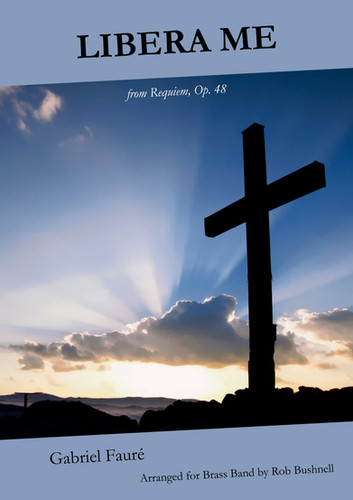 £33.62
Libera Me from 'Requiem' (Brass Band) Faure arr. Rob Bushnell
Composed between 1887 and 1890, Gabriel Faure's Requiem is not only one of his best-known works but one of the most popular piece of choral music in the Classical repertoire, coming 23rd in the Classic FM's Hall of Fame 2024. Believed to be a tribute to his father (who died in 1885), Faure himself said "My Requiem wasn't written for anything - for pleasure, if I may call it that!" It started life as a five-movement work but was later expanded to be the final seven-movement work we know today. The first version (which Faure called "un petit Requiem") was first performed on 16 January 1888, with Faure conducting, a second version premiered on 21 January 1893 before the final version (reworked for full orchestra) was played on 12 July 1900; the Requiem was performed at the composer's own funeral in 1924.The Libera Me, or Deliver Me, was actually written in 1877 and is the sixth part of the Requiem.Faure once said of the work, "Everything I managed to entertain by way of religious illusion I put into my Requiem, which moreover is dominated from beginning to end by a very human feeling of faith in eternal rest." Upon interview, he also said, "It has been said that my Requiem does not express the fear of death and someone has called it a lullaby of death. But it is thus that I see death: as a happy deliverance, an aspiration towards happiness above, rather than as a painful experience. The music of Gounod has been criticised for its inclination towards human tenderness. But his nature predisposed him to feel this way: religious emotion took this form inside him. Is it not necessary to accept the artist's nature? As to my Requiem, perhaps I have also instinctively sought to escape from what is thought right and proper, after all the years of accompanying burial services on the organ! I know it all by heart. I wanted to write something different."This arrangement is for the British-style brass band, with alternative parts for horns in F and bass-clef lower brass. The tenor solo is featured on the euphonium. A recording of the original composition can be found here: www.youtube.com/watch?v=fXwFNoBHCf0 Duration: 4.20 minutes approx. Difficulty Level: 4th Section + PDF download includes parts and score. Sheet music available from www.brassband.co.uk Instrumentation: Soprano Cornet Eb Solo Cornet Bb Repiano Cornet Bb 2nd Cornet Bb 3rd Cornet Bb Flugel Horn Bb Solo Horn Eb 1st Horn Eb 2nd Horn Eb 1st Baritone Bb 2nd Baritone Bb 1st Trombone Bb 2nd Trombone Bb Bass Trombone Euphonium Bb Bass Eb Bass BbTimpani
In Stock: Estimated dispatch 1-3 working days
 Watch video