
Results
-
 £120.00
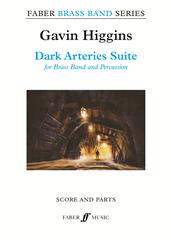
Dark Arteries Suite (Brass Band - Score and Parts)
Dark Arteries was commissioned by Rambert Dance Company and first performed in May 2015 with the Tredegar Town Band sharing the stage with Rambert dancers. Dark Arteries is a personal and at times highly wrought response to the Miners Strike and its aftermath. It is in three movements, the first and last are expansive, with widely contrasting sound worlds, from dark, brooding melodies and the haunting sounds of solo flugel horn to wild syncopations on cornets, suggestive of an imposing, but often bleak mining landscape. Suitable for 1st Section Bands and above. Duration: 16.00
Estimated dispatch 7-14 working days
-
 £29.95
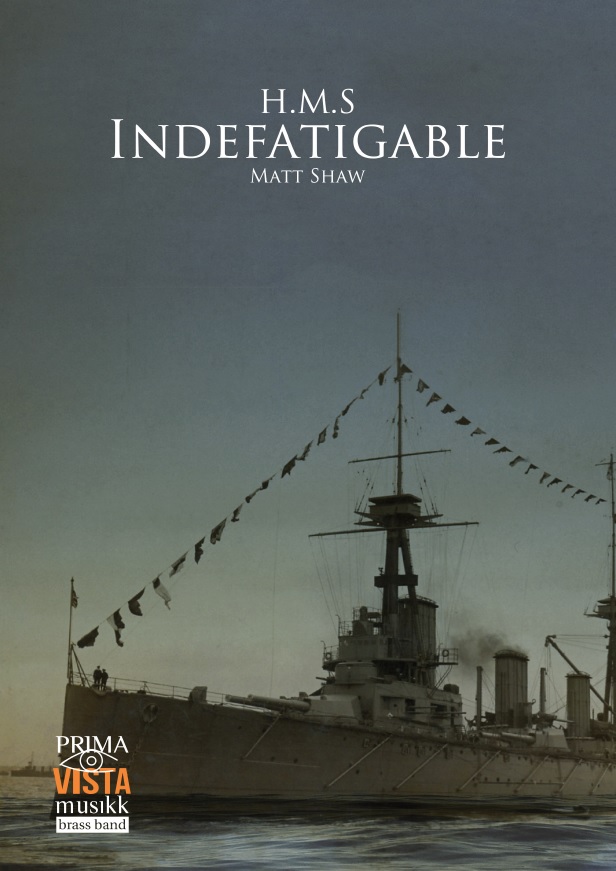
HMS Indefatigable (Brass Band - Score and Parts)
HMS Indefatigable is a contest march, composed for the Virtuosi GUS Band, under the direction of Adam Cooke, and used as part of their programme for Brass in Concert in November 2016.The march is named after the battlecruiser HMS Indefatigable; an ill-fated ship of the British fleet that fell victim to German Bombardment in the Battle of Jutland, in 1916. During the initial 30 minutes of the battle, the Indefatigable sustained heavy fire from the German battleship SMS Von der Tann, which struck Indefatigable's armoury and caused the ship to suffer a catastrophic explosion, resulting in the ship sinking, with all but two lives lost. 1,017 souls perished.This piece aims to capture the might and power of the great ship at sea, incorporating a touch of menace, hinting at the unfortunate end awaiting the HMS Indefatigable, whilst serving as a fitting tribute to the ship and her crew.
Estimated dispatch 7-14 working days
-
 £14.95
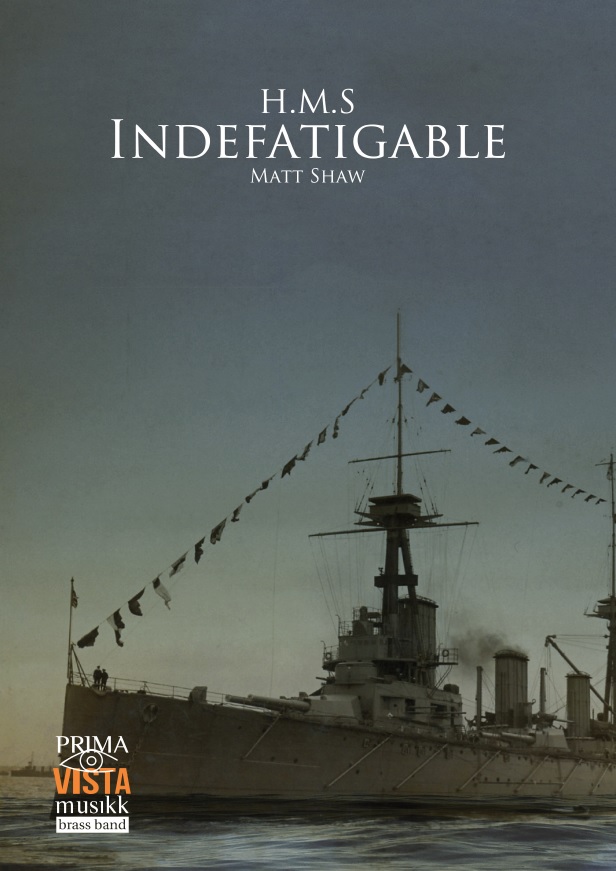
HMS Indefatigable (Score Only)
HMS Indefatigable is a contest march, composed for the Virtuosi GUS Band, under the direction of Adam Cooke, and used as part of their programme for Brass in Concert in November 2016.The march is named after the battlecruiser HMS Indefatigable; an ill-fated ship of the British fleet that fell victim to German Bombardment in the Battle of Jutland, in 1916. During the initial 30 minutes of the battle, the Indefatigable sustained heavy fire from the German battleship SMS Von der Tann, which struck Indefatigable's armoury and caused the ship to suffer a catastrophic explosion, resulting in the ship sinking, with all but two lives lost. 1,017 souls perished.This piece aims to capture the might and power of the great ship at sea, incorporating a touch of menace, hinting at the unfortunate end awaiting the HMS Indefatigable, whilst serving as a fitting tribute to the ship and her crew.
Estimated dispatch 7-14 working days
-
 £14.95
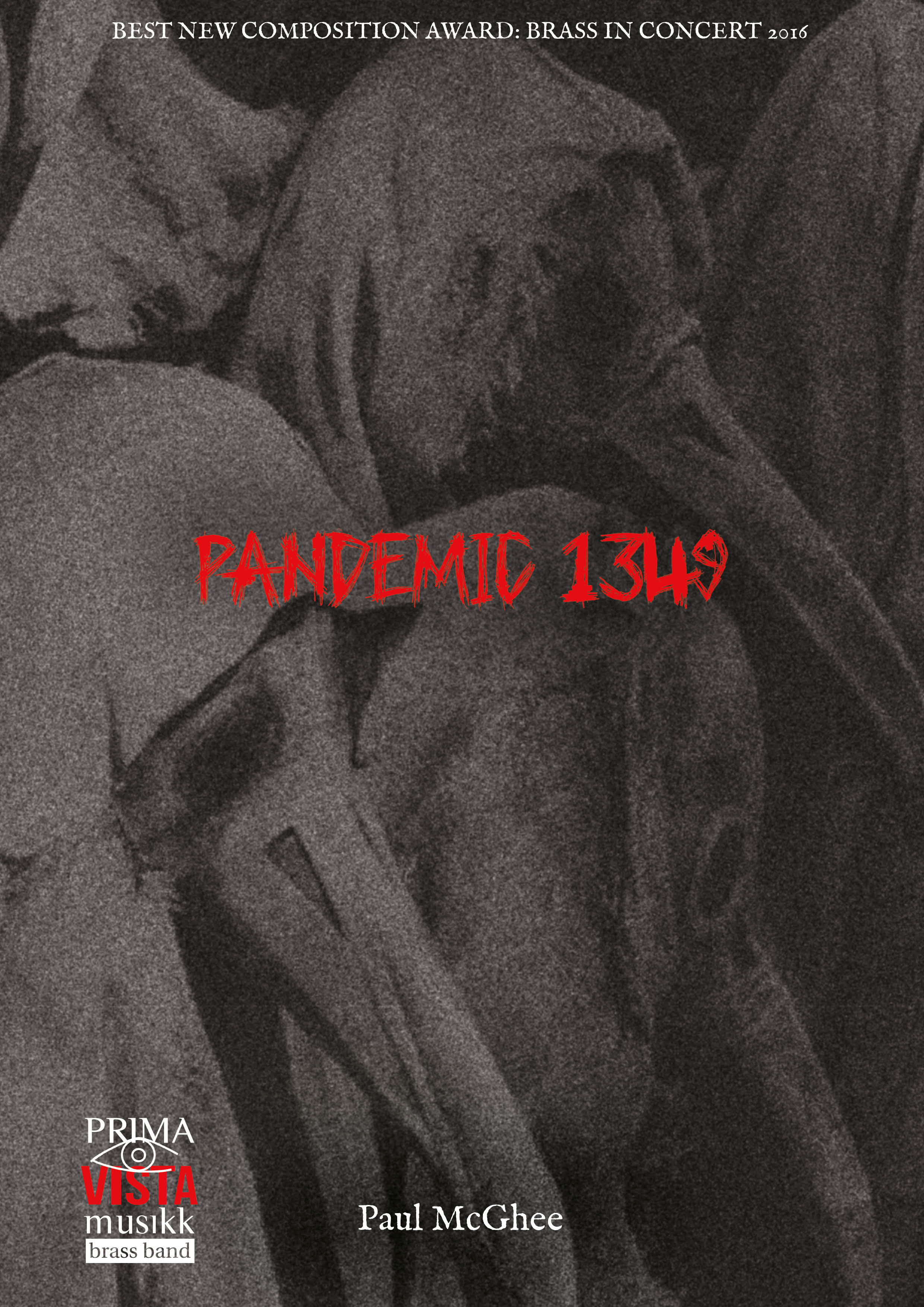
Pandemic 1342 (Score Only)
'Pandemic 1349' was written during September and October 2016 and received its premiere on Sunday 20 th November at the 40 th Brass in Concert Championships at the Sage, Gateshead where it received the best new composition/arrangement award.'Pandemic 1349' is a concert work that aims to capture the atmosphere of fear and terror as the plague spreads throughout the city. The cries and screams get louder and reach a chaotic climax, before a calmer and reflective passage takes over - although the chaos and fear never totally leaves as the melodic material is played against the backdrop of what has gone before.London lost almost half of its population during the Black Death, making this one of the single most devastating events in the city's dark history. The outbreak not only shaped the number of inhabitants in London but also changed their mind-sets with many turning to religion - even the English language was to be forever altered.
Estimated dispatch 7-14 working days
-
 £34.95
Pandemic 1349 (Brass Band - Score and Parts)
'Pandemic 1349' was written during September and October 2016 and received its premiere on Sunday 20 th November at the 40 th Brass in Concert Championships at the Sage, Gateshead where it received the best new composition/arrangement award.'Pandemic 1349' is a concert work that aims to capture the atmosphere of fear and terror as the plague spreads throughout the city. The cries and screams get louder and reach a chaotic climax, before a calmer and reflective passage takes over - although the chaos and fear never totally leaves as the melodic material is played against the backdrop of what has gone before.London lost almost half of its population during the Black Death, making this one of the single most devastating events in the city's dark history. The outbreak not only shaped the number of inhabitants in London but also changed their mind-sets with many turning to religion - even the English language was to be forever altered.
Estimated dispatch 7-14 working days
-
 £69.95
Seascapes (Brass Band - Score and Parts)
Seascapes was commissioned for the National Brass Band Championships of Great Britain in 1988.Seascapes takes its inspiration from the poem 'Cargos' by John Masefield. In the first movement, a gentle lyric theme, set against a pulsating background is contrasted with a dance. The dance reaches its climax and the music concludes with a quiet theme. The second movement has something of the nature of a sarabande, with a central section, which is a little lighter but retains a Spanish flavour. The composer adds a whimsical thought of his own that there may also have been a party of monks aboard. A variety of ingredients blend in the third movement: the coaster engines, the sea, some jovial shanty-music and the storm element through which the coaster steadily chugs.Suitable for Championship Section bands.
Estimated dispatch 7-14 working days
-
 £40.00
In Gardens of Peace (Score and Parts)
Composed to commemorate the life Henry Nichols, killed in the Battle of the Somme in 1917, the music has a peaceful tranquillity, but also a deep sense of tragedy and loss. It ends positively, with the wish that hope can come from desperation. Recorded by Glyn Williams with Cory Band.
Estimated dispatch 7-14 working days
-
 £104.99
Friendly Takeover (Brass Band - Score and Parts)
Friendly Takeover was composed for the 2016 Swiss Wind Band Convention in Montreux. In this three movement piece the composer experiments with lyrical motives combined with rhythmical pulses in different meters throughout the piece. In the finale, the musical scene is taken over completely by groove-based rhythms. This takeover, however, is of a friendly nature, as the various beats are not being conceived as rivals of the lyrical motives, but are rather supposed to infuse energy and vitality to the latter. Thus, one gets the impression of an ongoing acceleration throughout the piece.Duration: 9.30
Estimated dispatch 7-14 working days
-
 £69.95
Transformation (Brass Band - Score and Parts)
I believe in transformation, God can change the hearts of men, And refine the evil nature, till it glows with grace again'. So wrote John Gowans in the second verse of his great hymn, 'I believe that God the Father, can be seen in God the Son', written specifically to affirm Salvationists' beliefs. It is sung to the tune Bethany and in seeking to explore this great subject at the heart of the Christian gospel in musical terms, the composer has used this fine tune as the basis. Although it never appears in its entirety, it is seldom out of the picture and much of the work is derived from it. The other main source of material is the lovely, simple chorus, 'Some day I shall be like him, changed to heavenly beauty, when his face I see'. This chorus is especially prominent in the middle section but there are important references to it throughout. There are also brief references to Charles Wesley's hymn, 'Love Divine' and, in particular, the telling lines, 'Changed from glory into glory, till in Heaven we take our place'. The work suggests that, at times, the process of being transformed is a struggle, portrayed with many passages of fraught and demanding music. Considerable reserves of stamina and technique are required while, in contrast, the chorus, 'Some day I shall be like him' provides the warm, gentle centre of the work. The premiere of the work was given by The International Staff Band of The Salvation Army in Cadogan Hall on Friday 3rd June 2011, as part of the band's 120th anniversary celebrations.
Estimated dispatch 7-14 working days
-
 £95.00
Variations on a Theme of Michael Tippett (Brass Band - Score and Parts)
A Centenary Tribute by Michael Ball, Edward Gregson, Elgar Howarth, Bramwell Tovey and Philip WilbyThis unique 'pice d'occasion' arose out of a telephone conversation in 2004 with Alan Wycherley, who was the soprano cornet player of the Foden's Richardson Band at the time. He indicated that the band would like to include an original birthday tribute for Edward Gregson (60) and Elgar Howarth (70) in its concert at the 2005 RNCM Festival of Brass in Manchester. I have been Artistic Director of Manchester's Festival of Brass since it was established in 1990 as a BBC Radio 3 series, As the centenary of the birth of Sir Michael Tippett fell on 5 January 2005, I devised this collective work as a way of embracing all three anniversaries in a novel way.The idea of joint compositions is not a new one in the classical music world. In the 1860s, Verdi was joined by a number of his contemporaries in a Requiem Mass for Rossini. In this country there have been a number of orchestral examples over the past fifty years, but never before for the brass band. Although Tippett composed only one work for brass band, Festal Brass with Blues, his orchestral works and operas are full of idiomatic brass writing. The theme I chose for this celebration is one of Tippet's most memorable miniatures featuring wind and brass. In the opera Midsummer Marriage it marks the entry of the Ancients. It is also included in the orchestral Suite in D (1948), for the Birthday of Prince Charles.I invited five of the leading contemporary voices in brass band music to add their own creative perspectives to the little Tippett theme, with it's characteristic rhythms, embellishments and modality - the Lydian mode. Each contribution was designed to fit into a tonal and formal template to give the whole work a flow and continuity. In Danse des Amis, Bramwell Tovey has composed a jazzy, humorous variation. Inspiration came from Tippett's love of jazz and, more personally, from the characteristically syncopated gait of the distinguished music critic John Amis, who Tovey once observed leaving a performance of Tippett's opera King Priam before the end. Incidentally, that performance was conducted by Elgar Howarth.We hear Edward Gregson in lyrical mode. His Midsummer Song is redolent of the sound world of Tippett's opera A Midsummer Marriage and it ends with a brief reference to a favourite of Gregson's, Tippett's Concerto for Orchestra. Michael Ball provides a brief moment of light, airy activity bringing to mind perhaps Tippett's love of Shakespearian fantasy, especially The Tempest. Elgar Howarth juxtaposes a slowed down version of the processional theme with distant recollections of fanfares from King Priam. Philip Wilby has rounded the tribute off with a spectacular fugue. During its inexorable progress Wilby ingeniously introduces the two other birthday references - the three-note musical signature that Elgar Howarth includes in much of his music and the characteristic theme which begins Edward Gregson's substantial work for brass an organ The Trumpets of the Angels. An elaborated reprise of Tippett's little theme is followed by a dynamic coda.- Paul HindmarshDuration: 13.00
Estimated dispatch 7-14 working days