
Results
-
 £25.00
ST ANDREW'S VARIATIONS (Brass Band Extra Score) - Fernie, Alan
Brass Band Extra Score only. National Brass Band Championships of Great Britain Area Test Piece 2017 - Fourth Section. French Open Championships 2007. Contains:Theme - AndanteVariation 1 - Alla MarciaVariation 2 - GentlyVariation 3 - AdagiettoVariation 4 - Alla Marcia - sempre marcatoVariation 5 - AndantinoVariation 6 - Con Moto sempre rubatoVariation 7 - AllegrettoVariation 8 - Lento moderatoFinale - Allegro giocoso
Estimated dispatch 7-14 working days
-
£55.00
ST ANDREW'S VARIATIONS (Brass Band Set - Score and Parts) - Fernie, Alan
Brass Band Set and Score. National Brass Band Championships of Great Britain Area Test Piece 2017 - Fourth Section. French Open Championships 2007. Contains:Theme - AndanteVariation 1 - Alla MarciaVariation 2 - GentlyVariation 3 - AdagiettoVariation 4 - Alla Marcia - sempre marcatoVariation 5 - AndantinoVariation 6 - Con Moto sempre rubatoVariation 7 - AllegrettoVariation 8 - Lento moderatoFinale - Allegro giocoso
Estimated dispatch 7-14 working days
-
£12.50
TERRA AUSTRALIS (Brass Band - Study Score) - Ellerby, Martin
Study only (reduced size). National Brass Band Championships of Great Britain Championship Section Finals 2010 . Australian Championships Easter 2007. A descriptive work in one continuous movement. Terra Australis portrays the discovery of Australia, the wonders of the land, the promise of new life and the nation's anthem, closing with a massive grand chorale and an engergetic conclusion. Recorded on Polyphonic QPRL231D Terra Australis
Estimated dispatch 7-14 working days
-
 £85.00
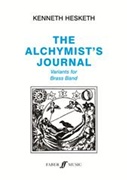
The Alchymist's Journal (Brass Band - Score and Parts) - Hesketh, Kenneth
The Alchymist's Journal (Variants for Brass Band) was commissioned by Faber Music Band Consultant Paul Hindmarsh in 2001, with the support of the Brass Band Heritage Trust, as a substantial concert/contest challenge that would be within the compass of the country's most able youth and first section bands. It received its first performance in January 2002, by Black Dyke Band under Nicholas Childs, as part of the Royal Northern College of Music Festival of Brass.Since its original publication, composer Kenneth Hesketh has made a number of revisions to the work. Most of these were included in the recording made by Foden's Band conducted by Bramwell Tovey. This definitive new edition, including all the composer's revisions, has been specially prepared for the 2015 National Brass Band Championships of Great Britain and is the text that all bands performing were required to use.Suitable for 1st Section Bands and aboveDuration: 12 minutes
Estimated dispatch 7-14 working days
-
 £69.95
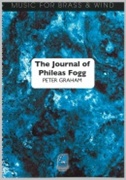
The Journal of Phileas Fogg (Brass Band - Score and Parts) - Graham, Peter
2016 National Championships Regional Testpiece - 3rd Section.The novels by Jules Verne have been a rich source of inspiration for composers over the years. Graham has taken elements of the epic work Around the World in Eighty Days as the outline for a series of adventures recorded in an imaginary diary by the hero of the story, Phileas Fogg.Commencing with London bells in the background, the ensuing journey takes our hero by boat train to Paris (passing the Moulin Rouge en route), Russia (where he is chased by Cossacks), Vienna at night, Spain (where he is a spectator at a bull fight) before a final circumnavigation by sea (where we hear hints of foreign lands) brings him back to London with rich memories of his trip.The Journal of Phileas Fogg was commissioned by Dr Nicholas Childs for the National Children's Brass Band of Great Britain and was first performed by them in July 2012, conducted by Dr Robert Childs.
Estimated dispatch 7-14 working days
-
£29.95
The Journal of Phileas Fogg (Brass Band - Score only) - Graham, Peter
2016 National Championships Regional Testpiece - 3rd Section.The novels by Jules Verne have been a rich source of inspiration for composers over the years. Graham has taken elements of the epic work Around the World in Eighty Days as the outline for a series of adventures recorded in an imaginary diary by the hero of the story, Phileas Fogg.Commencing with London bells in the background, the ensuing journey takes our hero by boat train to Paris (passing the Moulin Rouge en route), Russia (where he is chased by Cossacks), Vienna at night, Spain (where he is a spectator at a bull fight) before a final circumnavigation by sea (where we hear hints of foreign lands) brings him back to London with rich memories of his trip.The Journal of Phileas Fogg was commissioned by Dr Nicholas Childs for the National Children's Brass Band of Great Britain and was first performed by them in July 2012, conducted by Dr Robert Childs.
Estimated dispatch 7-14 working days
-
£82.95
THEME AND CO-OPERATION (Passacaglia for Brass) (Brass Band - Score and Parts) - Horovitz, Joseph
Commissioned for the Premier Division Finals of the Boosey & Hawkes National Brass Band Championships of Great Britain with funds provided by the Co-operative Union Limited on the occasion of the 150th anniversary of the Co-operative Movement. Published in 1994. Recorded on Polyphonic DPRL901D Joseph Horovitz (The Brass Band Music of)
Estimated dispatch 7-14 working days
-
£37.95
THEME AND CO-OPERATION (Passacaglia for Brass) (Brass Band - Score only) - Horovitz, Joseph
Commissioned for the Premier Division Finals of the Boosey & Hawkes National Brass Band Championships of Great Britain with funds provided by the Co-operative Union Limited on the occasion of the 150th anniversary of the Co-operative Movement. Published in 1994. Recorded on Polyphonic DPRL901D Joseph Horovitz (The Brass Band Music of)
Estimated dispatch 7-14 working days
-
 £37.95
TOCCATA from Organ Symphony No.5 (Brass Band) - Widor, Charles-Marie - Sparke, Philip
Recorded on Polyphonic QPRL056D National Brass Band Championships of Great Britain and Gala Concert - 1992, Polyphonic QPRL040D Pageantry
Estimated dispatch 7-14 working days
-
£89.95
TUBA CONCERTO (Gregson) (Tuba Solo with Brass Band - Score and Parts) - Gregson, Edward
This work was commissioned by the Besses o' th' Barn Band with funds provided by the Arts Council of Great Britain. It was written for, and is dedicated to, John Fletcher, who gave the first performance in Middleton Civic Hall, near Manchester, on 24 April, 1976, with Besses o' th' Barn Band conducted by the composer. Another interesting feature about the premire was that it was recorded by BBC Television for an Omnibus programme with Andr Previn as presenter. The concerto exists in four versions: with brass band (1976), orchestra (1978), wind band (1984) and piano reduction.The concerto is in three movements, following the usual, quick-slow-quick pattern: Allegro deciso,Lento e mesto, Allegro giocoso. The first movement has a sonata form shell with two contrasting themes, the first one being rhythmic in character, the second lyrical. There is a reference made in passing to the Vaughan Williams Tuba Concerto, but this merges into the other material in the development section.The second movement begins with a chorale, but after the entry of the tuba it leads to a cantabile theme, softly unfolded by the soloist. The opening chorale passage returns, this time briefly on muted brass, and leads to a middle section which is more chromatic in style and soon builds to a powerful climax, where the opening cantabile theme triumphantly returns. The music subsides, returning to the opening chorale and ending peacefully.The finale is light and breezy in style, and is cast in rondo form. After a brief introduction the tuba announces the main rondo theme, which is dance-like and a little jaunty. There are two episodes: the first a broad sweeping tune, the second a slowish waltz and a little jazz-like. After a virtuoso cadenza reference is made to the very opening of the concerto before the work ends with a triumphal flourish.The Tuba Concerto has established itself as one of the main works in the solo tuba repertoire. It has been performed and broadcast in over 40 countries all over the world. There are currently six commercial recordings of the concerto in its various versions.resolution in C major, pointed by a simple but expansive melody towards which the piece has been heading, and ending in a blaze of joyful colour.Duration: 18 mins
Estimated dispatch 7-14 working days