
Results
-
 £7.46
£7.46King (Concertino for Solo Trombone & Brass Band) Brenton Broadstock - Solo Copy
King is a major new addition to the trombone repertoire, commissioned in 2024 by Brett Baker as a deeply personal homage to his mentor, the legendary David King. This compelling Concertino for Solo Trombone and Brass Band seeks to capture the multifaceted personality of its namesake through three distinct movements: i. Rhapsodic: A movement defined by fluid tempo shifts and evocative mood changes. ii. Introspective: A generous, lyrical section that highlights the expressive capabilities of the soloist. iii. Fast & Passionate: A high-energy finale characterized by determination, optimism, and rhythmic drive. The work is masterfully constructed with pitch material derived directly from the name 'David,' establishing a thematic core introduced by the soloist in the opening bars and woven throughout the entire ensemble texture. It is an essential work for soloists looking for a piece that combines technical brilliance with profound musical narrative. To listen to an excerpt featuring Brett Baker and Flowers Band please visit: https://youtu.be/i-px4OmjplQ Duration: Approx. 12.00 minutes Difficulty Level: 1st Section + This PDF download includes the solo part only. Full set available here. Sheet music available at www.brassband.co.uk (UK) or https://satradecentral.org (USA) Instrumentation:Trombone Soloist* Soprano Cornet Eb Solo Cornet Bb Repiano Cornet Bb 2nd Cornet Bb 3rd Cornet Bb Flugel Horn Bb Solo Horn Eb 1st Horn Eb 2nd Horn Eb 1st Baritone Bb 2nd Baritone Bb 1st Trombone Bb 2nd Trombone Bb Bass Trombone Euphonium Bb Bass Eb Bass Bb Timpani Percussion 1-3 *For bands with only 3 trombones where one is the soloist, the 1st trombone part is covered in other parts throughout the piece.
In Stock: Estimated dispatch 1-3 working days
-
 £34.00
99 Red Balloons (Nena arr. by David Beal) - Brass Band Music Full Score & Parts - LMAM118 DOWNLOAD ONLY
COMPOSER: Carlo Karges, Kevin Mcalea, Joern Uwe Fahrenkrog-PetersonARRANGER: David Beal"99 Luftballons" (German: Neunundneunzig Luftballons, "99 balloons") is a song by the West German band Nena from their 1983 self-titled album. An English-language version titled "99 Red Balloons" (German: Neunundneunzig Rote Luftballons), with lyrics by Kevin McAlea, was also released by Nena on the album 99 Luftballons in 1984 after widespread success of the original in Europe and Japan. The English version is not a direct translation of the German original and contains lyrics with a somewhat different meaning. In the US, the English-language version did not chart, while the German-language recording became Nena's only US hit on the Billboard Hot 100.
In Stock: Estimated dispatch 3-5 working days
-
 £29.88
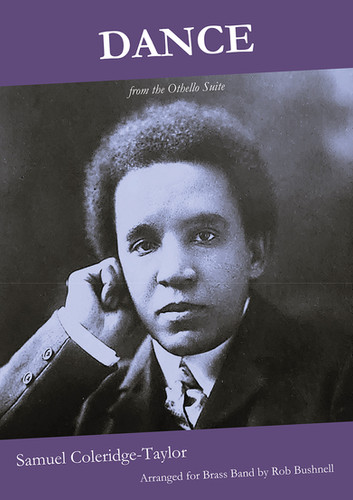
Dance from the Othello Suite (Brass Band) Coleridge-Taylor arr. Bushnell
Samuel Coleridge-Taylor is a British composer, who, from a young age, showed talent on the violin and entered the Royal College of Music, studying with Charles Villers Standford. His music become so popular that his Hiawatha trilogy was the second most performed choral piece (joint with Mendelssohn's Elijah, and only beaten by Handel's Messiah) with choral societies up and down the British Isles. In fact, Hiawatha was arranged by Charles Godfrey as a test-piece for the 1902 National Brass Band Championship of Great Britain, held at Crystal Palace.Commissioned by the theatre impresario Herbert Beerbohm, Coleridge-Taylor composed incidental music for His Majesty's Theatre London production of the Shakespeare play, Othello, in the West End, in 1909. In 1912, the play opened to the public, with a suite of five movements put together soon afterwards. The Dance, arranged here by Rob Bushnell, makes a great concert opener.This arrangement is for the British-style brass band, with alternative parts for horns in F and bass-clef lower brass. A recording of the original composition can be found at www.youtube.com/watch?v=OQeO_Ij9CV8 Duration: approx. 2.30 minutes Difficulty Level: 3rd Section + PDF download includes parts and score. Sheet music available at www.brassband.co.uk (UK) or https://satradecentral.org (USA) Instrumentation: Soprano Cornet Eb Solo Cornet Bb Repiano Cornet Bb 2nd Cornet Bb 3rd Cornet Bb Flugel Horn Bb Solo Horn Eb 1st Horn Eb 2nd Horn Eb 1st Baritone Bb 2nd Baritone Bb 1st Trombone Bb 2nd Trombone Bb Bass Trombone Euphonium Bb Bass Eb Bass Bb Timpani Percussion - Triangle, Cymbal & Bass Drum
In Stock: Estimated dispatch 1-3 working days
-
 £33.62
Prelude in C-sharp Minor (Brass Band) Rachmaninoff arr. Rob Bushnell
One of Sergei Rachmaninoff's most famous compositions, Prelude in C-sharp minor (Op. 3, No. 2) is part of a set of five pieces entitled Morceaux de fantaisie. It was written when Rachmaninoff was only 19 years old and was first performance by the composer on 26 September 1892 at a festival called the Moscow Electrical Exhibition. This arrangement is for the UK-style brass band, with alternative parts for horns in F and bass-clef lower brass. The piece has been transposed from the original (for piano) of C-sharp minor to A minor, which better suits a brass band. There is another arrangement of this piece by Sandy Smith (published by Obrasso) which is designed for more advanced ensembles. A recording of the original composition can be found here: www.youtube.com/watch?v=mXGSfJn3nKQ Duration: Approx. 3.40 minutes Difficulty Level: 3rd Section + PDF download includes parts and score. Also includes alternative parts for horns in F and lower brass in bass clef. Sheet music available from www.brassband.co.uk Instrumentation: Soprano Cornet Eb Solo Cornet Bb Repiano Cornet Bb 2nd Cornet Bb 3rd Cornet Bb Flugel Horn Bb Solo Horn Eb 1st Horn Eb 2nd Horn Eb 1st Baritone Bb 2nd Baritone Bb 1st Trombone Bb 2nd Trombone Bb Bass Trombone Euphonium Bb Bass Eb Bass Bb Percussion 1-3
In Stock: Estimated dispatch 1-3 working days
-
 £33.62
Alleluia (Brass Band) Ralph Manuel arr. Mark Ford
In composing Alleluia, Ralph Manuel created a masterwork for a capella choir. Through its melodic simplicity and warm harmonic textures, it beautifully expresses the sentiments of "Alleluia," its only word of text. The numerous timbral possibilities of brass and percussion provides an exciting palette of sound for this arrangement. This arrangement for brass band is from the pen of Mark Ford in a delightful setting sure to be popular with audiences. To view a rolling score video of the work please visit www.youtube.com/watch?v=Cg4MDGVBpns Duration: 5.00 minutes Difficulty Level: 3rd Section + This PDF download includes the full score and parts. Sheet music available at www.brassband.co.uk (UK) or https://satradecentral.org (USA) Instrumentation: Soprano Cornet Eb Solo Cornet 1&2 Bb Solo Cornet 3&4 Bb Repiano Cornet Bb 2nd Cornet Bb 3rd Cornet Bb Flugel Horn Bb Solo Horn Eb 1st Horn Eb 2nd Horn Eb 1st Baritone Bb 2nd Baritone Bb 1st Trombone Bb 2nd Trombone Bb Bass Trombone Euphonium Bb Bass Eb Bass Bb Timpani Percussion 1-2 Tuned Percussion
In Stock: Estimated dispatch 1-3 working days
-
 £59.77
Avifauna (Brass Band) Joshua Tyler Jameson
This highly descriptive work was commissioned by the National Youth Brass Band of America and will be a terrific concert or entertainment contest item. The music paints the picture of the lives of a variety of different birds. The composer writes: 'When I began thinking about this project I was sitting in my office in the early morning, the sun having just risen. There was a gentle breeze and the only thing that I could hear (aside from my hungry whining cats) was the gentle song of the birds outside my open window. As much of my work is programmatic, almost like symphonic poems, this immediately gave me the image of a majestic sunrise with all types of birds fluttering about, almost as if out of an episode of Planet Earth. When I was commissioned by the National Youth Brass Band of America, I knew the project had to be something the ensemble could grab onto. Something they could see. Something they could relate to. There being so many types of birds in North America, I selected a handful to help tell my story... The scene where I came up with this idea seemed to be the perfect starting point. Sunrise, tiny chirps of Morning Birds floating around the twilight of dawn, swiftly moving towards the majesty of the sun cresting the horizon. A new day, the beginning of a story. As the sun rises higher in the sky, animal activity stirs, becoming lively and wild. The flowers have opened up to drink in the sun's rays, leaving them open to nectar-seeking Hummingbirds. Whizzing by at lightning speed, the hummingbirds journey from flower to flower, drinking their fill until the sun begins to set back over the horizon. When daylight fades, the enigmatic Owl floats silently through the sky. The wonder of these creatures comes not just from their beauty, but also from their mystery and their ferocity. We see images in pop culture of majestic white owls and marvel in their beauty... but to a mouse roaming the forest floor in the dark of the night, the terror of suddenly being dropped upon by a silent predator is anything but peaceful. In the dead of night, soft rolling clouds thicken as a storm begins to brew. With the ensuing rain also emerges the grotesque scavenging Vulture; marching along from carcass to carcass, tearing into the rotting leftovers of another predator's kill, gorging themselves until over-full. However, from this nightmare fuel of a bird, a new day awaits... As the dawn of another day approaches, you begin to hear the same morning birds you heard the previous day. When the light finally breaks the horizon, the soaring majesty of the Eagle drives us to the end of our story; an exciting journey told through the eyes of the winged creatures that paint the skies of North America. This is Avifauna.' To view a follow-the-score video please visit: www.youtube.com/watch?v=J2bhBpx9KvM Sheet music available from: UK - www.brassband.co.uk USA - www.solidbrassmusic.com Difficulty Level: 2nd Section + Instrumentation: Soprano Cornet Eb Solo Cornet Bb Repiano Cornet Bb 2nd Cornet Bb 3rd Cornet Bb Flugel Horn Bb Solo Horn Eb 1st Horn Eb 2nd Horn Eb 1st Baritone Bb 2nd Baritone Bb 1st Trombone Bb 2nd Trombone Bb Bass Trombone Euphonium Bb Bass Eb Bass Bb Percussion 1-4
In Stock: Estimated dispatch 1-3 working days
-
 £44.83
Boreas: The North Wind (Brass Band) Derek Jenkins
Boreas was an ancient Greek deity personifying the north wind. He was a winged god of ruthless disposition, which was rivaled only by the harsh wintry winds at his command. Boreas fell in love with Orithyia, the King's daughter. Contrary to his genuine nature, he attempted to woo her with sweet words of devotion. His efforts were in vain, and Orithyia failed to yield to his advances. With this rejection, Boreas's temper flared and he, once again, was overcome by his icy and merciless nature. Like Boreas, this work begins with slow, lyrical lines that quickly fade into an unrelenting fury of anger. Moments reminiscent of Boreas's words of affection appear, but they are quickly washed away as the piece escalates. This arrangement was written for Joseph Parisi and the Fountain City Brass Band as a small token of thanks. The original version for wind ensemble was commissioned by and written for Timothy Shade and the Bethel College Wind Ensemble. To view a video of Diamond Brass Band performing the work please visit: www.youtube.com/watch?v=Co4oreV7Hm4 Sheet music available from: UK - www.brassband.co.uk USA - www.solidbrassmusic.com Difficulty Level: 2nd Section + Instrumentation: 1 Soprano Cornet (Eb) 9 Cornets (Bb) 1 Flugelhorn 3 Tenor Horns (Eb) 2 Baritones (Bb) 2 Trombones (Bb) 1 Bass Trombone 2 Euphoniums (Bb) 2 Basses (Eb) 2 Basses (Bb) 4 Percussion
In Stock: Estimated dispatch 1-3 working days
-
 £48.56
Euryanthe Overture (Brass Band) von Weber arr. Barrie Gott
This expert arrangement for brass band by Barrie Gott of Carl Maria von Weber's popular overture, 'Euryanthe' will be a terrific addition to concert programmes.'Euryanthe' is acknowledged as one of Weber's most important operas and is based on the 13th-century French romance L'Histoire du tres-noble et chevalereux prince Gerard, comte de Nevers et la tres-virtueuse et tres chaste princesse Euriant de Savoye, sa mye.Only the overture, an outstanding example of the early German Romantic style (heralding Richard Wagner), is regularly played today.This transcription for brass band attempts to realise the orchestral score as closely as possible. There are many technical challenges that will provide opportunities for the expert level of player and ensemble. It will be and exciting addition to a concert programme. To view a follow-the-score video of the work please visit https://www.youtube.com/watch?v=wMePX1rVigk PDF download includes score and parts. Sheet music available from: UK - www.brassband.co.uk USA - www.solidbrassmusic.com Difficulty Level: 1st Section + Instrumentation: Soprano Cornet Eb Solo Cornet Bb Repiano Cornet Bb 2nd Cornet Bb 3rd Cornet Bb Flugel Horn Bb Solo Horn Eb 1st Horn Eb 2nd Horn Eb 1st Baritone Bb 2nd Baritone Bb 1st Trombone Bb 2nd Trombone Bb Bass Trombone Euphonium Bb Bass Eb Bass Bb Timpani
In Stock: Estimated dispatch 1-3 working days
-
 £14.94
Jingle Boogie-Woogie Bells (Brass Band - Ukraine Charity Release) Ovcharenko
This piece was arranged by Halyna Ovcharenko, a Ukrainian composer who was born in Lugansk, a Ukrainian city that is currently under occupation by the Russian Federation. All the proceeds from this sale will go towards the 'A family for every orphan' appeal, which is providing emergency relief services to thousands of children and families in Ukraine. For more information about the charity please visit https://afamilyforeveryorphan.org/ukraine/ Halyna Ovcharenko has been composing music since she was 11. Many of her compositions of various genres have received international awards, but she discovered the world of brass band music with its specific timbre and huge range of musical colors only recently, in 2022, while composing her Vyshyvanka for Grimethorpe Colliery Band. Halyna comments: "I enjoyed my experience. Since then I have had an appetite to write more for brass bands, and here we are - an arrangement of a traditional English Christmas song which I have done especially to raise money for Ukrainian orphans. Their heroic parents stood for my Lugansk, for our Ukraine and for the whole World. I hope that the World will make these children feel that they are not left alone, giving them love, care and joy." The picture on the front cover was drawn by Victoria Lebed, a Ukrainian girl. This PDF download includes parts and score. Sheet music available from www.brassband.co.uk Instrumentation: Soprano Cornet Eb Solo Cornet Bb Repiano Cornet Bb 2nd Cornet Bb 3rd Cornet Bb Flugel Horn Bb Solo Horn Eb 1st Horn Eb 2nd Horn Eb 1st Baritone Bb 2nd Baritone Bb 1st Trombone Bb 2nd Trombone Bb Bass Trombone Euphonium Bb Bass Eb Bass Bb Percussion 1-2
In Stock: Estimated dispatch 1-3 working days
-
 £33.62
Libera Me from 'Requiem' (Brass Band) Faure arr. Rob Bushnell
Composed between 1887 and 1890, Gabriel Faure's Requiem is not only one of his best-known works but one of the most popular piece of choral music in the Classical repertoire, coming 23rd in the Classic FM's Hall of Fame 2024. Believed to be a tribute to his father (who died in 1885), Faure himself said "My Requiem wasn't written for anything - for pleasure, if I may call it that!" It started life as a five-movement work but was later expanded to be the final seven-movement work we know today. The first version (which Faure called "un petit Requiem") was first performed on 16 January 1888, with Faure conducting, a second version premiered on 21 January 1893 before the final version (reworked for full orchestra) was played on 12 July 1900; the Requiem was performed at the composer's own funeral in 1924.The Libera Me, or Deliver Me, was actually written in 1877 and is the sixth part of the Requiem.Faure once said of the work, "Everything I managed to entertain by way of religious illusion I put into my Requiem, which moreover is dominated from beginning to end by a very human feeling of faith in eternal rest." Upon interview, he also said, "It has been said that my Requiem does not express the fear of death and someone has called it a lullaby of death. But it is thus that I see death: as a happy deliverance, an aspiration towards happiness above, rather than as a painful experience. The music of Gounod has been criticised for its inclination towards human tenderness. But his nature predisposed him to feel this way: religious emotion took this form inside him. Is it not necessary to accept the artist's nature? As to my Requiem, perhaps I have also instinctively sought to escape from what is thought right and proper, after all the years of accompanying burial services on the organ! I know it all by heart. I wanted to write something different."This arrangement is for the British-style brass band, with alternative parts for horns in F and bass-clef lower brass. The tenor solo is featured on the euphonium. A recording of the original composition can be found here: www.youtube.com/watch?v=fXwFNoBHCf0 Duration: 4.20 minutes approx. Difficulty Level: 4th Section + PDF download includes parts and score. Sheet music available from www.brassband.co.uk Instrumentation: Soprano Cornet Eb Solo Cornet Bb Repiano Cornet Bb 2nd Cornet Bb 3rd Cornet Bb Flugel Horn Bb Solo Horn Eb 1st Horn Eb 2nd Horn Eb 1st Baritone Bb 2nd Baritone Bb 1st Trombone Bb 2nd Trombone Bb Bass Trombone Euphonium Bb Bass Eb Bass BbTimpani
In Stock: Estimated dispatch 1-3 working days
