
Results
-
 £29.95
Intrada - Jonathan Bates
DURATION: 2'30. DIFFICULTY: 2nd+. 'Intrada for Brass Band' was composed for my great friends at Orskog Brass, Norwayin celebration of their 50th anniversary. The work is a short celebratory fanfare used to open their anniversary concert, making use of antiphonal cornet choirs and marimba (with which the band had only recently been able to source, hence it's inclusion!).
In Stock: Estimated dispatch 1-3 working days
-
 £34.95
Spring: Reloaded - Jonathan Bates
DIFFICULTY: 2nd+. DURATION: 3'00". 'Spring:Reloaded' is composed as a response to Vivaldi's famous 'Spring' from his Violin Concerto in E Major - more commonly known. as 'The Four Seasons' - and was composed for Strata Brass' seasons themed sets for their 2019 entertainment competition programmes. . This composition sets a number of the original Vilvaldi melodies from each movement of 'Spring' against a far more contemporary . harmonic backdrop, featuring antiphonal cornet & percussion choirs, with each 'choir' having it's own mini concertino group to accompany . them which is formed from a selection of the remaining lower brass and percussion. .
In Stock: Estimated dispatch 1-3 working days
-
 £16.00
Sonata Pian'e Forte
DescriptionSonata Pian'e Forte means an instrumental piece using soft and loud dynamics. A "Sonata" (at this time) meant a piece for instruments (as opposed to voices). It was probably written to be played as part of a service at St Mark's, Venice. This is the earliest known piece to specify both the instruments to be played AND the dynamics in the written music.Gabrieli was born in Venice sometime between 1554 and 1557 and studied with the renowned Dutch composer Orlando di Lassus. He also studied with his uncle, Andrea Gabrieli, and eventually succeeded him as the organist and composer at St Mark's Basilica in Venice. Already renowned as a musical centre, Venice became a magnet for composers wishing to study with Gabrieli after 'Symphoniae Sacrae' was published.Like many of his works, Sonata Pian'e Forte was written to take advantage of the unique layout of St Mark's, which had galleries on three sides where the musicians could be placed to create novel spatial effects - utterly new and exciting for sixteenth century listeners. Sonata Pian'e Forte has two different antiphonal 'choirs' and in this arrangement the band is split into two groups to reflect Gabrieli's innovative idea. Ideally the two groups should be clearly separated so the the antiphonal effect comes across clearly, although this will of course depend on the performance space. On no account should the band remain in its normal seated formation!As Gabrieli didn't have any percussionists (and percussion was widely thought inappropriate for music performed in church anyway) there are no percussion parts in this music.This arrangement is available for full brass band or 8-piece brass ensemble andwas first performed by the Blackley Band conducted by Andrew Baker in 2004.Listen to a computer realisation and follow the score in the video below:Duration approximately 4'20".
Estimated dispatch 7-14 working days
-
 £65.00
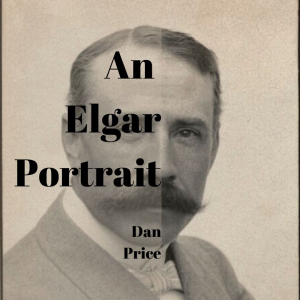
AN ELGAR PORTRAIT - D.Price
This work was composed in commemoration of the 150th Anniversary of the birth English Composer Sir Edward Elgar. The suite is in three movements: 'Introduction', 'Elegy' and 'March', each of which have been inspired by three of Elgar's most celebrated works; Chanson de Matin, Nimrod ('Variation IX' from the Enigma Variations) and Pomp and Circumstance No.1.'Introduction' - Hollybush HillHollybush Hill is the name of one of the peaks of the Malvern Hills in Worcestershire. The Malverns were a favourite walking area for Elgar and his wife, and their panoramic views inspired much of Elgar's music.'Elegy' - BroadheathBroadheath is the small village at the foot of the Malvern Hills where Elgar was born (and lived at various times throughout his life). Elgar is buried not far from Broadheath at St Wulstan's in Little Malvern. 'March' - Worcester CathedralMany of the Worcestershire ensembles and music festivals played an important role in Elgar's early musical education. He was heavily involved in The Three Choirs Festival and either conducted or played in many of the light orchestras and vocal groups that performed at venues across Worcester. A statue of Elgar overlooks the Cathedral at the end of Worcester High Street.An Elgar Portrait has been used regularly as an own-choice test-piece for Section 4 bands, and was also selected as the set work for the Swiss National Championships in 2007 as well as the Pontins Championships in 2008. The composer has slightly reworked this piece for the Section 4 Final of the National Brass Band Championships of Great Britain 2020 and it's this version that should be performed at the contest. If bands currently have an older version in their libraries, please contact us directly for more information.
In Stock: Estimated dispatch 3-5 working days
-
 £30.00
Deus in Adjutorium
DescriptionMonteverdi's Vespro della Beata Vergine (Vespers for the Blessed Virgin) is a musical setting by Claudio Monteverdi of the evening vespers on Marian feasts, scored for soloists, choirs, and orchestra. It is an ambitious work in scope, style and scoring, and has a duration of around 90 minutes. Published in Venice with a dedication to Pope Paul V dated 1 September 1610 as Sanctissimae Virgini Missa senis vocibus ac Vesperae pluribus decantandae, cum nonnullis sacris concentibus, ad Sacella sive Principum Cubicula accommodata ("Mass for the Most Holy Virgin for six voices, and Vespers for several voices with some sacred songs, suitable for chapels and ducal chambers"), it is mercifully regularly shortened to Monteverdi's Vespers of 1610.Monteverdi was born and spent the first part of his working life in Cremona before moving to Mantua (where he composed the Vespers) and finally attaining one of the top jobs in Italian renaissance music as Maestro di Capella at the Basilica di San Marco in Venice. He is most famous for his vocal music, notably his madrigals and the earliest surviving opera, Orfeo.Watch a preview video of the brass band score below:
Estimated dispatch 7-14 working days
-
£132.00
Celebration for Band - John Brakstad
Many Norwegian bands have grown up around factories; but Norwegian factories are often located in the countrysides - by a fjord or lake, by a river or waterfall that provided power for the factory.The factory was the foundation for the existence of the community, but it was also essential for the community's cultural life; choirs, bands etc. (cp. British brass bands and mining)."Celebration for band" tries to give a picture of the environment and life around a band like this, with both factory noise and the natural world (Pastorale), as well as the challenges and development of the band itself.The composition is built up of five connected episodes:- Fanfare and Prologue (concludes with a feeling of the untamed power of the river) - Pastorale I: " At the river"- Intermezzo: " The Factory" (starts with the opening of water for the turbines: snare drum. Factory whistle and bell call to work, and the spinning and weaving machinery starts up.)- Pastorale II: " Summer evening on the fjord." - Finale: " Challenge and Progress"
Estimated dispatch 7-14 working days