
Results
-
 £29.95
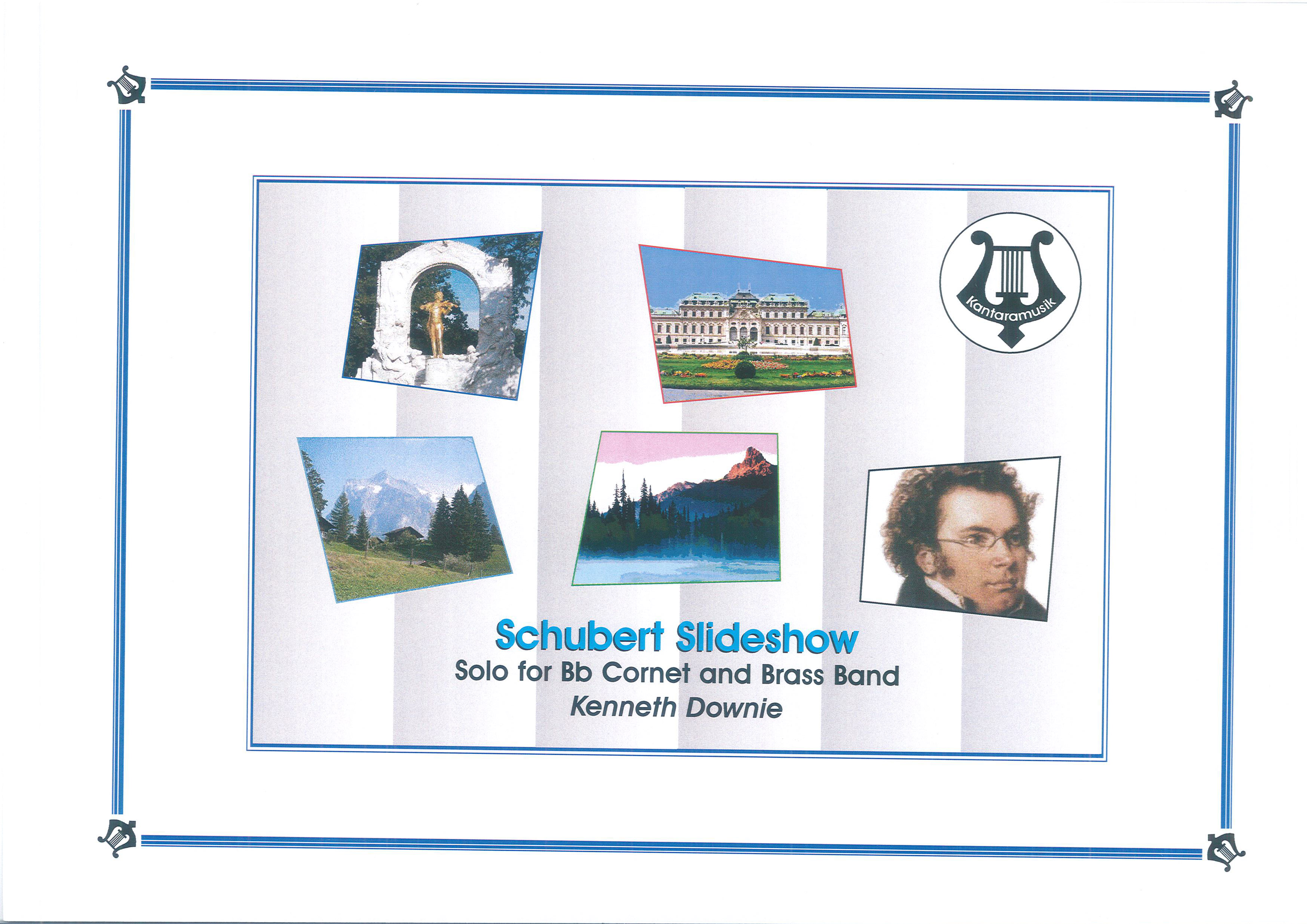
Schubert Slideshow - Cornet Solo (Brass Band - Score and Parts)
Heidenroslein' is a poem by Goethe, published in 1799, which was notably set to music by Schubert in 1815. It is this music which inspired this variation solo. It is called 'Slideshow' as each variation might be considered as a different view or aspect of the theme. Cornet players have the opportunity to demonstrate both the lyrical and the more bravura qualities of their playing.
Estimated dispatch 7-14 working days
-
 £24.95
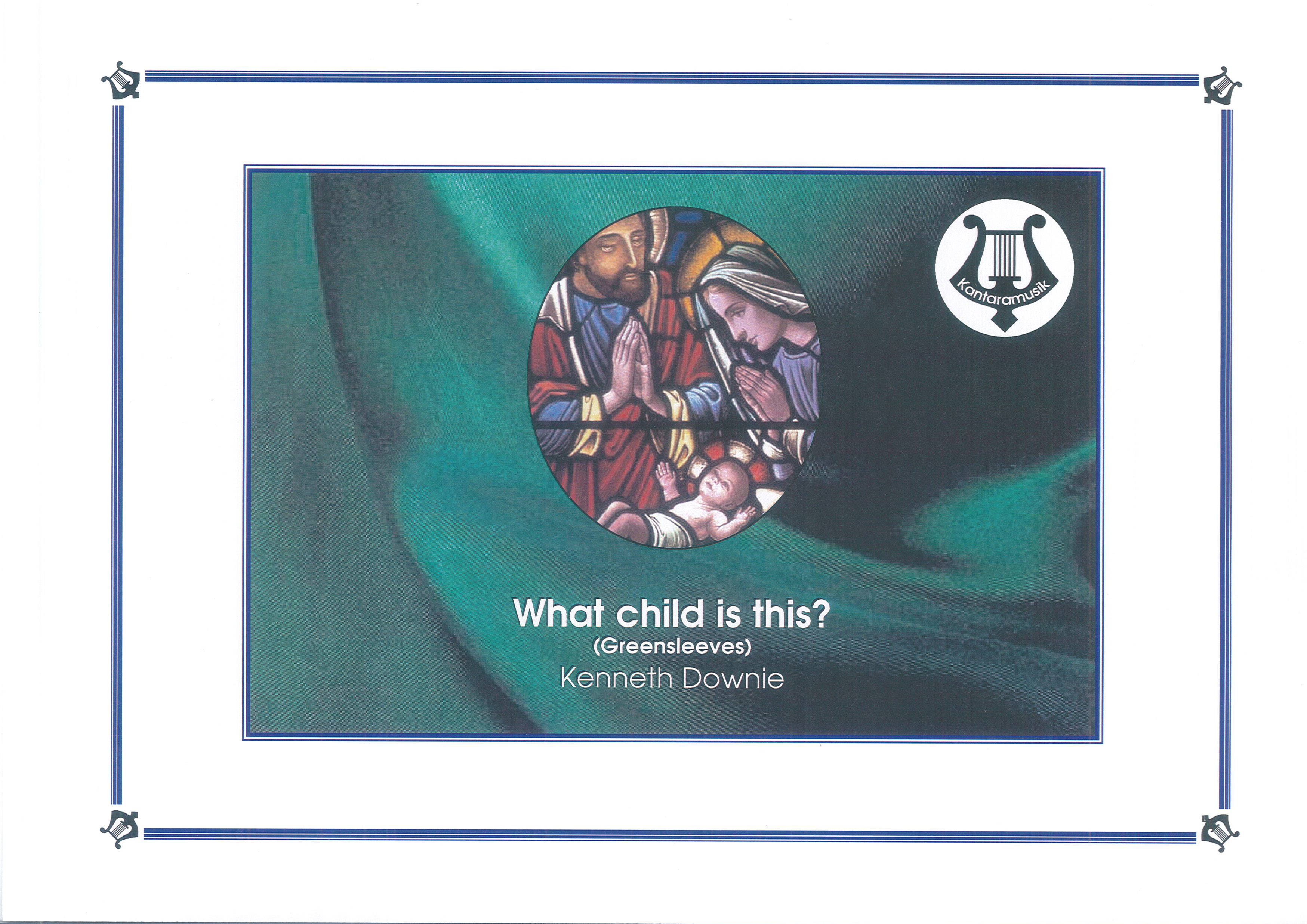
What Child is This? (Greensleeves) (Cornet Solo with Brass Band - Score and Parts)
Another Christmas arrangement of the traditional English tune 'Greensleeves'. It takes the form of a solo for Bb cornet, intentionally written to be well within the ability range of most players, yet providing plenty of scope for musical lyricism.
Estimated dispatch 7-14 working days
-
 £16.99
The Bells of Peover (Cornet Solo with Brass Band - Score and Parts)
The Bells of Peover is a beautiful and lyrical cornet solo, conjuring up a pastoral scene with the distant ringing of church bells. The piece is named after a pub in the Cheshire village of Lower Peover, near Knutsford. Suitable for Youth/4th Section Bands and above. Duration: 4.00
Estimated dispatch 7-14 working days
-
 £39.95
When Thunder Calls (Brass Band - Score and Parts)
When Thunder Calls was commissioned by Dr Nicholas Childs and the Black Dyke Band for their performance at the Gala Concert of the Swiss Open Championships in September 2011. When composing this piece, I decided to focus on both the music and the stage presentation. The way the piece has been composed and designed makes it a very effective way of starting a concert or a second half of a concert.At the start of the piece, the percussion enter the stage and take their positions in their usual place behind the band. They begin playing the piece without a conductor. They keep repeating the opening section while the Basses, Horns, Baritones and Euphoniums march onto the stage.This group of musicians take their seats with the Horns, Baritones and Euphoniums sitting where they usually sit in the band but the Basses sit where the solo cornets usually sit, forming an inner semi-circle of lower brass. When seated and when the music gets to the end of bar 4 the piece continues onto section A. All performers keep repeating this next 4-bar phrase until the trombones march onto stage and stand at the front of the stage with the Bass Trombone standing in between the other two trombones.All performers then play from figure B to C with the trombones taking the lead at the front. When the performers get to rehearsal figure C they repeat this section (the same as section A) while the trombones move from the front of the stage and take their positions where the Basses would normally sit (between the horns and the percussion) and remain standing. Meanwhile, the flugel enters the stage and stands at the front of the stage (standing where the trombones did). When in position the flugel soloist picks up into rehearsal figure D.When the flugel soloist finishes playing, just before rehearsal figure F they then move to their normal seat in the band. At figure F the cornets march onto the stage from either side, they turn and stand side by side each other facing outward towards the audience forming two 'fanfare' lines either side of the lower brass. The conductor follows the cornets on stage and on cue they lift their instruments at the same time and perform when the piece gets to figure G.There is no more moving around from this point on other than the solo cornet to move forward with the solo euphonium and perform their duet at letter H. Also the horns are required to stand and play at letter I and then sit just before J.When performed with all the choreography, this piece makes for an exciting addition to any concert repertoire both for the performer and the audience.Suitable for 3rd Section Bands and Above
Estimated dispatch 7-14 working days
-
 £39.95
Swing into Christmas (Brass Band - Score and Parts)
Written during Colonel Robert Redhead's tenure as Bandmaster of The International Staff Band, this bright and good-humoured selection - originally titled Sounds of the forties - was composed for the UK Territory's annual Christmas event at the Westminster Central Hall in 1993. It features lively treatments of Good King Wenceslas, Carol of the drum, Silent Night! and Deck the hall and brings fresh sparkle to these familiar carols. With the permission of the Redhead family, the work has been readied for publication. Colonel Redhead lives in retirement in Canada, and this release stands as a welcome addition to the journals.The secret to a successful presentation of this piece (and any swing number) is for the band to have a clear grasp of basic swing principles. Players should aim for a relaxed, buoyant feel built on back'beat emphasis (2 and 4), light articulation, and a sense of forward motion without rushing. Note that, apart from the intentionally straight quavers on the drum kit in sections D and E, quavers elsewhere should be swung.A drum kit will be essential as it provides the stylistic anchor throughout, setting up the tempo, supporting the back'beat, and giving the band confidence to embrace the swing style.The Glenn Miller-inspired opening cornet feature sets the tone for the whole piece and should be played with strength, clarity, and stylistic assurance. The outer movements share this brighter, punchier swing character, with crisp rhythmic definition and confident ensemble playing.In contrast, the central setting of Silent Night! adopts a slow 'shuffle' feel. This section should feel spacious and unhurried, with warm phrasing, gentle back'beat, and a laid'back rhythmic pulse. In the melody line, think breadth, and in the accompaniment, think subtlety rather than weight.
Estimated dispatch 7-14 working days
-
 £77.00
General Series Brass Band Journal, Numbers 2246 - 2249, August 2024
2246: Christmas Prelude - David's City (Noel Jones)In 2 Samuel 5, we read of David's anointing as King of Israel at the age of thirty, a reign that lasted for forty years. Bethlehem was known as 'David's city' because he was born there and worked as a shepherd on the nearby hills. Verses 1, 2 and 5 of Once in Royal David's City (C.C. 68) are featured in this Christmas Prelude. There are also brief references to the carols O come, all ye faithful and O little town of Bethlehem between verses.2247: Cornet and Euphonium Duet - This Kingdom (Stephen Bulla)Geoff Bullock's song, This Kingdom, has been made well known by the American gospel singer Ron Kenoly. Stephen Bulla wrote this duet for a Brass Spectacular concert held in Basel, Switzerland, in May 2019.2248: Wonder (Stephen Gibson)When we stop to consider the mystery of God's love for each one of us, its enormity can only cause us to wonder. The opening bars of this music create an atmosphere, using a rolling accompaniment underneath sustained, music and chromatic Cornets, setting the style for the entire piece. Occasional references to Albert E. Webber's chorus Can you wonder? are heard throughout.2249: O to love thee! (Michael Davis)This piece takes its title from the first verse of Francis Bottome's words, Precious Jesus, O to love thee! The introduction establishes the baroque form of a prelude which leads into the tune Glory to the lamb (T.B. 327). Following a brief interlude, the melody is passed through several sections of the band, with delicate countermelodies in the Flugel and Horns. The majestic ending eventually comes to rest on the final tonic chord.
Estimated dispatch 7-14 working days
-
 £77.00
General Series Brass Band Journal, Numbers 2254 - 2257, April 2025
2254: Be glorified today (Martin Cordner)Built around Bob Kilpatrick's song In my life, Lord, be glorified today (S.A.S.B. 593), this concert opener was composed for Cambridge Citadel Band (UK and Ireland Territory) at the request of Bandmaster Simon Fisher. The piece pays homage to the city.2255: Driven by mission (Stephen Bulla)Stephen Bulla wrote this piece to commemorate Willis Howell and his wife's retirement from active officership. Bulla references St. Denio (S.A.S.B. 37), Melita (T.B. 442), For your mission and Men of Harlech (T.B. 756), and the assembling of the tunes and all they represent reflects the masterful artistry that always marks Bulla's works.2256: The Lord's my shepherd (Paul Sharman)This arrangement brings together two settings of Psalm 23; the familiar hymn tune Crimond (T.B. 68) and the more recent melody by Stuart Townend (T.B. 863).2257: Cornet Solo - I love you, Lord (Ian Robinson)Laurie Klein's chorus I love you, Lord (S.A.S.B. 369) has been popular for many years with Salvation Army congregations around the world and this work combines unconventional harmonies with sparse scoring to feature the soloist.
Estimated dispatch 7-14 working days
-
 £77.00
General Series Brass Band Journal, Numbers 2250 - 2253, December 2024
2250: Prelude on 'Rhosymedre' (Ralph Vaughan Williams trs. Douglas Engle)The English composer Ralph Vaughan Williams' work Three Preludes (founded on Welsh Hymn Tunes) was published for the organ in 1920. This is a transcription of the second movement of that work. The words associated with the hymn tune are by Samuel Crossman, My song is love unknown (S.A.S.B. 149), and vividly depict the events of Holy Week. The music is gentle and solemn and would be appropriate for a Good Friday service or as a moment of repose in a concert. 2251: Hosanna Shuffle (Sam Creamer)The half-time shuffle groove is a popular feel developed by alternative rock/pop bands of the 1980s. It marries elements of rock and swing styles together to form a new and infectious feel - Hosannah Shuffle being written as a tribute to this fusion of musical styles. Contrary to a swing style, shuffle brings the pulse back onto the beat while maintaining the swung quaver rhythms to create a rock-type rhythmic drive. 2252: Everlasting Love (Keith Manners)This piece was written for the London North East Music School in 2004. The theme of the week was 'Making a stand for Christ', reminding the school that it only takes one person to make such a stand before others follow. The music starts with a lone Solo Cornet playing the melody of Graham Kendrick's song Such Love (S.A.S.B. 199). One by one, other parts join in with the theme.2253: Festival March (Michael Cooper)This piece represents the first published brass composition of Bandmaster Michael Cooper, who is the Bandmaster at Brisbane City Temple Corps. This imposing festival march features the tunes I want to be a soldier (T.B. 683), Lift up the banner (T.B. 90) and My Jesus, I love thee (T.B. 506). These tunes depict the idea that spiritual warfare is an essential component of one's faith, success of which is articulated in the final verse of My Jesus, I love thee (S.A.S.B. 878).
Estimated dispatch 7-14 working days
-
 £29.95
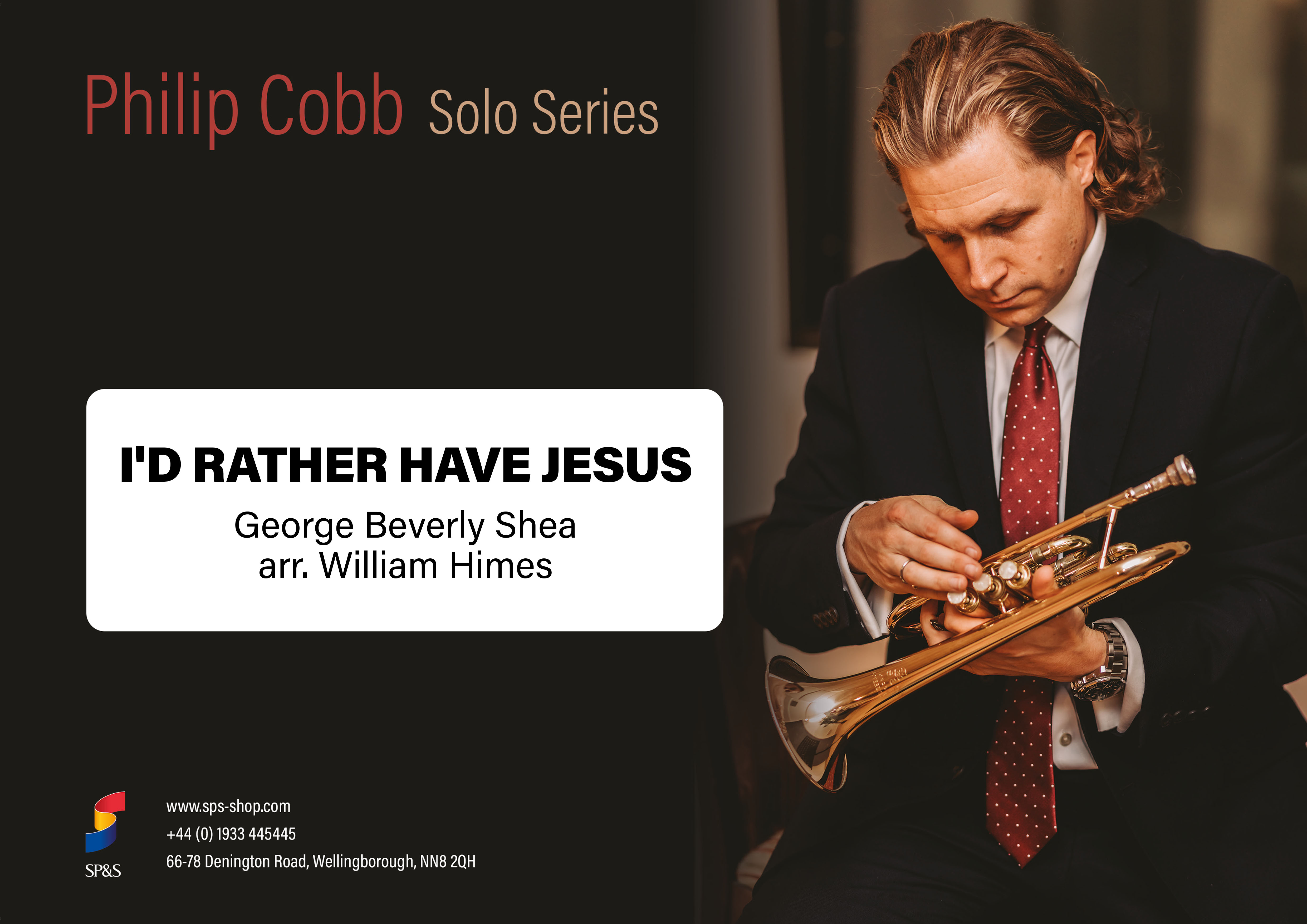
I'd Rather Have Jesus (Cornet Solo with Brass Band - Score and Parts)
The poem, I'd rather have Jesus, was written in 1922 by Rhea Miller with the tune written by George Beverly Shea. This arrangement by William Himes was originally written for William Scarlett, trumpet player with the Chicago Symphony Orchestra and former member of the Chicago Staff Band of The Salvation Army.Duration: 3.15
Estimated dispatch 7-14 working days
-
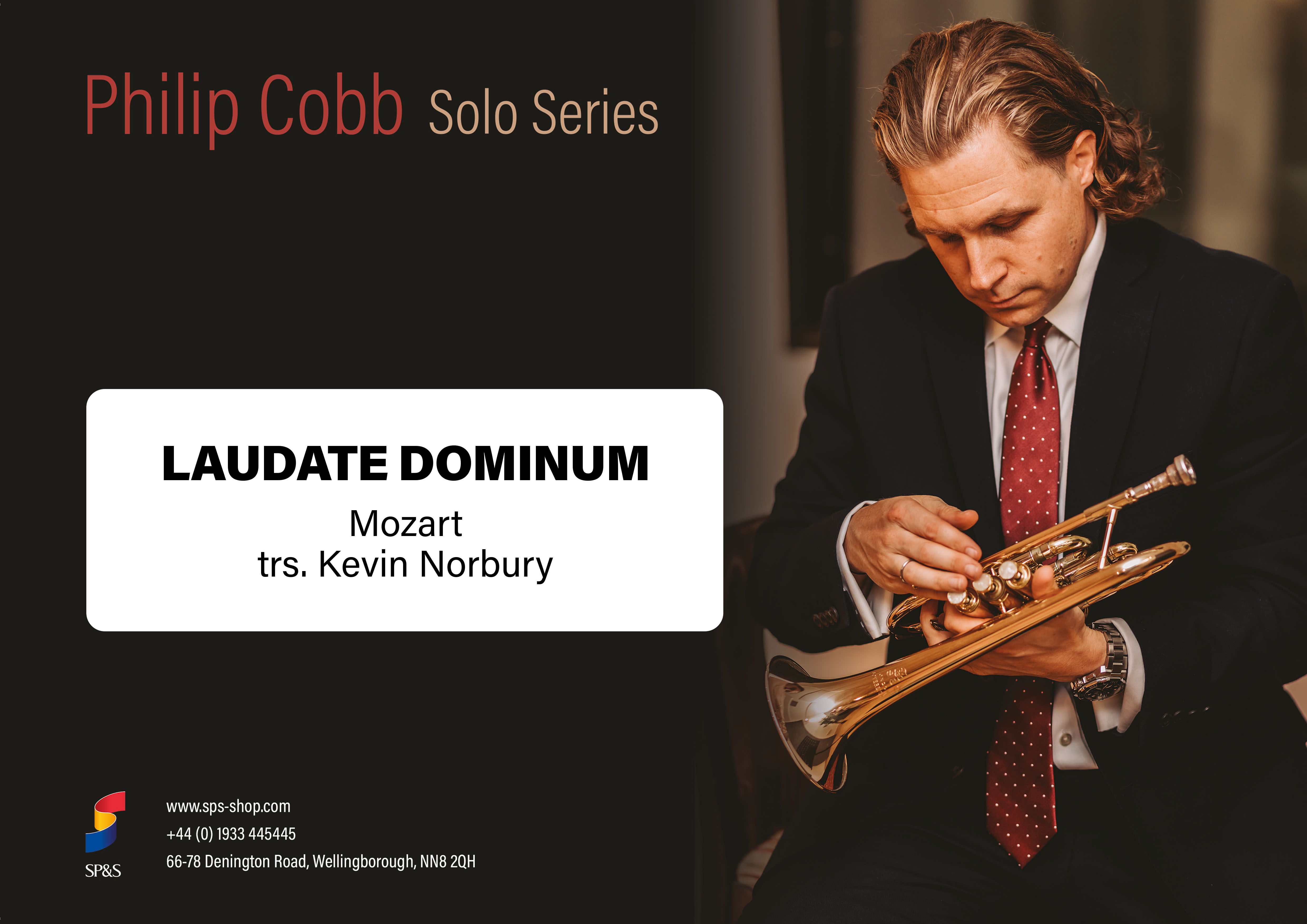 £29.95
Laudate Dominum (Cornet Solo with Brass Band - Score and Parts)
Originally composed by Mozart in 1780 from the Vesperae ples de Confessore, this setting of the shortest of the psalms, Psalm 117, has an ethereal quality. It seems to express something of the beauty of God and of his love in creation. This work has been beautifully transcribed for brass and soloist by Kevin Norbury.Duration: 5.00
Estimated dispatch 7-14 working days