Results
-
 £39.95
Impulse (Brass Band - Score and Parts)
This work represents a brief, musical study of the practical expression of faith by Salvationists. Why do we do what we do? The beginning of the piece reflects the busyness and drive of those who feel called to Rescue the perishing (S.A.S.B. 927). Motivated by compassion, there is a constant, insistent urgency to accomplish this mission, and referenced is Albert Orsborn's song Except I am moved with compassion (S.A.S.B. 626). From here, the piece builds to a climactic, full statement of Rescue the perishing.
Estimated dispatch 7-14 working days
-
 £29.95
The Strong Tower (Brass Band - Score and Parts)
Following the popularity of Turris Fortissima, I decided, albeit many years later, to revisit some of the material it contains and create a shorter piece, expanding on some of the ideas and motifs, allowing myself to follow those in different directions altogether. The result is this piece which I hope will also excite players and listeners alike.The music is marked at a quick tempo from the start, but despite several changes in meter, the tempo doesn't change until the small accelerando leads us into the presto section. In order to maintain the excitement and drama, it's important to set the pace and keep it consistent throughout.Section A introduces a few of the motifs that will be developed during the piece, including the main Turris Fortissima theme from bar 13 to 18.At section B, ensure the quavers are tight across the whole band with a strong attack, making an obvious difference in dynamic when fff is marked, in bars 23, 25 and 27. A more lyrical approach will be effective from the Horns in section C, with vigorous interruptions from the rest of the band breaking up their melody.Section D features long notes from muted 1st and 2nd Cornets and Trombones, with crescendos each time. These should be significant and sound as though they emerge from nowhere, completely cutting through the overall texture.Section D features long notes from muted 1st and 2nd Cornets and Trombones, with crescendos each time. These should be significant and sound as though they emerge from nowhere, completely cutting through the overall texture.Sections E and F are both passages of building intensity. Various contrasting motifs are layered, including a subtle reference to the hymn tune Ein' feste Burg (A mighty fortress is our God) from the Euphonium. The music becomes more busy and muddled, before reaching its climax at section G where the lyrical melody is heard again, this time from the Solo Cornets and Euphonium.In bars 141 to 145, there is a reference to Dean Goffin's My strength, my tower in the Basses, as used in Turris Fortissima. Allow this motif to dominate, keeping the notes full and grand-sounding. In bars 149 to 151 there is further use of the line from Ein' feste Burg in the Baritones, Trombones, Euphoniums and Basses leading into the final section.- Steven Ponsford
Estimated dispatch 7-14 working days
-
 £39.95
When Thunder Calls (Brass Band - Score and Parts)
When Thunder Calls was commissioned by Dr Nicholas Childs and the Black Dyke Band for their performance at the Gala Concert of the Swiss Open Championships in September 2011. When composing this piece, I decided to focus on both the music and the stage presentation. The way the piece has been composed and designed makes it a very effective way of starting a concert or a second half of a concert.At the start of the piece, the percussion enter the stage and take their positions in their usual place behind the band. They begin playing the piece without a conductor. They keep repeating the opening section while the Basses, Horns, Baritones and Euphoniums march onto the stage.This group of musicians take their seats with the Horns, Baritones and Euphoniums sitting where they usually sit in the band but the Basses sit where the solo cornets usually sit, forming an inner semi-circle of lower brass. When seated and when the music gets to the end of bar 4 the piece continues onto section A. All performers keep repeating this next 4-bar phrase until the trombones march onto stage and stand at the front of the stage with the Bass Trombone standing in between the other two trombones.All performers then play from figure B to C with the trombones taking the lead at the front. When the performers get to rehearsal figure C they repeat this section (the same as section A) while the trombones move from the front of the stage and take their positions where the Basses would normally sit (between the horns and the percussion) and remain standing. Meanwhile, the flugel enters the stage and stands at the front of the stage (standing where the trombones did). When in position the flugel soloist picks up into rehearsal figure D.When the flugel soloist finishes playing, just before rehearsal figure F they then move to their normal seat in the band. At figure F the cornets march onto the stage from either side, they turn and stand side by side each other facing outward towards the audience forming two 'fanfare' lines either side of the lower brass. The conductor follows the cornets on stage and on cue they lift their instruments at the same time and perform when the piece gets to figure G.There is no more moving around from this point on other than the solo cornet to move forward with the solo euphonium and perform their duet at letter H. Also the horns are required to stand and play at letter I and then sit just before J.When performed with all the choreography, this piece makes for an exciting addition to any concert repertoire both for the performer and the audience.Suitable for 3rd Section Bands and Above
Estimated dispatch 7-14 working days
-
 £34.95
Judd: Salsalvation
In writing this piece I set out to emulate the sound of the Stan Kenton big band and music of that 'golden' era. The piece itself is based around two Salvation Army tunes that are associated with the word, 'salvation'; Steadily forward march! (T.B. 799) and Hark, hark, my soul (T.B.542).The music is intentionally flamboyant and requires a secure grasp of the style and rhythm to be successful. It was featured at the Belfast Temple Music School to great effect.Andrew Mackereth
Estimated dispatch 7-14 working days
-
 £127.95
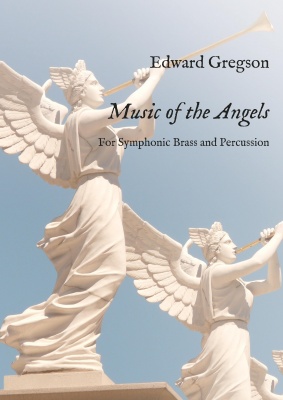
Music of the Angels (Symphonic Brass Ensemble - Score and Parts)
In 1998 Gregson was commissioned by conductor Martyn Brabbins to write a short concert opener with choir to mark his debut as Music Director of the Huddersfield Choral Society. Entitled ...and the seven trumpets... this ten minute flourish is founded on a verse from Chapter 8 of the Revelation To John (The Apocalypse), the last book in the Bible: 'and I saw the seven Angels which stood before God: and to them were given seven trumpets'. The performance employed the full power of the Huddersfield Town Hall organ and the brass section of the BBC Philharmonic, including seven trumpets and four horns placed strategically around hall.The following year, when Gregson received a commission from the Cheshire-based Foden's Brass Band (conducted at that time by Nicholas Childs) for a work to mark its centenary in 2000, he turned to the first portion of ...and the seven trumpets... as the basis for an ambitious celebratory work entitled The Trumpets of the Angels. "The opportunity to create an extended work which would break out of the brass band mould was an important milestone for me," the composer says. In 2015 he was asked by Nicholas Childs to create a new performing edition without organ for the Black Dyke Band. This received its first performance in April 2016 at the European Brass Band Festival in Lille. In 2018, Gregson revisited the music for a third time, returning the opening fanfares to orchestral brass and transforming substantial portions of the 'Black Dyke' version to create Music of the Angels, a dramatic canvas for symphonic brass and percussion.An array of bells and gongs offer an unmistakable key to the source of Gregson's inspiration. Inscribed In tribute to Olivier Messiaen, the work's principal material and its sound world, but crucially not the underlying musical processes, are influenced by Messiaen's masterpiece for wind and percussion, Et exspecto ressurectionem mortuorum (1964). Music of the Angels begins with braying of horns suggestive of the start of an ancient ritual. Six 'angel' trumpeters, set behind the ensemble, answer in sequence, with the evocative sound of tam-tams creating the Messiaen-like aura. Once the horns have reached the performing space, four of the trumpeters deliver highly contrasting fanfare cadenzas. At the climax of this episode, the individual fanfares are presented together, as if, perhaps, to reflect the Biblical writer's apocalyptic visions of hail, fire, seas of blood and the cataclysmic destruction of man and beast.This powerful vision of death and destruction gives way to a prayerful lament, re-imagining a sung Kyrie Eleison from the 'Black Dyke' edition, with flugel horn and euphonium obligati. The hushed atmosphere is broken by tenor and side drums, and trumpets five and six, which gallop away like the Horsemen of the Apocalypse. In the biblical account their steeds had 'heads like lions with fire and smoke and sulphur issuing from their mouths'.As the reverberation of a dramatic climax dies we hear the entry of the seventh trumpet, from 'on high', blazing forth with a version of the main that extends across the entire compass of the instrument - almost three octaves. Supported by a 'holy trinity' of gongs, an 'epic' final cadenza introduces new material which is further developed in a frenetic final section. This is announced by two sets of timpani, to the left and right. Braying brass (euphoniums and horns) once more adds an air of foreboding. As the music builds towards a magisterial conclusion, the Messiaen-inspired tritones of the principal motif are smoothed out into perfect 5ths and combined with the earlier material in a full-voiced chorale, over which the seventh trumpet blazes in triumph.- Programme note by Paul HindmarshScored for1 Trumpet in E flat (Trumpet 5)6 Trumpets in B flat (Trumpet 4 doubling Flugel Horn)4 Horns in F3 Tenor Trombones1 Bass TromboneEuphonium2 Tubas2 Timpani (Percussion 3 doubles Timpani 2)Percussion (3 players): 3 Tam-tams, 3 Suspended Cymbals, Bass Drum, Tenor Drum, Snare Drum, Tubular Bells.Duration: 16.00
Estimated dispatch 7-14 working days
-
 £62.72
Temperamental (Brass Band) Fendall Hill
This work by Fendall Hill was the set test for the 2021 National Brass Band Championships of New Zealand, B Grade. The composer writes: 'J.S. Bach (1685-1750) is deemed by many to be the 'Ulimate Composer'. He added an incredible proportion to the DNA of western music, and his influence is heard in the music of today. Like many artists, he was not overly recognised as a composer during his lifetime, and it took an 1829 performance of the St Matthew Passion by Mendelssohn to ignite a recognition of his place in the music world, a place he has maintained ever since. This piece starts with a similar spark of rediscovery of the music of Bach. It contains arrangements of various works, interspersed with composition based on Bach's chord structures, sections in the style of Bach, and original sections inspired by the moods created along the way. The first section explores the Toccata, and great organ works. This leads into an exploration of his choral works, and a finale based on the Preludes. The word 'Tempered' has different meanings, and all seem to apply to the music of Bach, and these appeal to the musical, engineering and spiritual aspects of my personal life. His music reaches to the humanity and divinity, it has strength, structure and order that creates frameworks in which incredible complexity reigns; and the complexity leads to a wildness, a kind of craziness that represents a range of human moods, and can change without warning. The same piece of music affects people in very different ways. I don't know if it's Bach's music, or us, but it can seem out of control and under control at the same time - the combination is highly temperamental. To view a follow-the-score video of the work please visit: https://youtu.be/zpNxITUqXZU Sheet music available from: UK - www.brassband.co.uk USA - www.solidbrassmusic.com Difficulty Level: 1st Section + Instrumentation: Soprano Cornet Eb Solo Cornet 1&2 Bb Solo Cornet 3&4 Bb 2nd Cornet Bb 3rd Cornet Bb Flugel Horn Bb Solo Horn Eb 1st Horn Eb 2nd Horn Eb 1st Baritone Bb 2nd Baritone Bb 1st Trombone Bb 2nd Trombone Bb Bass Trombone Euphonium Bb Bass Eb Bass Bb Timpani Percussion 1-4
In Stock: Estimated dispatch 1-3 working days
-
 £44.95
Triumphant (Brass Band - Score and Parts)
Triumphant was written as the opening work for the 2024 Future All-Stars final concert. Based on the well-known hymn Victory in Jesus (S.A.S.B. 464), the piece reimagines the familiar melody and words with energetic drumline-inspired rhythms and driving Bass groove.O victory in Jesus, my Saviour, for ever!He sought me and bought me with his redeeming blood;He loved me ere I knew him, and all my love is due him -He plunged me to victory beneath the cleansing flood.Musically speaking, the rhythmic pulse should remain confident and consistent throughout, with the percussion establishing the groove and the band locking in with precision. Take time to find a tempo that allows the Bass and Percussion parts to remain clear and accurate. A slightly steadier pace will produce a stronger, more convincing groove. However, a slower tempo can result in the band's playing becoming too heavy. Melodic lines should be played on the longer side, allowing phrases to sing over the rhythmic accompaniment that can be more defined and articulated. As the work builds, be patient and disciplined with dynamics, saving the band's fullest sound for the climactic moments, maximising their impact.
Estimated dispatch 7-14 working days
-
 £59.95
Aftershock (Brass Band - Score and Parts)
In this piece, the term "aftershock" serves as a metaphor for the Christian Church: commissioned by Jesus to carry forward the impact of his ministry and message. The Church is the spiritual aftershock of Christ's life, death, and resurrection - reverberating through history and into the present.Musically, the piece is constructed in three movements and built around motifs that pulse, echo, and resonate, symbolising the ongoing influence of Christ through his Church. Several well-known Christian songs are woven into its fabric, each contributing to the narrative of mission and worship. Build your Kingdom here (Rend Collective) affirms the Church's identity as "the hope on earth," while Major Leonard Ballantine's And you will be my witnesses (M.S. 1992-10) recalls Jesus' call to spread the gospel.The reflective central section features Matt Redman's I will offer up my life in spirit and truth, expressing personal devotion of a believer seeking to serive within the global Church.The finale draws on a traditional Salvation Army song by William Drake Pennick (S.A.S.B. 937), urging believers to proclaim the gospel far and wide: Tell the world, O tell the world!Make salvation's story heard;In the highways, in the byways,And in lands beyond the sea,do some witnessing for JesusWheresoever you may be.
Estimated dispatch 7-14 working days
-
 £59.95
Fantasia on an Old Dutch Hymn Tune (Brass Band - Score and Parts)
Kevin Norbury writes:This tune has always been a favourite of mine. It was first published in Holland in 1624 and then appeared in a later collection called David's Psalmen in 1685. In many hymnals it is still known by its original name, Vruechten. In the vast majority of cases, the melody is associated with the lyrics by George Ratcliffe Woodward, an ordained minister of the Church of England, who lived from 1848 to 1934.At no time in this piece do I envisage any heaviness of style. Even in slow movement, whilst predominantly homophonic, the music should flow and be transparent. The music seeks to capture the essence of joy in both the melody and words (S.A.S.B. 234).
Estimated dispatch 7-14 working days
-
£55.00
Firefly (brass band score & parts) - Simon Dobson
Firefly was composed by award-winning composer Simon Dobson (b.1981) to provide an entertaining up-tempo concert work for community and youth bands. Composed in funk-rock style, and is based on the groove beat with which it opens. Dobson says, "Firefly was written as a break from my more serious music and as a 'hat tip' to the various types of beat orientated music I listen to." It was first performed by Oslofjord Brass in Norway and in its wind version by Harmonie Shostakovich, Switzerland. Duration: 5-6 minutes. INSTRUMENTATION: 1 Eflat Sop. Cornet, Solo Cornets (4), Bflat Rep. Cornet (1), 2nd Bflat, Cornets (2), 3rd Bflat Cornets (2); Flugel horn, Solo Eflat Horn, 1st Eflat Horn, 2nd Eflat Horn; 1st Bflat Bar., 1 2nd Bflat Bar., 1st Trombone, 2nd Trombone, Bass Trombone; Bflat Euphoniums (2); Eflat Tubas (2); Bflat Tubas (2); 2 percussion
In Stock: Estimated dispatch 1-3 working days