
Results
-
 £47.50
You'll Never Walk Alone (Brass Band - Score and Parts) - Hammerstein & Rodgers - Oud, Thijs
This great football anthem, made famous worldwide when sung against the background of the Eiffel Tower to close the 1998 World Cup, can now be played and enjoyed by your brass band. An ideal piece to close any concert with.Duration: 2:10
Estimated dispatch 7-14 working days
-
 £60.99
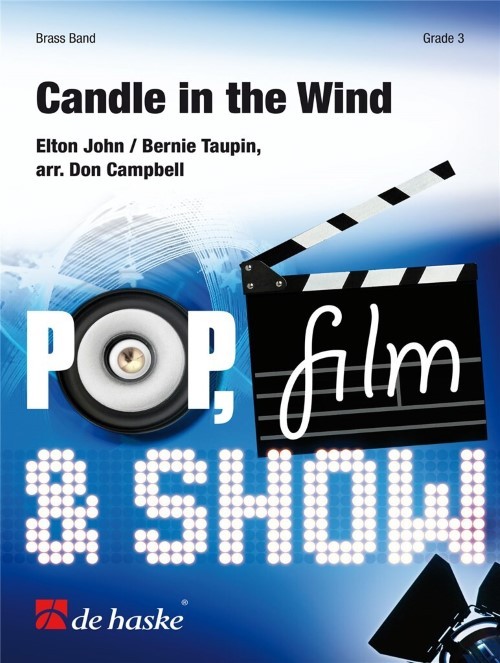
Candle in the Wind (Brass Band - Score and Parts) - John & Taupin - Campbell, Don
Candle in the Wind, the song Elton John originally wrote and dedicated to Marilyn Monroe, achieved worldwide fame when a special version was played at the funeral of Princess Diana. This arrangement by Don Campbell retains all the beauty of the original and will fit into any concert programme.Duration: 2.45
Estimated dispatch 7-14 working days
-
 £47.50
Intrada Festivo (Brass Band - Score and Parts) - Bulla, Stephen
Intrada Festivo by Stephen Bulla is an exciting opening piece. The cornets, together with the percussion, create a fantastic fanfare which will provide a spectacular opener for any concert.Duration: 3:15
Estimated dispatch 7-14 working days
-
 £60.99
Vom Himmel Hoch, O Englein Kommt (Brass Band - Score and Parts) - De Haan, Jan
The German Christmas song Von Himmel hoch, O Englein kommt is one of the oldest known German carols, with the earliest versions, also known as Susani, going back to the 14th century. This exceptional arrangement by Jan de Haan works extremely well for brass band and will make an ideal work for any Christmas concert.Duration: 3:00
Estimated dispatch 7-14 working days
-
 £72.99
Advents-Fantasie (Brass Band - Score and Parts) - Kernen, Roland
Roland Kernen has arranged the songs Macht hoch die Tur (Open Wide the Gates), Maria durch ein Dornwald ging (Maria Walks Amid the Thorns) and O Little Town of Bethlehem in his magical Advents-Fantasie. Within this work O Little Town of Bethlehem is skilfully used to connect the individual sections. A very varied and beautifully constructed composition to enrich any Christmas programme.Duration: 7.00
Estimated dispatch 7-14 working days
-
 £54.99
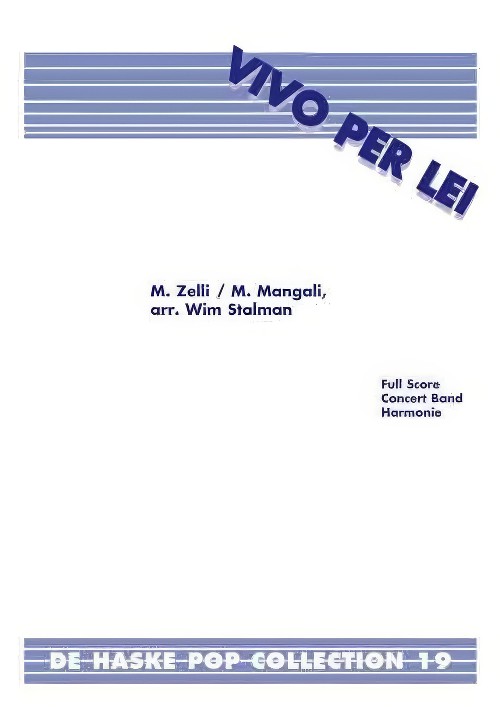
Vivo Per Lei (Brass Band - Score and Parts) - Stalman, Wim
A passionate desire for Andrea Bocelli's voice has spread across the world like wildfire for Andrea Bocelli possesses a truly remarkable voice. A voice as palpably powerful, as it is almost ethereal. Vivo Per Lei (I live for Her) tells of a passion so great that it is felt in every action, every moment of the day. This excellent arrangement will bring a moment of tender passion to any concert.Duration: 4:30
Estimated dispatch 7-14 working days
-
 £60.99
Magic Slides (Trombone Trio with Brass Band - Score and Parts) - Laseroms, Wim
This playful novelty item for three trombones and band makes use of the trombone's most entertaining feature - the glissando. Makes an ideal light interlude in any concert or a great encore piece.Duration: 4:15
Estimated dispatch 7-14 working days
-
 £52.50
Olympic Fanfare and Theme (Brass Band - Score and Parts) - Curnow, James
Dramatic trumpet fanfares announce a flowing main theme, creating an atmosphere of exhilaration and anticipation. Commissioned for the 1996 Atlanta Centennial Olympics, Olympic Fanfare and Theme will make a brilliant opener for any occasion.Duration: 3.30
Estimated dispatch 7-14 working days
-
 £52.50
Scherzo for Xylophone (Xylophone Solo with Brass Band - Score and Parts) - Curnow, James
Let your percussionist shine with this exciting lively work for xylophone and brass band. Makes an ideal encore piece or lighter item in any concert programme.Duration: 3.00
Estimated dispatch 7-14 working days
-
 £54.99
Earth Song (Brass Band - Score and Parts) - Jackson, Michael - Sebregts, Ron
Michael Jackson, the King of Pop, died in Los Angeles on June 25th 2009. He can without any shadow of a doubt be compared with artists such as Elvis Presley, Jimi Hendrix, and John Lennon - all of them musicians who will never die in the hearts of their fans. Why not keep the legend of Michael Jackson alive in your next concert with this hit from Michael Jackson's repertoire arranged for Brass Band.Duration: 3:40
Estimated dispatch 7-14 working days
 View Music