
Results
-
 £89.99
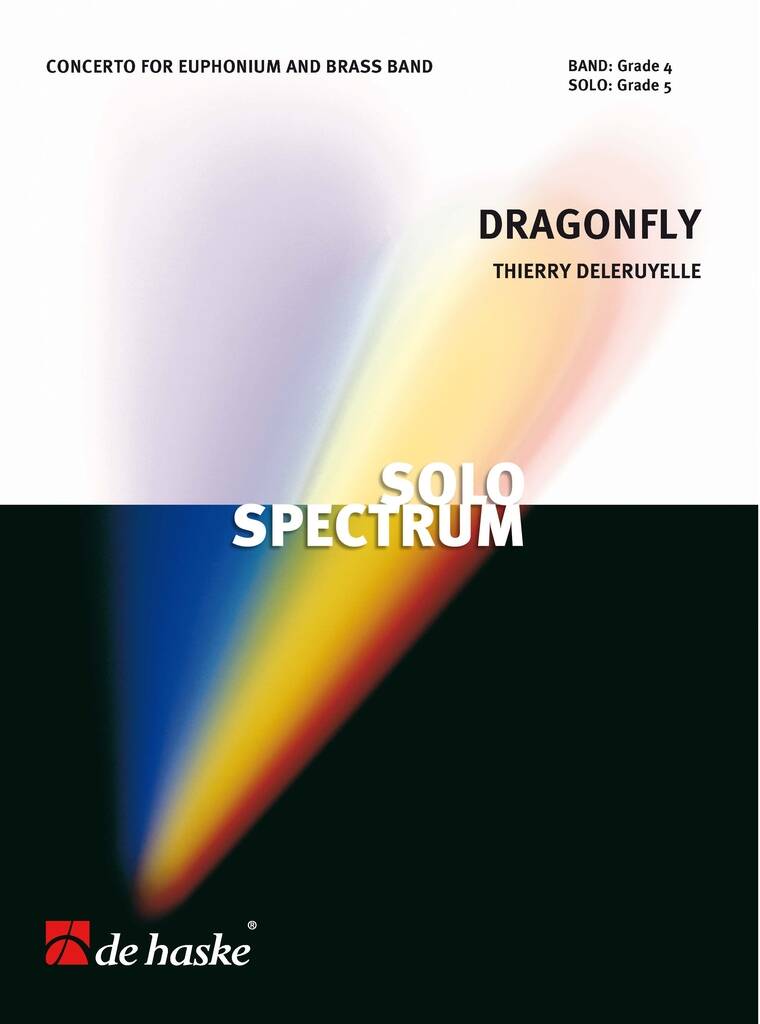
Dragonfly - Thierry Deleruyelle
Dragonfly was commissioned by Bastien Baumet, an international French soloist, as a new departure in euphonium repertoire. The concerto can be accompanied by wind band or brass band, as well as with piano accompaniment.Written in three uninterrupted parts, a slow and warm theme separates two dynamic, swift, and agile sections. Like a dragonfly, the music flies sometimes with jolts, sometimes with serenity, allowing us to discover landscapes, colours, and changing horizons. Dragonfly showcases the soloist's inspired melodic curves, beautiful tone, and virtuosity.A graduate of the Paris Conservatoire and first prize winner in the prestigious Jeju International Competition in South Korea, Bastien Baumet is a leading figure in the euphonium world. He will be performing this concerto all over the world, to triumphant acclaim wherever he goes.
Estimated dispatch 5-14 working days
-
£34.95
CONCERT PIECE (Morceau Symphonique) (Trombone Solo with Brass Band Set) - Guilmant - Ray Steadman-Allen
Guilmant was an organist of the Church of Trinity, Paris and was also a staff member at the Paris Conservatoire. Concert Piece (also known as Morceau Symphonique) consists of a slow prelude followed by a quicker, more brilliant section, the two linked by a cadenza. A lyrical element persists in the second section and there is a brief return to the theme of the prelude following which the music is brought to a fiery and exciting conclusion.
Estimated dispatch 7-14 working days
-
 £34.95
Judd: Concert Piece For Trombone
Guilmant was an organist of the Church of Trinity, Paris and was also a staff member at the Paris Conservatoire. Concert Piece (also known as Morceau Symphonique) consists of a slow prelude followed by a quicker, more brilliant section, the two linked by a cadenza. A lyrical element persists in the second section and there is a brief return to the theme of the prelude following which the music is brought to a fiery and exciting conclusion.
Estimated dispatch 7-14 working days
-
 £64.95
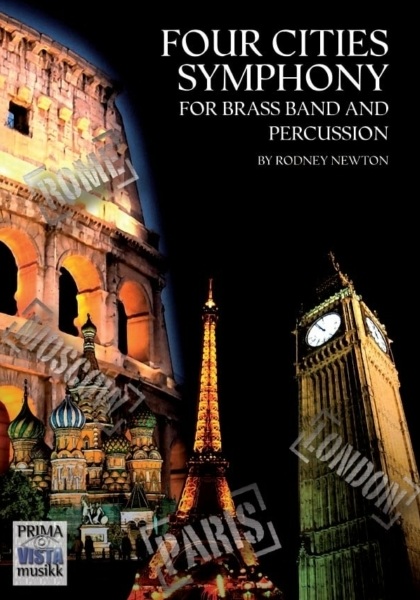
Four Cities Symphony (Brass Band - Score and Parts)
This piece was commissioned by the National Contesting Council as the 4th section test piece for the 2008 Regional Brass Band Championships of Great Britain.This symphony (the composer's 12th) has four movements played without a break. The first centres on two aspects of the city of London: its history and pageantry and its role as a busy modern metropolis.The second movement depicts Paris, its street cafes and boulevards and riverside walks, in the form of a romantic waltz.The third movement is constructed around the Gregorian chants of the Lord's Prayer (Pater noster, qui es in caelis) and the Creed (Credo in unum Deum) in an evocation of the city of Rome. After a powerful climax, mysterious tramping footsteps are heard as the ghosts or a Roman legion march through the city by night. The vision fades and the pater noster is heard once again before the movement is brought to a close with the ancient Ambrosian chant, Christus Vincit, Christus Regnet, Christus Imperat.The final movement is an evocation of the city of Moscow, with its great historic buildings, its turbulent history and its fiery traditional music. At the outset a rather dour folk-like melody is heard which is transformed into a lively Cossack dance.This work is dedicated to Howard Wilson, former principal euphonium of City of Coventry Band who, in 1972, introduced the composer to top section brass band contesting.Duration: 11.00
Estimated dispatch 7-14 working days
-
 £33.62
Les Chasseresses from 'Sylvia' (Brass Band) Delibes arr. Rob Bushnell
Clement Philibert Leo Delibes was a French composer, best known for his ballets and operas, including works such as Lakme (with its famous "Flower Duet"), Coppelia and Sylvia (both key works in the development of modern ballet). The latter started as a play, Aminta, by the Italian poet Torquato Tasso, which Delibes set to music. It was then adapted for the Paris Opera with rehearsals starting in August 1875. The premiere took place on 14 June 1876 and was the first ballet to be shown at the newly-built Opera Garnier. Whilst the scenery and costumes were created by top artists and designers (Cheret and Lacoste), it was Delibes's music that shown thrown, being said to have saved the production, preventing the ballet from drifting into obscurity.Sylvia is said to be one of the first modern ballets, with Tchaikovsky remarking to composer Sergei Taneyev upon its ingenuity: "... the first ballet, where the music constitutes not only the main, but the only interest. What charm, what elegance, what richness of melody, rhythm, harmony." Although Swan Lake, a contemporary to Sylvia, is considered one of the best ballets there is, Tchaikovsky preferred Sylvia to his own work, saying Swan Lake was "poor stuff in comparison". Tchaikovsky said to Taneyev, "I was ashamed. If I had known this music early then, of course, I would not have written Swan Lake". The music to Sylvia, rather than setting only the mood, also sets the action and is noted for its use of leitmotifs - Delibes was an admirer of Wagner - and more dominant use of brass and wind. The most famous piece from this ballet is the Pizzicati in the third act.Act I of the ballet takes place in sacred wood, where creatures are worshipping before Eros when Sylvia arrives with her huntresses to mock the god of love. Aminta, a lowly shepherd and infatuated with Sylvia, protects the deity and Sylvia is wounded by Eros's arrow. The hunter Orion kidnaps Sylvia, whilst Eros revives Aminta. Act II takes place in Orion's Island cave, where Sylvia tries to bribe Orion with jewels and wine. Unsuccessful, she appeals to Eros for help, who arrives and takes her to the temple of Diana (where the final act takes place). Orion and Aminta fight, Sylvia and Orion cause the goddess of the hunt, Diana, to be outraged, smiting Orion and denying the love of Aminta and Sylvia. Eros shows Diana a vision, which changes her mind and the couple finally come together.This brilliant and lively fanfare that introduces the huntresses in the first act is arranged here for the UK-style brass band, with alternative parts for horns in F and bass-clef lower brass. The piece has been lowered by a tone compared to the original. A recording of the original composition can be found here https://youtu.be/6yoGrUH38PI?si=0L0bFa1qXnYNvkR3 Duration: Approx. 3.10 minutes Difficulty Level: 1st Section + This PDF download includes the full score and parts. Includes alternative parts for soloist in Eb, horns in F and lower brass in bass clef. Sheet music available at www.brassband.co.uk (UK) or https://satradecentral.org (USA) Instrumentation: Soprano Cornet Eb Solo Cornet Bb Repiano Cornet Bb 2nd Cornet Bb 3rd Cornet Bb Flugel Horn Bb Solo Horn Eb 1st Horn Eb 2nd Horn Eb 1st Baritone Bb 2nd Baritone Bb 1st Trombone Bb 2nd Trombone Bb Bass Trombone Euphonium Bb Bass Eb Bass Bb Timpani Percussion - Triangle, Cymbal & Bass Drum
In Stock: Estimated dispatch 1-3 working days
-
 £34.95
Concert Piece (Morceau Symphonique) (Trombone Solo with Brass Band - Score and Parts) - Guilmant, Alexandre - Steadman-Allen, Ray
Guilmant was an organist of the Church of Trinity, Paris and was also a staff member at the Paris Conservatoire. Concert Piece (also known as Morceau Symphonique) consists of a slow prelude followed by a quicker, more brilliant section, the two linked by a cadenza. A lyrical element persists in the second section and there is a brief return to the theme of the prelude following which the music is brought to a fiery and exciting conclusion.
Estimated dispatch 7-14 working days
-
£17.50
Concert Piece (Morceau Symphonique) (Trombone Solo with Brass Band - Score only) - Guilmant, Alexandre - Steadman-Allen, Ray
Guilmant was an organist of the Church of Trinity, Paris and was also a staff member at the Paris Conservatoire. Concert Piece (also known as Morceau Symphonique) consists of a slow prelude followed by a quicker, more brilliant section, the two linked by a cadenza. A lyrical element persists in the second section and there is a brief return to the theme of the prelude following which the music is brought to a fiery and exciting conclusion.
Estimated dispatch 7-14 working days
-
 £64.95
Four Cities Symphony (Brass Band - Score and Parts) - Newton, Rodney
This piece was commissioned by the National Contesting Council as the 4th section test piece for the 2008 Regional Brass Band Championships of Great Britain.This symphony (the composer's 12th) has four movements played without a break. The first centres on two aspects of the city of London: its history and pageantry and its role as a busy modern metropolis.The second movement depicts Paris, its street cafes and boulevards and riverside walks, in the form of a romantic waltz.The third movement is constructed around the Gregorian chants of the Lord's Prayer (Pater noster, qui es in caelis) and the Creed (Credo in unum Deum) in an evocation of the city of Rome. After a powerful climax, mysterious tramping footsteps are heard as the ghosts or a Roman legion march through the city by night. The vision fades and the pater noster is heard once again before the movement is brought to a close with the ancient Ambrosian chant, Christus Vincit, Christus Regnet, Christus Imperat.The final movement is an evocation of the city of Moscow, with its great historic buildings, its turbulent history and its fiery traditional music. At the outset a rather dour folk-like melody is heard which is transformed into a lively Cossack dance.This work is dedicated to Howard Wilson, former principal euphonium of City of Coventry Band who, in 1972, introduced the composer to top section brass band contesting.Duration: 11.00
Estimated dispatch 7-14 working days
-
 £69.95
The Journal of Phileas Fogg (Brass Band - Score and Parts) - Graham, Peter
2016 National Championships Regional Testpiece - 3rd Section.The novels by Jules Verne have been a rich source of inspiration for composers over the years. Graham has taken elements of the epic work Around the World in Eighty Days as the outline for a series of adventures recorded in an imaginary diary by the hero of the story, Phileas Fogg.Commencing with London bells in the background, the ensuing journey takes our hero by boat train to Paris (passing the Moulin Rouge en route), Russia (where he is chased by Cossacks), Vienna at night, Spain (where he is a spectator at a bull fight) before a final circumnavigation by sea (where we hear hints of foreign lands) brings him back to London with rich memories of his trip.The Journal of Phileas Fogg was commissioned by Dr Nicholas Childs for the National Children's Brass Band of Great Britain and was first performed by them in July 2012, conducted by Dr Robert Childs.
Estimated dispatch 7-14 working days
-
£29.95
The Journal of Phileas Fogg (Brass Band - Score only) - Graham, Peter
2016 National Championships Regional Testpiece - 3rd Section.The novels by Jules Verne have been a rich source of inspiration for composers over the years. Graham has taken elements of the epic work Around the World in Eighty Days as the outline for a series of adventures recorded in an imaginary diary by the hero of the story, Phileas Fogg.Commencing with London bells in the background, the ensuing journey takes our hero by boat train to Paris (passing the Moulin Rouge en route), Russia (where he is chased by Cossacks), Vienna at night, Spain (where he is a spectator at a bull fight) before a final circumnavigation by sea (where we hear hints of foreign lands) brings him back to London with rich memories of his trip.The Journal of Phileas Fogg was commissioned by Dr Nicholas Childs for the National Children's Brass Band of Great Britain and was first performed by them in July 2012, conducted by Dr Robert Childs.
Estimated dispatch 7-14 working days
 View Music