
Results
-
 £24.95
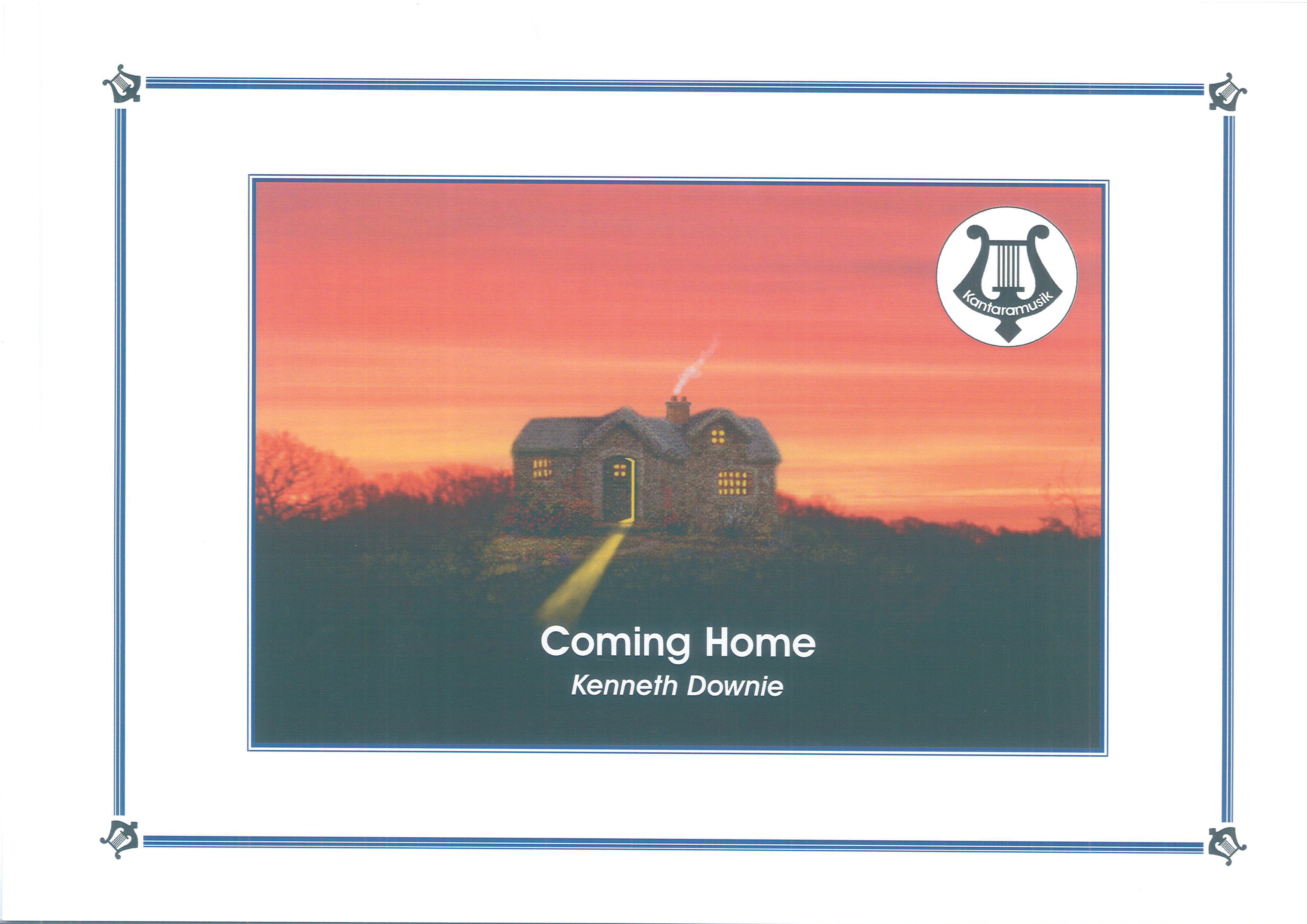
Coming Home (Brass Band - Score and Parts)
The arranger has described Coming Home! as music of reconciliation. In a world of conflict, at both national and personal level, it would be good to think that this music could bring a message of hope and resolution of problems for people who are hurting. It is a setting of Will Lamartine Thompson's melody to his own words beginning 'Softly and tenderly Jesus is calling'. The chorus starts 'Come home, come home! Ye who are weary,come home!'. The rising interval of a fifth is always associated with the words 'Come home'. It is the arrangers hope that the gentle and moving nature of this music will create for all listeners, whether or not they possess religious faith, a spirit of harmony and reconciliation.
Estimated dispatch 7-14 working days
-
 £34.95
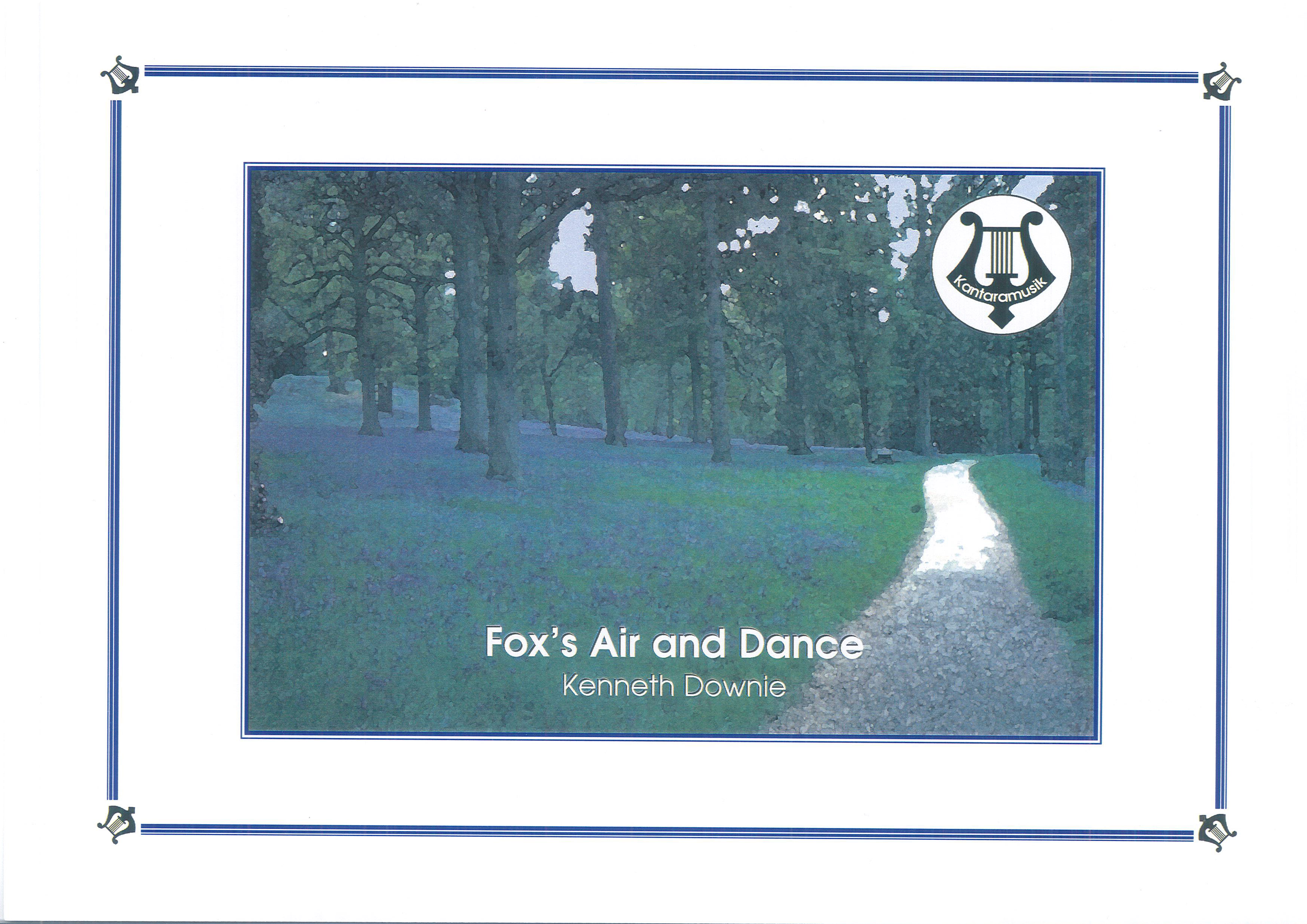
Fox's Air and Dance (Brass Band - Score and Parts)
This is a one-movement composition, albeit in two sections, that is accessible to bands of most abilities and to all audiences. The Air is in a good-natured, easy-going style while the Dance section is a bit of a romp loosely based on the traditional tune 'In and out the dusty bluebells'.
Estimated dispatch 7-14 working days
-
 £30.00
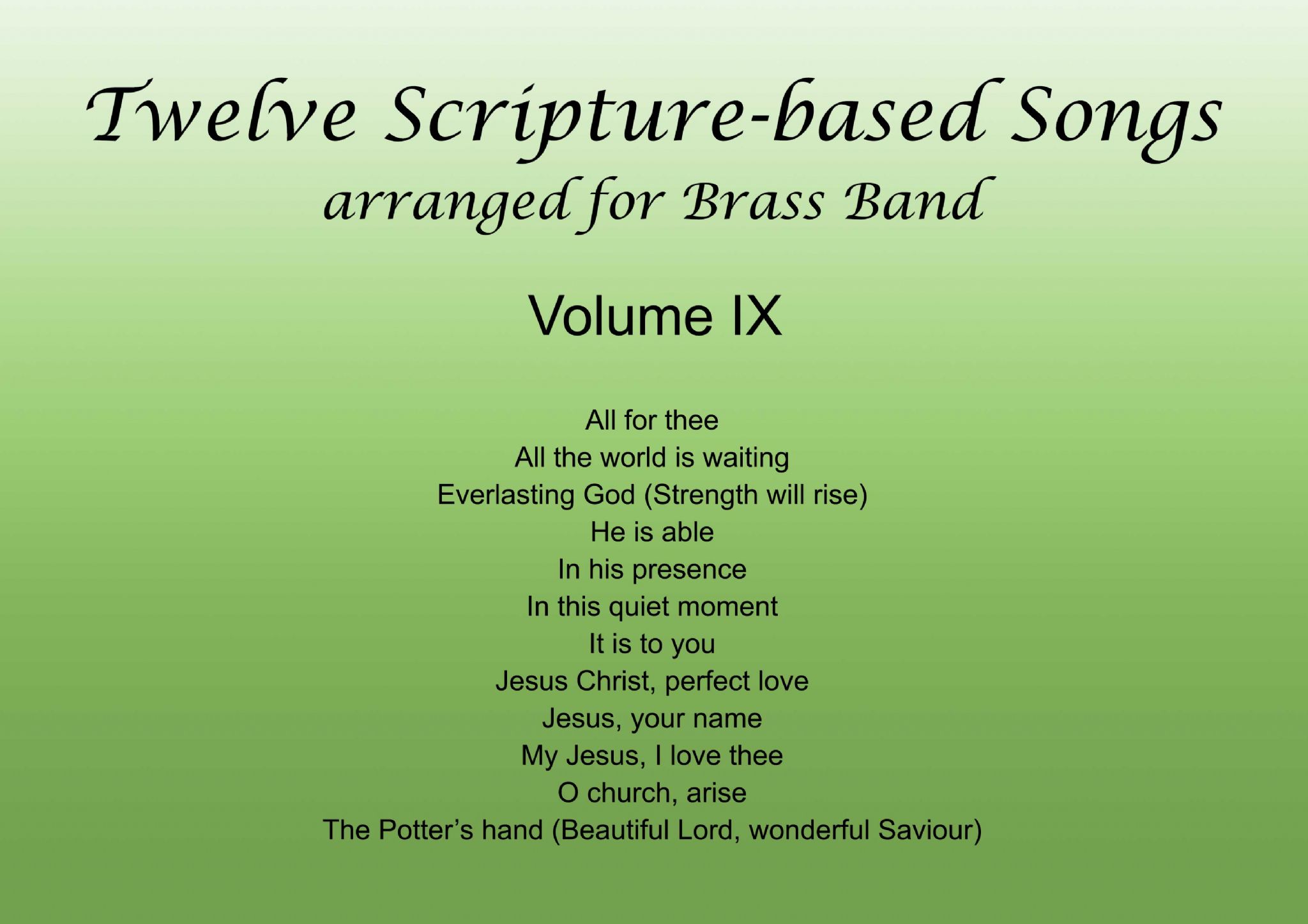
Twelve Scripture-Based Songs Volume IX
Twelve scripture-Based Songs arranged for Brass Band (Volume IX) are packaged and marketed in complete sets which include a full score and a set of master parts. It is intended that these parts be used as 'masters', for the purpose of photocopying a quantity of parts to accommodate the precise instrumentation needs of the band for which this has been purchased.All for theeAll the world is waitingEverlasting God (Strength will rise)He is ableIn his presenceIn this quiet momentIt is to youJesus Christ, perfect loveJesus, your nameMy Jesus, I love theeO church, ariseThe Potter's hand (Beautiful Lord, wonderful Saviour)
Estimated dispatch 7-14 working days
-
 £45.00
Starburst
Commissioned by the Greater Manchester Hub Youth Brass Band for their 2014 season, Starburst is a high-octane work in a contemporary style with elements of rock and funk fusion. The piece features soloistic input from all sections, with vibrant percussion colours adding to the overall effectiveness. Although the piece sounds extremely virtuosic it is accessible for most bands, and is fun to rehearse as well as exciting to listen to. Duration: 00:04:00 Grade: 3 (Works well when paired with Aurora Awakes)
Estimated dispatch 5-7 working days
-
 £33.62
Abide with me (Brass Band) William H. Monk arr. Greg Jasperse trs. Espen Haukas
VIEW SCORE PDF Greg Jasperse's choral setting of the much-loved hymn Abide with me has become very popular with choirs and has here been arranged for brass band by Norwegian composer Espen Haukas. The scoring is for standard brass band although the Repiano Cornet part is set as a second Flugel part. Optional cues are written for some upper register notes meaning the piece is playable by bands of all levels. To view a follow-the-score video with Bjorsvik Brass performing the work please visit: www.youtube.com/watch?v=lVHlQW_8Pao Sheet music available from: UK - www.brassband.co.uk USA - www.solidbrassmusic.com Difficulty Level: 4th Section + Instrumentation: Soprano Cornet Eb Solo Cornet 1&2 Bb Solo Cornet 3&4 Bb 2nd Cornet Bb 3rd Cornet Bb Flugel Horn 1&2 Bb Solo Horn Eb 1st Horn Eb 2nd Horn Eb 1st Baritone Bb 2nd Baritone Bb 1st Trombone Bb 2nd Trombone Bb Bass Trombone Euphonium 1&2 Bb Bass Eb Bass Bb Percussion 1-3
In Stock: Estimated dispatch 1-3 working days
-
 £59.77
Avifauna (Brass Band) Joshua Tyler Jameson
This highly descriptive work was commissioned by the National Youth Brass Band of America and will be a terrific concert or entertainment contest item. The music paints the picture of the lives of a variety of different birds. The composer writes: 'When I began thinking about this project I was sitting in my office in the early morning, the sun having just risen. There was a gentle breeze and the only thing that I could hear (aside from my hungry whining cats) was the gentle song of the birds outside my open window. As much of my work is programmatic, almost like symphonic poems, this immediately gave me the image of a majestic sunrise with all types of birds fluttering about, almost as if out of an episode of Planet Earth. When I was commissioned by the National Youth Brass Band of America, I knew the project had to be something the ensemble could grab onto. Something they could see. Something they could relate to. There being so many types of birds in North America, I selected a handful to help tell my story... The scene where I came up with this idea seemed to be the perfect starting point. Sunrise, tiny chirps of Morning Birds floating around the twilight of dawn, swiftly moving towards the majesty of the sun cresting the horizon. A new day, the beginning of a story. As the sun rises higher in the sky, animal activity stirs, becoming lively and wild. The flowers have opened up to drink in the sun's rays, leaving them open to nectar-seeking Hummingbirds. Whizzing by at lightning speed, the hummingbirds journey from flower to flower, drinking their fill until the sun begins to set back over the horizon. When daylight fades, the enigmatic Owl floats silently through the sky. The wonder of these creatures comes not just from their beauty, but also from their mystery and their ferocity. We see images in pop culture of majestic white owls and marvel in their beauty... but to a mouse roaming the forest floor in the dark of the night, the terror of suddenly being dropped upon by a silent predator is anything but peaceful. In the dead of night, soft rolling clouds thicken as a storm begins to brew. With the ensuing rain also emerges the grotesque scavenging Vulture; marching along from carcass to carcass, tearing into the rotting leftovers of another predator's kill, gorging themselves until over-full. However, from this nightmare fuel of a bird, a new day awaits... As the dawn of another day approaches, you begin to hear the same morning birds you heard the previous day. When the light finally breaks the horizon, the soaring majesty of the Eagle drives us to the end of our story; an exciting journey told through the eyes of the winged creatures that paint the skies of North America. This is Avifauna.' To view a follow-the-score video please visit: www.youtube.com/watch?v=J2bhBpx9KvM Sheet music available from: UK - www.brassband.co.uk USA - www.solidbrassmusic.com Difficulty Level: 2nd Section + Instrumentation: Soprano Cornet Eb Solo Cornet Bb Repiano Cornet Bb 2nd Cornet Bb 3rd Cornet Bb Flugel Horn Bb Solo Horn Eb 1st Horn Eb 2nd Horn Eb 1st Baritone Bb 2nd Baritone Bb 1st Trombone Bb 2nd Trombone Bb Bass Trombone Euphonium Bb Bass Eb Bass Bb Percussion 1-4
In Stock: Estimated dispatch 1-3 working days
-
 £37.35
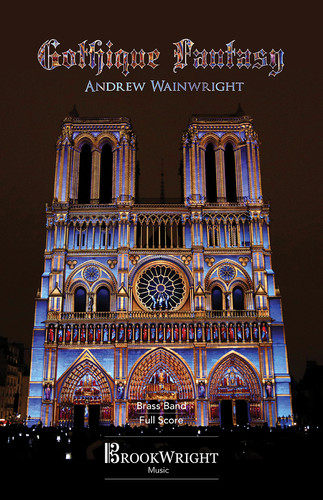
Gothique Fantasy - On a theme by Boellmann (Brass Band Score) Andrew Wainwright
This magnificent work was commissioned by The Illinois Brass Band for the 2024 North American Brass Band Championships. It is also the title track of the 2026 CD by Black Dyke Band, featuring the music of Andrew Wainwright. Please note this PDF download is for the full score. The full set can be purchased here. Based on Leon Boellmann's epic organ work Suite Gothique, the 3rd movement of which is entitled Priere a Notre-Dame (A Prayer for Notre Dame), it pays tribute to the nearly 700-year-old Notre-Dame de Paris after the fire which did so much damage to this iconic building. Notre-Dame stands out for its three pipe organs (one historic) and its immense church bells, which are referenced at various times in Gothique Fantasy. Two of the other movements from Boellmann's work also provide inspiration for the piece, firstly the Introduction - Choral, and the famous Toccata, snippets of which appear at various times in the piece. Gothique Fantasy opens with the Choral, a solo offstage cornet sounding the opening statement. A quintet, stood to the side of the stage, takes up the Choral, while the rest of the band enters on held muted notes, creating a sustained effect evoking the harmonies spreading across the vast cathedral. Colossal organ-like sounds announce themselves as the full band takes on the theme. A lively Animato follows. Here there are continued references to the Choral, while the famous Toccata motif starts to appear. A Misterioso section ensues, which leads into a poignant Prayer for Notre Dame featuring a euphonium duet, where the music reflects upon the devasting fire and centuries of history and artefacts that were lost. A lone euphonium the sounds, representing the remaining remnants of the cathedral. A chaotic and rhythmic Presto, based on the Toccata, then follows and tests the technique of the band from top to bottom, whilst moving through various time signatures, the pulse lacking any sense of stability. A return to the Choral theme leads into a further reflective section, this time featuring the secondary theme from the Toccata with a flugel and solo horn duet. Next the music arrives at an aleatory section (Senza Misura), which depicts the remnants of the fire, followed by the grand cathedral emerging out of the ashes. Various motifs from earlier in the piece are heard across the band. At this point, various parts enter at different times on the conductor's signal, before building towards a 6/8 Presto. Here the music gathers momentum as it leads to a Grandioso finale featuring the Choral in all its glory. However, to conclude the work, the final strains of the Toccata sound, bringing the work to a glorious conclusion as Notre-Dame rises again! To view a video of The Illinois Brass Band performing the work please visit www.youtube.com/watch?v=xG3JB6Ye5aU Duration: 15.00 minutes approx. Difficulty Level: Championship Section Sheet music available from www.brassband.co.uk Instrumentation: Soprano Cornet Eb Solo Cornet Bb Repiano Cornet Bb 2nd Cornet Bb 3rd Cornet Bb Flugel Horn Bb Solo Horn Eb 1st Horn Eb 2nd Horn Eb 1st Baritone Bb 2nd Baritone Bb 1st Trombone Bb 2nd Trombone Bb Bass Trombone Euphonium Bb Bass Eb Bass Bb Percussion 1-4
In Stock: Estimated dispatch 1-3 working days
-
 £33.62
Sunset (Cornet Solo with Brass Band) David Robb
Sunset was written in June 2023 as a graduation present for the composer's son Callum and is dedicated to him. It portrays an older father (the composer) reminiscing about the love, respect and pride he has for his grown-up son and all that he has achieved and worked for. Sunset is lyrical and song-like in style. A soaring solo line is accompanied by a mainly homophonic background which should support, but never overpower the soloist. The tutti sections feature the melody accompanied by flowing scalic figures which portray the passing of time. The piece ends with an ad lib cadenza section where the soloist can really put their own mark on the music. To view a video of Dominic Longhurst and Victoria Brass performing the solo please visit www.youtube.com/watch?v=nzYwOvlqaYU PDF download includes score and parts. Sheet music available from: UK - www.brassband.co.uk USA - https://satradecentral.org Difficulty Level: 4th Section + Length: 4.10 minutes Instrumentation: Cornet Soloist Bb Soprano Cornet Eb Tutti Solo Cornet Bb Repiano Cornet Bb 2nd Cornet Bb 3rd Cornet Bb Flugel Horn Bb Solo Horn Eb 1st Horn Eb 2nd Horn Eb 1st Baritone Bb 2nd Baritone Bb 1st Trombone Bb 2nd Trombone Bb Bass Trombone Euphonium Bb Bass Eb Bass Bb Timpani Suspended Cymbal Glockenspiel
In Stock: Estimated dispatch 1-3 working days
-
 £63.51
Temperamental (Brass Band) Fendall Hill
This work by Fendall Hill was the set test for the 2021 National Brass Band Championships of New Zealand, B Grade. The composer writes: 'J.S. Bach (1685-1750) is deemed by many to be the 'Ulimate Composer'. He added an incredible proportion to the DNA of western music, and his influence is heard in the music of today. Like many artists, he was not overly recognised as a composer during his lifetime, and it took an 1829 performance of the St Matthew Passion by Mendelssohn to ignite a recognition of his place in the music world, a place he has maintained ever since. This piece starts with a similar spark of rediscovery of the music of Bach. It contains arrangements of various works, interspersed with composition based on Bach's chord structures, sections in the style of Bach, and original sections inspired by the moods created along the way. The first section explores the Toccata, and great organ works. This leads into an exploration of his choral works, and a finale based on the Preludes. The word 'Tempered' has different meanings, and all seem to apply to the music of Bach, and these appeal to the musical, engineering and spiritual aspects of my personal life. His music reaches to the humanity and divinity, it has strength, structure and order that creates frameworks in which incredible complexity reigns; and the complexity leads to a wildness, a kind of craziness that represents a range of human moods, and can change without warning. The same piece of music affects people in very different ways. I don't know if it's Bach's music, or us, but it can seem out of control and under control at the same time - the combination is highly temperamental. To view a follow-the-score video of the work please visit: https://youtu.be/zpNxITUqXZU Sheet music available from: UK - www.brassband.co.uk USA - www.solidbrassmusic.com Difficulty Level: 1st Section + Instrumentation: Soprano Cornet Eb Solo Cornet 1&2 Bb Solo Cornet 3&4 Bb 2nd Cornet Bb 3rd Cornet Bb Flugel Horn Bb Solo Horn Eb 1st Horn Eb 2nd Horn Eb 1st Baritone Bb 2nd Baritone Bb 1st Trombone Bb 2nd Trombone Bb Bass Trombone Euphonium Bb Bass Eb Bass Bb Timpani Percussion 1-4
In Stock: Estimated dispatch 1-3 working days
-
 £79.95
Lost Village of Imber, The - Christopher Bond
The village of Imber on Salisbury Plain had been inhabited for over one thousand years when it was evacuated in 1943 to make way for military training in the Second World War. At the time, with preparations for the Allied invasion of Europe underway, most villagers put up no resistance, despite being upset, with the belief that they'd return once the war had concluded. To this day, Imber and its surrounding land remain a military training ground. The villagers never returned, and just the shell of what was once a community remains. Structured in three movements, it is on this very real story that the work is based, setting out the series of events of 1943 in chronological order. The first movement, On Imber Downe, portrays a sense of jollity and cohesiveness - a community of individuals living and working together before news of the evacuation had broken. Sounds of the village are heard throughout, not least in a series of percussive effects - the anvil of the blacksmith; the cowbell of the cattle and the bells of the church. The second movement, The Church of St. Giles, begins mysteriously and this sonorous, atmospheric opening depicts Imber in its desolate state and the apprehension of residents as they learn they have to leave their homes. Amidst this is the Church, a symbol of hope for villagers who one day wish to return, portrayed with a sweeping melodic passage before the music returns to the apprehension of villagers facing eviction around their sadness at losing their rural way of life. In complete contrast, the third movement, Imemerie Aeternum, portrays the arrival of the military, complete with the sounds of the ammunition, firing and tanks - sounds which were all too familiar to those living in the surround areas. To close, the Church of St. Giles theme returns in a triumphant style, representing the idea that the church has always been, even to this day, a beacon of hope for the villagers and local community - both the centrepiece and pinnacle of a very real story. The work was commissioned by Bratton Silver Band in celebration of the band's 160th Anniversary, with funding from the Arts Council National Lottery Project Grants Fund and the Brass Bands England Norman Jones Trust Fund.
Estimated dispatch 10-14 working days