Results
-
 £22.50
A Pastoral Symphony (Brass Band - Score only) - Redhead, Robert
This symphony for brass band seeks to explore the thought that 'the greatest need of any congregation is its pastor's personal holiness'. The first movement challenges the pastor 'to serve the present age', the tunes 'Majesty' and 'Lathbury' are used. The second movement expresses a priority to 'Seek...first the Kingdom of God'. The short third movement presents the question 'Except I am moved with compassion, how dwellest they Spirit in me?' before the triumphant finale reflects the desire of every Christian that his life and work will always be for the glory of God with the presentation of 'In my life Lord, be glorified'.
Estimated dispatch 7-14 working days
-
£44.95
Themes from The New World Symphony (Brass Band - Score and Parts) - Steadman-Allen, Ray
For three years the Czech composer Dvorak lived and worked in America and this, his ninth and last symphony, contains impressions of that continent. This arrangement for brass band follows the scheme of the original in movement order and theme presentation although a certain amount of 'condensing' of material has naturally been inevitable.
Estimated dispatch 7-14 working days
-
£22.50
Themes from The New World Symphony (Brass Band - Score only) - Steadman-Allen, Ray
For three years the Czech composer Dvorak lived and worked in America and this, his ninth and last symphony, contains impressions of that continent. This arrangement for brass band follows the scheme of the original in movement order and theme presentation although a certain amount of 'condensing' of material has naturally been inevitable.
Estimated dispatch 7-14 working days
-
 £42.95
ANDANTE (from 6th Symphony) (Brass Band) - Barry, Darrol
This famous melody is adored around the world. It was also the basis for a very popular 'pop' song Story of a Starry Night.
Estimated dispatch 7-14 working days
-
 £125.00
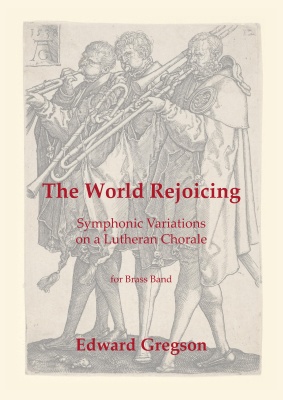
The World Rejoicing (Brass Band - Score and Parts)
The World Rejoicing was commissioned by the National Brass Band Associations of Belgium, Netherlands, Norway, Switzerland, and the British Open, as the test piece for their competitions in 2020/21. Although the work was completed in 2019, the pandemic of 2020 meant that these competitions were postponed until 2021/22. The premiere took place in September 2021 at Symphony Hall, Birmingham, UK.In searching for a common link between the brass band traditions of the various European countries that commissioned this work, I considered the fact that hymns have always played an important role in the relationship that brass bands have with their particular communities; and thus I turned to a well- known Lutheran chorale, Nun danket alle Gott (Now thank we all our God), written around 1636 by Martin Rinkart, with the melody attributed to Johann Cruger. A number of composers have incorporated this chorale into their music, most famously J.S. Bach in his Cantatas no. 79 and 192, and Mendelssohn in the Lobsegang movement of his 2nd Symphony (the harmonisation of which is usually used when this hymn is sung).It seemed fitting therefore for me to return to a compositional form I have used many times before (Variations) and to write a work based on this hymn. I have used it in a similar way to that which I employed in my Variations on Laudate Dominum of 1976 - that is, rather than writing a set of variations using elaborations of the complete tune, I have taken various phrases from the chorale and used them within the context of other musical material, applying an overall symphonic process of continuous variation and development. The structure, or sub-divisions of the work, which is through composed and plays without a break, is as follows:Prelude, Capriccio, La Danza 1, Processional, La Danza 2, Arias and Duets, Fuga Burlesca, Chorale, and Postlude.The work, which is around 16 minutes in length, is also partly autobiographical - in the manner say of Strauss's Ein Heldenleben - in that I have incorporated into the score brief quotations from many of my other major works for brass band. In that respect, The World Rejoicing sums up a particular facet of my life as a composer, and reflects the admiration I have always had for what is surely one of the great amateur music-making traditions in the world.Duration: 16.00
Estimated dispatch 7-14 working days
-
£40.00
The World Rejoicing (Brass Band - Score only)
The World Rejoicing was commissioned by the National Brass Band Associations of Belgium, Netherlands, Norway, Switzerland, and the British Open, as the test piece for their competitions in 2020/21. Although the work was completed in 2019, the pandemic of 2020 meant that these competitions were postponed until 2021/22. The premiere took place in September 2021 at Symphony Hall, Birmingham, UK.In searching for a common link between the brass band traditions of the various European countries that commissioned this work, I considered the fact that hymns have always played an important role in the relationship that brass bands have with their particular communities; and thus I turned to a well- known Lutheran chorale, Nun danket alle Gott (Now thank we all our God), written around 1636 by Martin Rinkart, with the melody attributed to Johann Cruger. A number of composers have incorporated this chorale into their music, most famously J.S. Bach in his Cantatas no. 79 and 192, and Mendelssohn in the Lobsegang movement of his 2nd Symphony (the harmonisation of which is usually used when this hymn is sung).It seemed fitting therefore for me to return to a compositional form I have used many times before (Variations) and to write a work based on this hymn. I have used it in a similar way to that which I employed in my Variations on Laudate Dominum of 1976 - that is, rather than writing a set of variations using elaborations of the complete tune, I have taken various phrases from the chorale and used them within the context of other musical material, applying an overall symphonic process of continuous variation and development. The structure, or sub-divisions of the work, which is through composed and plays without a break, is as follows:Prelude, Capriccio, La Danza 1, Processional, La Danza 2, Arias and Duets, Fuga Burlesca, Chorale, and Postlude.The work, which is around 16 minutes in length, is also partly autobiographical - in the manner say of Strauss's Ein Heldenleben - in that I have incorporated into the score brief quotations from many of my other major works for brass band. In that respect, The World Rejoicing sums up a particular facet of my life as a composer, and reflects the admiration I have always had for what is surely one of the great amateur music-making traditions in the world.Duration: 16.00
Estimated dispatch 7-14 working days
-
£125.00
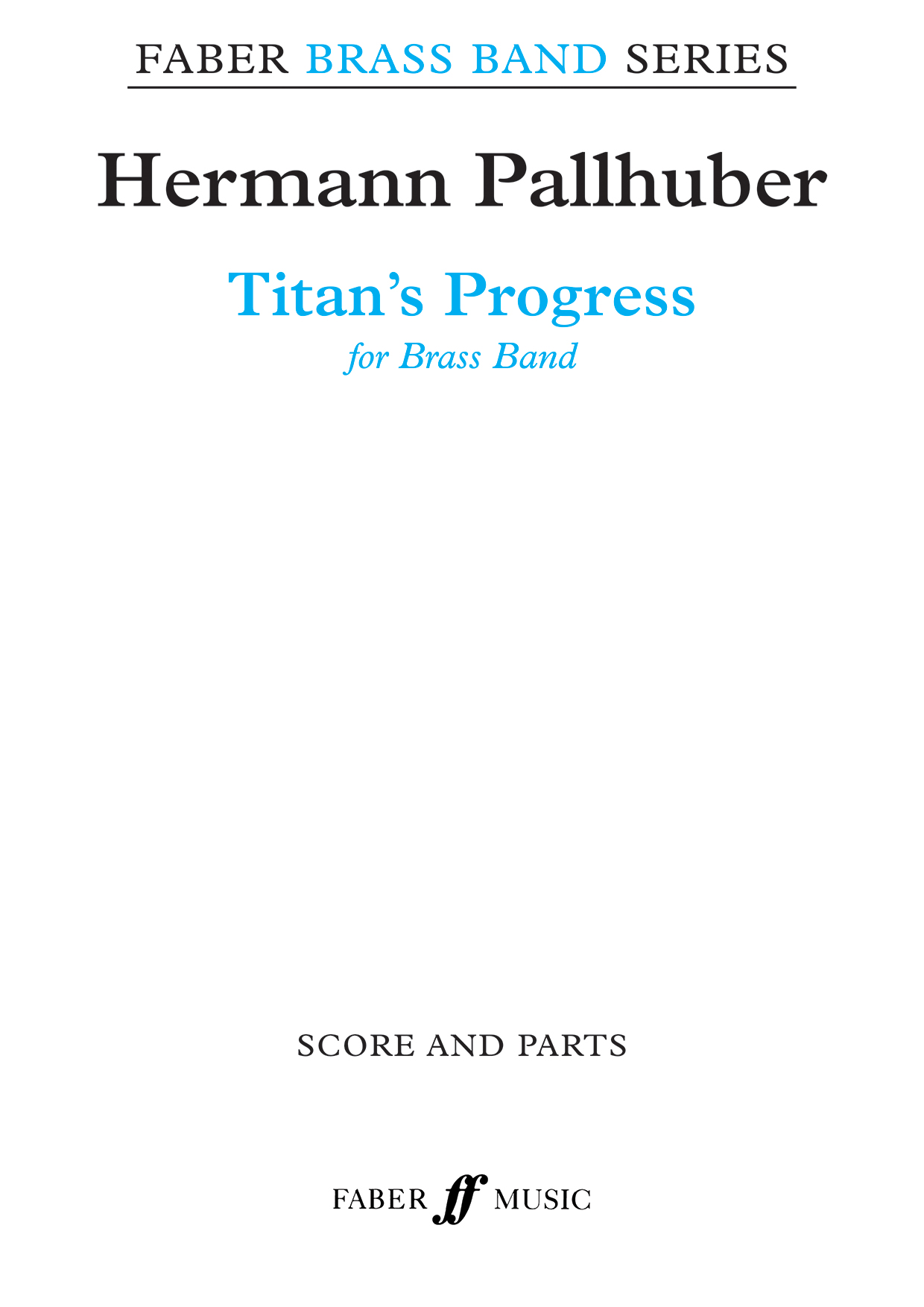
Titan's Progress (Score & Parts) - Hermann Pallhuber
Commissioned by Austria's leading brass band, Brass Band Oberoesterreich, Titan's Progress is a series of descriptive, virtuoso episodes based on the principal character of the novel by Jean Paul. This was also the original subject of Mahler's Symphony No. 1, from which Hermann Pallhuber derives much of his material. The work has proved an exceptionally popular test piece all over the world. Titan's Progress was the selected test piece for the British Open Brass Band Championship, held at Symphony Hall, Birmingham on Saturday 12th September 2009. Brass Band Grade 6: Championship Duration: 17 minutes The score provided with this set is a larger format, B4 size.
In Stock: Estimated dispatch 1-3 working days
-
 £89.66
Trumpet Concerto with Brass Band (Andrew Batterham)
Andrew Batterham's tour de force Trumpet Concerto showcases the incredible spectrum of emotions the trumpet can convey, in the hands of a dedicated performer. The music ranges from Classical to minimalism, ballads to fanfares, culminating in a wild dance full of stamina and energy. Commissioned by ABC Classic through the ABC Fresh Start Fund, Concerto was premiered by David Elton, Principal Trumpet with the Sydney Symphony Orchestra (previously with London Symphony Orchestra). This brass band version was premiered by David and Victoria Brass, conducted by Matt van Emmerik. It is also available with piano accompaniment here. To view a video of David Elton performing the work with Victoria Brass, please visit https://www.youtube.com/watch?v=zImGHAL9mIE PDF download includes score and parts. Sheet music available from: UK - www.brassband.co.uk USA - https://satradecentral.org Difficulty Level for Soloist: Advanced Difficulty Level for Band: 1st Section + Duration: approx. 19 minutes Instrumentation: Trumpet Soloist Bb Soprano Cornet Eb Solo Cornet Bb Repiano Cornet Bb 2nd Cornet Bb 3rd Cornet Bb Flugel Horn Bb Solo Horn Eb 1st Horn Eb 2nd Horn Eb 1st Baritone Bb 2nd Baritone Bb 1st Trombone Bb 2nd Trombone Bb Bass Trombone 1st Euphonium Bb 2nd Euphonium Bb Bass Eb Bass Bb Timpani Percussion 1-2
In Stock: Estimated dispatch 1-3 working days
-
 £11.20
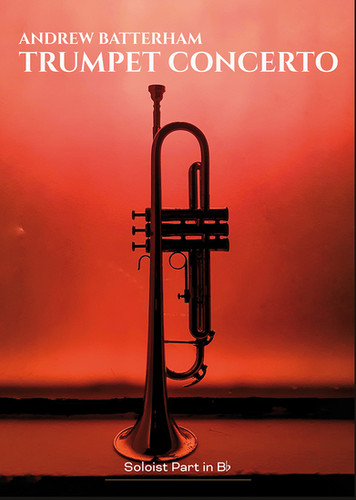
Trumpet Concerto with Brass Band (Andrew Batterham) Soloist Part in Bb
Andrew Batterham's tour de force Trumpet Concerto showcases the incredible spectrum of emotions the trumpet can convey, in the hands of a dedicated performer. The music ranges from Classical to minimalism, ballads to fanfares, culminating in a wild dance full of stamina and energy. Commissioned by ABC Classic through the ABC Fresh Start Fund, Concerto was premiered by David Elton, Principal Trumpet with the Sydney Symphony Orchestra (previously with London Symphony Orchestra). The brass band version was premiered by David and Victoria Brass, conducted by Matt van Emmerik. To view a video of David Elton performing the work with Victoria Brass, please visit www.youtube.com/watch?v=zImGHAL9mIE This PDF download includes soloist part in Bb. Brass band accompaniment version available here. Piano accompaniment version available here. Sheet music available from: UK - www.brassband.co.uk USA - https://satradecentral.org Difficulty Level for Soloist: Advanced Duration: approx. 19 minutes
In Stock: Estimated dispatch 1-3 working days
-
 £33.62
Going Home - Flugelhorn/Trumpet Solo with Brass Band (Dvorak arr. Kevin Larsson)
VIEW SCORE PDF A beautiful setting for flugelhorn/trumpet soloist by Kevin Larsson of the Largo from Symphony No. 9 in E minor, 'From the New World', Op. 95, B. 178, popularly known as the 'New World Symphony'. To view a video of Jens Lindemann performing the solo with the Canadian Staff Band, please visit: https://www.youtube.com/watch?v=fobUFG5QorQ PDF download includes score and full set of parts. Sheet music available from: UK - www.brassband.co.uk USA - www.solidbrassmusic.com Difficulty Level: 4th Section + Instrumentation: Flugelhorn/Trumpet Soloist Bb Soprano Cornet Eb Solo Cornet Bb 1st Cornet Bb 2nd Cornet Bb Flugel Horn Bb Solo Horn Eb 1st Horn Eb 2nd Horn Eb 1st Baritone Bb 2nd Baritone Bb 1st Trombone Bb 2nd Trombone Bb Bass Trombone Euphonium Bb Bass Eb Bass Bb Timpani Percussion 1-2
In Stock: Estimated dispatch 1-3 working days