
Results
-
 £41.95
Stai si, defenda! (Stand Up, Defend!)
Stai si, defenda romontsch, tiu vegl lungatg (Stand up, defend your old Romansh language): This composition was named after a quotation from a poem by famous Romansh poet Giachen Casper Muoth. The arrangement deals with various well known songs for male choir such as A Trun sut igl ischi (In Trun under the malpe tree), Si sededesta Rezia (Wake up, land of Raetia), Il pur suveran (The independent farmer) or Il paun palus (The rosted bread). An atmospheric beginning over a pedal point uses quotations from these songs and leads eventually into a dark but warmly orchestrated section on Nossa viarva (Our language) by H. Erni. The piece ends, once more quoting A Trun sut igl ischi by J. Heim, a dedication to struggle for freedom and independence.
Estimated dispatch 7-14 working days
-
£29.95
The Land of the Long White Cloud (Score Only)
Dating from 1979, The Land of the Long White Cloud (Aotearoa) was Philip Sparke's first test-piece. It was commissioned by the New Zealand Brass Band Association for their 1980 National Championships (their centenary year) and set for the European Brass Band Championships, the same year, at the Royal Albert Hall in London. Aotearoa was the name given to New Zealand by its Polynesian settlers whose first sight of the islands was a long, flat cloud lying low over the land. The work has no specific programme although many have seen pictures of the surging ocean in the opening bars. A faster dance-like section leads to a slow, haunting solo for soprano cornet; this is taken up by the whole band before earlier material returns. The dance-like tune is, this time, given a fugal treatment and the opening bars return to close the work.Philip Sparke was born in London and studied composition, trumpet and piano at the Royal College of Music, where he gained an ARCM. It was at the College that his interest in bands arose. He played in the College wind orchestra and also formed a brass band among the students, writing several works for both ensembles.At that time, his first published works appeared - Concert Prelude (brass band) and Gaudium (wind band). A growing interest in his music led to several commissions, his first major one being this featured piece for the Centennial Brass Band Championships in New Zealand - The Land of the Long White Cloud. He has written for brass band championships in New Zealand, Switzerland, Holland, Australia and the UK, including three times for the National Finals at the Royal Albert Hall.In September 2000, he was awarded the Iles Medal of the Worshipful Company of Musicians for his services to brass bands and in 2005 Music of the Spheres won the National Band Association/William D. Revelli Memorial Band Composition Contest. In 2011, he received the BUMA International Brass Award for his contribution to brass music.His conducting and adjudicating activities have taken him to most European countries, Scandinavia, Australia, New Zealand, Japan, Taiwan, South Korea, Canada and the USA. In May 2000, he took the major step of becoming a full-time composer by founding his own publishing company, Anglo Music Press. The company is devoted to publishing his brass band, concert band, fanfare band and instrumental publications as well as recordings dedicated to his latest works.
Estimated dispatch 7-14 working days
-
 £32.50
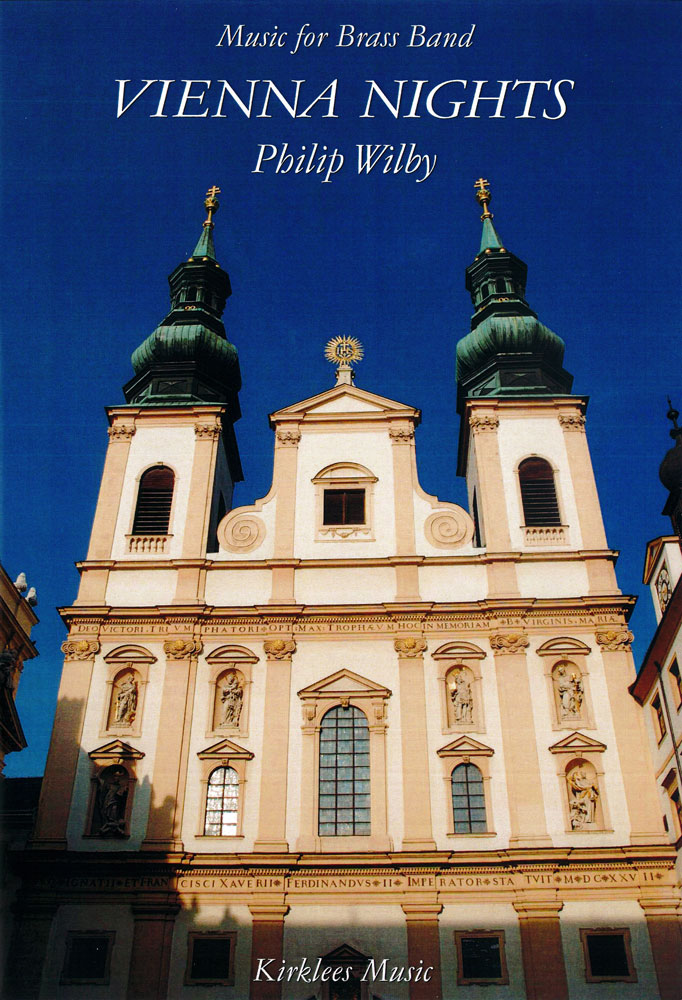
Vienna Nights (Score Only)
The City of Vienna stands at one of the historic crossroads of the world, linking east and west and embracing artistic influences from all sides. In the 250th anniversary year of Mozart's birth, this fantasy on Mozart's celebrated Piano Sonata in A (K331), has been composed true to the form and content of the original, but also to the underlying substance of the conception.One of Mozart's distinguishing features, and one that links him to later music by Beethoven, Schubert, Mahler and Schoenberg, is the breadth of his musical vision. His music links intellectual rigour with ecstatic utterance and darker preoccupations. It is, perhaps, this shadow-laden side of his musical nature which gives his work a profundity often absent in the work of his contemporaries. Admirers of his Requiem Mass or the Statue music in Don Giovanni will recognise that it is this extra sense of reality which makes Mozart so relevant to the modern age, and where he may link hands with the other great Viennese thinkers such as Berg, Webern and Adorno.The composer follows the three movement plan of the Sonata closely. The original begins with a Theme and Variations which is freely quoted. His Minuet is mirrored in the Recitative and Notturno, where each section of the band lays down a metaphoric rose to his memory. Famously, the sonata ends in populistic style with a Turkish Rondo. Ever since the Hapsburg-Ottoman Wars, which came to an end in the seventeenth century, Viennese composers have included Turkish elements in their music, not least in the use of certain percussion instruments. Vienna Nights is thusly a homage.It celebrates the world's greatest composer, but also the city which fostered his work. Here, in your imagination, you might easily conjure up a caf table near the Opera House, where Mozart, Mahler and Sigmund Freud, observed by us all from a discreet distance, may meet as old friends.
Estimated dispatch 7-14 working days
-
 £48.56
Allegro Marcato from Symphony No.5 (Brass Band) Prokofiev arr. Fendall Hill
The premiere of Prokofiev's 5th Symphony took place on January 13, 1945, with Prokofiev himself conducting the USSR State Symphony Orchestra. During the performance, artillery fire could be heard in the distance, celebrating the Red Army's victory over German forces and providing a stark reminder of the ongoing conflict. Prokofiev's Symphony No. 5 emerged as a symbol of hope and human resilience. The 2nd movement is the Allegro marcato, a lively scherzo. The piece is energetic, full of contrasts and dynamic melodies, and embodies a spirit of defiance. It is one of the arranger's favourite pieces, and translates brilliantly to brass band for an orchestral transcription. To view a rolling score video of the work please visit www.youtube.com/watch?v=kM642RBFO2E PDF download includes score and parts. Sheet music available from: UK - www.brassband.co.uk USA - https://satradecentral.org Difficulty Level: 1st Section + Length: 8.45 minutes Instrumentation: Soprano Cornet Eb Solo Cornet Bb Repiano Cornet Bb 2nd Cornet Bb 3rd Cornet Bb Flugel Horn Bb Solo Horn Eb 1st Horn Eb 2nd Horn Eb 1st Baritone Bb 2nd Baritone Bb 1st Trombone Bb 2nd Trombone Bb Bass Trombone Euphonium Bb Bass Eb Bass Bb Timpani Percussion 1-3
In Stock: Estimated dispatch 1-3 working days
-
 £41.09
At the Going Down of the Sun (Brass Band) Mike Fitzpatrick
At The Going Down Of The Sun is a deeply moving musical tribute dedicated to the courage, resilience, and ultimate sacrifice of those who have defended the nation of Australia. Inspired by the heroic legacy of the 2/25th Battalion and their storied defense of the Kokoda Track during World War II, this composition serves as a solemn reminder of the immense gratitude owed to its fallen heroes. This piece is born from a legacy of service. It was composed in honor of Keith Fitzpatrick, who enlisted in the AIF on November 28, 1941. Keith served two tours in New Guinea, spending 359 days on the treacherous Kokoda Track. Keith Fitzpatrick lived to celebrate his 100th birthday in 2023, leaving behind a profound legacy through his wife of 67 years, Valda, and three generations of descendants. At The Going Down Of The Sun captures this spirit of endurance and devotion. It is an ideal addition to any program focused on: Anzac Day & Remembrance Day services Military Commemorations Historical Tributes To view a rolling score video of the work please visit www.youtube.com/watch?v=ydO9PKOKTpk Duration: 7.00 minutes Difficulty Level: 3rd Section + This PDF download includes the full score and parts. Sheet music available at www.brassband.co.uk (UK) or https://satradecentral.org (USA) Instrumentation: Soprano Cornet Eb Solo Cornet 1&2 Bb Solo Cornet 3&4 Bb Repiano Cornet Bb 2nd Cornet Bb 3rd Cornet Bb Flugel Horn Bb Solo Horn Eb 1st Horn Eb 2nd Horn Eb 1st Baritone Bb 2nd Baritone Bb 1st Trombone Bb 2nd Trombone Bb Bass Trombone Euphonium Bb Bass Eb Bass Bb Percussion Tubular Bells
In Stock: Estimated dispatch 1-3 working days
-
 £29.88
Breathe on me, breath of God (Brass Band) Robert Jackson arr. Andrew Wainwright
Andrew Wainwright's sensitive setting of Breathe on Me, Breath of God was commissioned by Sione Malekamu Manu Jr for the 2026 Tonga Secondary School Music Festival, in memory of the late Sione Malekamu Manu. The piece offers a reflective yet powerful treatment of Edwin Hatch's beloved 1878 hymn. Set across two contrasting verses, the arrangement traces a spiritual journey from quiet contemplation to triumphant exaltation. The first verse opens with delicate textures and warm, blended tone, allowing the familiar melody - traditionally set to Robert Jackson's tune Trentham - to emerge with serene simplicity. Building seamlessly through a transitional passage, the setting broadens into a majestic second verse, celebrating the transformative power and majesty of the divine spirit. Concise yet profoundly moving, this arrangement showcases both the lyrical sensitivity and majestic power inherent to the traditional brass band. To view a rolling score video of this piece please visit www.youtube.com/watch?v=Oh7WRTwhpqM Duration: approx. 2.40 minutes Difficulty Level: 4th Section + This PDF download includes the full score and parts. Sheet music available at www.brassband.co.uk (UK) or https://satradecentral.org (USA) Instrumentation: Soprano Cornet Eb Solo Cornet Bb Repiano Cornet Bb 2nd Cornet Bb 3rd Cornet Bb Flugel Horn Bb Solo Horn Eb 1st Horn Eb 2nd Horn Eb 1st Baritone Bb 2nd Baritone Bb 1st Trombone Bb 2nd Trombone Bb Bass Trombone Euphonium Bb Bass Eb Bass Bb Timpani Percussion 1-2
In Stock: Estimated dispatch 1-3 working days
-
 £29.88
Call (Brass Band) Zachary Docter
This short concert opener by American composer Zachary Docter is built around a trumpet-call motif, first heard in canon at the outset. The motif is gradually developed before a broader, more substantial theme emerges in the trombones. This new material is then explored and expanded, eventually combining with the original motif in a grand, climactic conclusion. Harmonically, the work draws on the perfect intervals of the opening call, creating a sound world that feels contemporary while remaining accessible. Energetic and effective, it makes an ideal concert opener without presenting excessive technical demands for most bands. To view a rolling score video of this piece please visit https://www.youtube.com/watch?v=YxCuFLMdh6c Duration: 1.40 minutes Difficulty Level: 4th Section + This PDF download includes the full score and parts. Sheet music available at www.brassband.co.uk (UK) or https://satradecentral.org (USA) Instrumentation: Soprano Cornet Eb Solo Cornet Bb Repiano Cornet Bb 2nd Cornet Bb 3rd Cornet Bb Flugel Horn Bb Solo Horn Eb 1st Horn Eb 2nd Horn Eb 1st Baritone Bb 2nd Baritone Bb 1st Trombone Bb 2nd Trombone Bb Bass Trombone Euphonium Bb Bass Eb Bass Bb Timpani Percussion 1-2
In Stock: Estimated dispatch 1-3 working days
-
 £11.20
Christmas Processional (Brass Band Additional Parts) Trad. arr. Wainwright)
An effective opener to any Christmas concert, based on the French carol, 'Bring a torch, Jeanette, Isabella'. It tells the story of a group of children in medieval Provence, dressed up as shepherds and milkmaids, carrying torches and candles as they proceed to the stable. As they draw closer and their excitement increases, they are constantly reminded by their parents to keep the noise down so that they don't wake up the baby Jesus. The music begins quietly and builds to a majestic conclusion. "If I were still conducting bands regularly, this would certainly be on my list as a Christmas concert opener - it sets the energy and mood most effectively. The scoring is terrific." Paul Hindmarsh, British Bandsman magazine This arrangement also includes optional Organ and Hand bells parts. For a follow-the-score video of Virtuosi GUS Band performing the work, please visit: https://www.youtube.com/watch?v=2GasDfecnyY Sheet music available exclusively from World of Brass - www.worldofbrass.com Includes score and full set of parts. Difficulty Level: 2nd Section + Instrumentation: Solo Horn F 1st Horn F 2nd Horn F 1st Baritone B.C. 2nd Baritone B.C. 1st Trombone B.C. 2nd Trombone B.C. Euphonium B.C. Bass B.C. (Bass Eb Part) Bass B.C. (Bass Bb Part)
In Stock: Estimated dispatch 1-3 working days
-
 £37.35
Christmas Processional - Brass Band & opt. Organ (Trad. arr. Andrew Wainwright)
An effective opener to any Christmas concert, based on the French carol, 'Bring a torch, Jeanette, Isabella'. It tells the story of a group of children in medieval Provence, dressed up as shepherds and milkmaids, carrying torches and candles as they proceed to the stable. As they draw closer and their excitement increases, they are constantly reminded by their parents to keep the noise down so that they don't wake up the baby Jesus. The music begins quietly and builds to a majestic conclusion. "If I were still conducting bands regularly, this would certainly be on my list as a Christmas concert opener - it sets the energy and mood most effectively. The scoring is terrific." Paul Hindmarsh, British Bandsman magazine This arrangement also includes optional Organ and Hand bells parts. For a follow-the-score video of Virtuosi GUS Band performing the work, please visit: https://www.youtube.com/watch?v=2GasDfecnyY Sheet music available exclusively from World of Brass - www.worldofbrass.com Includes score and full set of parts. Alternative parts for Horns in F, and Baritones, Trombones, Euphonium and Tubas in Bass Clef are available here. Difficulty Level: 2nd Section + Instrumentation: Soprano Cornet Eb Solo Cornet Bb Repiano Cornet Bb 2nd Cornet Bb 3rd Cornet Bb Flugel Horn Bb Solo Horn Eb 1st Horn Eb 2nd Horn Eb 1st Baritone Bb 2nd Baritone Bb 1st Trombone Bb 2nd Trombone Bb Bass Trombone Euphonium Bb Bass Eb Bass Bb Timpani Percussion 1-3 Organ (optional) Hand bells (optional)
In Stock: Estimated dispatch 1-3 working days
-
 £44.83
City of David (Brass Band) Philip Rayment
This engaging major Christmas work features three carols or songs associated with the place of Christ's birth: Once In Royal David's City, O Little Town of Bethlehem (Forest Green) and How Far Is It To Bethlehem? During Old Testament times, the city of Jerusalem had been considered the 'City of David', as the political and spiritual capital of Israel. However, after Christ's birth, that name was given to the town of Bethlehem - a quiet farming village in the countryside. This new designation is first mentioned in the Gospel of Luke: ''For unto you is born this day in the City of David a Saviour, which is Christ the Lord.' (Luke 2:11) A variety of moods are used to express:- The crowds of people arriving in Bethlehem to be taxed, overtaking the town, leaving no room for a young, pregnant Mary and her husband.- The stillness of the countryside on the eve of Christ's birth.- The excitement of worshippers celebrating the birth of a Saviour. To view performances of the work please visit: Canadian Staff Band: www.youtube.com/watch?v=0UC-j9jBsx4 Five Lakes Silver Band: www.youtube.com/watch?v=aCn4JjQCe9A Duration: 7.30 minutes approx. Difficulty Level: 2nd Section + PDF download includes parts and score. Sheet music available here. Instrumentation: Soprano Cornet Eb Solo Cornet Bb 1st Cornet Bb 2nd Cornet Bb Flugel Horn Bb Solo Horn Eb 1st Horn Eb 2nd Horn Eb 1st Baritone Bb 2nd Baritone Bb 1st Trombone Bb 2nd Trombone Bb Bass Trombone Euphonium Bb Bass Eb Bass BbTimpani Percussion 1-3
In Stock: Estimated dispatch 1-3 working days