
Results
-
 £94.99
Chorale Variations - Jan de Haan
Chorale Variations comprises six variations on an original theme in Renaissance style. Written as a test piece for the renowned contest 'Gouden Spiker Festival' in Friesland (The Netherlands), it is a challenging concert or contest piece, presenting attractive and demanding parts for all sections.
Estimated dispatch 5-14 working days
-
 £74.99
The Banks of Green Willow - George Butterworth - Duncan Wilson
George Butterworth (1885-1916) was an English composer who died at a very young age, leaving behind few compositions. One of his best known and regularly played works is The Banks of Green Willow. People who have studied his work agree that Butterworth displayed great potential which would have flourished were it not for his untimely death. Duncan Wilson's arrangement makes Butterworth's imagination accessible to everyone!
Estimated dispatch 5-14 working days
-
 £55.00
New York. - Nigel Hess
'New York'... or to be more precise, Manhattan. For anyone who is familiar with this bizarre and wonderful city, this piece needs no explanation. This brass band transcription has been made by Phillip Littlemore and provides adriving and punchy 4 minute work for brass band. 'New York' is the third movement of 'East Coast Pictures', originally written for wind band, commissioned in 1985 by the British Youth Wind Orchestra with funds from NationalWestminster Bank plc. These three short 'pictures' were inspired by several visits by the composer to a small part of the USA's East Coast, an area that provides great extremes in the geography and thepeople.This work has recently been recorded on the CD 'East Coast Pictures' by the Leyland Band, conducted by Michael Fowles, and is available from this site (catalogue number: 0-571-52109-6).
Estimated dispatch 5-14 working days
-
 £125.00
Titan's Progress - Hermann Pallhuber
Commissioned by Austria's leading brass band, Brass Band Oberoesterreich, Titan's Progress is a series of descriptive, virtuoso episodes based on the principal character of the novel by Jean Paul. This was also theoriginal subject of Mahler's Symphony No. 1, from which Hermann Pallhuber derives much of his material. The work has proved an exceptionally popular test piece all over the world. Titan's Progress wasthe selected test piece for the British Open Brass Band Championship, held at Symphony Hall, Birmingham on Saturday 12th September 2009. Brass Band Grade 6: Championship Duration: 17 minutes Thescoreprovided with this set is a larger format, B4 size.
Estimated dispatch 5-14 working days
-
 £22.00
Little Hymn - Simon Dobson
Little Hymn was composed by award-winning composer Simon Dobson (b.1981) to provide an alternative to the traditional hymn tune settings that provide one of the foundations of the brass band repertoire. This simple, hauntingmelody begins on a brass quartet without cornets. The full band joins for the second part, which rises to a richly textured climax before receding to a quiet, reflective close.
Estimated dispatch 5-14 working days
-
 £54.99
A Spanish Christmas Carol - Patrick Millstone
Rondeau of the Shepherds," so ran the official title of the famous Dutch Christmas carol 'Midden in de winternacht'. In 1948 wrote Dutch poet and writer Harry Prenen this text. The melody is known by the 17th/18th- century organ composers of suites Daquin, Balbastre and Dandrieu. "Rondeau of the Shepherds" was subtitled "Catalan Christmas Carol". The song itself is because its origins in a Spanish (Catalan probably) Christmas song from the late Middle Ages, "El Desembre congelat. The motives of this song (shepherds, flutes, drums) demonstrate knowledge of the Bible and give a picture of the late medieval Christmas experience. . Perfect as an uptempo intermezzoin a church service.
Estimated dispatch 5-14 working days
-
 £69.99
Fanitullen - O. Olsen - Tom Brevik
Fanitullen is a lively, beautiful 'Sl?tt', i.e. an old Norwegian melody which is played on a traditional 'Hardingfele' (Hardanger fiddle).Because of its violent rhythm and exciting character, playing a Fanitullen for a long time was considered improper. It was believed that a person playing this melody would come under the influence of the devil. Therefore, Fanitullen could be regarded as a kind of Rock'n Roll from the 18th century.Tom Brevik's adaptation is based on a composition for piano by Ole Olsen (1850-1927) Fanitullen is een levendige, mooie 'Sl?tt', een oude Noorse melodie die gespeeld word op een traditionele 'Hardingfele' (Hardanger viool).Door de heftigeritmiek en het opzwepende karakter, werd het spelen van een Fanitullen gedurende lange tijd als niet kies beschouwd. Er zouden invloeden van de duivel in schuilen. Fanitullen zou daarom misschien wel als een soort Rock'n Roll van de 18e eeuw gezien kunnen worden.De bewerking van Tom Brevik is gebaseerd op een compositie voor piano van Ole Olsen (1850-1927)
Estimated dispatch 5-14 working days
-
 £84.99
Love Song - Halfdan Kjerulf - Tom Brevik
Melancholy and romance in a contemporary setting. A small but brilliant gem of sonority based on a melody by the Norwegian composer Halfdan Kjerulf (1815-1868). Romance and a full command of timbre are the challenging cornerstones of any succesful interpretation of Love Song. An ideal moment of tranquillity in your programme. Melancholie en romantiek in een eigentijds jasje. Een eenvoudig doch schitterend klankwerkje gebaseerd op een melodie van de Noorse componist Halfdan Kjerulf (1815-1868). De romantiek en klankbeheersing zijn de uitdagende pijlers van Love Song. Het meditatieve moment in uw programma!
Estimated dispatch 5-14 working days
-
 £54.99
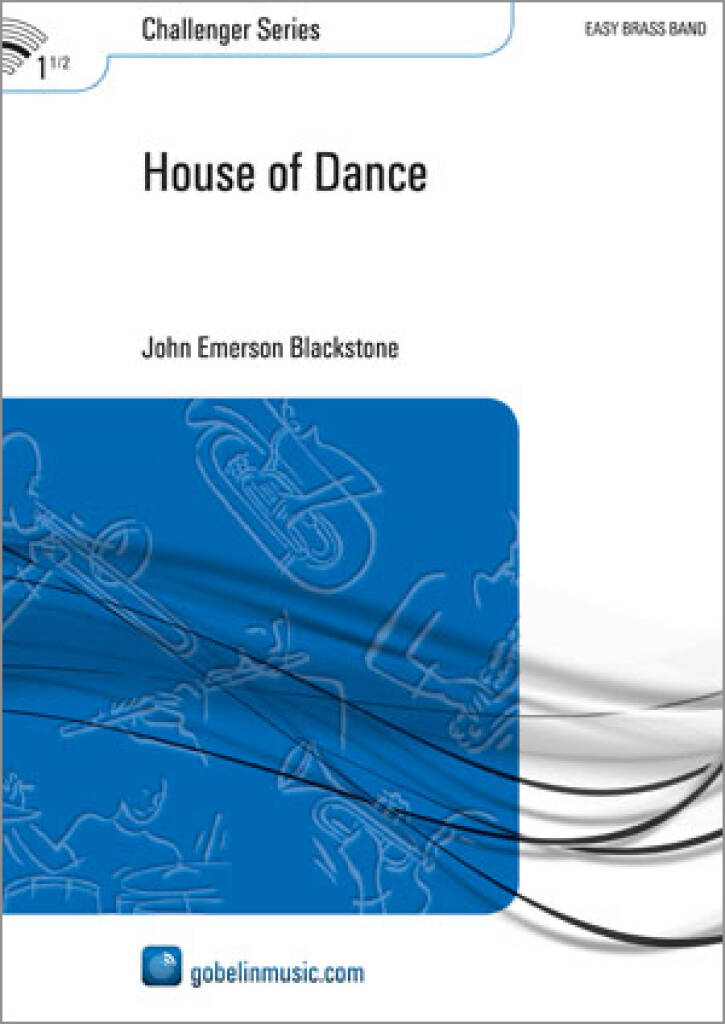
House of Dance - John Emerson Blackstone
In imitation of the huge 'House rage' (at the end of the eighties) John Emerson Blackstone composed 'House of Dance' for youth orchestra. It proved to be a success. House owes its name to the place where this music was 'developed', i.e. an old night club called 'The Warehouse' in Chicago. Many subcultures followed. Whether you like the style or not, one thing is certain: House music (also called Dance music) for many provides the basis for hours of fun on the dance floor.
Estimated dispatch 5-14 working days
-
 £69.99
Little Christmas Piece - Al Govan
An attractive work by the hand of Al Govan. Musicians and listeners will enjoy this three-part suite including: O Come All Ye Faithfull, Silent Night, Hark the Herald Angels Sing and fragments including from Jingle Bells and Joy to the World.
Estimated dispatch 5-14 working days
 View Music