
Results
-
 £54.95
Fire in the Blood (Brass Band - Score and Parts)
Fire in the Blood was commissioned by Dr Stephen Cobb for the 120th anniversary of the International Staff Band of the Salvation Army. The piece was composed for the celebration concert where the ISB were joined by several other staff bands from around the world to perform independently to a sell-out capacity crowd at Britain's most famous concert hall The Royal Albert Hall. Fire in the Blood received its world premier at the 'ISB 120' concert at the Royal Albert Hall on June 4th 2011.With this piece I wanted to acknowledge music that had an impact on me through my Salvation Army upbringing. When thinking of a title for this piece I had no hesitation than to reflect and re-word the Salvation Army's motto under their famous crest 'Blood and Fire'.When composing Fire in the Blood I wanted to use three songs of worship that have been prevalent in the Salvation Army's services over a number of years. Opening with Richard Phillips' setting of Psalm 95, 'Sing for Joy', the music is vibrant and full of energy, I wanted to capture the spirit of the well known words of Scripture. The music then moves into a more reflective section that includes Howard Davies' emotive song melody 'Lord, you know that we love you' and Laurie Klein's worship song 'I love you Lord'.A re-statement of the opening Psalm setting follows and this, in turn, leads into a dramatic and powerful finale that combines two pivotal statements drawn from the slower, reflective section: I love you lord, and I lift my voice to worship you, O my soul rejoice and Lord, you know that we love you with a final flourish from Psalm 95: Come let us sing joy to the Lord!Paul Lovatt-Cooper
Estimated dispatch 7-14 working days
-
 £24.95
Fire in the Blood (Brass Band - Score only)
Fire in the Blood was commissioned by Dr Stephen Cobb for the 120th anniversary of the International Staff Band of the Salvation Army. The piece was composed for the celebration concert where the ISB were joined by several other staff bands from around the world to perform independently to a sell-out capacity crowd at Britain's most famous concert hall The Royal Albert Hall. Fire in the Blood received its world premier at the 'ISB 120' concert at the Royal Albert Hall on June 4th 2011.With this piece I wanted to acknowledge music that had an impact on me through my Salvation Army upbringing. When thinking of a title for this piece I had no hesitation than to reflect and re-word the Salvation Army's motto under their famous crest 'Blood and Fire'.When composing Fire in the Blood I wanted to use three songs of worship that have been prevalent in the Salvation Army's services over a number of years. Opening with Richard Phillips' setting of Psalm 95, 'Sing for Joy', the music is vibrant and full of energy, I wanted to capture the spirit of the well known words of Scripture. The music then moves into a more reflective section that includes Howard Davies' emotive song melody 'Lord, you know that we love you' and Laurie Klein's worship song 'I love you Lord'.A re-statement of the opening Psalm setting follows and this, in turn, leads into a dramatic and powerful finale that combines two pivotal statements drawn from the slower, reflective section: I love you lord, and I lift my voice to worship you, O my soul rejoice and Lord, you know that we love you with a final flourish from Psalm 95: Come let us sing joy to the Lord!Paul Lovatt-Cooper
Estimated dispatch 7-14 working days
-
 £54.95
Wall of Sound (Brass Band - Score and Parts)
This piece was commissioned by Dr Nicholas Childs and Philip Biggs for the National Children's Band of Great Britain.As the commission was for a youth band, I wanted to compose a piece of music that alluded to the styles and genres of music that are abundant in the current popular music market. However, the National Children's Band isn't just any old youth band; they are some of the finest young musicians in Great Britain. So the challenge was to compose a piece that included many popular music styles whilst providing enough of a test to keep the music technically interesting to work on and perform.The driving force behind the whole piece is the percussion section and in particular, the drum kit which is constant throughout. From the start the music is rhythmic and repetitive, similar to many dance tracks. The music begins to slowly unfold and build in texture and at bar 24 the syncopated main theme appears. This theme reappears throughout the piece along with various other motifs and solo lines. The music uses the styles, rock, pop, latin, funk and dance within the score and has a real fun factor about it.There are lots of opportunities for soloists to play and it is marked in the score where to stand and soloists can come out to the front of the stage. I really enjoyed working on this piece and I'm sure performers and audience members will enjoy it too.Paul Lovatt-Cooper
Estimated dispatch 7-14 working days
-
 £29.95
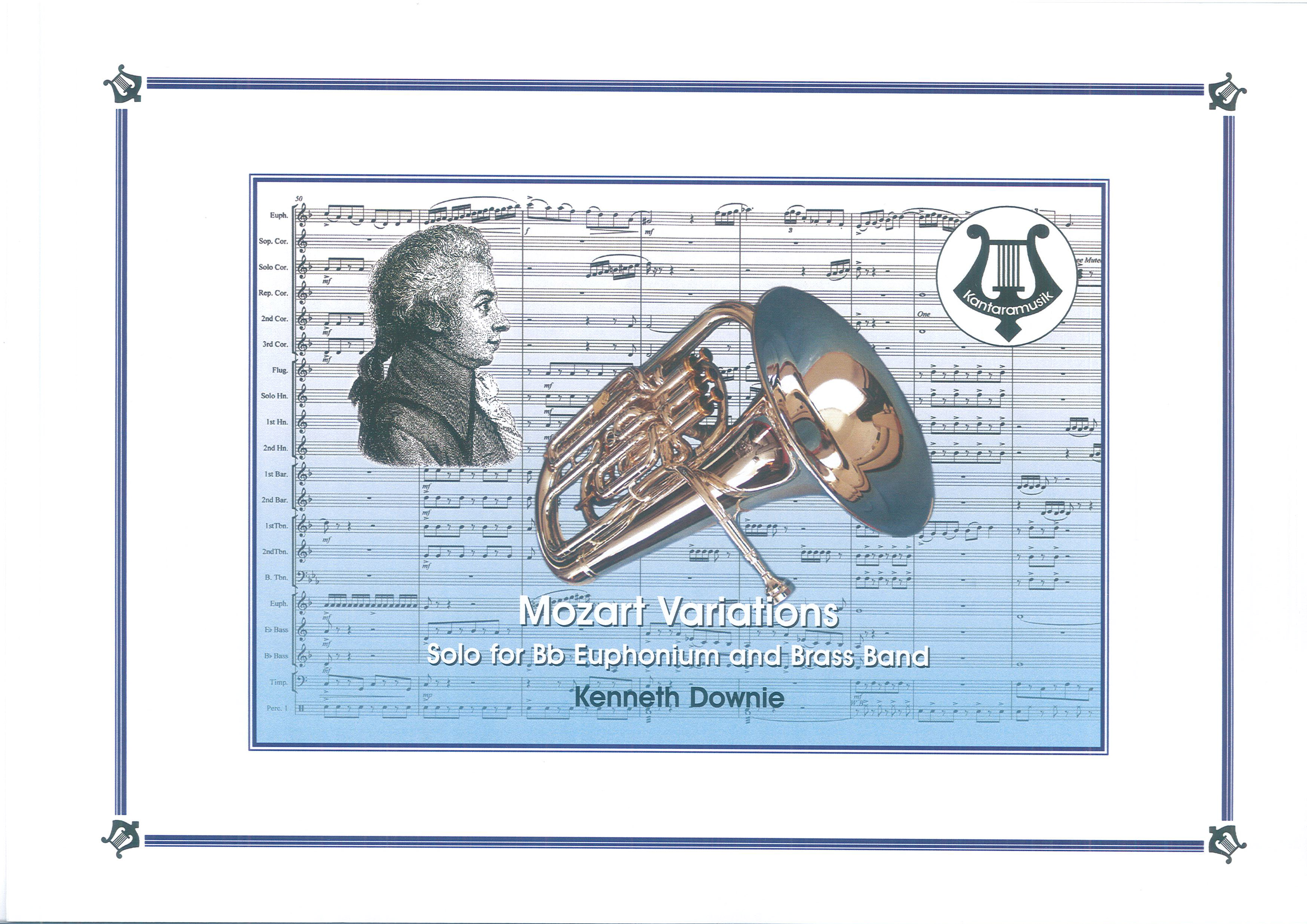
Mozart Variations - Euphonium Solo (Brass Band - Score and Parts)
The main theme of this music comes from Mozart's opera The Magic Flute, a very well-known melody which is sometimes associated with sacred words. It is a beautiful tune which lends itself to variation treatment including these very light-hearted examples. While working on this music, the composer had the idea of incorporating references to other well-known Mozart themes, again, with a rather tongue-in-cheek approach. The result is a high-spirited, flamboyant solo that will be fun to play and to listen to.
Estimated dispatch 7-14 working days
-
 £34.95
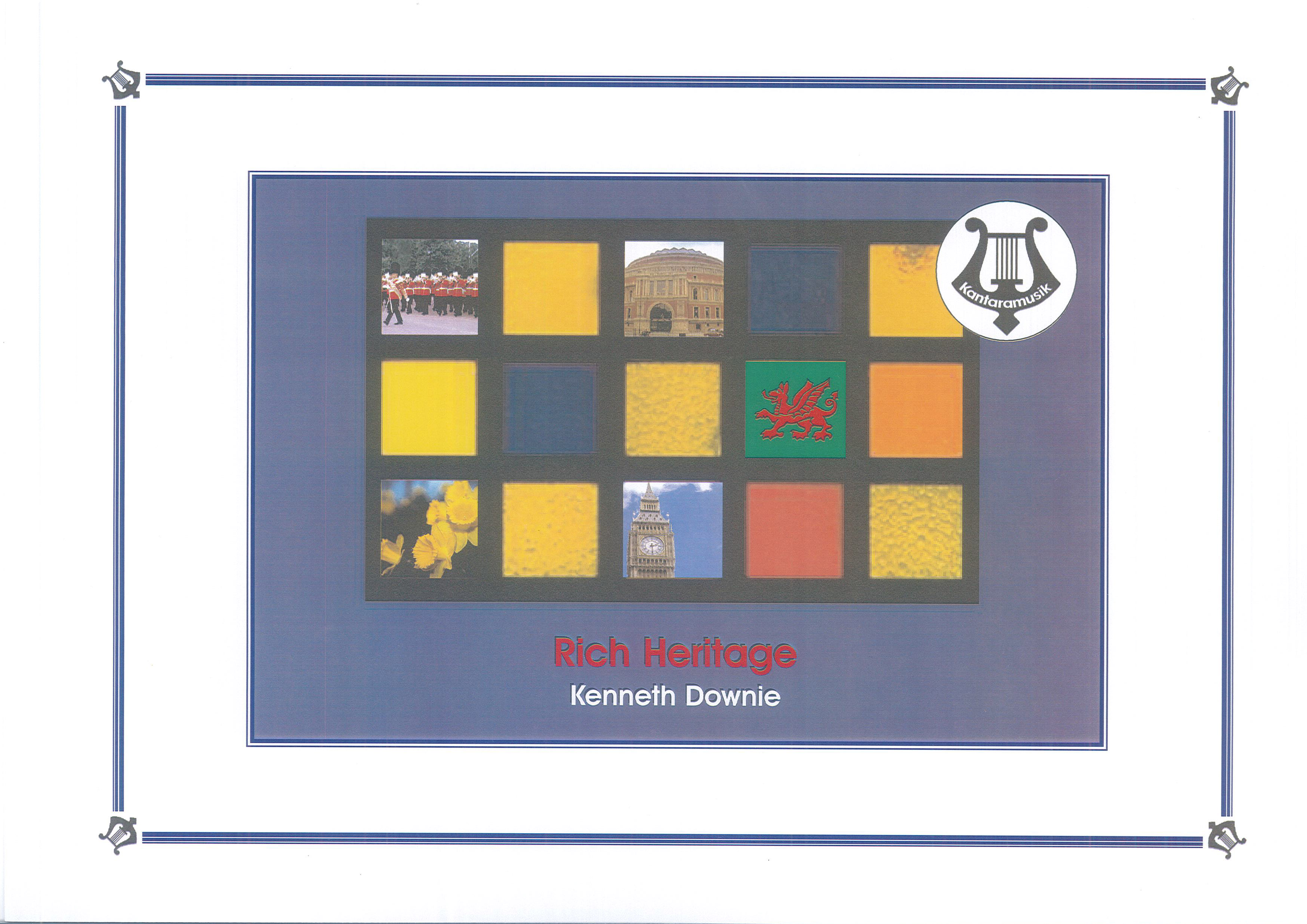
Rich Heritage (Brass Band - Score and Parts)
This music was written to celebrate the distinguished work done by Leighton Rich as Music Director of the Hampshire County Youth Band. Leighton's Welsh origins and his past link with the Coldtsream Guards are expressed in the music.
Estimated dispatch 7-14 working days
-
 £29.95
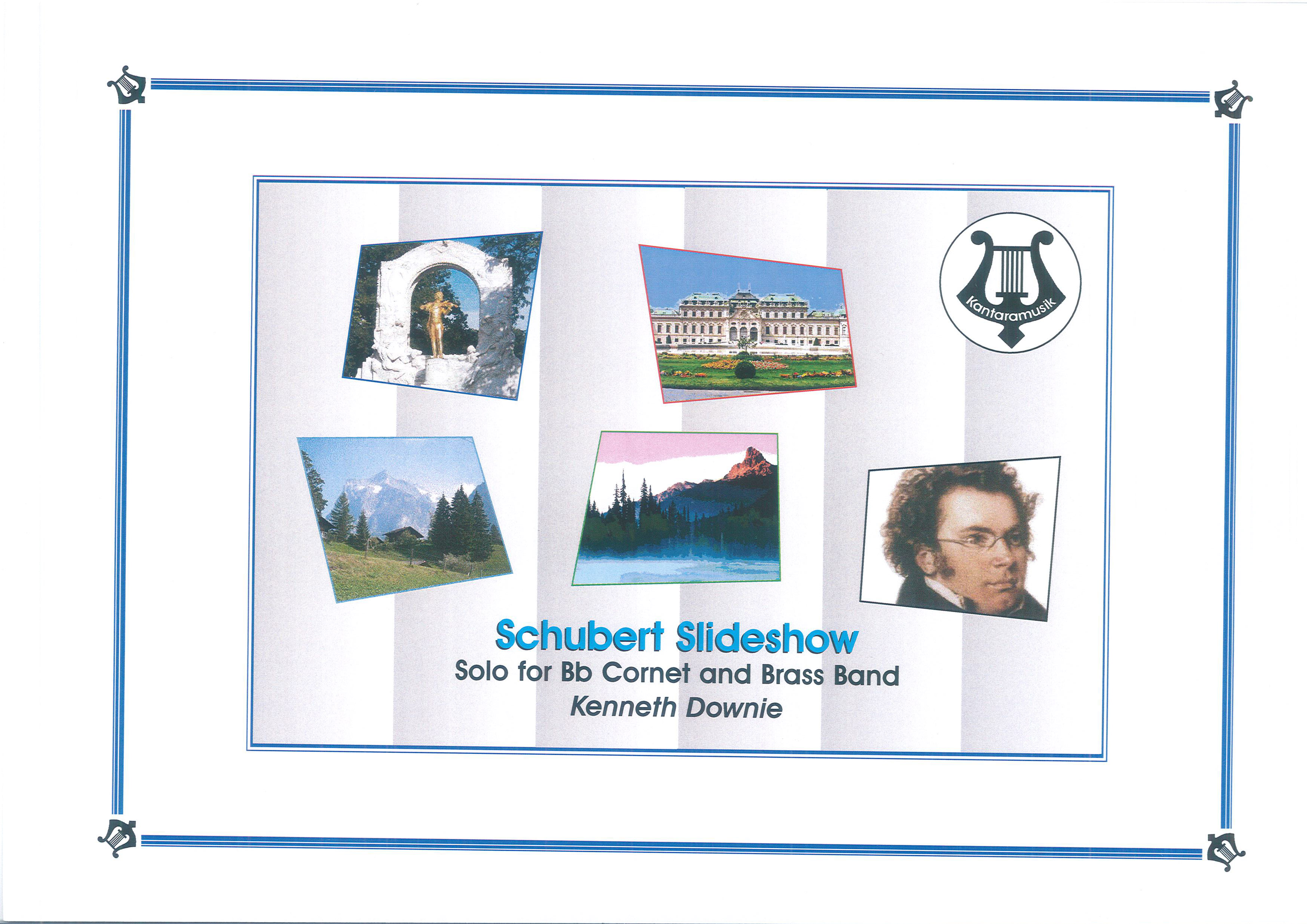
Schubert Slideshow - Cornet Solo (Brass Band - Score and Parts)
Heidenroslein' is a poem by Goethe, published in 1799, which was notably set to music by Schubert in 1815. It is this music which inspired this variation solo. It is called 'Slideshow' as each variation might be considered as a different view or aspect of the theme. Cornet players have the opportunity to demonstrate both the lyrical and the more bravura qualities of their playing.
Estimated dispatch 7-14 working days
-
 £15.00
Visions of Gerontius (Brass Band - Study Score)
Visions of Gerontius is a set ofvariations on a hymn tune which is invariably associated with Cardinal John Henry Newman 's words taken from his visionary poem "The Dream of Gerontius", which deals with the journey of the soul from this world to the next. The stanzas of the hymn are taken from the poem which Elgar set to music in his great masterpiece of the same name, for soloists, chorus and orchestra, first performed in Birmingham in 1900. The dramatic setting of those words provides some of the most memorable moments in the music
Estimated dispatch 7-14 working days
-
£89.95
Visions of Gerontius (Brass Band -Score and Parts)
Visions of Gerontius is a set of variations on a hymn tune which is invariably associated with Cardinal John Henry Newman 's words taken from his visionary poem "The Dream of Gerontius", which deals with the journey of the soul from this world to the next. The stanzas of the hymn are taken from the poem which Elgar set to music in his great masterpiece of the same name, for soloists, chorus and orchestra, first performed in Birmingham in 1900. The dramatic setting of those words provides some of the most memorable moments in the music.
Estimated dispatch 7-14 working days
-
 £119.95
Harrison's Dream (Brass Band - Score and Parts)
At 8.00pm on the 22nd of October 1707, the Association, flagship of the Royal Navy, struck rocks off the Scilly Isles with the loss of the entire crew. Throughout the rest of the evening the remaining three ships in the fleet suffered the same fate. Only 26 of the original 1,647 crew members survived. This disaster was a direct result of an inability to calculate longitude, the most pressing scientific problem of the time. It pushed the longitude question to the forefront of the national consciousness and precipitated the Longitude Act. Parliament funded a prize of �20,000 to anyone whose method or device would solve the dilemma. For carpenter and self-taught clockmaker John Harrison, this was the beginning of a 40 year obsession. To calculate longitude it is necessary to know the time aboard ship and at the home port or place of known longitude, at precisely the same moment. Harrison's dream was to build a clock so accurate that this calculation could be made, an audacious feat of engineering. This work reflects on aspects of this epic tale, brilliantly brought to life in Dava Sobel's book Longitude. Much of the music is mechanistic in tone and is constructed along precise mathematical and metrical lines. The heart of the work however is human - the attraction of the �20,000 prize is often cited as Harrison's motivation. However, the realisation that countless lives depended on a solution was one which haunted Harrison. The emotional core of the music reflects on this, and in particular the evening of 22ndOctober 1707. Peter GrahamCheshireJuly 2000
Estimated dispatch 7-14 working days
-
£37.95
Harrison's Dream (Brass Band - Score only)
At 8.00pm on the 22nd of October 1707, the Association, flagship of the Royal Navy, struck rocks off the Scilly Isles with the loss of the entire crew. Throughout the rest of the evening the remaining three ships in the fleet suffered the same fate. Only 26 of the original 1,647 crew members survived. This disaster was a direct result of an inability to calculate longitude, the most pressing scientific problem of the time. It pushed the longitude question to the forefront of the national consciousness and precipitated the Longitude Act. Parliament funded a prize of �20,000 to anyone whose method or device would solve the dilemma. For carpenter and self-taught clockmaker John Harrison, this was the beginning of a 40 year obsession. To calculate longitude it is necessary to know the time aboard ship and at the home port or place of known longitude, at precisely the same moment. Harrison's dream was to build a clock so accurate that this calculation could be made, an audacious feat of engineering. This work reflects on aspects of this epic tale, brilliantly brought to life in Dava Sobel's book Longitude. Much of the music is mechanistic in tone and is constructed along precise mathematical and metrical lines. The heart of the work however is human - the attraction of the �20,000 prize is often cited as Harrison's motivation. However, the realisation that countless lives depended on a solution was one which haunted Harrison. The emotional core of the music reflects on this, and in particular the evening of 22ndOctober 1707. Peter GrahamCheshireJuly 2000
Estimated dispatch 7-14 working days