
Results
-
 £54.95
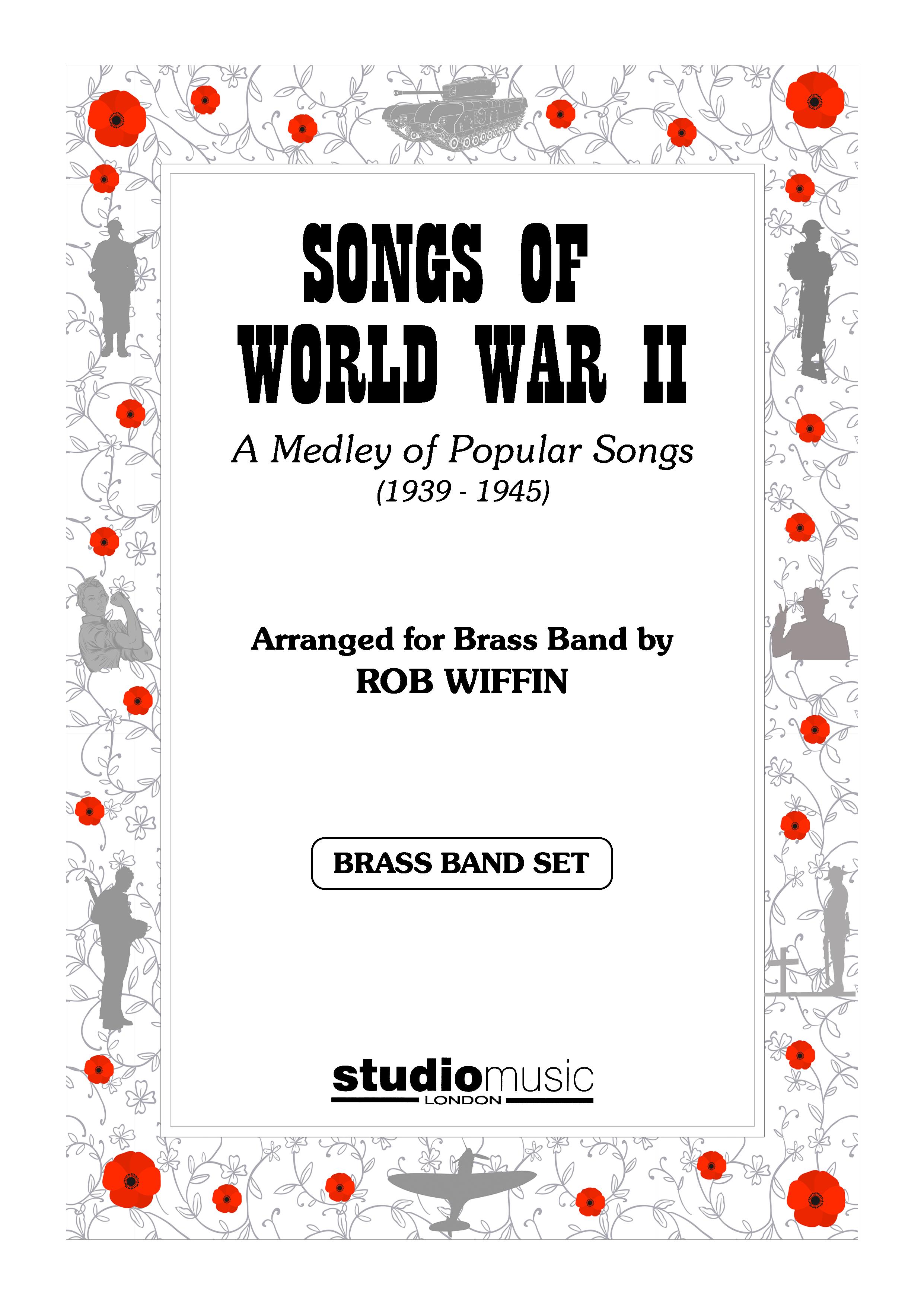
Songs of World War II (Brass Band - Score and Parts)
A Medley of Popular Songs (1939-1945)Includes:In the MoodA Nightingale Sang in Berkeley SquareWe're Gonna Hang Out the Washing on the Siegfried LineRun, Rabbit, Run!Kiss Me Goodnight, Sergeant MajorI'll Be Seeing You
Estimated dispatch 7-14 working days
-
I Believe - Drake, Graham, Shirl & Stillman - Len Jenkins
"I Believe" is a popular song written by Ervin Drake, Irvin Graham, Jimmy Shirl and Al Stillman in 1953. It was commissioned with the intent of offering people hope and faith against the backdrop of the Korean War that followed so soon after World War 2. The number has been recorded by many artists and the edition by The Bachelors is perhaps the best well-known in Britain. This arrangement, which is very suitable for fetes and concerts, features the Flugel and Tenor Horns in a duet, with band accompaniment. It is dedicated to the twins Hazel and Heather who play these instruments in the Woburn Sands Band. Graham Cooper
-
 £39.95
Judd: The Great Salvation War
James Curnow was inspired to compose this work after reading 'Marching to Glory', a history of The Salvation Army in the USA. The writer of the book, Dr. Edward H. McKinley, was a colleague of Curnow on the faculty of Asbury College and a member of The Salvation Army Student Fellowship Band. The work was written for this band and premiered by them at the Centennial National Congress in 1980 which was held at Asbury College. Curnow has endeavoured to capture the spirit of early day Salvationists as they gave themselves completely to the great salvation war. Three songs support the three-part structure; 1) Stand like the brave 2) In Thee, O Lord, do I put my trust 3) Rescue the perishing.
Estimated dispatch 7-14 working days
-
 £38.95
Unity Series Band Journal - Numbers 518 - 521, June 2023
518: March - A Christmas cavalcade (Morgan Juel Stavik)This march contains several Christmas carols and songs. Some are easy to recognise and are identified in the score, while other references are more subtle.519: Christmas bossa nova (Kevin Larsson)Using Jingle Bells, The First Nowell, It came upon the midnight clear and Ding dong! merrily on high, here is a great bossa nova to liven up your Christmas concert.520 (1): In te Domine speravi (Des Prez trs. Zachary Docter)This piece is a transcription of an early 16th century choral work by the Renaissance composer Josquin des Prez. Josquin was a well-known and highly regarded composer in his day. Like many composer of this period, Josquin wrote linearly, valuing independent free-flowing lines over vertical harmonies. As a result, the interlocking counterpoint in this work can be quite complex and the tied rhythms challenging.520 (2): Excerpt from 'Vespers' (Rachmaninoff trs. Andrew Poirier)Sergei Rachmaninoff's setting of the All-Night Vigil (Vespers) Op.37, of which this excerpt is taken, was composed in January and February 1915. The outbreak of World War I in August 1914 took many people by surprise, and to Rachmaninoff it was a severe shock. This compelled him to write a piece that reminded him of his childhood and the importance of the Russian Orthodox Church within the national identity of Russia. The excerpt transcribed here has a quality and enigmatic charm that never fails to move the souls of those that listen to it.521: March - Walk of faith (Stanley Makau)This march introduces Stanley Makau to the band journals. Stanley is currently the Deputy and Youth Bandmaster at Quarry Road Citadel Corps in Nairobi, Kenya. His inspiration for the march primarily came from Psalm 91: 11-12, and the march is in keeping with the traditional style that has been a staple for Salvation Army music-making.
Estimated dispatch 7-14 working days
-
 £154.99
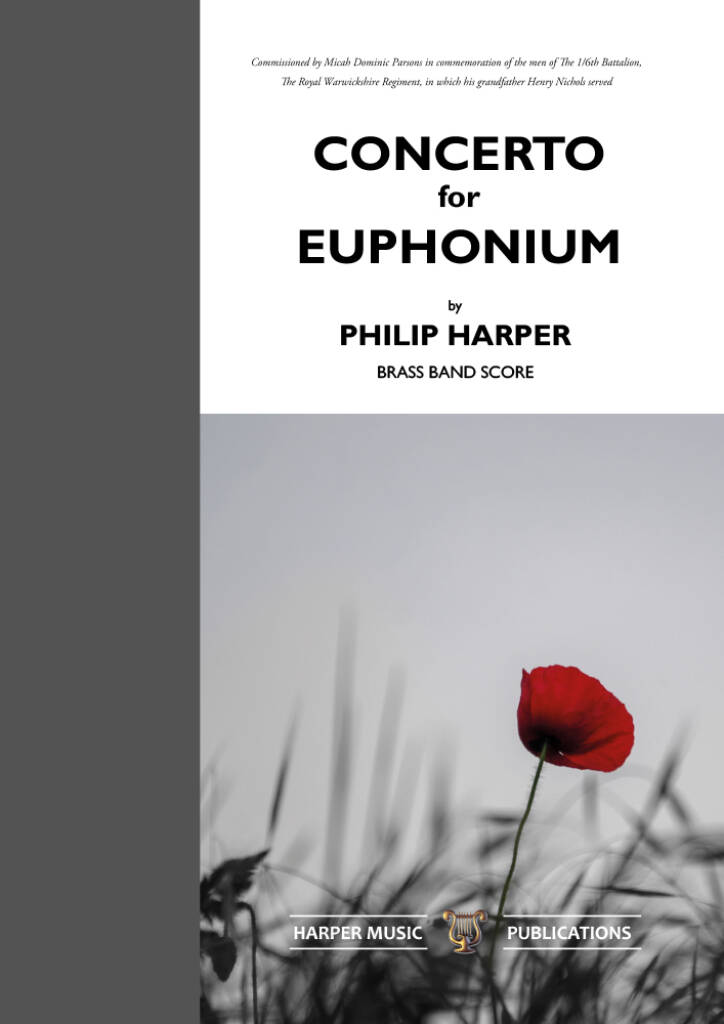
Concerto for Euphonium - Philip Harper
This Concerto for Euphonium casts the euphonium soloist as one of the young soldiers in a World War I battalion for an intensely intimate and visceral experience of events. However the music also portrays a more general human journey, and will appeal on a number of levels. There are three movements which have the following subtitles: I - Summer 1916 - Days of YouthII - Winter 1916 - The Weight of MaturityIII - 4th February 1917 - ReleaseAlthough challenging, the solo part is designed to be achievable by all ambitious euphonium soloists.
Estimated dispatch 5-14 working days
-
£69.99
El Cumbanchero - Rafael Hernandez - Naohiro Iwai
Rafael Hernandez (1892-1965) was probably the greatest composer in Puerto Rico. After serving in World War I, he worked in the USA, in Mexico and in Puerto Rico as a musician, composer, band-leader and actor. Masato Myokoin has written this new, exciting arrangement of Rafael Hernandez' biggest international hit, El Cumbanchero.
Estimated dispatch 5-14 working days
-
 £67.24
Armistice at Flanders Fields (Brass Band) Dwayne Bloomfield
This poignant and powerful work for brass band by Dwayne Bloomfield describes the day peace was announced to end World War I. The piece was written in 2023 to be played by bands around the world to mark Armistice Day. The composer writes: 'Unless you were there, it's impossible to imagine what it must have been like the day peace was announced ending World War I. The feelings soldiers experienced, who after years of fighting and suffering, to know it was over and they would return home to see family and loved ones again. This piece tries to tell their story. The work begins by approaching the front, distant artillery and battle sounds heard while the carnage and loss of lives was already known to the world. The band builds as we enter the thick of battle, the death and destruction, the conditions faced and the loss of hope of ever surviving. The next section, in 7/8 time, reflects the two sides fighting - both sides attacking and defending with mostly little result, but for the loss of more lives. Two euphoniums then depict the news and hope of peace talks. However, fighting did continue right up to the very end and on the last day there would be another 2,738 casualties. The Canadians were still battling to capture the town of Mons that morning. A song is sung in reflection of the estimated 5.5 million allied soldiers who lost their lives during World War I, then a clock ticks down the final minutes. The last three known casualties are depicted with French soldier Augustin Trebuchon, killed at 10:45am by a single shot as he rushed down the trenches to spread the news of coming peace; Canadian George Lawrence Price killed by a sniper round at 10:58am at the battle of Mons, and lastly a machine gun burst that killed American Henry Gunther, who is believed to have fallen on the 11th hour. Bells then toll ringing around the world announcing the end of the war. After years of war, it must have been jubilation for the families at home knowing their loved ones would be returning to them. The band builds with a hymn for peace as a final tribute to those who fought, before the piece resides with one of the most dreaded sounds at that time, the knock on the door from a telegram delivery boy or better known then as the Angels of Death. It wasn't just the 2,738 families from the casualties of the last day who would receive such a knock, but many more who expected their loved ones to be returning home would instead find out they were instead killed in the last weeks. So close. Driving around the battlefields today one comes across many intersections in the countryside which have cemetery signposts pointing in every direction. While the last post sounds in ceremonies today, this last bugle call instead depicts the horrors, devastation and death the soldiers faced during the war and right up the 11th hour of the 11th day of the 11th month, Armistice at Flanders Fields.' To view a video of Dallas Brass Band performing the work please visit https://www.youtube.com/watch?v=ljfyVz3cMgk Duration: Approx. 15.00 minutes Difficulty Level: 2nd Section + PDF download includes parts and score. Sheet music available from www.brassband.co.uk Instrumentation: Soprano Cornet Eb Solo Cornet Bb Repiano Cornet Bb 2nd Cornet Bb 3rd Cornet Bb Flugel Horn Bb Solo Horn Eb 1st Horn Eb 2nd Horn Eb 1st Baritone Bb 2nd Baritone Bb 1st Trombone Bb 2nd Trombone Bb Bass Trombone Euphonium Bb Bass Eb Bass Bb Percussion 1-3
In Stock: Estimated dispatch 1-3 working days
-
 £35.00
Flanders Fields
Commissioned in 2014 by the 2nd Rossendale Scout Band, Flanders Fields was composed to commemorate the 100th anniversary of World War I, also known as the Great War. It is a reflective work which uses a hymn as its basis, infusing the sound of bugle calls and marching drums to convey the impression of a conflict rather than depicting a specific battle. Narration and wordless choir can be included as part of performance. Listen: Duration: 00:07:30 Grade: 3
Estimated dispatch 5-7 working days
-
 £44.95
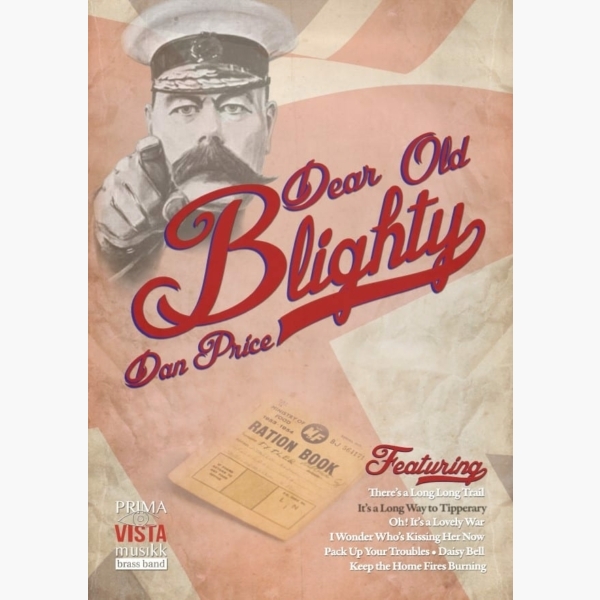
Dear Old Blighty - Dan Price
Commissioned in 2014 by the Flowers Band and premiered at the Cheltenham Music Festival in the same year, Dear Old Blighty is a creative arrangement of songs popular in 1914 and of those released during the World War I period....
Estimated dispatch 5-7 working days
-
 £33.62
Menuet (Brass Band) Ravel arr. Rob Bushnell
Le Tombeau de Couperin (The Grave of Couperin) was written by Maurice Ravel between 1914 and 1917, originally a suite of piece for solo piano. Based on what was considered a traditional Baroque suite, Ravel wanted to pay homage to Baroque French keyboard music, whilst retaining his 20th-century chromaticism, making the work neoclassicist. Each movement is dedicated to the memory of a friend of the composer who died fighting in World War I. Ravel produced an orchestral version in 1919, omitting two of the original six movements. The Menuet was written in memory of Jean Dreyfus; Ravel had recuperated at his home. This arrangement is for the British-style brass band, with alternative parts for horns in F and bass-clef lower brass. A recording of the original composition can be found here: www.youtube.com/watch?v=jnNwEcBTSmk. Duration: Approx. 4 minutes Difficulty Level: 2nd Section + Duration: 4 minutes (depending on tempo and without any cuts) PDF download includes parts and score. Sheet music available at www.brassband.co.uk (UK) or https://satradecentral.org (USA) Instrumentation: Soprano Cornet Eb Solo Cornet Bb Repiano Cornet Bb 2nd Cornet Bb 3rd Cornet Bb Flugel Horn Bb Solo Horn Eb 1st Horn Eb 2nd Horn Eb 1st Baritone Bb 2nd Baritone Bb 1st Trombone Bb 2nd Trombone Bb Bass Trombone Euphonium Bb Bass Eb Bass Bb Timpani Percussion - Vibraphone & Glockenspiel
In Stock: Estimated dispatch 1-3 working days
 View Music