
Results
-
 £69.00
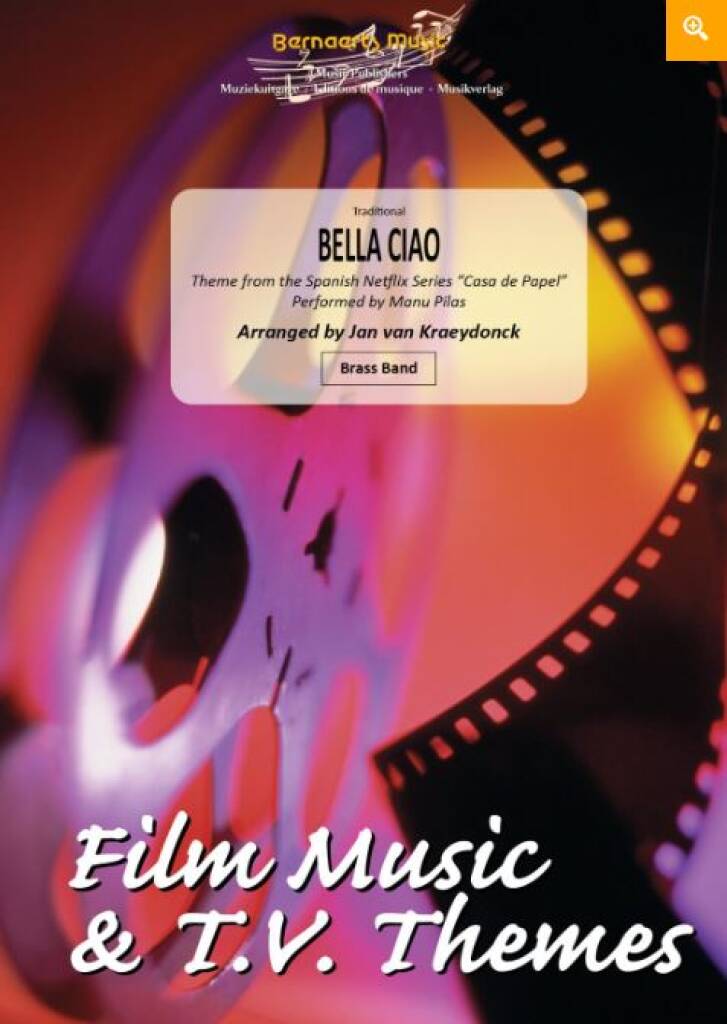
Bella Ciao - Manu Pilas - Jan van Kraeydonck
Bella Ciao is an Italian battle song, which became popular in Italy during World War II among partisans resisting fascism and national socialism. The song became a global resistance song against oppressive powers. In 2018, the song became known again through the Spanish Netflix series La Casa de Papel, in which the song was used multiple times. Jan van Kraeydonck wrote a skillful arrangement for concert band, fanfare and brass band.
Estimated dispatch 5-14 working days
-
 £154.99
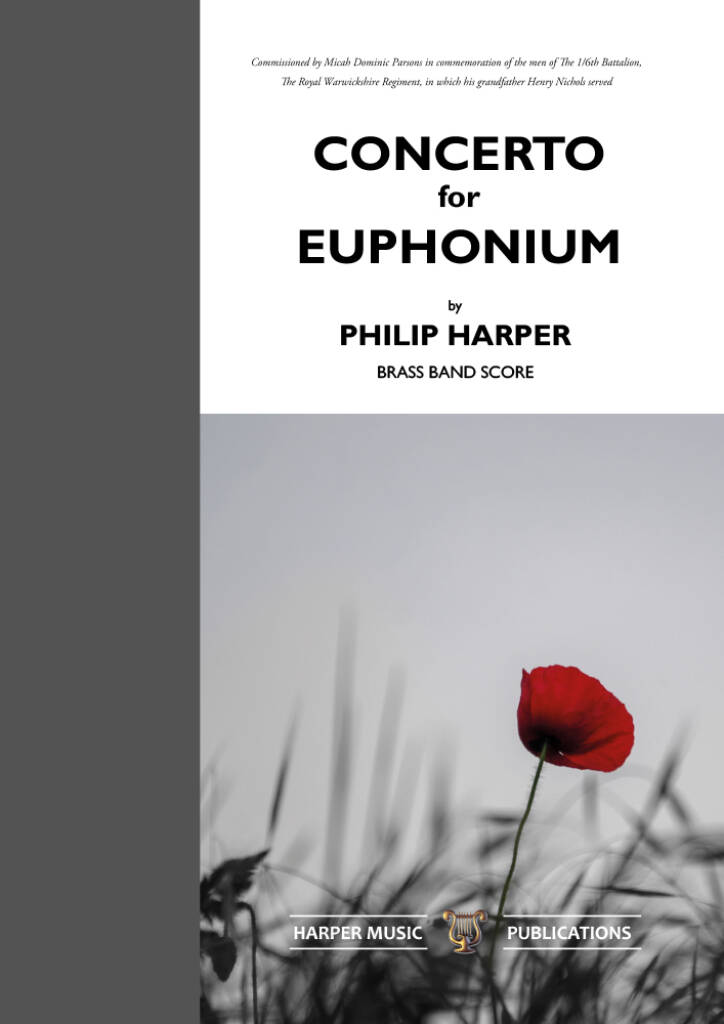
Concerto for Euphonium - Philip Harper
This Concerto for Euphonium casts the euphonium soloist as one of the young soldiers in a World War I battalion for an intensely intimate and visceral experience of events. However the music also portrays a more general human journey, and will appeal on a number of levels. There are three movements which have the following subtitles: I - Summer 1916 - Days of YouthII - Winter 1916 - The Weight of MaturityIII - 4th February 1917 - ReleaseAlthough challenging, the solo part is designed to be achievable by all ambitious euphonium soloists.
Estimated dispatch 5-14 working days
-
 £107.80
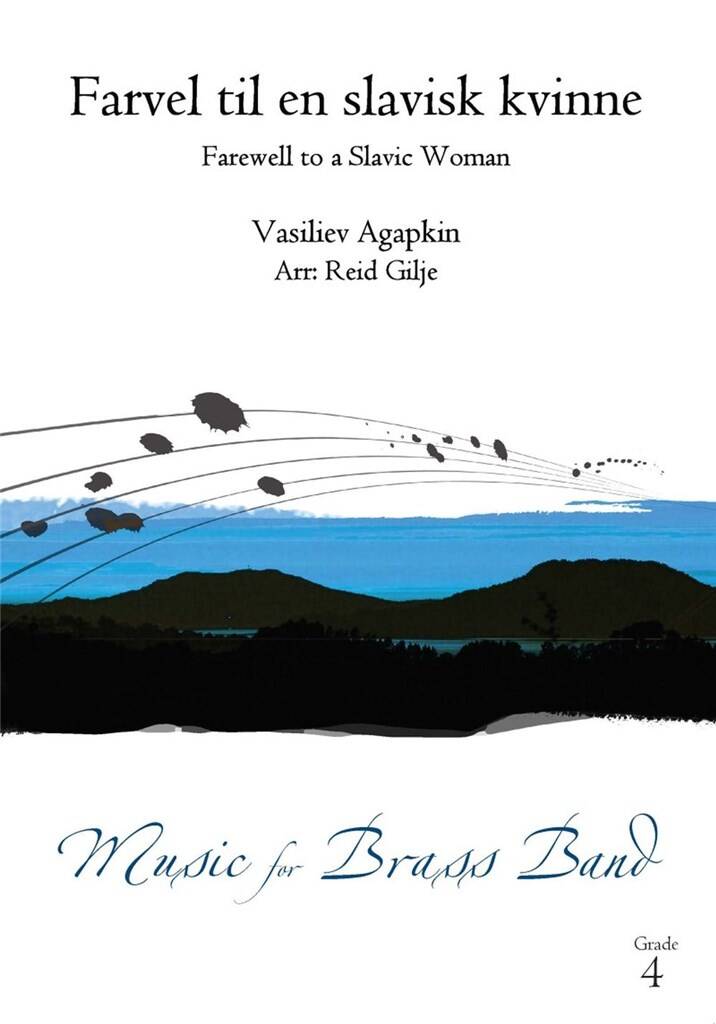
Farvel til en slavisk kvinne - Vasily Ivanovich Agapkin - Reid Gilje
Vasili Agapkin was trained as a trumpet player and a cavalryman. Farewell to a Slavoc Woman was composed in 1912 and is dedicated to all Slavic women. The march has had many different texts throughout the years, becoming very popular during the First World War. The composer is known for this march only. Today, the march has a kind of a National March status in his native Russia.
Estimated dispatch 5-14 working days
-
£101.30
Salute to Liberty - March - John Brakstad
This march is written for the 70-year anniversary of the conclusion of the World War II in 1945.
Estimated dispatch 5-14 working days
-
 £76.99
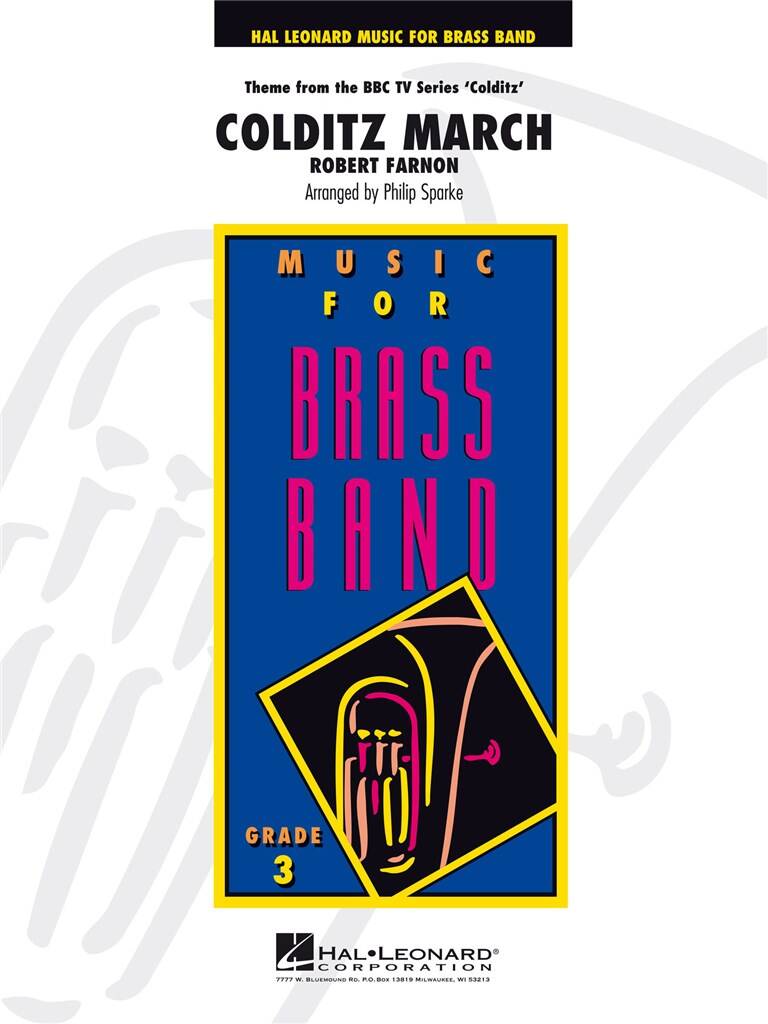
Colditz March - Robert Farnon - Philip Sparke
Acclaimed Canadian composer/arranger Robert Farnon penned this distinctive march theme for the 1970s BBC television drama Colditz telling the story of prisoners held at Colditz Castle, Germany, during World War II. Philip Sparke'sextended concert version is expertly scored for band and an elegant and powerful addition to any programme.
Estimated dispatch 5-14 working days
-
£69.99
El Cumbanchero - Rafael Hernandez - Naohiro Iwai
Rafael Hernandez (1892-1965) was probably the greatest composer in Puerto Rico. After serving in World War I, he worked in the USA, in Mexico and in Puerto Rico as a musician, composer, band-leader and actor. Masato Myokoin has written this new, exciting arrangement of Rafael Hernandez' biggest international hit, El Cumbanchero.
Estimated dispatch 5-14 working days
-
 £78.20
The Rocketeer - James Horner - Roland Smeets
Before Titanic,James Horner was not above composing scores for cartoonish family films, and many of those that brought him on their production board owe him greatly. The Rocketeer entails the story of a young pilot during World War II who happens upon a rocket pack that allows him to fly. The film is based on the tradition of old film serials that left theater-goers hanging with "To be continued," and aside from modern production, it is old fashioned and innocent fun. Horner's score begins and ends with the brilliant "Main Title," which is so moving it was used in previews for later films that did not yet have finished scores. Most of th Rocketeersoundtrack elicits the adventure and lifting spirit of the film and reveals how Horner incorporates rich instrumentals in the tiniest crevices. Even when the film involves danger, as in "Jenny's Rescue," the composer takes care when it is hardly even required. Instead of some "duh-duh-duhs," he brings on a full, stunning orchestra and when he overdoes it, it is in a jolly way -- he never exhausts his medium. That is what separates him from inferior composers, and what makes a nice film like The Rocketeer extra nice. It is a soundtrack worth listening to.
Estimated dispatch 5-14 working days
-
 £67.24
Armistice at Flanders Fields (Brass Band) Dwayne Bloomfield
This poignant and powerful work for brass band by Dwayne Bloomfield describes the day peace was announced to end World War I. The piece was written in 2023 to be played by bands around the world to mark Armistice Day. The composer writes: 'Unless you were there, it's impossible to imagine what it must have been like the day peace was announced ending World War I. The feelings soldiers experienced, who after years of fighting and suffering, to know it was over and they would return home to see family and loved ones again. This piece tries to tell their story. The work begins by approaching the front, distant artillery and battle sounds heard while the carnage and loss of lives was already known to the world. The band builds as we enter the thick of battle, the death and destruction, the conditions faced and the loss of hope of ever surviving. The next section, in 7/8 time, reflects the two sides fighting - both sides attacking and defending with mostly little result, but for the loss of more lives. Two euphoniums then depict the news and hope of peace talks. However, fighting did continue right up to the very end and on the last day there would be another 2,738 casualties. The Canadians were still battling to capture the town of Mons that morning. A song is sung in reflection of the estimated 5.5 million allied soldiers who lost their lives during World War I, then a clock ticks down the final minutes. The last three known casualties are depicted with French soldier Augustin Trebuchon, killed at 10:45am by a single shot as he rushed down the trenches to spread the news of coming peace; Canadian George Lawrence Price killed by a sniper round at 10:58am at the battle of Mons, and lastly a machine gun burst that killed American Henry Gunther, who is believed to have fallen on the 11th hour. Bells then toll ringing around the world announcing the end of the war. After years of war, it must have been jubilation for the families at home knowing their loved ones would be returning to them. The band builds with a hymn for peace as a final tribute to those who fought, before the piece resides with one of the most dreaded sounds at that time, the knock on the door from a telegram delivery boy or better known then as the Angels of Death. It wasn't just the 2,738 families from the casualties of the last day who would receive such a knock, but many more who expected their loved ones to be returning home would instead find out they were instead killed in the last weeks. So close. Driving around the battlefields today one comes across many intersections in the countryside which have cemetery signposts pointing in every direction. While the last post sounds in ceremonies today, this last bugle call instead depicts the horrors, devastation and death the soldiers faced during the war and right up the 11th hour of the 11th day of the 11th month, Armistice at Flanders Fields.' To view a video of Dallas Brass Band performing the work please visit https://www.youtube.com/watch?v=ljfyVz3cMgk Duration: Approx. 15.00 minutes Difficulty Level: 2nd Section + PDF download includes parts and score. Sheet music available from www.brassband.co.uk Instrumentation: Soprano Cornet Eb Solo Cornet Bb Repiano Cornet Bb 2nd Cornet Bb 3rd Cornet Bb Flugel Horn Bb Solo Horn Eb 1st Horn Eb 2nd Horn Eb 1st Baritone Bb 2nd Baritone Bb 1st Trombone Bb 2nd Trombone Bb Bass Trombone Euphonium Bb Bass Eb Bass Bb Percussion 1-3
In Stock: Estimated dispatch 1-3 working days
-
 £67.24
Letters from Flanders (Brass Band) Andrew Batterham
This descriptive work by Australian composer Andrew Batterham portrays the experiences of his maternal grandfather, Corporal Reginald Littlejohns, (4th Australian Machine Gun Battalion) in the First World War. Reginald left Melbourne for Europe in May 1916 then served in Flanders through to the end of the war. He returned in April 1919, having sent hundreds of letters home during his service. His honest, articulate, and highly descriptive prose served as inspiration for this piece. Each of the 5 movements portrays a different aspect of Reginald's war, with a quote from his letters included. The first movement was premiered by the Box Hill City Band, conducted by Matt van Emmerik, in Melbourne. Daniel van Bergen conducted Booroondara Brass performing most of the work in April 2019, and Box Hill premiered the complete version in November 2019 conducted by Simon Brown. The work is comprised of the following movements: i. The World at War ii. Over the Sea iii. Passchendaele iv. Homecoming Parade v. Elegy Length: c.12.00 minutes PDF download includes score and parts. Sheet music available from www.brassband.co.uk Difficulty Level: 1st Section + Instrumentation: Soprano Cornet Eb Solo Cornet Bb Repiano Cornet Bb 2nd Cornet Bb 3rd Cornet Bb Flugel Horn Bb Solo Horn Eb 1st Horn Eb 2nd Horn Eb 1st Baritone Bb 2nd Baritone Bb 1st Trombone Bb 2nd Trombone Bb Bass Trombone Euphonium Bb Bass Eb Bass Bb Percussion 1-3
In Stock: Estimated dispatch 1-3 working days
-
 £30.00
Russian Rag - George L Cobb, Sandy Coffin
Interpolating the world famous"Prelude" by RachmaninoffCommissioned by John Wallace, this arrangement of Russian Rag has been crafted by Sandy Coffin through close listening of the available recordings of the Harlem Hellfighters Band. Sandy had been heavily involved with the Historic Brass Society symposium 2017 held in New York and assisted John with his research on this fascinating band and the style of music it generated.Eye-witness accounts refer to the 369th band 'dancing' rather than 'marching'. Above all, in modern performance, finding a 'dancing beat' is crucial to a successful performance of this Ragtime march in order to do justice to the great pioneering work of James Reese Europe. Note the cheeky virtuosity and rubato!Look and Listen (courtesy of Tullis Russell Mills Band):Background to the Harlem HellfightersThe US Army 369th Regiment, made up largely of African-Americans from New York, became known as the Harlem Hellfighters because of the heroic reputation which accrued to them during the actions they engaged in during the First World War in Europe.James Reese Europe was one of the most active African-American composer/musical directors in the pre-war American music scene. The legendary Harlem Hellfighters Band, which he assembled in 1917 from African-American and Puerto Rican musicians, came at an important transitional point in musical history. A new form of music called jazz was emerging from Ragtime and the performing style of Europe's band was immersed in the flow of this new direction.Europe's Harlem Hellfighters influenced and inspired everyone who heard them, including the welcoming crowd when they disembarked in France, bowled over by their swinging rendition of La Marseillaise. Reese Europe became a war hero, commanding a machine-gun unit as well as the band.On return from War in 1919 the band led a ticker-tape parade along Fifth Avenue in New York and soon made about 30 shellac recordings. These recordings display some of the fingerprints of their performing style: ragging, improvising, muting, wailing, smearing (their word for glissando) - and from the evidence of their recordings they took the printed page as a blueprint for individuality.In May 1919 during the Hellfighters' triumphant coast-to-coast tour after their return, James Reese Europe was tragically murdered, bringing to premature close, at the age of 39, the work of a great musical innovator.
In Stock: Estimated dispatch 3-5 working days
 View Music