
Results
-
 £33.62
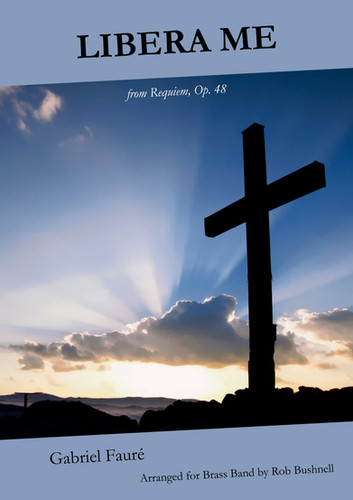
Libera Me from 'Requiem' (Brass Band) Faure arr. Rob Bushnell
Composed between 1887 and 1890, Gabriel Faure's Requiem is not only one of his best-known works but one of the most popular piece of choral music in the Classical repertoire, coming 23rd in the Classic FM's Hall of Fame 2024. Believed to be a tribute to his father (who died in 1885), Faure himself said "My Requiem wasn't written for anything - for pleasure, if I may call it that!" It started life as a five-movement work but was later expanded to be the final seven-movement work we know today. The first version (which Faure called "un petit Requiem") was first performed on 16 January 1888, with Faure conducting, a second version premiered on 21 January 1893 before the final version (reworked for full orchestra) was played on 12 July 1900; the Requiem was performed at the composer's own funeral in 1924.The Libera Me, or Deliver Me, was actually written in 1877 and is the sixth part of the Requiem.Faure once said of the work, "Everything I managed to entertain by way of religious illusion I put into my Requiem, which moreover is dominated from beginning to end by a very human feeling of faith in eternal rest." Upon interview, he also said, "It has been said that my Requiem does not express the fear of death and someone has called it a lullaby of death. But it is thus that I see death: as a happy deliverance, an aspiration towards happiness above, rather than as a painful experience. The music of Gounod has been criticised for its inclination towards human tenderness. But his nature predisposed him to feel this way: religious emotion took this form inside him. Is it not necessary to accept the artist's nature? As to my Requiem, perhaps I have also instinctively sought to escape from what is thought right and proper, after all the years of accompanying burial services on the organ! I know it all by heart. I wanted to write something different."This arrangement is for the British-style brass band, with alternative parts for horns in F and bass-clef lower brass. The tenor solo is featured on the euphonium. A recording of the original composition can be found here: www.youtube.com/watch?v=fXwFNoBHCf0 Duration: 4.20 minutes approx. Difficulty Level: 4th Section + PDF download includes parts and score. Sheet music available from www.brassband.co.uk Instrumentation: Soprano Cornet Eb Solo Cornet Bb Repiano Cornet Bb 2nd Cornet Bb 3rd Cornet Bb Flugel Horn Bb Solo Horn Eb 1st Horn Eb 2nd Horn Eb 1st Baritone Bb 2nd Baritone Bb 1st Trombone Bb 2nd Trombone Bb Bass Trombone Euphonium Bb Bass Eb Bass BbTimpani
In Stock: Estimated dispatch 1-3 working days
-
 £41.09
Verklarte Nacht (Brass Band) Arnold Schoenberg arr. Rob Bushnell
Composed in just three weeks in 1899, Verklarte Nacht (Transfigured Night) is a string sextet in one movement by Arnold Schoenberg. Whilst known better for tone rows, his dodecaphonic music and the Second Viennese School, Schoenberg was a master of harmony (writing a number of books on the subject) and, in his early life, was inspired by the music of Brahms and Wagner. This is his best-known tonal work. Its description as a tone poem is not surprising given it takes its inspiration from Richard Dehmel's poem of the same name, as well as Schoenberg's strong feelings towards his future wife, Mathilde Zemlinsky, sister of his teacher, Alexander von Zemlinsky. The work is said to have five sections, one for each of the stanzas in the poem. The poem, from 1896, describes a man and woman walking through a dark forest on a moonlit night. The woman shares a secret with him, that she is pregnant but not with his child. The man reflects upon this before warmly accepting (and forgiving) the news. The work premiered on 18 March 1902 in the Vienna Musikverein by the Rose Quartet. As was normal at the time, Schoenberg produced a string orchestra version that was premiered on 29 November 1916 in Prague, conducted by Zemlinsky, which was later revised in 1943 to better support the soloists, also adding more articulation and tempo markings. Whilst the piece was controversial at the time, both musically and due to the poem's "inappropriate" subject matter, Richard Dehmel himself was impressed, writing "I had intended to follow the motives of my text in your composition, but soon forgot to do so, I was so enthralled by the music." This arrangement is for the British-style brass band, with alternative parts for horns in F and bass-clef lower brass. To view a recording of the original composition please visit www.youtube.com/watch?v=vqODySSxYpc. Difficulty Level: 2nd Section + Duration: approx. 6.40 minutes Sheet music available from www.brassband.co.uk Instrumentation: Soprano Cornet Eb Solo Cornet Bb Repiano Cornet Bb 2nd Cornet Bb 3rd Cornet Bb Flugel Horn Bb Solo Horn Eb 1st Horn Eb 2nd Horn Eb 1st Baritone Bb 2nd Baritone Bb 1st Trombone Bb 2nd Trombone Bb Bass Trombone Euphonium Bb Bass Eb Bass BbTimpani Percussion 1-3
In Stock: Estimated dispatch 1-3 working days
-
 £63.51
Temperamental (Brass Band) Fendall Hill
This work by Fendall Hill was the set test for the 2021 National Brass Band Championships of New Zealand, B Grade. The composer writes: 'J.S. Bach (1685-1750) is deemed by many to be the 'Ulimate Composer'. He added an incredible proportion to the DNA of western music, and his influence is heard in the music of today. Like many artists, he was not overly recognised as a composer during his lifetime, and it took an 1829 performance of the St Matthew Passion by Mendelssohn to ignite a recognition of his place in the music world, a place he has maintained ever since. This piece starts with a similar spark of rediscovery of the music of Bach. It contains arrangements of various works, interspersed with composition based on Bach's chord structures, sections in the style of Bach, and original sections inspired by the moods created along the way. The first section explores the Toccata, and great organ works. This leads into an exploration of his choral works, and a finale based on the Preludes. The word 'Tempered' has different meanings, and all seem to apply to the music of Bach, and these appeal to the musical, engineering and spiritual aspects of my personal life. His music reaches to the humanity and divinity, it has strength, structure and order that creates frameworks in which incredible complexity reigns; and the complexity leads to a wildness, a kind of craziness that represents a range of human moods, and can change without warning. The same piece of music affects people in very different ways. I don't know if it's Bach's music, or us, but it can seem out of control and under control at the same time - the combination is highly temperamental. To view a follow-the-score video of the work please visit: https://youtu.be/zpNxITUqXZU Sheet music available from: UK - www.brassband.co.uk USA - www.solidbrassmusic.com Difficulty Level: 1st Section + Instrumentation: Soprano Cornet Eb Solo Cornet 1&2 Bb Solo Cornet 3&4 Bb 2nd Cornet Bb 3rd Cornet Bb Flugel Horn Bb Solo Horn Eb 1st Horn Eb 2nd Horn Eb 1st Baritone Bb 2nd Baritone Bb 1st Trombone Bb 2nd Trombone Bb Bass Trombone Euphonium Bb Bass Eb Bass Bb Timpani Percussion 1-4
In Stock: Estimated dispatch 1-3 working days
-
 £31.95
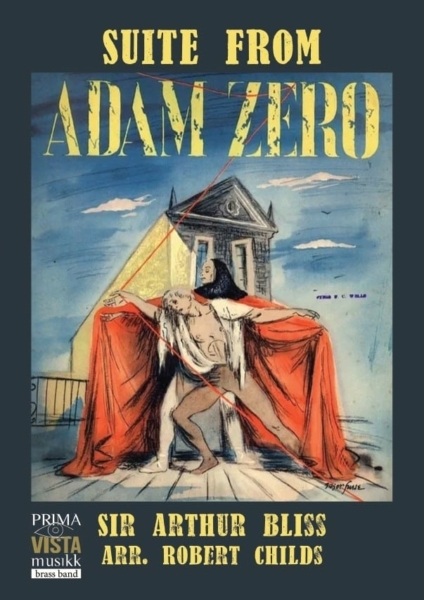
Adam Zero, Suite from (Brass Band - Score only) - Bliss, Arthur - Childs, Robert
Selected as the Section 2 test piece for the National Brass Band Championships of Great Britain 2025Following his ballet Checkmate, Bliss composed another score for the, by then, Sadler's Wells Ballet, Miracle in the Gorbals, which was choreographed by Robert Helpmann, to a scenario by Michael Benthall. Premired in 1944, the ballet made a considerable impact and was a box-office success. It was followed in turn by a further collaboration with Helpmann and Benthall, Adam Zero. This would serve Helpmann, in the eponymous role, as a vehicle in two respects: demonstrating his gifts as a dancer-actor and as a choreographer. First performed at the Royal Opera House, Covent Garden, on 8 April 1946, Adam Zero was conducted by Constant Lambert, the work's dedicatee. Bliss considered it 'his most varied and exciting ballet score'. Benthall provided a synopsis for the programme:There is a philosophy that life moves in an endless series of timeless cycles. As Nature passes through Spring, Summer, Autumn and Winter, so man is born, makes a success in his own particular sphere, loses his position to a younger generation, sees his world crumble before his eyes and only finds peace in death. This age-old story is told in terms of a Company creating a ballet and calling on the resources of the theatre to do so. Lighting, stage mechanism, dance conventions, musical forms and costumes and scenery of all periods are used to symbolize the world of 'Adam Zero'.Apart from Adam, as the Principal Dancer, other main roles included the Stage Director (representing Omnipotence), and Adam's Fates (Designer, Wardrobe Mistress, and Dresser). 'The Woman in this allegory', wrote Bliss, 'under the symbol of the Choreographer, was both the creator and destroyer of Adam: his first love, his wife, his mistress, and finally the figure of beneficent Death.' When the curtain rose, the 'audience saw the Covent Garden stage right back to the wall, completely empty except for the protagonists, 'the Company poised, still and expectant, as they await the birth of... Adam Zero.'Unfortunately, soon after the premire, Helpmann injured himself and had to withdraw from the remaining performances. Despite generally positive reviews, the ballet did not capture the imagination of audiences and, to Bliss's considerable disappointment, was not revived. Seventy years would elapse before its first major return to the stage, in 2016, performed by the ballet company of Stadttheater Bremerhaven with choreography by Sergei Vanaev.Bliss extracted a concert suite from the ballet, conducting its first performance with the City of Birmingham Symphony Orchestra on 28 October 1948. For his own suite, arranged for brass band in 2023, Dr Robert Childs chose three dances linked to the seasons, book-ending them with the ebullient 'Fanfare Overture' and 'Fanfare Coda'. After Adam has grown to manhood, his Fates clothe him in a costume synonymous with confident youth, appropriate for the virile, ardent 'Dance of Spring'. In the 'Approach of Autumn', Adam, now wearing a sombre costume, has grown older: his Fates have streaked grey in his hair and put lines on his face. But they had earlier raised Adam to the zenith of his power, and the 'Dance of Summer' depicts him in the prime of life, in music of sweeping grandeur. The 'Fanfare Coda' signals that the next cycle of life is about to begin.Duration: 10.30
Estimated dispatch 7-14 working days
-
£21.65
Adam Zero, Suite from (Brass Band - Study Score) - Bliss, Arthur - Childs, Robert
Selected as the Section 2 test piece for the National Brass Band Championships of Great Britain 2025Following his ballet Checkmate, Bliss composed another score for the, by then, Sadler's Wells Ballet, Miracle in the Gorbals, which was choreographed by Robert Helpmann, to a scenario by Michael Benthall. Premired in 1944, the ballet made a considerable impact and was a box-office success. It was followed in turn by a further collaboration with Helpmann and Benthall, Adam Zero. This would serve Helpmann, in the eponymous role, as a vehicle in two respects: demonstrating his gifts as a dancer-actor and as a choreographer. First performed at the Royal Opera House, Covent Garden, on 8 April 1946, Adam Zero was conducted by Constant Lambert, the work's dedicatee. Bliss considered it 'his most varied and exciting ballet score'. Benthall provided a synopsis for the programme:There is a philosophy that life moves in an endless series of timeless cycles. As Nature passes through Spring, Summer, Autumn and Winter, so man is born, makes a success in his own particular sphere, loses his position to a younger generation, sees his world crumble before his eyes and only finds peace in death. This age-old story is told in terms of a Company creating a ballet and calling on the resources of the theatre to do so. Lighting, stage mechanism, dance conventions, musical forms and costumes and scenery of all periods are used to symbolize the world of 'Adam Zero'.Apart from Adam, as the Principal Dancer, other main roles included the Stage Director (representing Omnipotence), and Adam's Fates (Designer, Wardrobe Mistress, and Dresser). 'The Woman in this allegory', wrote Bliss, 'under the symbol of the Choreographer, was both the creator and destroyer of Adam: his first love, his wife, his mistress, and finally the figure of beneficent Death.' When the curtain rose, the 'audience saw the Covent Garden stage right back to the wall, completely empty except for the protagonists, 'the Company poised, still and expectant, as they await the birth of... Adam Zero.'Unfortunately, soon after the premire, Helpmann injured himself and had to withdraw from the remaining performances. Despite generally positive reviews, the ballet did not capture the imagination of audiences and, to Bliss's considerable disappointment, was not revived. Seventy years would elapse before its first major return to the stage, in 2016, performed by the ballet company of Stadttheater Bremerhaven with choreography by Sergei Vanaev.Bliss extracted a concert suite from the ballet, conducting its first performance with the City of Birmingham Symphony Orchestra on 28 October 1948. For his own suite, arranged for brass band in 2023, Dr Robert Childs chose three dances linked to the seasons, book-ending them with the ebullient 'Fanfare Overture' and 'Fanfare Coda'. After Adam has grown to manhood, his Fates clothe him in a costume synonymous with confident youth, appropriate for the virile, ardent 'Dance of Spring'. In the 'Approach of Autumn', Adam, now wearing a sombre costume, has grown older: his Fates have streaked grey in his hair and put lines on his face. But they had earlier raised Adam to the zenith of his power, and the 'Dance of Summer' depicts him in the prime of life, in music of sweeping grandeur. The 'Fanfare Coda' signals that the next cycle of life is about to begin.Duration: 10.30
Estimated dispatch 7-14 working days
-
£74.95
Adam Zero, Suite from (Brass Band - Score and Parts) - Bliss, Arthur - Childs, Robert
Selected as the Section 2 test piece for the National Brass Band Championships of Great Britain 2025Following his ballet Checkmate, Bliss composed another score for the, by then, Sadler's Wells Ballet, Miracle in the Gorbals, which was choreographed by Robert Helpmann, to a scenario by Michael Benthall. Premired in 1944, the ballet made a considerable impact and was a box-office success. It was followed in turn by a further collaboration with Helpmann and Benthall, Adam Zero. This would serve Helpmann, in the eponymous role, as a vehicle in two respects: demonstrating his gifts as a dancer-actor and as a choreographer. First performed at the Royal Opera House, Covent Garden, on 8 April 1946, Adam Zero was conducted by Constant Lambert, the work's dedicatee. Bliss considered it 'his most varied and exciting ballet score'. Benthall provided a synopsis for the programme:There is a philosophy that life moves in an endless series of timeless cycles. As Nature passes through Spring, Summer, Autumn and Winter, so man is born, makes a success in his own particular sphere, loses his position to a younger generation, sees his world crumble before his eyes and only finds peace in death. This age-old story is told in terms of a Company creating a ballet and calling on the resources of the theatre to do so. Lighting, stage mechanism, dance conventions, musical forms and costumes and scenery of all periods are used to symbolize the world of 'Adam Zero'.Apart from Adam, as the Principal Dancer, other main roles included the Stage Director (representing Omnipotence), and Adam's Fates (Designer, Wardrobe Mistress, and Dresser). 'The Woman in this allegory', wrote Bliss, 'under the symbol of the Choreographer, was both the creator and destroyer of Adam: his first love, his wife, his mistress, and finally the figure of beneficent Death.' When the curtain rose, the 'audience saw the Covent Garden stage right back to the wall, completely empty except for the protagonists, 'the Company poised, still and expectant, as they await the birth of... Adam Zero.'Unfortunately, soon after the premire, Helpmann injured himself and had to withdraw from the remaining performances. Despite generally positive reviews, the ballet did not capture the imagination of audiences and, to Bliss's considerable disappointment, was not revived. Seventy years would elapse before its first major return to the stage, in 2016, performed by the ballet company of Stadttheater Bremerhaven with choreography by Sergei Vanaev.Bliss extracted a concert suite from the ballet, conducting its first performance with the City of Birmingham Symphony Orchestra on 28 October 1948. For his own suite, arranged for brass band in 2023, Dr Robert Childs chose three dances linked to the seasons, book-ending them with the ebullient 'Fanfare Overture' and 'Fanfare Coda'. After Adam has grown to manhood, his Fates clothe him in a costume synonymous with confident youth, appropriate for the virile, ardent 'Dance of Spring'. In the 'Approach of Autumn', Adam, now wearing a sombre costume, has grown older: his Fates have streaked grey in his hair and put lines on his face. But they had earlier raised Adam to the zenith of his power, and the 'Dance of Summer' depicts him in the prime of life, in music of sweeping grandeur. The 'Fanfare Coda' signals that the next cycle of life is about to begin.Duration: 10.30
Estimated dispatch 7-14 working days
-
 £125.00
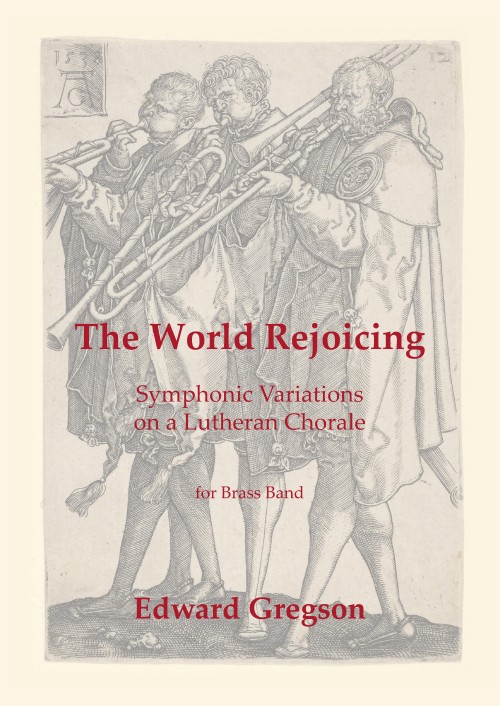
The World Rejoicing (Brass Band - Score and Parts) - Gregson, Edward
The World Rejoicing was commissioned by the National Brass Band Associations of Belgium, Netherlands, Norway, Switzerland, and the British Open, as the test piece for their competitions in 2020/21. Although the work was completed in 2019, the pandemic of 2020 meant that these competitions were postponed until 2021/22. The premiere took place in September 2021 at Symphony Hall, Birmingham, UK.In searching for a common link between the brass band traditions of the various European countries that commissioned this work, I considered the fact that hymns have always played an important role in the relationship that brass bands have with their particular communities; and thus I turned to a well- known Lutheran chorale, Nun danket alle Gott (Now thank we all our God), written around 1636 by Martin Rinkart, with the melody attributed to Johann Cruger. A number of composers have incorporated this chorale into their music, most famously J.S. Bach in his Cantatas no. 79 and 192, and Mendelssohn in the Lobsegang movement of his 2nd Symphony (the harmonisation of which is usually used when this hymn is sung).It seemed fitting therefore for me to return to a compositional form I have used many times before (Variations) and to write a work based on this hymn. I have used it in a similar way to that which I employed in my Variations on Laudate Dominum of 1976 - that is, rather than writing a set of variations using elaborations of the complete tune, I have taken various phrases from the chorale and used them within the context of other musical material, applying an overall symphonic process of continuous variation and development. The structure, or sub-divisions of the work, which is through composed and plays without a break, is as follows:Prelude, Capriccio, La Danza 1, Processional, La Danza 2, Arias and Duets, Fuga Burlesca, Chorale, and Postlude.The work, which is around 16 minutes in length, is also partly autobiographical - in the manner say of Strauss's Ein Heldenleben - in that I have incorporated into the score brief quotations from many of my other major works for brass band. In that respect, The World Rejoicing sums up a particular facet of my life as a composer, and reflects the admiration I have always had for what is surely one of the great amateur music-making traditions in the world.Duration: 16.00
Estimated dispatch 7-14 working days
-
£40.00
The World Rejoicing (Brass Band - Score only) - Gregson, Edward
The World Rejoicing was commissioned by the National Brass Band Associations of Belgium, Netherlands, Norway, Switzerland, and the British Open, as the test piece for their competitions in 2020/21. Although the work was completed in 2019, the pandemic of 2020 meant that these competitions were postponed until 2021/22. The premiere took place in September 2021 at Symphony Hall, Birmingham, UK.In searching for a common link between the brass band traditions of the various European countries that commissioned this work, I considered the fact that hymns have always played an important role in the relationship that brass bands have with their particular communities; and thus I turned to a well- known Lutheran chorale, Nun danket alle Gott (Now thank we all our God), written around 1636 by Martin Rinkart, with the melody attributed to Johann Cruger. A number of composers have incorporated this chorale into their music, most famously J.S. Bach in his Cantatas no. 79 and 192, and Mendelssohn in the Lobsegang movement of his 2nd Symphony (the harmonisation of which is usually used when this hymn is sung).It seemed fitting therefore for me to return to a compositional form I have used many times before (Variations) and to write a work based on this hymn. I have used it in a similar way to that which I employed in my Variations on Laudate Dominum of 1976 - that is, rather than writing a set of variations using elaborations of the complete tune, I have taken various phrases from the chorale and used them within the context of other musical material, applying an overall symphonic process of continuous variation and development. The structure, or sub-divisions of the work, which is through composed and plays without a break, is as follows:Prelude, Capriccio, La Danza 1, Processional, La Danza 2, Arias and Duets, Fuga Burlesca, Chorale, and Postlude.The work, which is around 16 minutes in length, is also partly autobiographical - in the manner say of Strauss's Ein Heldenleben - in that I have incorporated into the score brief quotations from many of my other major works for brass band. In that respect, The World Rejoicing sums up a particular facet of my life as a composer, and reflects the admiration I have always had for what is surely one of the great amateur music-making traditions in the world.Duration: 16.00
Estimated dispatch 7-14 working days
-
£15.00
The World Rejoicing (Brass Band - Study Score) - Gregson, Edward
The World Rejoicing was commissioned by the National Brass Band Associations of Belgium, Netherlands, Norway, Switzerland, and the British Open, as the test piece for their competitions in 2020/21. Although the work was completed in 2019, the pandemic of 2020 meant that these competitions were postponed until 2021/22. The premiere took place in September 2021 at Symphony Hall, Birmingham, UK.In searching for a common link between the brass band traditions of the various European countries that commissioned this work, I considered the fact that hymns have always played an important role in the relationship that brass bands have with their particular communities; and thus I turned to a well- known Lutheran chorale, Nun danket alle Gott (Now thank we all our God), written around 1636 by Martin Rinkart, with the melody attributed to Johann Cruger. A number of composers have incorporated this chorale into their music, most famously J.S. Bach in his Cantatas no. 79 and 192, and Mendelssohn in the Lobsegang movement of his 2nd Symphony (the harmonisation of which is usually used when this hymn is sung).It seemed fitting therefore for me to return to a compositional form I have used many times before (Variations) and to write a work based on this hymn. I have used it in a similar way to that which I employed in my Variations on Laudate Dominum of 1976 - that is, rather than writing a set of variations using elaborations of the complete tune, I have taken various phrases from the chorale and used them within the context of other musical material, applying an overall symphonic process of continuous variation and development. The structure, or sub-divisions of the work, which is through composed and plays without a break, is as follows:Prelude, Capriccio, La Danza 1, Processional, La Danza 2, Arias and Duets, Fuga Burlesca, Chorale, and Postlude.The work, which is around 16 minutes in length, is also partly autobiographical - in the manner say of Strauss's Ein Heldenleben - in that I have incorporated into the score brief quotations from many of my other major works for brass band. In that respect, The World Rejoicing sums up a particular facet of my life as a composer, and reflects the admiration I have always had for what is surely one of the great amateur music-making traditions in the world.Duration: 16.00
Estimated dispatch 7-14 working days
-
 £44.95
A Pastoral Symphony (Brass Band - Score and Parts) - Redhead, Robert
This symphony for brass band seeks to explore the thought that 'the greatest need of any congregation is its pastor's personal holiness'. The first movement challenges the pastor 'to serve the present age', the tunes 'Majesty' and 'Lathbury' are used. The second movement expresses a priority to 'Seek...first the Kingdom of God'. The short third movement presents the question 'Except I am moved with compassion, how dwellest they Spirit in me?' before the triumphant finale reflects the desire of every Christian that his life and work will always be for the glory of God with the presentation of 'In my life Lord, be glorified'.
Estimated dispatch 7-14 working days
 View Music