
Results
-
£44.95
NONE OTHER NAME (Brass Band Set) - Erik Leidzen
None Other Name was written for the 1960 tour of England by the New York Staff Band of The Salvation Army and can justifiably be termed a classic of brass band repertoire. It is best described as a symphonic medley of six songs focused on the name of Christ; The Saviour's Name; Jesus is the Sweetest Name I know; There's a Wonderful Name, 'tis Jesus; He's the Lily of the Valley; Jesus, the Very Thought of Thee (St. Agnes); All Hal the Power of Jesus' Name (Diadem).
Estimated dispatch 7-14 working days
-
£59.95
LORD IS KING, The (Brass Band Set) - Ray Steadman-Allen
Ray Steadman-Allen was for many years the driving force in Salvation Army music. His publication list of both brass and vocal works can be measured literally by the hundred. 'The Lord is King' is arguably his crowning achievement of over twenty major works for brass band. Although described as a suite, the work is more symphonic in conception and scale as well as being formidable to perform. The work is based on the Welsh hymn tune 'Llangollen' to which the hymn 'The Lord is King, I own His power' are associated. The three movements derive inspiration from the lines 'My joy, my toil, my craftman's skill, all have their place, and serve His will' found in verse five of the hymn.
Estimated dispatch 7-14 working days
-
£44.95
DAWNING, The (Brass Band Set) - Peter Graham
This early Peter Graham work in Sinfonietta form, takes as its central theme Joy Webb's original melody 'There will be God', which speaks of 'the dawning of a brand new day'. Peter Graham's dramatic treatment takes us into a world of 'cosmic power' and evokes ideas that one day wars will end as God will rule supreme.
Estimated dispatch 7-14 working days
-
 £42.35
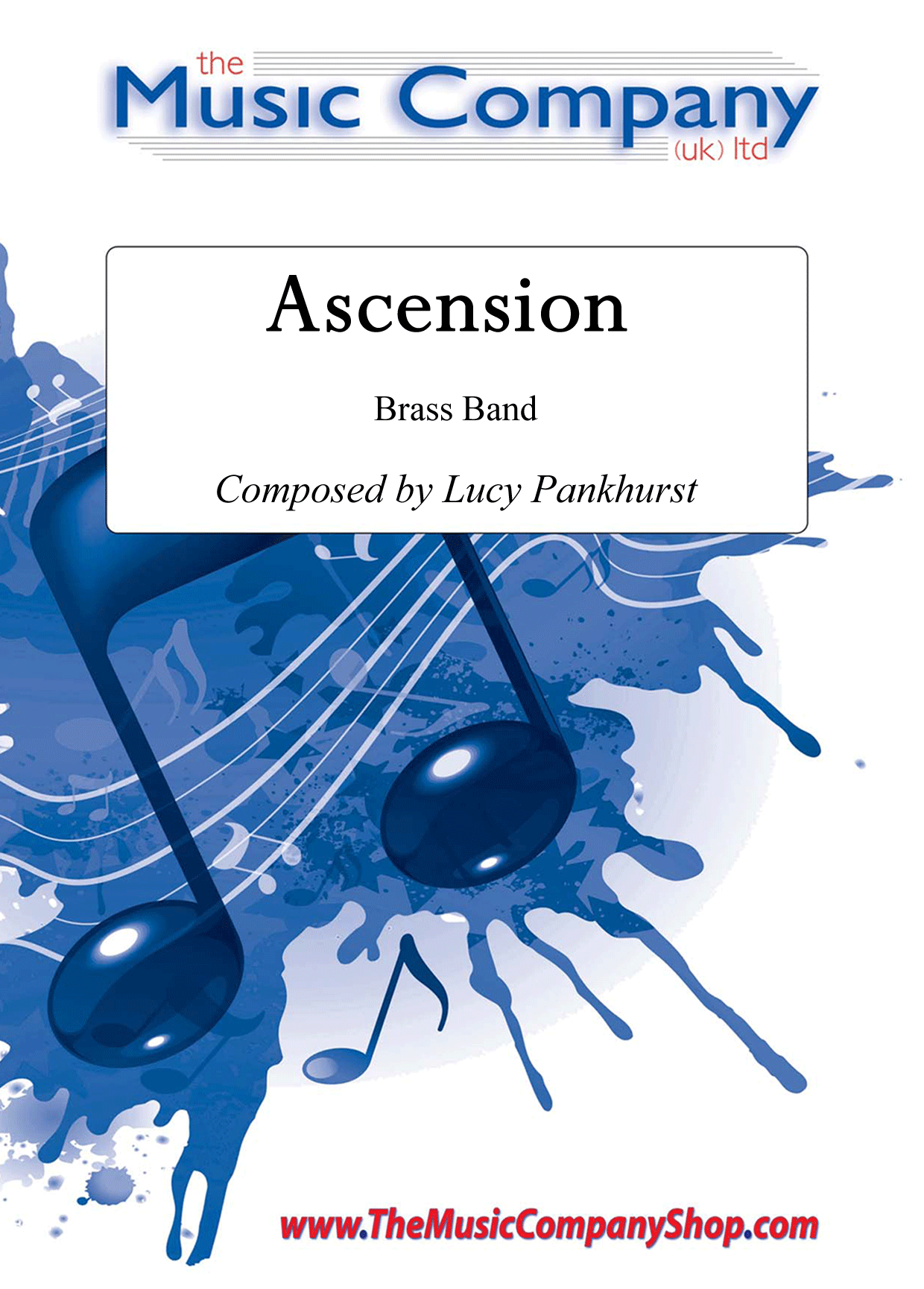
Ascension - Lucy Pankhurst
A major work written for the RNCM Brass Festival Competition 2005, and inspired by the nature of Ascension - creating a Musical depiction of the spiritual journey towards enlightenment, sanctuary and ultimate inner peace.As aninitial muse for this work, the 'Tibetan Singing Bowl' is utilised with the Brass Band in order to represent this path to Serenity, together withBaoding Balls(Chinese Health Balls) to mark the point of Final Ascension.Programme notes from the composer, Lucy Pankhurst:Ascension is a Musical depiction of the Spiritual Journey towards enlightenment, sanctuary and ultimate inner peace.As my initial muse for this work, the Singing Bowl is utilised with the Brass Band in order to represent this path to Serenity. "Tibetan" Singing Bowls date back to the 8th Century A.D., originating in the pre-Buddhist shamanic Bon Po culture in the Himalayas and are still used in modern Monasteries. The original purpose of them still remains a mystery, with accounts stating that it is forbidden to disclose the true function of the Bowls, as the "secrets of sound" yield so much Power, that they must be kept hidden.Listening to the tones created by the Singing Bowl effectively silences the internal dialogue of the listener, making it an excellent tool for Meditation, Centering and entering trance-like states. In Buddhism, as with many cultures, sound is an important part of Spiritual Practice. There are 9 methods to reach Enlightenment in the Buddhist Doctrine ; the seventh is SOUND.These Bowls are used by Healers in a similar way to help balance the body's residual energies. The Bowls are usually made from seven different sacred metals, intended to correlate directly to the seven sacred "Planets" : GOLD (Sun), SILVER (Moon), MERCURY (Mercury), COPPER (Venus), IRON (Mars), TIN (Jupiter), ANTIMONY (Saturn). Any one Bowl can create up to seven different frequencies (tones) simultaneously. In Healing, the Singing Bowl is played whilst balanced on the palm of the hand, struck three times to stabilise the surrounding energies, before rotating the wooden "beater" around the outer circumference of the Bowl to create the "singing" effect.I have included an optional Vibraphone part (to be played with a Double Bass Bow) with Tubular Bells, to be used only in performances where a Singing Bowl cannot be acquired. However, a traditional Bowl should be used whenever possible, to create this specific and unique sound.Baoding Balls or Chinese Health Balls are also utilised in this work. Their appearance in the Music here, however, is to mark the point of Final Ascension, where the music reaches its ultimate goal. These delicate cloisonne iron Balls are said to stimulate the acupressure points on the hand, thus improving the Chi and Energy Paths (Life Force) throughout the entire body. The delicate "tinkle" produced by these spheres is hypnotic and captivating. For this reason, where no Baoding Balls are obtainable for performance, only delicate metallic percussion should be used in replacement (i.e. Crotales, Antique Cymbals or (liberal) single strikes on a Triangle etc.). Bell Trees, Wind Chimes and Cow Bells should not be used.As in many cultures, the number three is important in Ascension, as it represents not only the purification from the Singing Bowl, but also it is a number of confirmation, reiterated throughout the music in the metallic percussion in addition to the Brass, re-affirming the correct path to Enlightenment.
In Stock: Estimated dispatch 3-5 working days
-
 £55.00
Triumph Series Brass Band Journal, Numbers 1392 - 1395, November 2026
1392: March - Joyful Salute (Paul Drury)This march was written in 2014 to celebrate the 125th Anniversary of Rutherglen Corps and features three songs: Sweeter as the years go by; I love him better every day (S.A.S.B. 844); and The voice of Jesus.1393: The wondrous cross (Adrian Lyons)This arrangement combines two powerful melodies: Boston and The power of the Cross. The words of When I survey (S.A.S.B. 208) are woven together with the modern hymn by Keith Getty and Stuart Townend through a linking musical passage. Although particularly appropriate for Easter worship, both songs draw our attention to the central message of the Gospel and the sacrificial love revealed at Calvary, making the piece suitable for use throughout the Christian year.1394: Turn your eyes upon Jesus (Paul Sharman) This is a straightforward arrangement of Turn Your Eyes Upon Jesus (S.A.S.B. 445). Written by Helen Lemmel in 1918, the chorus was inspired by words from a tract by the missionary Lilias Trotter: "Turn your eyes upon Him, look full into His face and you will find that the things of earth will acquire a strange new dimness." Its timeless message continues to encourage Christians to look beyond earthly concerns and fix their attention upon Christ.1395: Cornet Solo - Suo Gn (Ivor Bosanko)Suo Gn is one of the best-known traditional Welsh lullabies. An anonymous folk melody, first published around 1800, it expresses a mother's love and tenderness as she gently comforts her child to sleep. Its simple beauty and lyricism have ensured its enduring popularity.
Estimated dispatch 7-14 working days
-
 £74.95
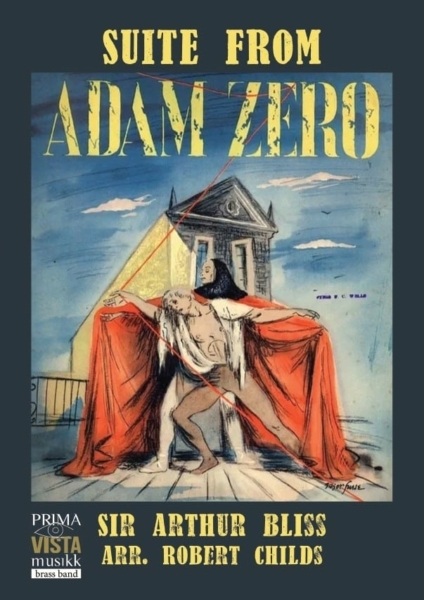
Adam Zero, Suite from (Brass Band - Score and Parts)
Selected as the Section 2 test piece for the National Brass Band Championships of Great Britain 2025Following his ballet Checkmate, Bliss composed another score for the, by then, Sadler's Wells Ballet, Miracle in the Gorbals, which was choreographed by Robert Helpmann, to a scenario by Michael Benthall. Premired in 1944, the ballet made a considerable impact and was a box-office success. It was followed in turn by a further collaboration with Helpmann and Benthall, Adam Zero. This would serve Helpmann, in the eponymous role, as a vehicle in two respects: demonstrating his gifts as a dancer-actor and as a choreographer. First performed at the Royal Opera House, Covent Garden, on 8 April 1946, Adam Zero was conducted by Constant Lambert, the work's dedicatee. Bliss considered it 'his most varied and exciting ballet score'. Benthall provided a synopsis for the programme:There is a philosophy that life moves in an endless series of timeless cycles. As Nature passes through Spring, Summer, Autumn and Winter, so man is born, makes a success in his own particular sphere, loses his position to a younger generation, sees his world crumble before his eyes and only finds peace in death. This age-old story is told in terms of a Company creating a ballet and calling on the resources of the theatre to do so. Lighting, stage mechanism, dance conventions, musical forms and costumes and scenery of all periods are used to symbolize the world of 'Adam Zero'.Apart from Adam, as the Principal Dancer, other main roles included the Stage Director (representing Omnipotence), and Adam's Fates (Designer, Wardrobe Mistress, and Dresser). 'The Woman in this allegory', wrote Bliss, 'under the symbol of the Choreographer, was both the creator and destroyer of Adam: his first love, his wife, his mistress, and finally the figure of beneficent Death.' When the curtain rose, the 'audience saw the Covent Garden stage right back to the wall, completely empty except for the protagonists, 'the Company poised, still and expectant, as they await the birth of... Adam Zero.'Unfortunately, soon after the premire, Helpmann injured himself and had to withdraw from the remaining performances. Despite generally positive reviews, the ballet did not capture the imagination of audiences and, to Bliss's considerable disappointment, was not revived. Seventy years would elapse before its first major return to the stage, in 2016, performed by the ballet company of Stadttheater Bremerhaven with choreography by Sergei Vanaev.Bliss extracted a concert suite from the ballet, conducting its first performance with the City of Birmingham Symphony Orchestra on 28 October 1948. For his own suite, arranged for brass band in 2023, Dr Robert Childs chose three dances linked to the seasons, book-ending them with the ebullient 'Fanfare Overture' and 'Fanfare Coda'. After Adam has grown to manhood, his Fates clothe him in a costume synonymous with confident youth, appropriate for the virile, ardent 'Dance of Spring'. In the 'Approach of Autumn', Adam, now wearing a sombre costume, has grown older: his Fates have streaked grey in his hair and put lines on his face. But they had earlier raised Adam to the zenith of his power, and the 'Dance of Summer' depicts him in the prime of life, in music of sweeping grandeur. The 'Fanfare Coda' signals that the next cycle of life is about to begin.Duration: 10.30
Estimated dispatch 7-14 working days
-
£31.95
Adam Zero, Suite from (Brass Band - Score only)
Selected as the Section 2 test piece for the National Brass Band Championships of Great Britain 2025Following his ballet Checkmate, Bliss composed another score for the, by then, Sadler's Wells Ballet, Miracle in the Gorbals, which was choreographed by Robert Helpmann, to a scenario by Michael Benthall. Premired in 1944, the ballet made a considerable impact and was a box-office success. It was followed in turn by a further collaboration with Helpmann and Benthall, Adam Zero. This would serve Helpmann, in the eponymous role, as a vehicle in two respects: demonstrating his gifts as a dancer-actor and as a choreographer. First performed at the Royal Opera House, Covent Garden, on 8 April 1946, Adam Zero was conducted by Constant Lambert, the work's dedicatee. Bliss considered it 'his most varied and exciting ballet score'. Benthall provided a synopsis for the programme:There is a philosophy that life moves in an endless series of timeless cycles. As Nature passes through Spring, Summer, Autumn and Winter, so man is born, makes a success in his own particular sphere, loses his position to a younger generation, sees his world crumble before his eyes and only finds peace in death. This age-old story is told in terms of a Company creating a ballet and calling on the resources of the theatre to do so. Lighting, stage mechanism, dance conventions, musical forms and costumes and scenery of all periods are used to symbolize the world of 'Adam Zero'.Apart from Adam, as the Principal Dancer, other main roles included the Stage Director (representing Omnipotence), and Adam's Fates (Designer, Wardrobe Mistress, and Dresser). 'The Woman in this allegory', wrote Bliss, 'under the symbol of the Choreographer, was both the creator and destroyer of Adam: his first love, his wife, his mistress, and finally the figure of beneficent Death.' When the curtain rose, the 'audience saw the Covent Garden stage right back to the wall, completely empty except for the protagonists, 'the Company poised, still and expectant, as they await the birth of... Adam Zero.'Unfortunately, soon after the premire, Helpmann injured himself and had to withdraw from the remaining performances. Despite generally positive reviews, the ballet did not capture the imagination of audiences and, to Bliss's considerable disappointment, was not revived. Seventy years would elapse before its first major return to the stage, in 2016, performed by the ballet company of Stadttheater Bremerhaven with choreography by Sergei Vanaev.Bliss extracted a concert suite from the ballet, conducting its first performance with the City of Birmingham Symphony Orchestra on 28 October 1948. For his own suite, arranged for brass band in 2023, Dr Robert Childs chose three dances linked to the seasons, book-ending them with the ebullient 'Fanfare Overture' and 'Fanfare Coda'. After Adam has grown to manhood, his Fates clothe him in a costume synonymous with confident youth, appropriate for the virile, ardent 'Dance of Spring'. In the 'Approach of Autumn', Adam, now wearing a sombre costume, has grown older: his Fates have streaked grey in his hair and put lines on his face. But they had earlier raised Adam to the zenith of his power, and the 'Dance of Summer' depicts him in the prime of life, in music of sweeping grandeur. The 'Fanfare Coda' signals that the next cycle of life is about to begin.Duration: 10.30
Estimated dispatch 7-14 working days
-
£21.95
Adam Zero, Suite from (Brass Band - Study Score)
Selected as the Section 2 test piece for the National Brass Band Championships of Great Britain 2025Following his ballet Checkmate, Bliss composed another score for the, by then, Sadler's Wells Ballet, Miracle in the Gorbals, which was choreographed by Robert Helpmann, to a scenario by Michael Benthall. Premired in 1944, the ballet made a considerable impact and was a box-office success. It was followed in turn by a further collaboration with Helpmann and Benthall, Adam Zero. This would serve Helpmann, in the eponymous role, as a vehicle in two respects: demonstrating his gifts as a dancer-actor and as a choreographer. First performed at the Royal Opera House, Covent Garden, on 8 April 1946, Adam Zero was conducted by Constant Lambert, the work's dedicatee. Bliss considered it 'his most varied and exciting ballet score'. Benthall provided a synopsis for the programme:There is a philosophy that life moves in an endless series of timeless cycles. As Nature passes through Spring, Summer, Autumn and Winter, so man is born, makes a success in his own particular sphere, loses his position to a younger generation, sees his world crumble before his eyes and only finds peace in death. This age-old story is told in terms of a Company creating a ballet and calling on the resources of the theatre to do so. Lighting, stage mechanism, dance conventions, musical forms and costumes and scenery of all periods are used to symbolize the world of 'Adam Zero'.Apart from Adam, as the Principal Dancer, other main roles included the Stage Director (representing Omnipotence), and Adam's Fates (Designer, Wardrobe Mistress, and Dresser). 'The Woman in this allegory', wrote Bliss, 'under the symbol of the Choreographer, was both the creator and destroyer of Adam: his first love, his wife, his mistress, and finally the figure of beneficent Death.' When the curtain rose, the 'audience saw the Covent Garden stage right back to the wall, completely empty except for the protagonists, 'the Company poised, still and expectant, as they await the birth of... Adam Zero.'Unfortunately, soon after the premire, Helpmann injured himself and had to withdraw from the remaining performances. Despite generally positive reviews, the ballet did not capture the imagination of audiences and, to Bliss's considerable disappointment, was not revived. Seventy years would elapse before its first major return to the stage, in 2016, performed by the ballet company of Stadttheater Bremerhaven with choreography by Sergei Vanaev.Bliss extracted a concert suite from the ballet, conducting its first performance with the City of Birmingham Symphony Orchestra on 28 October 1948. For his own suite, arranged for brass band in 2023, Dr Robert Childs chose three dances linked to the seasons, book-ending them with the ebullient 'Fanfare Overture' and 'Fanfare Coda'. After Adam has grown to manhood, his Fates clothe him in a costume synonymous with confident youth, appropriate for the virile, ardent 'Dance of Spring'. In the 'Approach of Autumn', Adam, now wearing a sombre costume, has grown older: his Fates have streaked grey in his hair and put lines on his face. But they had earlier raised Adam to the zenith of his power, and the 'Dance of Summer' depicts him in the prime of life, in music of sweeping grandeur. The 'Fanfare Coda' signals that the next cycle of life is about to begin.Duration: 10.30
Estimated dispatch 7-14 working days
-
 £55.00
Triumph Series Brass Band Journal, Numbers 1367 - 1370, November 2024
1367: March - Risen, conquering Son (Noel Jones)Two uplifting Easter songs are featured in this march; Low in the grave he lay (S.A.S.B. 228) with words and music written by Robert Lowry, and Thine is the glory (S.A.S.B. 276) with words by Edmond L. Budry and music by George F. Handel. Both serve as a powerful reminder of the resurrection of Jesus.1368: Horn Solo - O how much he cared for me (Keith Wilkinson)This solo was originally penned for Bandsman Frank Taylor, who plays Solo Horn at Stapleford Citadel Corps. As its basis, it uses the popular hymn No one ever cared for me like Jesus by Charles F. Weigle, a Baptist evangelist who wrote more than a thousand hymns.1369: My Redeemer lives (Olaf Ritman)This arrangement of Reuben Morgan's well-known worship song (S.A.S.B. 223) was first written as an accompaniment for congregational singing and can still be used in that way. It was inspired by the American R&B group Tower of Power and is meant to sound soulful and funky.1370: Selection - With life anew (Mervyn Clarke)This selection features music associated with two hymns; Blessd Saviour, now behold me (S.A.S.B. 575) by William Baugh and Breathe on me, breath of God (S.A.S.B. 294) by Edwin Hatch. Although Edwin Hatch's hymn-writing output was very small, this hymn has seen numerous settings and melodies associated with the words from which the piece takes its title; two of these melodies are featured here in Trentham and Carlisle.
Estimated dispatch 7-14 working days
-
 £38.95
Unity Series Band Journal - Numbers 510 - 513, October 2022
510: March - There is a fountain (Zachary Docter)This bright and cheerful march takes two songs as its basis; Jesus loves me! This I know (S.A.S.B. 807) and There is a fountain (S.A.S.B 202).511: Shine, Jesus, shine (Marcus Venables)While this piece was originally written for young people at a summer music camp in Canada, the piece is a light programme item suitable for smaller ensembles of any age.512: My Trust (Alan Williams)This setting is based on the simple chorus In thee, O Lord, do I put my trust (S.A.S.B 594). Ordinarily heard in 3/4 times, this 4/4 version of the tune has the space for reflection written into the notation.513: Power in the blood (Martyn Thomas)This is a blues/rock arrangement of the traditional hymn Would you be free from your burden of sin? (S.A.S.B 451). It can be used as a stand-alone piece or equally well as an accompaniment for congregational singing.
Estimated dispatch 7-14 working days