
Results
-
 £35.00
Good King Wenceslas (Brass Band - Score and Parts) - McKenzie, Jock
This popular Christmas carol tells the story of a Bohemian King who braved harsh winter weather to give alms to a poor peasant. This takes place on the Feast of Stephen, the first day of Christmas (December 26th). This legend is based on the life of the historical Saint Wenceslas 1, Duke of Bohemia (907 - 935). In 1853 the English hymn writer John Mason Neale wrote his own version of this tale, setting his words to the melody of a 13th century spring carol "Tempus adest floridum" which had first been published in Piae Cantiones (1582). It is this version that has endured to become the popular carol of today. Duration: 4.30
Estimated dispatch 7-14 working days
-
 £69.99
Navigation Inn (Brass Band - Score and Parts) - Sparke, Philip
Navigation Inn was originally written to celebrate one of the most popular events in the brass band calendar - the Whit Friday marches. The Navigation Inn is a pub which is a popular meeting place for bandsmen and which celebrates the love of brass bands with mementos and historic photographs on the walls. This lively piece in the style of a traditional contest-style march will bring a great sense of tradition to any concert.Duration: 3.15
Estimated dispatch 7-14 working days
-
 £35.00
Carol of the Bells (Brass Band - Score and Parts) - Littlemore, Phillip
This popular Christmas piece was composed by Mykola Leontovych around 1916. It is based on a Ukrainian folk chant known as 'Shchedryk', a New Year's carol. However, it was not until after the composer's death in 1921 that it was first introduced to Western audiences, when the Ukrainian National Choir included it on their tour of Europe and the Americas that same year. The film composer John Williams incorporated it into the score for the 1990 film Home Alone and he is credited for bringing it to a wider audience still, although it had been released on Christmas albums by a number of popular artists before that. This transcription for brass band has been adapted from the arrangement by Robert Prizeman, who created it for Libera, the world famous boys choir that he both founded and directs. Their unique, enchanting and, some say, heavenly sound delights audiences throughout the world through extensive concerts, recording and TV broadcasts. This brass band transcription introduces this skilled choral arrangement to a new genre and a whole new audience as well. Duration: 3.00
Estimated dispatch 7-14 working days
-
 £54.95
Songs of the Great War (Brass Band - Score and Parts) - Wiffin, Rob
A Medley of Popular Songs, 1914 - 1918Music of the Great War is a five year project to use music of the period to educate and engage schools, colleges, town bands, and the wider public across the UK and the world to learn in a positive way about the events, the experience of the troops involved from all sides, and how music played its part.This year, to commemorate the centenary of the Great War a specially arranged medley Songs of the Great War has been created. The medley has been arranged for bands to rehearse and eventually perform on the 11 November 2015. It brings together some of the most popular tunes played, sung and performed by the men and women of the time - in the trenches and on the various home fronts.With the support of many countries and organisations, on the 11 November the medley will be first played in New Zealand and Australia. It will ripple east across the world being performed in countries like India and Pakistan before hitting Europe and onwards to include performances in Canada and the Caribbean. This could become one of the most played pieces of music in a 24-hour period.In Britain, there will be performances across the country, including some at key events and sites involving a wide range of military and non-military personnel.The medley includes:It's a Long Way to TipperaryYour King and Country Want YouGood Bye-eeOh! It's a Lovely WarHello! Hello! Who's Your Lady FriendTake Me Back to Dear Old BlightyMademoiselle from ArmentieresThere's a Long, Long Trail A-windingIf You Were the Only Girl in the WorldPack Up Your Troubles (In Your Old Kit Bag)Old Soldiers Never Die/Last Post
Estimated dispatch 7-14 working days
-
 £29.99
Titan's Progress (score only) - Hermann Pallhuber
Commissioned by Austria's leading brass band, Brass Band Oberoesterreich, Titan's Progress is a series of descriptive, virtuoso episodes based on the principal character of the novel by Jean Paul. This was also the original subject of Mahler's Symphony No.1, from which Hermann Pallhuber derives much of his material. The work has proved an exceptionally popular test piece all over the world.Titan's Progress was the selected test piece for the British Open Brass Band Championship, held at Symphony Hall, Birmingham on Saturday 12th September 2009.Suitable for Championship BandsDuration: 17 minutes
Estimated dispatch 7-14 working days
-
 £49.99
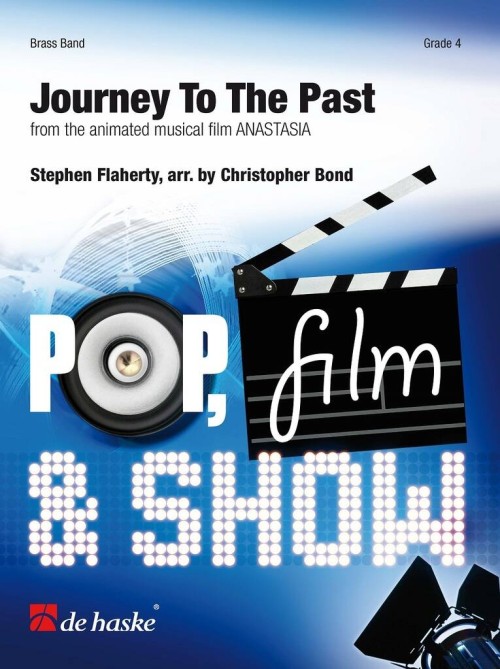
Journey to the Past (from Anastasia) (Brass Band - Score and Parts) - Flaherty, Stephen - Bond, Christopher
Step into an enchanting world of nostalgia with the compelling sounds of Journey To The Past, a wonderful little gem by Stephen Flaherty, magically arranged for brass band by Christopher Bond. This song, originally composed for the popular animated film Anastasia, tells a story of hope, discovery and finding one's true self. The warm brass band sounds add a new dimension, infusing each note with emotion and passion.Duration: 3.15
Estimated dispatch 7-14 working days
-
 £56.00
Chicago Tribute (Brass Band - Score and Parts) - Chambers, William Paris - Wilkinson, Keith M.
Chicago Tribune is W. Paris Chambers' most popular march. It is so distinctive, with skilful interplay between melody and countermelody. The march is a bold statement that well represents one of America's great newspapers.
Estimated dispatch 7-14 working days
-
 £29.95
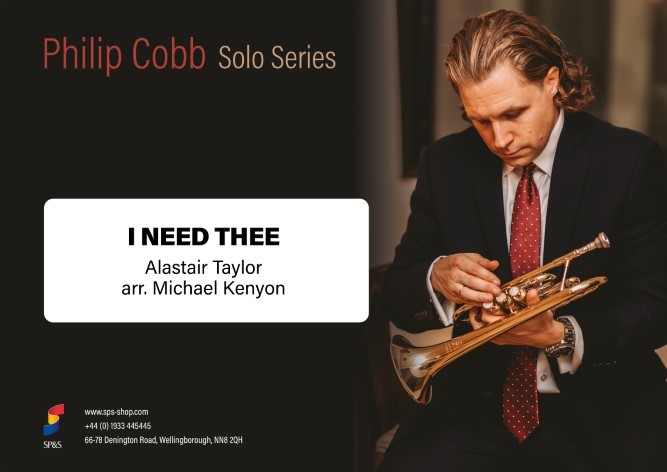
I Need Thee (Cornet Solo with Brass Band - Score and Parts) - Taylor, Alastair - Kenyon, Michael
In the late 1980s, Scottish composer Alastair Taylor bought a new setting to words by Annie S. Hawkes entitled I Need Thee. The impact of Taylor's setting was instant, and has since become a popular and much-loved song. Duration: 5.30
Estimated dispatch 7-14 working days
-
 £54.95
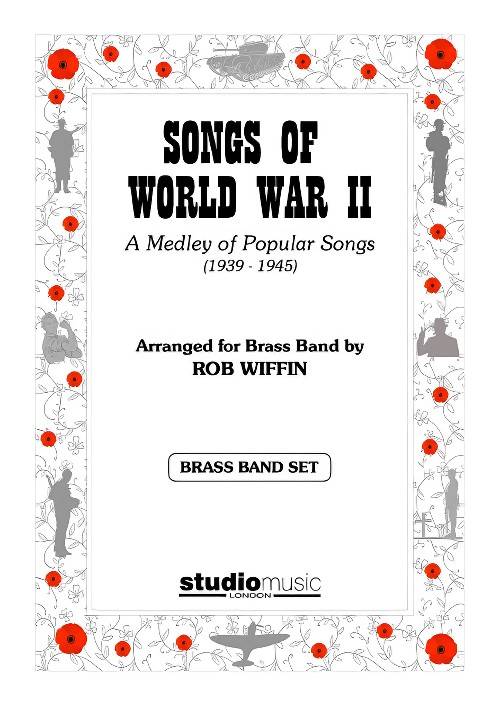
Songs of World War II (Brass Band - Score and Parts) - Wiffin, Rob
A Medley of Popular Songs (1939-1945)Includes:In the MoodA Nightingale Sang in Berkeley SquareWe're Gonna Hang Out the Washing on the Siegfried LineRun, Rabbit, Run!Kiss Me Goodnight, Sergeant MajorI'll Be Seeing You
Estimated dispatch 7-14 working days
-
 £69.99
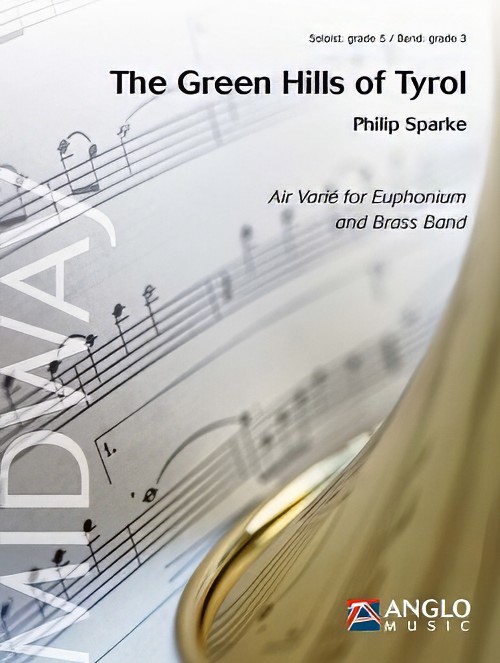
The Green Hills of Tyrol (Euphonium Solo with Brass Band - Score and Parts) - Sparke, Philip
The Green Hills of Tyrol was commissioned by Jrena and Beat Knusel for their son, Swiss euphonium player Joel Knusel, to celebrate his 20th birthday in 2019. The request was for a piece suitable for use in a solo competition, possibly using a Scottish or Irish melody, and composer Philip Sparke suggested an old-fashioned air varie might be a suitable idea. The piece follows the well-established formula of a theme followed by four variations. The history of the original melody is fascinating and, although it is now well-known as a bagpipe tune, its background is Austrian or Italian, rather than Scottish. The tune appears as a chorus of Swiss soldiers in Rossini's 1829 opera William Tell but was possibly an existing Tyrolean folk tune. In 1854, during the Crimean War, Pipe Major John MacLeod of the 93rd Highlanders heard a band of the Sardinian contingent playing selections from the opera in camp before the Siege of Sebastopol. He was struck by the melody and arranged it for his pipers, calling it The Green Hills of Tyrol, referring to Tell's visit to that corner of Austria in the opera. It has since become universally popular among pipe bands who usually refer to it as A Scottish Soldier, following the addition of new lyrics in a 1961 hit by Andy Stewart.Duration: 5.45
Estimated dispatch 7-14 working days
 View Music