Results
-
£65.00
Infernal Ride - Phillip Littlemore
Infernal Ride is mercurial and virtuosic, reflecting the mad-cap chase of Ichabod Crane's final ride on his horse, Gunpowder, in the story by Washington Irving, namely The Legend of Sleepy Hollow. Often an atmosphere of driven fear pushes the music forward, only briefly stopping for breath. The work closes with flourishes in rapid succession, perhaps with the hapless Ichabod meeting his unfortunate end!Brass Band Grade 5: 1st SectionDuration: 7 minutes.Infernal Ride has been recorded by the Leyland Band, conducted by Jason Katsikaris, and is available on the CD Penlee.
In Stock: Estimated dispatch 1-3 working days
-
£30.00
O Little Town of Bethlehem
Based on an 1868 text written by Phillips Brooks and the hymn Forest Green (a tune collected by Ralph Vaughan Williams and first published in the 1906 English Hymnal) O Little Town of Bethlehem is perhaps one of the most widely recognised of all Christmas Carols. This arrangement resets the music as a beautiful Tenor Horn solo within the framework of a graceful and flowing waltz. Also available to
In Stock: Estimated dispatch 1-3 working days
-
 £30.00
Be Thou My Vision (Traditional arr. by David Grace) - Brass Band Sheet Music Full Score & Parts - LM656 - Traditional - David Grace
COMPOSER: TraditionalARRANGER: David Grace"Be Thou My Vision" (Old Irish: Rop tu mo baile or Rob tu mo bhoile) is a traditional Christian hymn of Irish origin.The words are based on a Middle Irish poem that has traditionally been attributed to Dallan Forgaill in the 6th century.However, scholars believe it was written later than that.Some date it to the 8th century; others put it as late as the 10th or 11th century.That it sat untranslated for perhaps 14 centuries is astounding.The best-known English version, with some minor variations, was translated in 1905 by Mary Elizabeth Byrne, then made into verse by Eleanor Hull and published in 1912.Since 1919 it has been commonly sung to an Irish folk tune, noted as "Slane" in church hymnals, and is one of the most popular hymns in the United Kingdom.LM656 - ISMN : 9790570006564
In Stock: Estimated dispatch 3-5 working days
-
£35.00
Land of the Living Skies - Peter Meechan
From the composer:aCommissioned by tuba virtuoso Patrick Sheridan, Land of the Living Skies is inspired by the love of photography shared by both Patrick and I.After moving from the UK to Saskatchewan, Canada, there were many changes, but perhaps the most striking of all were the skyscapes that my new home produced; stunning sunsets, incredible views of the Milky Way, amazing moonlit landscapes, and - of course - the Northern Lights.This piece was the last I wrote before moving away from Saskatchewan and. given that the Province calls itself the aLand of the Living Skiesa, it seemed only fitting to name the work after its amazing skies that had provided a lifetimeas worth of inspiration.The piece is dedicated to Patrick Sheridan, an amazing tubist, musician, educator and friend.aPete Meechan, January 2018
Estimated dispatch 12-14 working days
-
 £29.95
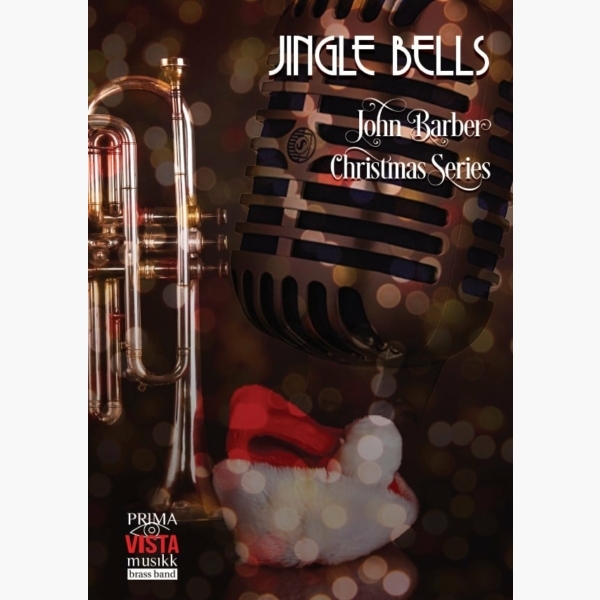
Jingle Bells - James Lord Pierpont - John Barber
Jingle Bells is perhaps one of the best-known and most commonly sung of all Christmas songs, and the version here is an arrangement of the celebrated recordings by Bing Crosby and the Andrews Sisters from the 1945 album Merry Christmas....
Estimated dispatch 5-7 working days
-
 £44.95
Sounds of St Michael's - Alan Fernie
Sounds of St Michael's was commissioned and premiered by Martlesham Brass (Suffolk) in 2016 to help commemorate their 20th anniversary. The band rehearse in their local church, St Michael's, and the piece reflects, perhaps, a year in the life of...
Estimated dispatch 5-7 working days
-
£44.95
KINGDOM TRIUMPHANT, The (Brass Band Set) - Eric Ball
This landmark composition written in 1962 is perhaps the most universally known Eric Ball classic. With its magnificent finale treatment of the hymn tune 'Helmsley,' this is ideal concert repertoire.
Estimated dispatch 7-14 working days
-
£24.95
SOMEONE CARES (Cornet Solo with Brass Band Set) - John Larsson - Ray Steadman-Allen
In the mid-1960s, then captains John Larsson and John Gowans (both of whom were later to become Generals of The Salvation Army) combined to write the first in what became a string of Salvation Army musicals, entitled 'Take-over Bid'. This solo features perhaps the most memorable song from that first musical, now arranged as a beautiful slow melody.
Estimated dispatch 7-14 working days
-
£59.95
DEVON FANTASY (Brass Band Set) - Eric Ball
About the lovely county of Devon are songs and stories galore, for it has 'the best of both worlds' in its seascapes and inland scenery. This suite will perhaps bring to remembrance a few aspects of its beauty. The fantasy is in four easily distinguished parts; I. Moorland Songs; here is loneliness as well as beauty. II. The Fair; containing a reference to the song, Widdicombe Fair. III. Quiet Village; little disturbs the even tenor of life, and the 'echo' of music from the church serves to deepen the peace all around. IV. Seafarers; swashbuckling music with reminiscences of half-forgotten shanties.
Estimated dispatch 7-14 working days
-
 £30.00
Black Bottom Stomp - Jelly Roll Morton
Ferdinand Joseph LaMothe, professionally known as Jelly Roll Morton, was an American ragtime and early jazz pianist, bandleader and composer who started his career in New Orleans, Louisiana. Widely recognised as a pivotal figure in early jazz, Morton is perhaps most notable as jazz's first arranger, proving that a genre rooted in improvisation could retain its essential spirit and characteristics when notated. His composition "Jelly Roll Blues" was the first published jazz composition in 1915. Morton is also notable for writing such standards as "King Porter Stomp", "Wolverine Blues", "Black Bottom Stomp", and "I Thought I Heard Buddy Bolden Say". Notorious for his arrogance and self-promotion, Morton claimed to have invented jazz outright in 1902, much to the derision of fellow musicians and the critics. At the age of fourteen, Morton began working as a piano player in a brothel (or, as it was referred to back then, a sporting house). In that atmosphere, he often sang smutty lyrics and took the nickname "Jelly Roll". While working there, he was living with his religious, church-going great-grandmother; who he convinced that he worked as a night watchman in a barrel factory. After Morton's grandmother found out that he was playing jazz in a local brothel, she kicked him out of her house and told him that "devil music" would surely bring about his downfall. Born in downtown New Orleans, Louisiana, his exact birth date differs depending to whichever source you want to believe; his half-sisters claimed he was born in September 1885, but his World War 1 draft card showed September 1884 and his California death certificate listed his birth as September 1889. He died in 1941 in Los Angeles.