
Results
-
£89.95
Of Distant Memories - Edward Gregson
Parts only. Of Distant Memories pays homage to the brass band composers that form the backbone of the brass band repertoire and their music, and in the process summons up a kind of subconscious memory bank of the musicallanguages, styles and forms used by them. The music is conceived in the form of a 'traditional' tone poem, reflecting certain aspects (e.g. melodic, harmonic, textural)of those early test pieces. Although fairly traditionalconcepts have been kept in planning the architecture of the work, certain aspects of the instrumentation, or scoring, are more contemporary in colouristic terms, as befits a composer writing in the 21st century. However, thepercussion requirements are fairly modest, similar to those used in the works of that period. The brass band tradition owes much to the composers of that period, for through their music they established a truly homogenous'British' brass band sound which has spread throughout many parts of the world. That tradition flourishes today and remains important for today's composers, even if their musical language is far removed from that of theirpredecessors. Of Distant Memories is the composers own way of repaying that gratitude.
Estimated dispatch 5-14 working days
-
£37.50
Polish Adventures - Gavin Somerset
Composed for the All Saints Wind Band, Sheffield after their trip to Poland in the summer of 2003. This work reflects the different parts of the tour in four continuous movements... PROGRAM NOTES AS THEY APPREAR ON SCORE COVER I don't wish to ramble on with the program notes, do I do believe that if you know the story behind a piece of music, it just puts that extra something into the players performance. In 2002, the All Saints Wind Band, Sheffield, embarked on a 10 day tour of Poland. The group spent 28hrs on a couch packed with instruments, only to arrive finding Poland experiencing its worst summer in 70 years. In 2003, they decided to go back for another go! This time, luxury all the way, no 28hr coach journey, just a 1 1/2hr flight. This piece tells the story of the 2nd tour of Poland in four continuous movements... First the introduction. Early one morning, prepared for the drive to the airport, everyone tired, but excited. A day prior to this, some parents of the children set off in a van driving the instruments to the hotel, some 300 miles away. Bar 13 introduces the "Van" theme. Once arriving at the airport, the movements begin... 1. MORNING FLIGHT A very self explanatory part of the piece, and impressionist in its writing. Flying high over England and the channel, giving a sense of speed we were travelling at (compared to the poor lads in the van somewhere below us!) The Largo before F tells of the short coach journey to the hotel, and settling into what was our new home for 10 days. 2. IN THE STORM The weather was definitely an improvement on last year. So much so, that it became a regular event of the day to go and play rounders in a nearby field. This particular day however, with everyone concentrating hard on the game, it escaped everyone's attention that there was a very large storm creeping over the high mountain range near us. As the title of the movement suggests, the scene involved 25 of us running as fast as we could back to the hotel. Unfortunately, the heavy rain ran faster than us. 3. LAST MEMORIES As most of the people in the band were 18 this year, it was apparent that this would be their last event with the band. Many of the group had grown up together for the last 7 years and so, as the tour came to a close, there was a sense of sadness in the air, but everyone would always have the memories. 4. FINALE & HOME The van and the brave volunteers that went with it, set off the day before the rest of us flew home. This last movement reflect the whole tour, bringing back all the main themes from the different movements before arriving back at the school, just in time to see the van pull up. The "Van" theme makes its presence heard again towards the end. This piece was performed by the Wind Band at the leaving concert of many of the players in the band. I dedicate this piece to the band which is still functioning with new players, and to all those who took part on this tour.
In Stock: Estimated dispatch 1-3 working days
-
 £24.50
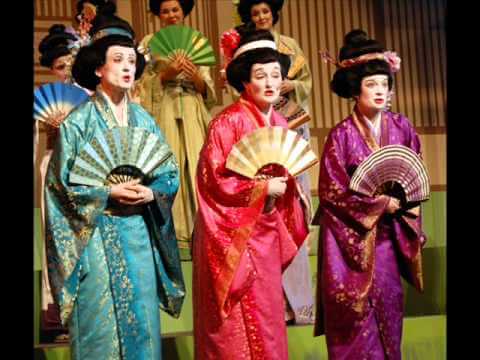
Three Little Maids - Arthur Sullivan - Bill Willis
The well-known aria from Gilbert & Sullivan's ninth operatic collaboration together, Mikado, is now available for band as a jolly, light-hearted cornet trio. Most people will instantly recognise the opening stanza as performed by the cornet trio, but the work holds much more. With some great detail in the inner band parts, this arrangement ensures that the work is not only a great piece for the players, but one that the audiences will love and soloists can enjoy. A must for all band's libraries.
In Stock: Estimated dispatch 1-3 working days
-
 £54.99
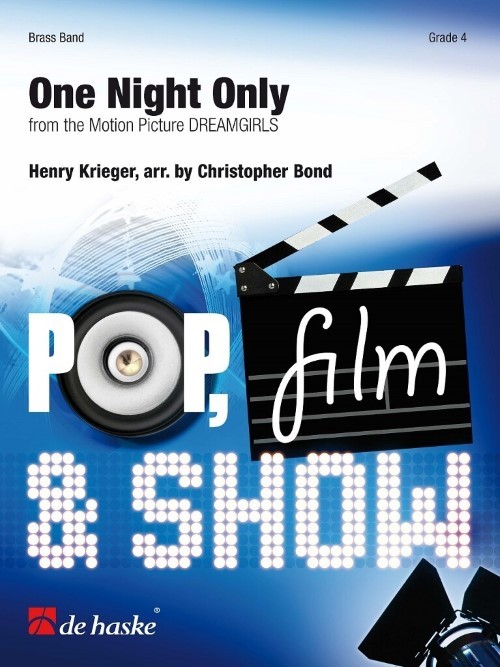
One Night Only (from Dreamgirls) (Brass Band - Score and Parts) - Eyen & Krieger - Bond, Christopher
From the movie musical Dreamgirls, this arrangement begins as a slow and emotional ballad, later kicking into high gear for a fast and powerful rendition. This absolutely fantastic and spectacular arrangement by Christopher Bond will surely create a positive vibe within the band and will undoubtedly be liked by the audience.Duration: 3.15
Estimated dispatch 7-14 working days
-
 £40.00
Drink to Me Only (Brass Band - Score and Parts) - Hartmann, John
-
Estimated dispatch 7-14 working days
-
 £56.00
Only Love (Cornet Solo with Brass Band - Score and Parts) - Cosma, Vladimir - Fernie, Alan
Duration: 3:30
Estimated dispatch 7-14 working days
-
 £36.80
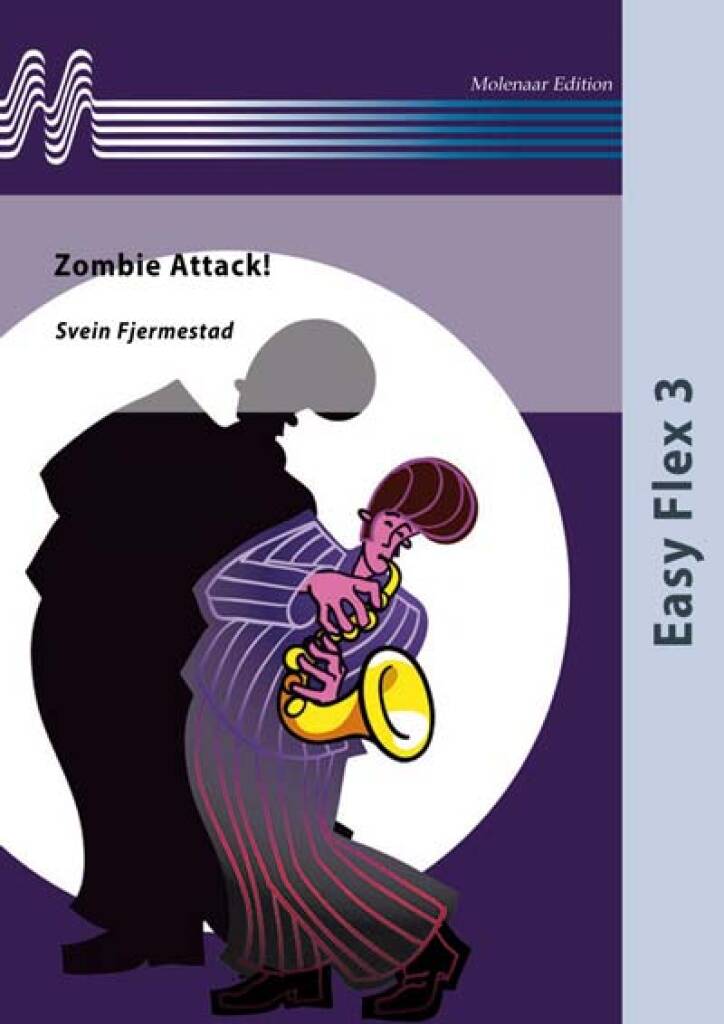
Zombie Attack! - Svein Fjermestad
In this terrifying piece, the undead rise from the grave, ready to take upon the band musicians. Since there are only three parts in addition to percussion, small bands get the opportunity to give the audience chills and nightmares. The tune is based on the three repeated notes in glockenspiel. If only one percussionist is available, drums play glockenspiel in the beginning until letter B.
Estimated dispatch 5-14 working days
-
 £379.99
Tranquil Abiding - Paul Mealor
An 18-minute work for brass band, written for the world renowned Foden's Band. This is a melodic work divided into three movements. All sections of the band are featured with solo parts. Each movement is headed by a line from a poem by James Agee, the American novelist and poet. 'Tranquil Abiding', often referred to as 'Shamatha' in Buddhist traditions, signifies a state of peaceful and calm mental stillness, achieved through focused meditation, where the mind rests peacefully and without agitation."The term has always resonated with me particularly during my long, regular walks into, around and along the amazingly beautiful woodlands, mountains and streams of North Wales at night lit only by the stars. It's during these walks that my meditative focus is at its most emotive and I am at one with the 'it' that surrounds us", says Paul Mealor. "Often on these walks and meditations I am reminded of the American poet, James Agee's pantheistic vision of the natural world and the stars above, 'Sure on this Shining Night' which conjures a serene and harmonious image of a summer night, illuminated by celestial bodies and bathed in kindness. The poem evokes a sense of peace and tranquillity as nature heals and the earth is rejuvenated".
Estimated dispatch 5-14 working days
-
 £60.99
All Together - Peter Kleine Schaars
All Together is a sparkling piece that is suitable for various playing levels, and offers the ideal motivation for young musicians within your society. Peter Kleine Schaars wrote this composition especially for (combined) ensembles withdifferent playing skills. Musicians can display their abilities at their own level and in between, they all play together. The 'grade three parts' contain all levels in cues, so that this composition can also be played by the large band only.
Estimated dispatch 5-14 working days
-
 £109.99
Fantasy for Brassband and Organ - Jan Bosveld
When I was approached to compose a work for brassband and church organ I already envisioned the concept I would use. It would indeed literally become a work for brassband and organ. Without the traditional solos, the organ would form an addition to the brassband orchestration as would the brassband provide an extra register for the organ. In short a homogeneous entity. The most important reason for doing this is quite simple. Since this work can only be performed in a church and because of the specific acoustics of the church, the brassband would sound in al its tone colour like an organ. By using certain registers of the organ and combining these with the brassband a wonderfulsound palette can be created. The use of complementary or contrasting tone quality is also possible. The primary theme of this composition is based on these three methods of "colouring". As far as structure is concerned this work consists of two parts. slow fast. It is built on a number of motifs in which some behave like a consecutive canon. In the fast movement the primary motif develops into a fugue-like section. The canon and fugato are techniques frequently used in classical and contemporary organ literature. The liberal use of structure and motif has lead to the title. "Fantasy for Brassband and Organ".
Estimated dispatch 5-14 working days
 View Music