
Results
-
 £59.99
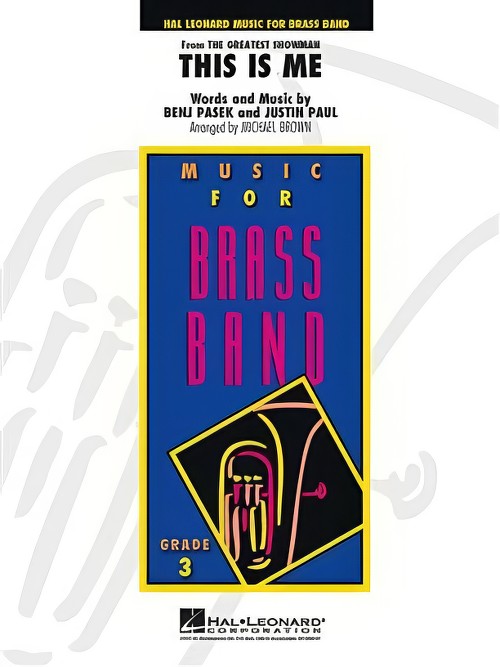
This is Me (from The Greatest Showman) (Brass Band - Score and Parts) - Pasek & Paul - Brown & Jeanbourquin
From the songwriting team who brought us Dear Evan Hansen and La La Land, the movie musical The Greatest Showman is based on the true story of P. T. Barnum, with Hugh Jackman in the title role. This arrangement of the powerful anthem from the film is a dynamic showcase for the concert stage.
Estimated dispatch 7-14 working days
-
 £75.00
Iceni Autumn (Brass Band - Score and Parts) - Barry, Darrol
The piece is in four movements; SPQR, Cockley Cley, Boudicca - Battles and Requiem and Venta Icenorum.S.P.Q.R. is an initialism of a Latin noun phrase, Senatus Populusque Romanus ("The Senate and the Roman People"). This movement attempts to portray the mood in England under Roman occupation and contains important themes developed throughout the suite.Cockley Cley is a reconstruction of the type of village occupied by the Iceni. For many years it was a popular tourist attraction in Norfolk.Boudicca (also known as Boadicea) was the wife of King Prasutagus of the Iceni, a British tribe that lived in East Anglia during the time of the Roman Emperor Nero. When Prasutagus, an ally of the Romans died, the local Roman government officials decided that they would seize her wealth and lands for themselves. When Boudicca protested, saying she was a Roman ally who was being treated no better than a slave, the Roman soldiers fogged her and raped her daughters. Boudicca called her tribe to arms and revolted against their Roman oppressors; this saw the complete devastation of Colchester, St Albans and London. In the final battle the Romans slaughtered about 80,000 Britons including women, children and old men, repaying atrocities in kind. Boudicca and her two daughters poisoned themselves rather than be captured and taken to Rome as prisoners of war.Venta Icenorum was the capital of the Iceni Tribe, who inhabited the flatlands and marshes of Norfolk and earned immortality for their revolt against Roman rule under their queen Boudicca in the winter of 61 AD. This triumphant march brings various themes together and ends with a final reference.
Estimated dispatch 7-14 working days
-
 £30.00
Iceni Autumn (Brass Band - Score only) - Barry, Darrol
The piece is in four movements; SPQR, Cockley Cley, Boudicca - Battles and Requiem and Venta Icenorum.S.P.Q.R. is an initialism of a Latin noun phrase, Senatus Populusque Romanus ("The Senate and the Roman People"). This movement attempts to portray the mood in England under Roman occupation and contains important themes developed throughout the suite.Cockley Cley is a reconstruction of the type of village occupied by the Iceni. For many years it was a popular tourist attraction in Norfolk.Boudicca (also known as Boadicea) was the wife of King Prasutagus of the Iceni, a British tribe that lived in East Anglia during the time of the Roman Emperor Nero. When Prasutagus, an ally of the Romans died, the local Roman government officials decided that they would seize her wealth and lands for themselves. When Boudicca protested, saying she was a Roman ally who was being treated no better than a slave, the Roman soldiers fogged her and raped her daughters. Boudicca called her tribe to arms and revolted against their Roman oppressors; this saw the complete devastation of Colchester, St Albans and London. In the final battle the Romans slaughtered about 80,000 Britons including women, children and old men, repaying atrocities in kind. Boudicca and her two daughters poisoned themselves rather than be captured and taken to Rome as prisoners of war.Venta Icenorum was the capital of the Iceni Tribe, who inhabited the flatlands and marshes of Norfolk and earned immortality for their revolt against Roman rule under their queen Boudicca in the winter of 61 AD. This triumphant march brings various themes together and ends with a final reference.
Estimated dispatch 7-14 working days
-
 £29.95
Spirit Of Praise (Brass Band - Score and Parts) - Marshall, George
The trio section of this march closely follows the vocal score of a setting of the hymn Praise my soul, the king of heaven by A. P. Berggren of Denmark. This hymn-like style, especially in the trio section, was not uncommon in Salvation Army marches of the period, intentionally devotional and a contrast to the lively nature which surrounded it.
Estimated dispatch 7-14 working days
-
£14.95
Spirit Of Praise (Brass Band - Score only) - Marshall, George
The trio section of this march closely follows the vocal score of a setting of the hymn Praise my soul, the king of heaven by A. P. Berggren of Denmark. This hymn-like style, especially in the trio section, was not uncommon in Salvation Army marches of the period, intentionally devotional and a contrast to the lively nature which surrounded it.
Estimated dispatch 7-14 working days
-
 £47.60
ASH GROVE, The (Cornet or Flugel Horn Solo with Brass Band) - Marlow, Alan P.
Grade: Easy.
Estimated dispatch 7-14 working days
-
£50.90
-
£38.80
SCHWEIZERPSALM (Brass Band) - Zwyssig, P. Alberich - Wilkinson, Keith M.
Grade: Easy
Estimated dispatch 7-14 working days
-
 £19.95
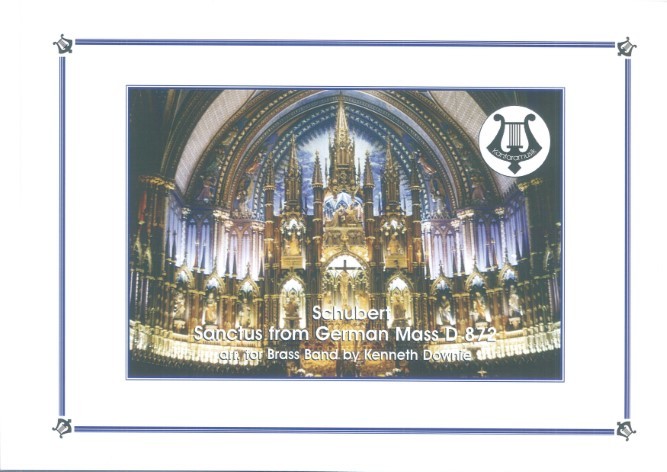
Sanctus (From German Mass D.872) (Brass Band - Score and Parts) - Schubert, Franz - Downie, Kenneth
Franz Schubert's so-called German Mass, D. 872 is one of his last works of sacred music and was written in 1827. The work was commissioned by Professor J P Neumann of the Polytechnic School of Vienna who provided the texts for the nine short sections. It was Neumann's idea that the work be as musically simple as possible and able to be performed by amateurs. This arrangement of the Sanctus seeks to preserve the simplicity of the original, allowing the sheer beauty of the melodic lines to have prominence.
Estimated dispatch 7-14 working days
-
£9.95
Sanctus (From German Mass D.872) (Brass Band - Score Only) - Schubert, Franz - Downie, Kenneth
Franz Schubert's so-called German Mass, D. 872 is one of his last works of sacred music and was written in 1827. The work was commissioned by Professor J P Neumann of the Polytechnic School of Vienna who provided the texts for the nine short sections. It was Neumann's idea that the work be as musically simple as possible and able to be performed by amateurs. This arrangement of the Sanctus seeks to preserve the simplicity of the original, allowing the sheer beauty of the melodic lines to have prominence.
Estimated dispatch 7-14 working days
 View Music