
Results
-
 £69.99
The Pioneers - Philip Sparke
In The Pioneers Philip Sparke salutes the bicentenary of an expedition by two all time American heroes - Meriwether Lewis and William Clark. They were commissioned by US President Thomas Jefferson to find the headwaters of the Missouri and a route to the Pacific following the Louisiana Purchase, which doubled the size of the USA. They set out as the 'Corps of Discovery' from Louisville, Kentucky, in May 1804 and not only did they succeed in reaching the Pacific through hostile territory, but also found their way back - in 3 years! The piece is not descriptive of the journey but gives the composer the opportunity to celebrate the 200th anniversary of this amazing feat. Add atouch of the wild-west to any concert with this exciting work.
Estimated dispatch 5-14 working days
-
 £154.99
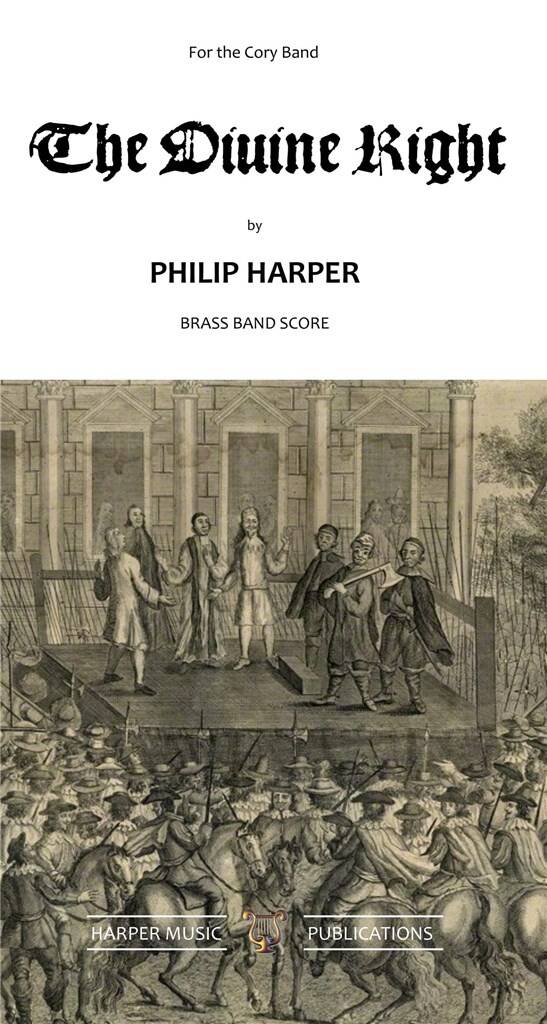
The Divine Right - Philip Harper
At the time of composing this piece, the Arab Spring was sweeping through the Middle East. It seemed that almost every week a new countrys people had risen up against the regimes and dictatorships which had prevailed for generations, leaving manynations at a defining crossroads in their history. There were so many possible ways ahead: so many hopes, yet so many uncertainties.My music is a depiction of these revolutionary times, and several musical themes are in turn presented, discussed, considered, fought over, altered, rejected or accepted. Most nations have had, or probably will have, their own Arab Spring, including my own, the United Kingdom. Events of 17th Century Britain provide the context for this piece, particularly those following the execution of the tyrant King Charles I on30 January 1649. The regicide was in part due to Charless steadfast belief in the Divine Right of Kings, and led to a tumultuous interregnum, where England stood at its own defining crossroads.The music begins turbulently, before King Charles appears and is led to the gallows outside Banqueting House in central London where he is brutally decapitated. From the assembled crowd rose, according to one observer, a moan as I never heard before and desire I may never hear again.The music descends to emptiness. The musical argument which follows is not strictly programmatic, but a number of musical themes are all thrown into the melting pot, representing ideas such as: religion; military force; reasoned Parliamentary debate; and the chattering,irrepressible voice of the people. Additionally, there are some quotations from the music of royalist composer Thomas Tomkins (1572-1656), who was often in tune with the feeling of the times. This defining episode in Englands history was brought to a close with the Restoration of the monarchy in 1660, and as the exiled King Charles II rode back into London the diarist John Evelyn wrote: Never was so joyful a day seen in this nation. I stood in the Strand and beheld it, and blessed God.At the end of the piece the bells ring out, and the musical appearance of the King has transformed from turbulent to triumphant. Philip Harper, 2013
Estimated dispatch 5-14 working days
-
 £60.99
Crazy Music in the Air - Jacob de Haan
This composition in two parts is one of the first successful works Jacob de Haan published for Brass Band. Somewhat under the influence of Ted Huggen's Choral and Rock Out which was an overwhelming success at the time, the still very young Jacob de Haan wrote this composition. The first part (Air) exists of a choral melody with baroque grace notes, supported by a pop rhythm in the drums. The second part (Crazy Music) is a swinging bossa nova, in which various instrument groups present themselves in the continuously varying themes. The famous Black Dycke Mills Band contributed to the success of Crazy Music in the Air by regularly puttingthe piece on its tour programmes.
Estimated dispatch 5-14 working days
-
 £87.99
Lady Claus - Thierry Deleruyelle
The Christmas festive season is a time for sharing the most wonderful stories. There are few female characters in these tales. And yet, they do exist in many countries. In Italy, Mother Christmas is associated with the Befana; in Russia with Babushka; and with Lucia in Scandinavia, Frau Holle in Germany, Mari Lwyd in Wales, and Tante Arie in France. What these women have in common is that they too hand out presents to children.The music begins with a majestic introduction that draws us into the heart of the Christmas legends. The timpani and sleigh bells then launch into a fast, joyful, and dynamic section. Finally, the music softens, with a Christmas chorale heard across multiple sections. The piece ends in a hushed atmosphere, as if all that remained was a Christmas tree twinkling in the darkness.Lady Claus was commissioned by the Montbeliard Municipal Wind Band, conducted by Laurent Zemp, to mark its 150th anniversary. This work pays tribute to those legendary women who contribute to the beauty and magic of Christmas, not only by delivering presents but also by passing on the human values they embody.
Estimated dispatch 5-14 working days
-
£40.00
Elemental - Philip Harper
The opening number in Cory Band's 2015 'Four Elements' themed Brass in Concert programme, this piece sets out a mysterious introduction transporting us back to the time of the Greek Philosophers, after which it presents short musical depictions of Fire, Air, Water and Earth. Designed to start your concert with a bang.
Estimated dispatch 5-14 working days
-
 £105.20
Terrible Symphony - Haakon Esplo
Let us present "Terrible Symphony" - the perfect piece for beginner or junior bands!This fun composition gives young musicians the opportunity to have a great time while driving the conductor crazy. The piece includes well-known themes from great symphonies, along with new music, and not least, lots of silliness and fun. All musicians can join in and come up with more pranks and humorous elements. The audience will laugh out loud and enjoy this crazy and entertaining, yet terrible symphony.Make your concert an unforgettable experience with "Terrible Symphony"!In the score, you will find instructions and suggestions for the conductor as the musicians become increasingly impossible.
Estimated dispatch 5-14 working days
-
 £54.45
Bathgate Hills Trilogy - Andrew Duncan
Composed by Andrew Duncan and written for the West Lothian Schools Band, A Bathgate Hills Trilogy is in three movements, each one dedicated to and representing a different hill.Comments from the composer:Movement 1 - Dechmont LawThe first movement describes the peculiar events which took place in November 1979 when a forestry worker, Bob Taylor, had a close encounter with an alien spacecraft in Dechmont Woods at the bottom of Dechmont Hill. Bob Taylor's account from the time describes a large sphere like object about twenty feet across which pulled him by the legs towards it, caustic smoke then caused him to pass out. He awoke a short time later in the same spot but the spaceship had gone leaving behind marks in the soil. His story caused a great deal of media interest and a great deal of excitement in the local community.Movement 2 - The Knock HillThe Term 'Knock' is Scottish Gaelic for 'hill' and the Knock Hill is the highest peak in the Bathgate Hills being 305 metres above Sea Level. On a clear day the Knock hill has excellent views of the Bass Rock to the East and the distant hills of Arran to the West as well as of the whole of West Lothian and across the Firth of Forth to Fife and beyond to the North.The second movement is a description of a leisurely walk to the summit of this hill and the enjoyment of a pleasant summer's day spent walking and taking in the beautiful panoramic views. However, as is the case with the Scottish Summer, a change in the weather finds a clear blue sky being replaced with dark rain clouds. The changed weather brings a sudden brief but unwelcome cold downpour of rain, drenching anyone out walking! Finally, the clouds pass and the more pleasant summer weather returns.Movement 3 - Cairnpapple HillCairnpapple Hill is a near neighbour of the Knock Hill. It is almost as high but interest in Cairnpapple Hill lies in the outstanding archaeological monument near the summit, an Iron Age burial chamber. The chamber dates back to 25 years BC and was built by a mysterious people known as the Beaker People (so called because they left behind a number of large earthenware beakers). The mysteries of Cairnpapple Hill have always been a source of fascination for me ever since first visiting the hill as a school child.The third movement describes the lives of the Beaker People. The landscape they would have looked out on would have been mostly dense forest which would have contained many perils including dangerous wolves and bears. Life was harsh and short for the Beaker People and they would always have been close to danger and to death. The average life expectancy for the Beaker People was only 31 years of age. The summit of the hill would have been clear of forest and would have afforded the Beaker People some protection as they could see all around the near countryside enabling them to keep a watchful lookout for their enemies - both animal and human!
In Stock: Estimated dispatch 3-5 working days
-
 £42.35
A Suffolk Prelude - Andrew Duncan
Written for the Ipswich & Norwich Co-Op Band, A Suffolk Prelude is based around five traditional tunes from Suffolk:'Nutting Time','Blackberry Fold','Cupid's Garden','A Seaman's Life''The Bold Richard'The piece begins on the percussion and timpani alone leading through a crescendo into the first statement of the fanfare which is derived from a motif from the tune 'Nutting Time'. This leads into a playing of the 'Nutting Time' tune which is then developed as the tune is passed around the band.'Nutting Time' is a jolly lighthearted tune about a 'fair maid' who meets a handsome young farmer called 'Johnny' when out gathering nuts in the wood. After a pause on the tubular bells the slow tune 'Blackberry Fold' is presented as a solo for Flugel Horn, then as a full band version.'Blackberry Fold' is a touching song about a Suffolk squire who gets married well below his station to a beautiful milkmaid, simply because he loves her! They live happily ever after.The next tune to be heard is the juanty 'Cupid's Garden' played firstly as a solo on the Euphonium, and again this is about the subject of love. This song is sung from a sailors prospective and he tells how he met a lovely maiden and has promised to marry her when he returns from duty at sea.The trombones then play the noble tune 'A Seaman's Life'. This tune seems to serve as a warning to young girls about the fickle nature and the total unsuitability of marrying a sailor! 'Oh a seaman's life is a merry merry life, they'll rob young girls of their heart's delight, they will leave them behind for to sail one morn, but they never know when they'll return'. Despite this it is a fine tune!The last tune featured is 'The Bold Richard' which is played by all the bass instruments in the band. This is a song telling how the Royal Navy friggate 'The Bold Richard' went to battle against a French friggate destroying her and taking her crew as prisoners.Suffolk Prelude goes on to feature a slow version of the tune 'A Seaman's Life' played alongside a fast version of the tune 'Cupid's Garden'. The opening fanfare then returns leading into a final coda section.
In Stock: Estimated dispatch 3-5 working days
-
 £68.45
Armistice at Flanders Fields (Brass Band) Dwayne Bloomfield
This poignant and powerful work for brass band by Dwayne Bloomfield describes the day peace was announced to end World War I. The piece was written in 2023 to be played by bands around the world to mark Armistice Day.The composer writes:'Unless you were there, it's impossible to imagine what it must have been like the day peace was announced ending World War I. The feelings soldiers experienced, who after years of fighting and suffering, to know it was over and they would return home to see family and loved ones again. This piece tries to tell their story.The work begins by approaching the front, distant artillery and battle sounds heard while the carnage and loss of lives was already known to the world. The band builds as we enter the thick of battle, the death and destruction, the conditions faced and the loss of hope of ever surviving. The next section, in 7/8 time, reflects the two sides fighting - both sides attacking and defending with mostly little result, but for the loss of more lives. Two euphoniums then depict the news and hope of peace talks. However, fighting did continue right up to the very end and on the last day there would be another 2,738 casualties.The Canadians were still battling to capture the town of Mons that morning. A song is sung in reflection of the estimated 5.5 million allied soldiers who lost their lives during World War I, then a clock ticks down the final minutes. The last three known casualties are depicted with French soldier Augustin Trebuchon, killed at 10:45am by a single shot as he rushed down the trenches to spread the news of coming peace; Canadian George Lawrence Price killed by a sniper round at 10:58am at the battle of Mons, and lastly a machine gun burst that killed American Henry Gunther, who is believed to have fallen on the 11th hour. Bells then toll ringing around the world announcing the end of the war.After years of war, it must have been jubilation for the families at home knowing their loved ones would be returning to them. The band builds with a hymn for peace as a final tribute to those who fought, before the piece resides with one of the most dreaded sounds at that time, the knock on the door from a telegram delivery boy or better known then as the Angels of Death. It wasn't just the 2,738 families from the casualties of the last day who would receive such a knock, but many more who expected their loved ones to be returning home would instead find out they were instead killed in the last weeks. So close.Driving around the battlefields today one comes across many intersections in the countryside which have cemetery signposts pointing in every direction. While the last post sounds in ceremonies today, this last bugle call instead depicts the horrors, devastation and death the soldiers faced during the war and right up the 11th hour of the 11th day of the 11th month, Armistice at Flanders Fields.'To view a video of Dallas Brass Band performing the work please visit https://www.youtube.com/watch?v=ljfyVz3cMgkDuration: Approx. 15.00 minutesDifficulty Level: 2nd Section +PDF download includes parts and score.Sheet music available from www.brassband.co.ukInstrumentation:Soprano Cornet EbSolo Cornet BbRepiano Cornet Bb2nd Cornet Bb3rd Cornet BbFlugel Horn BbSolo Horn Eb1st Horn Eb2nd Horn Eb1st Baritone Bb2nd Baritone Bb1st Trombone Bb2nd Trombone BbBass TromboneEuphonium BbBass EbBass BbPercussion 1-3
In Stock: Estimated dispatch 1-3 working days
-
 £41.83
Kolo (Brass Band) Derek Jenkins
'A kolo,' which translates to round or circle, is a fast and lively traditional folk dance that originated in the Balkans. The music accompanying a kolo dance is characteristically quite repetitive. The primary melodic material is introduced at the beginning, and it continues to appear and reappear throughout the duration of the dance. Several composers, including Antonin Dvorak, have adapted the kolo into concert pieces for orchestra. These are often fast and exhilarating showpieces that portray the virtuosity of the entire ensemble.This work entitled Kolo, by Derek Jenkins, continues this concert adaption tradition, and it follows the basic structure of the traditional dance with the exception of the middle section.The composer writes: 'I was fortunate to spend about two weeks in Zagreb and several days in Dubrovnik during the spring of 2009. Looking out upon the Adriatic Sea atop of Dubrovnik's historic city wall, I was struck by an overwhelming sense of tranquility, and that feeling has become the strongest association I have with my time in Croatia.'In order to depict this musically, I forewent the continuation of the fast and lively character of the middle section of my Kolo and instead replaced it with music that is peaceful and reflective. The melody used in this slow section comes from a folk song, "Oj, mladano mlado mom(ce)," in Bela Bartok and Albert B. Lord's folksong collection Serbo-Croatian Folk Songs. This middle section was my chance to return, if only in my mind, to the Adriatic coast.'The original concert band version was commissioned by Lee Hartman and the Mid America Freedom Band.Sheet music available from:UK - www.brassband.co.ukUSA - www.solidbrassmusic.comDifficulty Level: 3rd Section +Instrumentation:Soprano Cornet EbSolo Cornet BbRepiano Cornet Bb2nd Cornet Bb3rd Cornet BbFlugel Horn BbSolo Horn Eb1st Horn Eb2nd Horn Eb1st Baritone Bb2nd Baritone Bb1st Trombone Bb2nd Trombone BbBass TromboneEuphonium BbBass EbBass BbTimpaniGlockenspielPercussion 1-2
In Stock: Estimated dispatch 1-3 working days
 View Music
 Watch video