
Results
-
 £87.95
Masquerade (Score and Parts)
The first performance took place on the 4th. September 1993 at the Free Trade Hall in Manchester during the British Open Brass Band Championships.Note by Philip Wilby:Masquerade is a centenary tribute to Verdi's last opera Falstaff and takes its final scene as the basis for my own piece. Thus I have used some of Verdi's music, and some of Shalespeare's plot, and woven them into a fabric with highly demanding music of my own to produce a work in the great tradition of operatically-based brass band pieces. Such scores date from the very beginnings of band repertory and are often not direct arrangements in the established sense but new compositions produced in homage to a past master. They may still offer performers and audience alike something familiar interwoven with something new. My own piece reuses some elements from the original story: . .Falstaff has been caught in a web of his own lies by the ladies of the town, who propose to teach him a lesson. The story opens at night in Windsor Great Park. The plotters, variously disguised in Hallowe'en fashion (as fairies,elves hobgoblins etc!) assemble in the park to await Falstaff's arrival (musicologists will, perhaps, note a rare use of 'large bottle in F' being used during this scene of suppressed alcoholic revelry!). Falstaff's companions, Bardolph,Piston and Robin, enter (represented here by the three trombones!), and are variously abused by the masqueraders. At the height of the Tout an alarm sounds and Falstaff (euphonium cadenza) enters as Midnight strikes. From a safe hiding place he watches as the disguised Nanetta (principal comet) sings a serene solo as the moon appcars above the trees. With sudden force the others seize him and drag him from his hiding place. As in the traditional game 'Blind Man's Buff', he is roughly turned seven times (a sequence of solo accelerandi) until, at last, he recognizes his assailants as his sometime friends. Far from complaining, Verdi's character concludes the opera with a good-humoured fugue on the words.... 'All the World's a Joke... Every mortal laughs at the others, But he laughs best who has the final laugh. Philip Wilby.
Estimated dispatch 7-14 working days
-
 £44.95
Masquerade (Score Only)
The first performance took place on the 4th. September 1993 at the Free Trade Hall in Manchester during the British Open Brass Band Championships.Note by Philip Wilby:Masquerade is a centenary tribute to Verdi's last opera Falstaff and takes its final scene as the basis for my own piece. Thus I have used some of Verdi's music, and some of Shalespeare's plot, and woven them into a fabric with highly demanding music of my own to produce a work in the great tradition of operatically-based brass band pieces. Such scores date from the very beginnings of band repertory and are often not direct arrangements in the established sense but new compositions produced in homage to a past master. They may still offer performers and audience alike something familiar interwoven with something new. My own piece reuses some elements from the original story: . .Falstaff has been caught in a web of his own lies by the ladies of the town, who propose to teach him a lesson. The story opens at night in Windsor Great Park. The plotters, variously disguised in Hallowe'en fashion (as fairies,elves hobgoblins etc!) assemble in the park to await Falstaff's arrival (musicologists will, perhaps, note a rare use of 'large bottle in F' being used during this scene of suppressed alcoholic revelry!). Falstaff's companions, Bardolph,Piston and Robin, enter (represented here by the three trombones!), and are variously abused by the masqueraders. At the height of the Tout an alarm sounds and Falstaff (euphonium cadenza) enters as Midnight strikes. From a safe hiding place he watches as the disguised Nanetta (principal comet) sings a serene solo as the moon appcars above the trees. With sudden force the others seize him and drag him from his hiding place. As in the traditional game 'Blind Man's Buff', he is roughly turned seven times (a sequence of solo accelerandi) until, at last, he recognizes his assailants as his sometime friends. Far from complaining, Verdi's character concludes the opera with a good-humoured fugue on the words.... 'All the World's a Joke... Every mortal laughs at the others, But he laughs best who has the final laugh. Philip Wilby.
Estimated dispatch 7-14 working days
-
 £40.00
One Night Only (From Dreamgirls)
ABOUT THIS PIECE: Looking for a show-stopper for your next concert? Look no further than this electrifying arrangement of One Night Only from the hit musical Dreamgirls. With music by Henry Krieger and lyrics by Tom Eyen, this iconic number serves as a pivotal moment in the show, performed in two contrasting styles: a soulful ballad by Effie White and an upbeat dance version by Deena Jones & the Dreams. This arrangement expertly captures the essence of both renditions, bringing their energy and passion to the brass band stage. One Night Only delivers all the excitement and glamour of the original, leaving audiences tapping their feet and humming the unforgettable melody long after the final note. A must-have addition for bands seeking a dynamic and memorable highlight for their next programme! ENSEMBLE: Standard British Brass Band WHEN YOU BUY THIS PRODUCT, YOU GET: High-quality printed score and parts LEVEL: 2 LISTEN: DURATION: 4-minutes, 30-seconds EXAMPLE SCORE: Click here LEVEL GUIDE: Level 1- Accessible to all Level 2 - c. UK third section and higher Level 3 - c. UK second section and higher Level 4 - c. UK first section and higher Level 5 - c. UK championship section level
Estimated dispatch 5-7 working days
-
 £150.00
Brass Quintet Collection - Various - Lawrence Killian
20 Titles for Brass Quintet with Optional AugmentationFeaturing stylish arrangements using a flexible format for a minimum of five brass players, this set of music for small ensemble covers a wide range of composers and styles. The collection includes music by Purcell, Bach, Verdi, Gounod, Sousa, Joplin, Botsford, Elgar, Gershwin, and others.Using a unique approach to the scoring, the basic setup is for five players: two cornets/ trumpets, one horn, one trombone, and one bass tuba. Two optional "augment" players can be added using the "flugelhorn", and/ or the "Euphonium" parts. Further expansion of the ensemble is possible by adding multiple players to each part.Twelve parts are provided in total: 1st Bb Cornet, 2nd Bb Cornet, Eb Tenor Horn, French Horn in F, Bb Trombone or Baritone in treble clef, C Trombone in bass clef, EEb Bass, BBb Bass, C Tuba in bass clef, Bb Flugelhorn or Cornet (augment part 1), Bb Euphonium or Baritone (augment part 2), C Euphonium or Trombone in bass clef (augment part 2).A Full score is available seperately at a cost of �35.00. Please contact [email protected] to order. NOTE: Individual books are priced at �20.00 each. Please email [email protected] to order individual books. Videos of these works being performed are available below:- Asturias (Leyenda) from Suite Espanola No.1, Isaac AlbenizBerceuse from "Jocelyn", Benjamin Godard TITLES INCLUDED:- 1. Asturias (Leyenda) from Suite Espanola No.1, Isaac Albeniz 2. Bist du bei mir (Be Thou with Me), J. S. Bach3. Chatterbox Rag, George Botsford4. Grizzly Bear Rag, George Botsford5. Jubilee Fantasy on God Save the King, Bernhard Brahmig 6. Chanson de Matin, Sir Edward Elgar 7. Pomp and Circumstance March No. 4, Sir Edward Elgar 8. But Not For Me, George Gershwin 9. By Strauss, George Gershwin10. They All Laughed, George Gershwin11. Berceuse from "Jocelyn", Benjamin Godard12. JUDEX - from "Mors et Vita", Charles Gounod 13. The Entertainer (Rag), Scott Joplin14. Intermezzo No.2, Vasily Sergeyevich Kalinnikov 15. Berliner Luft, Paul Lincke 16. Sound the Trumpet, from "Come Ye Sons of Art", Henry Purcell 17. Gymnopedie No.1, Erik Satie 18. The Liberty Bell March, John Philip Sousa 19. Tritsch-Tratsch Polka, Johann Strauss II 20. Grand March from the opera Aida, Giuseppe Verdi
In Stock: Estimated dispatch 1-3 working days
-
 £24.50
MARCH: Fort Drake - Peter Boris Koval
"Fort Drake" was composed specially for the British Bandsman March Composition Contest. The title is a respectful parody of a well-known march cited as a model in the contest regulations. Originally just a working title, it was later accepted for its suggestion of unyielding strength and durability. Written to appeal to bands and audiences alike, the piece has striking melodies, a smooth trio section and exciting phrases featured in all instruments. Great difficulty and extreme ranges have been carefully avoided to achieve maximum sonority along with relative ease of presentation. NOTE: This edition is delivered as a DIGITAL PDF copy. To order a HARD COPY of this work, please order here
In Stock: Estimated dispatch 1-3 working days
-
 £29.50
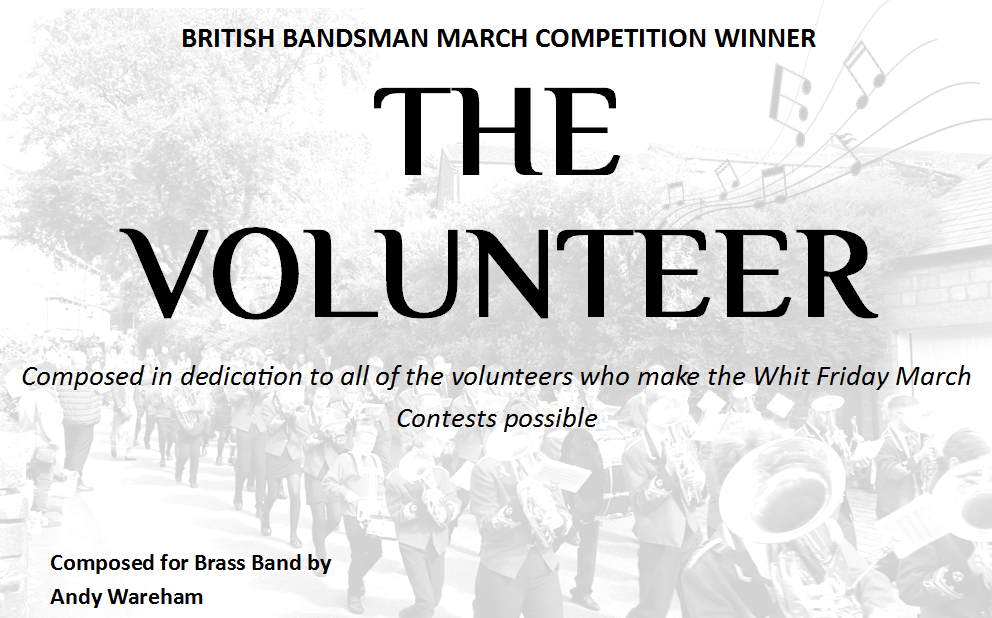
MARCH: The Volunteer - Andy Wareham
This year, the British Bandsman ran a March Composition Competion with the winning enteries judged by Paul Hindmarsh, Michael Fowles, and Aidan Smith. the March, 'The Volunteer' is a pastiche contest March and was the winning entry in the 'Category 1' tier, composed in dedication to all of the volunteers who work tirelessly to make the Whit Friday march contests possible. The march was written with upper section bands in mind and aims be a complete showcase for a band's contest performance. In doing so, the music follows the form and style of contest marches popularised by great march composers George Allan, Thomas "T. J." Powell and William Rimmer. Composed in dedication to all of the volunteers who make the Whit Friday March Contests possible NOTE: This edition is delivered as a DIGITAL PDF copy. To order a HARD COPY of this work, please order here
In Stock: Estimated dispatch 1-3 working days
-
 £29.50
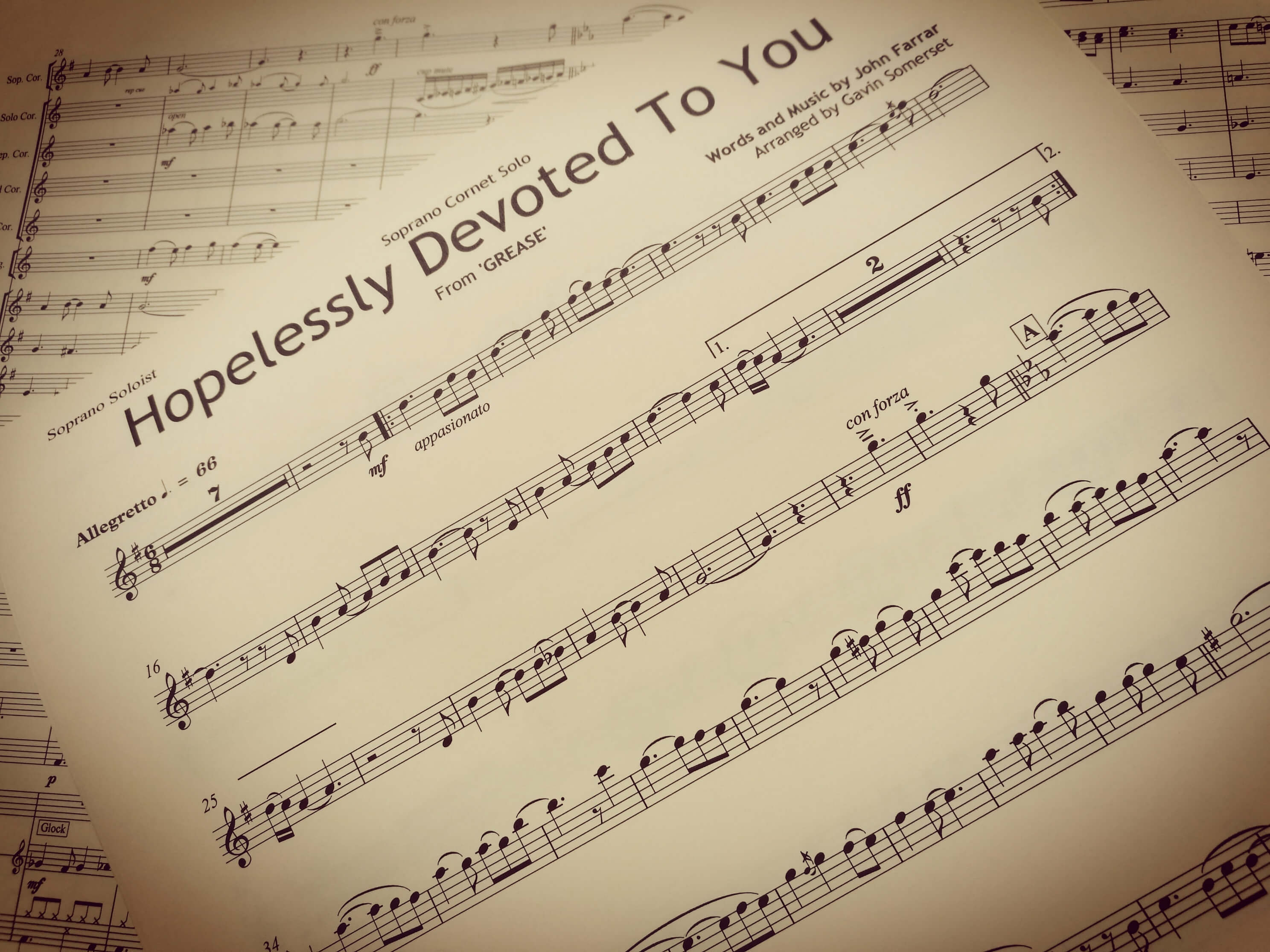
Hopelessly Devoted To You - John Farrar - Gavin Somerset
With Grease celebrating its 40th anniversary this year, this new Soprano Solo comes at the perfect time. The song was written by John Farrar, as the contractually agreed vocal solo for Olivia Newton-John to perform in the film. With simple accompaniments and a song well-known by audiences of all ages, this title is the perfect choice for Soprano players looking to combine their lyrical playing with power in the top register (highest note top C). A must have in the repertoire for soprano cornet soloists. **An alternate lower soloist part is also provided with this publication. FREE SOLOIST PART: CLICK HEREFREE ALTERNATE SOLOST PART: CLICK HERE To download the playback audio to play along to, please RIGHT CLICK HERE & Save As .
In Stock: Estimated dispatch 1-3 working days
-
 £44.50
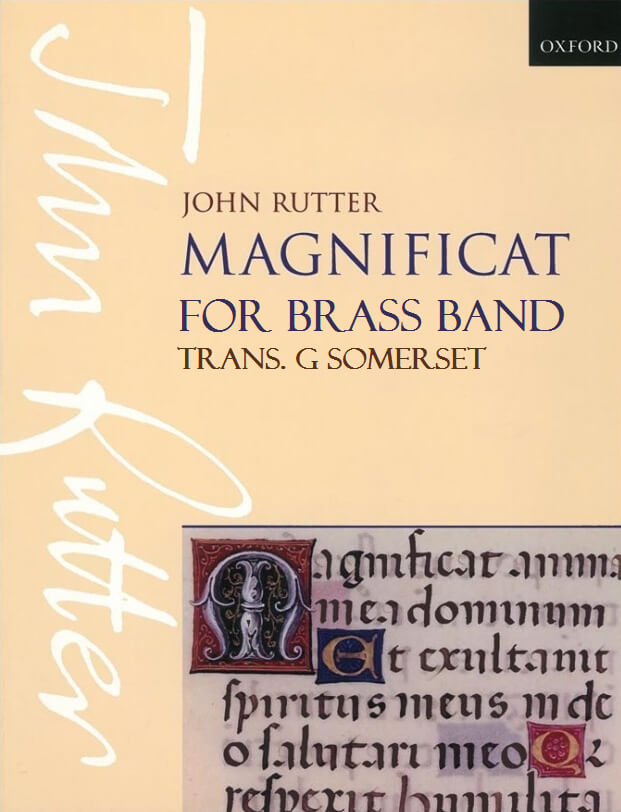
Magnificat - John Rutter - Gavin Somerset
John Rutter's Magnificat (Magnificat anima mea), first performed in 1990, opens with bold fanfares and syncopation which captures the listeners attention from the very first note. The work was originally composed for chamber orchestra and SATB choir. The SATB parts are also included in the score with this publication allowing bands if they wish, to perform with work alongside a full choir. Transcribed directly from the composers original score, Rutter's music is full of strong melodic lines and gorgeous harmonies. Full of hair raising moments, it lends itself perfectly to Brass Bands and this opening movement is a must have for bands wanting to add something new and challenging to their classical repertoire.
In Stock: Estimated dispatch 1-3 working days
-
 £80.00
St. Magnus - Kenneth Downie
Dedicated to Alastair Massey, an inspirational music teacher. Commissioned by the Scottish Brass Band Association for the 2004 European Brass Band Championships in Glasgow. This music is a set of variations on the tune known as St Magnus, which is attributed to Jeremiah Clarke. Most people will associate it with Thomas Kelly's hymn which begins: "The Head that once was crowned with thorns is crowned with glory now". The tune is very simple, consisting of just two, four-bar phrases. Neither is there much in the way of rhythmic variety, every note being a crotchet with the exception of two quavers, and the last note in each phrase. Within such a simple structure, however, lies considerable strength. THEME The listener is given the opportunity of hearing it twice, in full, at the beginning, starting with one player but soon taken up by the full ensemble. It returns in the middle of the music and is stated again near the end. This has been done quite deliberately in the hope that there will be an appreciation of what material is being developed, by the listener as well as by those with access to the score, who are able to see the visual connections. VARIATION 1 This takes the rhythm of the last part of the theme and also uses the shape of the opening as a recurring figure. The mood is whimsical and skittish, with short, teasing rhythmic figures tossed around the band, and quick interplay with percussion, at a fast tempo. An energetic flourish finishes this variation before the Andante espress. VARIATION 2 This commences with chords related to the opening of Variation 1. The cantabile on solo comets establishes a new, lyrical mood and there is scope for expressive playing in a series of short solo passages. The theme works its way unobtrusively into the texture before a reprise of the solo cornet melody and some more lyrical interchanges between Eb bass, euphonium, flugel horn and comets. The variation ends serenely with clear references to the last phrase of the theme. VARIATION 3 The first idea to dominate is clearly linked to the shape of the theme's first phrase. There is a frenetic feel to much of this variation, with considerable energy and instability created by extensive use of cross-rhythms. A thinning-out of the score marks a clear change to development of the start of the second phrase of the theme. This proves to be short-lived however, and the opening material returns leading to a restatement of the theme, "Maestoso," after which a euphonium cadenza links to Variation 4. VARIATION 4 Here we have some solos for euphonium, cornet, trombone and Eb bass set against a background of horns and baritones presenting a pensive statement of the theme's opening. VARIATION 5 This commences Allegro, with lively work for cornet and euphonium spreading to the whole band before attention focuses on the beginning of the second phrase of the theme which is initially presented in diminution, then in regular rhythm, then in inversion. An increase in tempo coupled with a decrease in volume, requires dexterity and control, with several metrical challenges thrown in for good measure. The same fragment of phrase becomes an ostinato which generates a frenzied climax, punctuated by short, dramatic silence, before the opening figure returns and the music gradually winds down. The tubular bells herald the final return of the theme, in augmentation, marking the start of the Finale. FINALE This features the running semiquavers of the previous variation sounding in counterpoint. A fast, furious coda speeds the work to a conclusion while references to the opening of the theme are still trying to break into the texture of the music. Kenneth Downie
Estimated dispatch 5-14 working days
-
 £104.99
High Flyers - Andrew R. Mackereth
From the composer: High Flyers are regarded as people with promise and potential.They are winners. This is music for winners.The title, as well as being a play-on-words, implies the nature of the work. It is a bright, optimistic, and upbeat piece attempting to depict an exhilarating ride on flying carpet. The opening rising chords immediately suggest the gentle elevation of the carpets' ascent towards unknown heights, leading to a hint of a first theme in the horns at Fig. B. The first four notes provide the thematic material for the whole work: C F G A.A perpetual sense of movement is achieved through accented quaver chords punctuating the melodicmaterial of the first main theme. Fig. E sees the music of the opening bars fully realised, with flourishes from the euphonium and baritones representing swirling clouds, shooting stars, or passing birds in flight.The same subject is developed into a lyrical second theme with a new lush harmonic treatment, evocative of gliding over an expanse of sparse countryside.This section ends with a note of serenity but is shattered by the urgent insistence of the percussion rhythms.The third section introduces a new idea with a slightly distorted fanfare in the cornets and trombones. This figure suggests for the first time that there may be trouble ahead. In fact, there is no need to fear and the journey can continue without aggravation. This fanfare returns near the end to signal a final note of triumph.A new rhythmic variant of the cell motif emerges as the third theme now transformed by the addition of a triplet figure. The music steadily gains momentum before moving inexorably towards the climactic return of the music and tonality of the opening bars of the piece.
Estimated dispatch 5-14 working days
 View Music