
Results
-
 £22.50
None Other Name (Brass Band - Score only) - Leidzen, Erik
None Other Name was written for the 1960 tour of England by the New York Staff Band of The Salvation Army and can justifiably be termed a classic of brass band repertoire. It is best described as a symphonic medley of six songs focused on the name of Christ; The Saviour's Name; Jesus is the Sweetest Name I know; There's a Wonderful Name, 'tis Jesus; He's the Lily of the Valley; Jesus, the Very Thought of Thee (St. Agnes); All Hal the Power of Jesus' Name (Diadem).
Estimated dispatch 7-14 working days
-
 £79.99
Sambezi (Trombone Solo with Brass Band - Score and Parts) - Sparke, Philip
Sambezi is the brass band version of the last movement of Philip Sparke's Trombone Concerto. It starts in a joyful and outgoing mood with the soloist playing a carefree samba tune. A jazz-induced central tune explores the higher ranges of the trombone before the samba rhythms set up a 'contest' between the soloist and the band's trombone section. The soloist is the eventual 'winner' and he celebrates by reintroducing the samba melody before bringing the work to a virtuosic close. A real treat for your trombone soloist.Duration: 6:00
Estimated dispatch 7-14 working days
-
 £59.99
The Conqueror (Brass Band - Score and Parts) - Sparke, Philip
This fantastic contest march was composed for the Alexander Brass Band from Stavanger, Norway, who wanted a brand new march to play when they took part in the world-renowned Whit Friday March Contest. In the march Philip Sparke has followed the traditional brass band contest march format and it is named as a tribute to Alexander the Great, rather than the Alexander brass band, who were actually named after their local pub!Duration: 3:00
Estimated dispatch 7-14 working days
-
 £59.99
A Final Fling (Euphonium Solo with Brass Band - Score and Parts) - Sparke, Philip
A Final Fling was written at the request of David Childs for a CD recording with a Celtic theme, which he released in 2007. The phrase 'a final fling' means a last quick effort at doing something, perhaps when this item is used as an encore, and also, a fling is a type of Scottish Highland dance, which tied in with the Celtic theme. A light- hearted piece, A Final Fling starts in the mood of a folk dance and quotes from The Irish Washerwoman before flying to a close. A perfect way to put your euphonium player in the spotlight.Duration: 2:00
Estimated dispatch 7-14 working days
-
 £69.99
Navigation Inn (Brass Band - Score and Parts) - Sparke, Philip
Navigation Inn was originally written to celebrate one of the most popular events in the brass band calendar - the Whit Friday marches. The Navigation Inn is a pub which is a popular meeting place for bandsmen and which celebrates the love of brass bands with mementos and historic photographs on the walls. This lively piece in the style of a traditional contest-style march will bring a great sense of tradition to any concert.Duration: 3.15
Estimated dispatch 7-14 working days
-
 £60.99
Love Can Build a Bridge (Brass Band - Score and Parts) - Sebregts, Ron
This arrangement for brass band of the successful song Love Can Build a Bridge includes a beautiful cornet solo. A splendid addition to any concert.Duration: 3:45
Estimated dispatch 7-14 working days
-
 £104.99
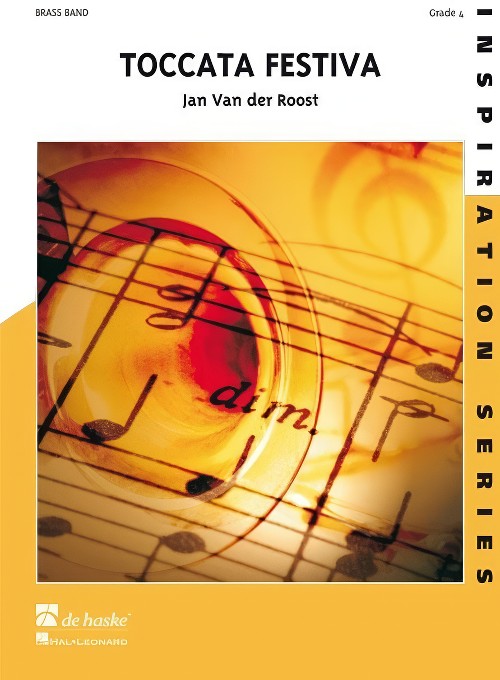
Toccata Festiva (Brass Band - Score and Parts) - Van der Roost, Jan
Toccata Festiva was commissioned in 1994 by the Dutch Brass Band Championships. The wind band version was made a year later by the composer himself. Historically speaking, the toccata is considered to be one of the first independent instrumental forms for keyboard instruments. Originally the toccata was typically more or less improvised, later this musical form was given a more regulated structure. Both elements are used in the Toccata Festiva: on the one hand the different themes are developed freely, on the other, the piece has an orderly structure. It is in a three part form (quick-slow-quick) and includes both strong rhythmical figures and broad melodic lines. Part of the composition is written in a more or less archaic tone idiom, referring to the period from which the toccata form originates (16th century).Duration: 13:30
Estimated dispatch 7-14 working days
-
 £76.99
The Universal Band Collection (Brass Band - Score and Parts) - De Haan, Jacob
A collection of 5 short works in pop style which can be performed by any kind of compilation. The titles can be presented on the programme as separate works but the Universal Band Collection can also be performed as a complete suite. From a didactic point of view it is a suitable work to teach musicians something about the structure in music. For this purpose not only the big structure but also the small structure was kept very clear.Western Girl: A girl from the west of the USA rides her horse across the prairie, dreaming of her future. The rough structure: introduction - theme in a blues scale - the same thing in a different instrumentation - finale.Just a ballad: A ballad in pop style with a rough A-B-A form. First there is the introduction of the main theme (A), then follows a tenor melody in minor with a rhythmical reference to the main theme (B). Finally there is the main melody, performed tutti with a different rhythm in the drums (A').Play the Game: An English saying meaning: play fairly. Playful music in up-tempo with a wink to China, where almost all games are manufactured nowadays. Once again an A-B-A structure here.San Diego: A Mexican fugitive enjoys his freedom in America but also remembers his place of birth with melancholy. A sad minor melody with a straight trendy beat appears twice. The second time it has a slightly different instrumentation, in which the muted trumpets represent the Mexican feeling.Final Dance: Eventually there is a dance with an introduction in renaissance style, followed by a fast dance in rock style. All this composed in a classical song structure: introduction, verse, bridge, chorus, shortened verse, bridge, chorus, chorus.Duration: 10:30
Estimated dispatch 7-14 working days
-
 £49.95
Of Men and Mountains (Brass Band - Score only) - Gregson, Edward
Of Men and Mountains was commissioned by the Netherlands Brass Band Championships for their 10th Anniversary Contest, held in Drachten in December 1990.The title of the work and its genesis came about as a result of a train journey the composer took in July 1989 across Canada from Toronto to Vancouver. The awe-inspiring journey through the Rocky Mountains, with its high peaks and shafts of sunlight breaking through the clouds, with its canyons and ferocious rapids, made the composer understand a little more about the majesty of nature and the fragility of humanity. The eternal struggle between man and nature was personified in the building of this incredible railway, hence the title (after Blake).The work is dedicated to the memory of Eric Ball, who died shortly before the writing of the work was commenced.Of Men and Mountains is in one continuous movement and lasts about 17 mins. Its form is difficult to describe because of its motivic and accumulative nature, but it is essentially a symphonic tone poem in search of a theme, which eventually comes in its final and complete state in the majestic ending after an ever-increasing paced scherzo.Duration: 17.00
Estimated dispatch 7-14 working days
-
 £94.95
Of Men and Mountains (Brass Band - Score and Parts) - Gregson, Edward
Of Men and Mountains was commissioned by the Netherlands Brass Band Championships for their 10th Anniversary Contest, held in Drachten in December 1990.The title of the work and its genesis came about as a result of a train journey the composer took in July 1989 across Canada from Toronto to Vancouver. The awe-inspiring journey through the Rocky Mountains, with its high peaks and shafts of sunlight breaking through the clouds, with its canyons and ferocious rapids, made the composer understand a little more about the majesty of nature and the fragility of humanity. The eternal struggle between man and nature was personified in the building of this incredible railway, hence the title (after Blake).The work is dedicated to the memory of Eric Ball, who died shortly before the writing of the work was commenced.Of Men and Mountains is in one continuous movement and lasts about 17 mins. Its form is difficult to describe because of its motivic and accumulative nature, but it is essentially a symphonic tone poem in search of a theme, which eventually comes in its final and complete state in the majestic ending after an ever-increasing paced scherzo.Duration: 17.00
Estimated dispatch 7-14 working days
 View Music