
Results
-
 £76.99
Free World Fantasy - Jacob de Haan
This piece was commissioned by the Dutch province of Groningen for the celebrations commemorating the liberation festivities in 1987. In the composition, the dream of a world without war is symbolized. It is the first composition in a series in which Jacob de Haan combines concert music with pop music in a style, which reminds one of film music. Later compositions in which he has reaped much success with the same formula in style are Oregon, La Storia and Utopia.
Estimated dispatch 5-14 working days
-
 £64.40
The Master Plan! - Dean Jones
We all have a purpose...whether those are found in daily routines or much larger parts of our lives. Having a plan or a goal is a great way we can measure our success. Here's a small piece of music that explores 3 such elements:Covert Mission - a militaristic theme where the music conveys action and drama.Finding Someone - at some point, we share our lives with people who are special to us. The music has a more lyrical feel to help illustrate affection.Life Goals! - the strong rhythmic pattern to this section is the undertone for portraying a a sense of focus. We need to match desire with action when attempting something new - the sense of excitement and hope will need to be drawn from the music to convey this message.The music tells a compelling story of purpose, hope and passion....in the words of Col. Hannibal Smith from the A-Team, "I love it when a plan comes together!"
Estimated dispatch 5-14 working days
-
 £105.20
Julepastorale - Arild Sandvold - Kjell Olav Martinsen
Arild Sandvold (1895 - 1984) began his studies at the Music Conservatory in Kristiania (Oslo) in 1906, in piano and organ as well as music theory. After his debut as organist and pianist, he had his debut as orchestral conductor in 1924. At the same time he also had two periods of studies in Leipzig. In addition to studies in piano and organ, he received tutoring in composition. He was a teacher at the Oslo Music Conservatory and organist and a cathedral cantor in Oslo for more than 50 years. Sandvold brought both Baroque and Romantic organ works to a wider audience. He wrote a number of works for organ, in addition to music for choir and orchestra. The polyfony of the lateBaroque and the harmony of the Romantic period serve as the basis of his musical style. "A Christmas Pastorale" arranged with thoughts about the brass bands possibility for sound and colour, and should be a nice piece to do on concerts in the Christmas time.
Estimated dispatch 5-14 working days
-
 £127.30
The Incredibles - Michael Giacchino - Lars Erik Gudim
Michael Giacchino (1967) has become one of the great composers scoring for Film, Television and Video Games. Music in the movies "Star Trek", "Ratatoille", "Mission Impossible III", "Sin" and "The Incredibles" has come from his hand, but even more known should be the music from the Television shows "Alias" and "Lost". In "The Incredibles", music with high energy and a lot of wind players fits well. To play this music with a wind band takes good care of this intentions. The super heroes are matched with music in all dimensions. This is well taken care of in the arrangement by Lars Erik Gudim.
Estimated dispatch 5-14 working days
-
 £119.99
The Lonesome Knight - Saskia Apon
The composition the Lonesome Knight was based on a fairytale. The piece was written by Saskia Apon for the National Brass Band Championships 2001. Once upon a time there was a knight who went to fight and defeat the dragon that had beenkilling the people of his town. There is a short but intense battle between the two and the knight is triumphant. However whilst persuing the dragon the knight has travelled far away from his home and now is lost. He roames around trying to findhis way home, but exhausted and weary he falls to the ground. He awakens startled by a Giant and a group of Goblins who are celebrating the death of the dragon. The knight joins in the festivities but after a long evening is once more leftalone. The sun rises the following morning and he sees a castle on the horizon. He enthousiastcally ventures towards the castle in the hope of meeting other people. However he becomes greatly disillusioned when there is none to be found. Inhis desperation the knight climbs the tower ready to jump off. Suddenly he hears a heavenly voice. Right before him is the most beautiful princess he has ever seen. She graciously thanks him for killing the dragon, a spark ingnites between themand they build a life together and.... live happily ever after! Saskia Apon studied harp at Rotterdam School of music. With this instrument she rounded of her studies by passing with credit, however it was her love of composition thatremained her focus. Self-taught, she began composing at the age of nine. Since then she has written pieces for The Dutch Brass Quintet, The Dutch Brass Ensemble, The Rotterdam Trombone Quartet and the brass band quintet Brass Ability. Atpresent she is the in-house arranger for The Rotterdam Philarmonic Brass Ensemble. Besides the customary attention for the real splashworks she endeavours to add value to the melodic function of the brass wind instruments in her music. Hercompositions and arrangements can be found on many diverse Cds.The composition the Lonesome Knight was based on a fairytale. The piece was written by Saskia Apon for the National Brass Band Championships 2001. Once upon a time there was aknight who went to fight and defeat the dragon that had been killing the people of his town. There is a short but intense battle between the two and the knight is triumphant. However whilst persuing the dragon the knight has travelled far awayfrom his home and now is lost. He roames around trying to find his way home, but exhausted and weary he falls to the ground. He awakens startled by a Giant and a group of Goblins who are celebrating the death of the dragon. The knight joins inthe festivities but after a long evening is once more left alone. The sun rises the following morning and he sees a castle on the horizon. He enthousiastcally ventures towards the castle in the hope of meeting other people. However he becomesgreatly disillusioned when there is none to be found. In his desperation the knight climbs the tower ready to jump off. Suddenly he hears a heavenly voice. Right before him is the most beautiful princess he has ever seen. She graciously thankshim for killing the dragon, a spark ingnites between them and they build a life together and.... live happily ever after! Saskia Apon studied harp at Rotterdam School of music. With this instrument she rounded of her studies by passing withcredit, however it was her love of composition that remained her focus. Self-taught, she began composing at the age of nine. Since then she has written pieces for The Dutch Brass Quintet, The Dutch Brass Ensemble, The Rotterdam Trombone Quartetand the brass band quintet Brass Ability. At present she is the in-house arranger for The Rotterdam Philarmonic Brass Ensemble. Besides the customary attention for the real splashworks she endeavours to add value to the melodic functionof the brass wind instruments in her music. Her compositions and arrangements can be found on many diverse Cds.
Estimated dispatch 5-14 working days
-
 £137.99
Klezmer Discovery - Sjaak van der Reijden
The Yiddish word 'Klezmer' has been derived from the Old Hebrew words 'Kley' (tool, instrument) and 'Zemer' (song, singing, making music).Klezmer is the traditional music of Jews from Eastern Europe.Yiddish musicians (Klezmorim) were regularly invited to come and play at Yiddish weddings as well as several other Jewish celebrations and festive occasions. Despite its close connection with traditional Eastern European folk music, Klezmer music has succeeded in preserving its distinctive Jewish character. 'Klezmer Discovery' is a voyage of discovery through the richly varied music of the Jewish people from Eastern Europe.The introduction consists of a number of motives from differenttraditional melodies (a Mitzve Tenzel and L'cha Dodi), followed by a melody in 3/8th time (Kandel's Hora). This dance melody originally came from Bessarabia (present-day Moldavia) and was taken along to America by Jewish musicians round 1900. Subsequently, 'Der Terk in Amerika', a composition by famous clarinet player Naftule Brandwein can be heard. A number of fast, cheerful dance melodies (bulgars) form the finale of 'Klezmer Discovery' (Lebedyk un Freylekh, Lomir sich iberbetn and Sherele).
Estimated dispatch 5-14 working days
-
 £80.00
St. Magnus - Kenneth Downie
Dedicated to Alastair Massey, an inspirational music teacher. Commissioned by the Scottish Brass Band Association for the 2004 European Brass Band Championships in Glasgow. This music is a set of variations on the tune known as St Magnus, which is attributed to Jeremiah Clarke. Most people will associate it with Thomas Kelly's hymn which begins: "The Head that once was crowned with thorns is crowned with glory now". The tune is very simple, consisting of just two, four-bar phrases. Neither is there much in the way of rhythmic variety, every note being a crotchet with the exception of two quavers, and the last note in each phrase. Within such a simple structure, however, lies considerable strength. THEME The listener is given the opportunity of hearing it twice, in full, at the beginning, starting with one player but soon taken up by the full ensemble. It returns in the middle of the music and is stated again near the end. This has been done quite deliberately in the hope that there will be an appreciation of what material is being developed, by the listener as well as by those with access to the score, who are able to see the visual connections. VARIATION 1 This takes the rhythm of the last part of the theme and also uses the shape of the opening as a recurring figure. The mood is whimsical and skittish, with short, teasing rhythmic figures tossed around the band, and quick interplay with percussion, at a fast tempo. An energetic flourish finishes this variation before the Andante espress. VARIATION 2 This commences with chords related to the opening of Variation 1. The cantabile on solo comets establishes a new, lyrical mood and there is scope for expressive playing in a series of short solo passages. The theme works its way unobtrusively into the texture before a reprise of the solo cornet melody and some more lyrical interchanges between Eb bass, euphonium, flugel horn and comets. The variation ends serenely with clear references to the last phrase of the theme. VARIATION 3 The first idea to dominate is clearly linked to the shape of the theme's first phrase. There is a frenetic feel to much of this variation, with considerable energy and instability created by extensive use of cross-rhythms. A thinning-out of the score marks a clear change to development of the start of the second phrase of the theme. This proves to be short-lived however, and the opening material returns leading to a restatement of the theme, "Maestoso," after which a euphonium cadenza links to Variation 4. VARIATION 4 Here we have some solos for euphonium, cornet, trombone and Eb bass set against a background of horns and baritones presenting a pensive statement of the theme's opening. VARIATION 5 This commences Allegro, with lively work for cornet and euphonium spreading to the whole band before attention focuses on the beginning of the second phrase of the theme which is initially presented in diminution, then in regular rhythm, then in inversion. An increase in tempo coupled with a decrease in volume, requires dexterity and control, with several metrical challenges thrown in for good measure. The same fragment of phrase becomes an ostinato which generates a frenzied climax, punctuated by short, dramatic silence, before the opening figure returns and the music gradually winds down. The tubular bells herald the final return of the theme, in augmentation, marking the start of the Finale. FINALE This features the running semiquavers of the previous variation sounding in counterpoint. A fast, furious coda speeds the work to a conclusion while references to the opening of the theme are still trying to break into the texture of the music. Kenneth Downie
Estimated dispatch 5-14 working days
-
 £54.95
Sonata - Derek Bourgeois
This work, composed in 1998, was commissioned by the American trombonist Don Lucas as a work for trombone and piano and first performed by him in Birmingham on 19th May 2000. Subsequently, I arranged the music for both solo trombone and brass band and solo trombone and wind band so that it now exists in three formats. The first movement, in B flat major, is brisk and energetic, and is cast in sonata form. The second subject is gentler and more lyrical. The second movement, a scherzo in C major, is the most complex of the four. Basically the structure is a rond. For a long time the music remains in the opening 5/8 time until a new theme introduces more broken rhythms in a more jazzy idiom. After a return of the opening theme the following episode is more tonally ambiguous. Finally, the main theme returns to round off the movement. The third movement, a lyrical adagio, is really one long extended melodic flow. The harmonies are lush and the textures simple and direct. The tonal center is A minor, but the music meanders through so many keys, that this key centre is heavily disguised. The finale is a fiery affair. G minor is really its home key, but throughout the movement the music moves about a lot and the second subject is first heard in A flat minor. The movement's underlying sonata structure is masked not only by its loose tonality but also by its frequently changing time signatures. Like the first movement the second subject is more lyrical in nature and for a while it seems that the music will end peacefully, but a final flurry heralds a triple forte unison on the home note of the first movement - B flat. Derek Bourgeois
Estimated dispatch 5-14 working days
-
 £115.60
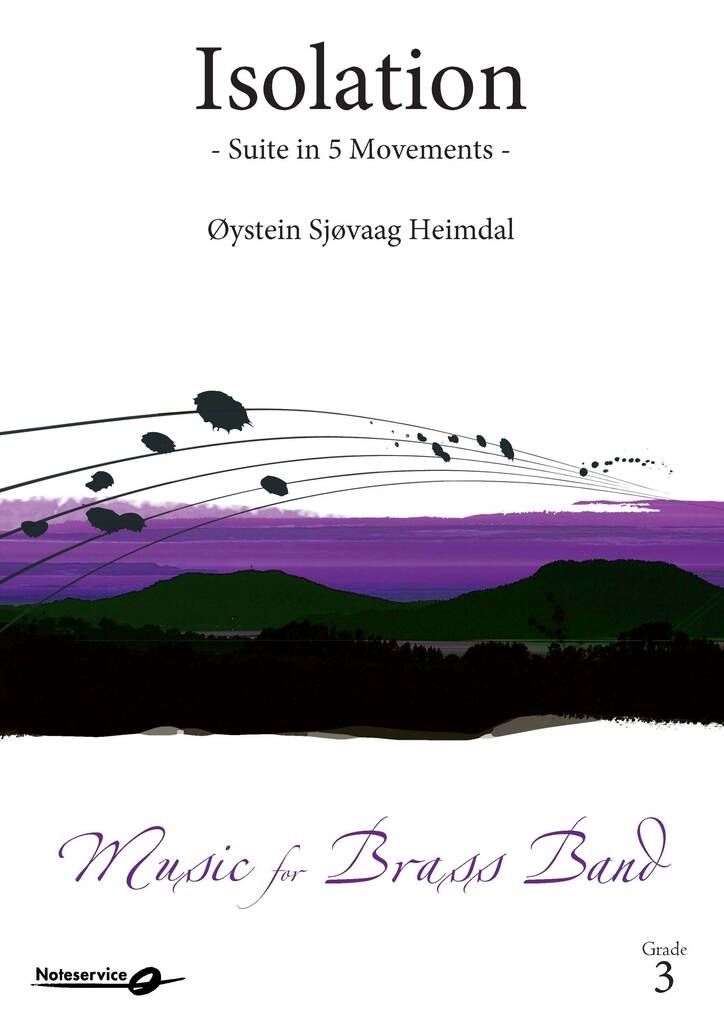
Isolation - Suite in 5 Movements - Øystein Sjøvaag Heimdal
This suite in 5 movements was written during the Corona pandemic and is inspired by experiences and feelings during this period. Feelings like insecurity, frustration, happiness, sorrow, hope, and optimism are the underlying themes, and this can be heard through the music. This is not, however, program music, so the audience may have their own perception of what the music is about.This piece provides the opportunity to focus on the different elements of music, such as dynamics, articulation, expression, tone control and timbre.The five movements can be performed separately.
Estimated dispatch 5-14 working days
-
 £59.99
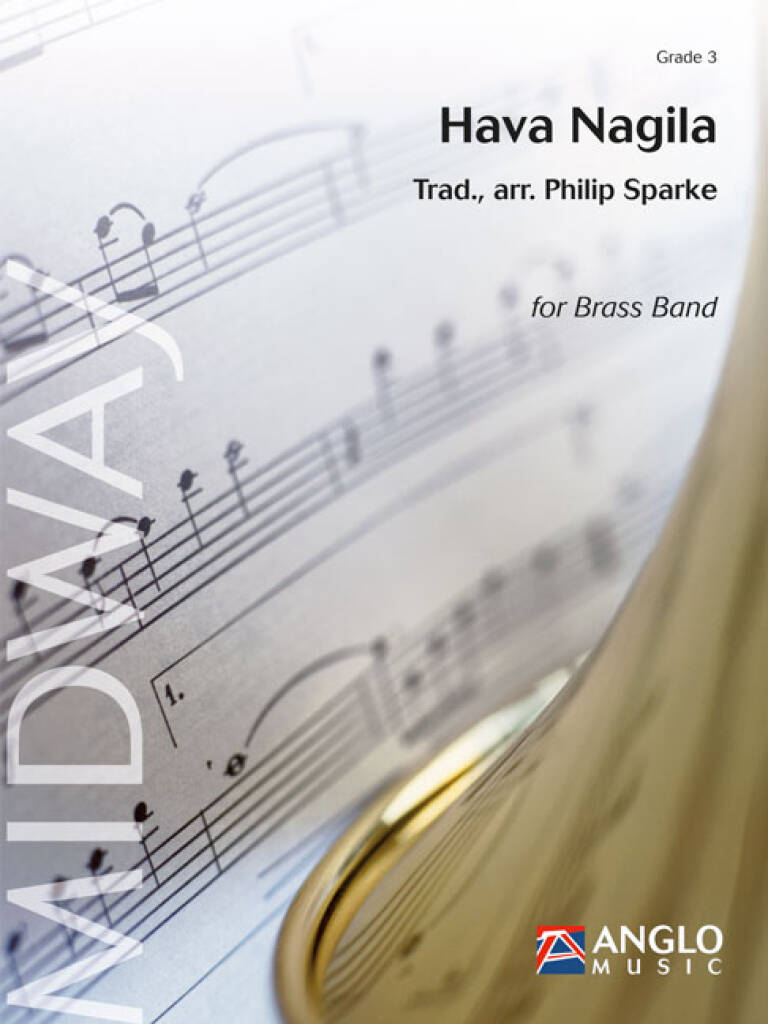
Hava Nagila - Philip Sparke
Hava Nagila (the title means 'let us rejoice') is perhaps the best known example of a style of Jewish music called 'klezmer'. Klezmer music originated in the 'shtetl' (villages) and the ghettos of Eastern Europe, where itinerant Jewish troubadours, known as 'klezmorim', had performed at celebrations, particularly weddings, since the early Middle Ages.'Klezmer' is a Yiddish term combining the Hebrew words 'kley' (instrument) and 'zemer' (song) and the roots of the style are found in secular melodies, popular dances, Jewish 'hazanut' (cantorial music) and also the 'nigunim', the wordless melodies intoned by the 'Hasidim' (orthodox Jews).Since the 16th century, lyrics hadbeen added to klezmer music, due to the 'badkhn' (the master of ceremony at weddings), to the 'Purimshpil' (the play of Esther at Purim) and to traditions of the Yiddish theatre, but the term gradually became synonymous with instrumental music, particularly featuring the violin and clarinet. The melody of Hava Nagila was adapted from a folk dance from the Romanian district of Bucovina. The commonly used text is taken from Psalm 118 of the Hebrew bible.
Estimated dispatch 5-14 working days
 View Music