
Results
-
 £59.95
Essay - Edward Gregson
This work was specially commissioned as the test piece for a new brass band competition in 1971, held at the Royal Albert Hall, London. It is in three movements, the titles of which all have literary connotations. The first movement, Dialoguetakes the form of 'conversations' between the instruments. The second movement, Soliloquy is dedicated to the memory of Gilbert Vinter - a composer who did so much in the 1960s to bring the brass band into the modern world. The final movement,Epigram, creates strong rhythmic contrasts and exploits the more virtuoso character of the brass band.
Estimated dispatch 5-14 working days
-
 £85.00
Freaks! - Gavin Higgins
Freaks! was written for Lisa Sarasini in 2006 and first performed by her with Zone One Brass at the Royal College of Music, London.This tuneful and flamboyant showpiece was inspired by the Tod Browning film of the samename. The 1932 black and white cult classic was banned for many years due to its controversial morality issues and lead characters real life side show freaks . It is one of the most bizarre things to have ever come out ofHollywood. Gavin Higgins' virtuoso trombone solo is programmatic in style, full of humour with a sinister undercurrent, and is broken into seven short scenes:IntroductionRoll up... See theFreaksThe Amazing Cleopatra Queen of the AirGooble Gobble one of us The Wedding PartyThe Fall of CleopatraThe Freaks Take RevengeCleopatra The Duck Lady
Estimated dispatch 5-14 working days
-
 £54.99
Peche Melba - Peter Martin
A delicacy for the eye, ear, and taste buds that was originally created by a Parisian cook in London. A musical haven of peace as a dessert and a romantic highlight of a diner a la carte. The melodic lines are relaxed and smooth and will definitely take you to another dimension for a while.
Estimated dispatch 5-14 working days
-
 £177.00
The Phantom of the Opera - Andrew Lloyd Webber - Erik Janssen
The English composer Andrew Lloyd Webber has managed to create one worldwide success after another during the last fifteen years. After the musical 'Jesus Christ Superstar' in 1971 which caused quite a stir, 'Evita' followed (1976), 'Cats' (1981), 'Song and Dance' (1982, a combination of 'Variations' and 'Tell me on a Sunday'), 'Starlight Express' (1984) and 'Requiem' (1985). His musical 'The Phantom of the Opera' saw its first performance in 1986 in London, featuring Sarah Brightman and Michael Crawford. This musical won both the Laurence Olivier Award and the Evening Standard Drama Award for the 'Best Musical of 1986'.
Estimated dispatch 5-14 working days
-
 £61.00
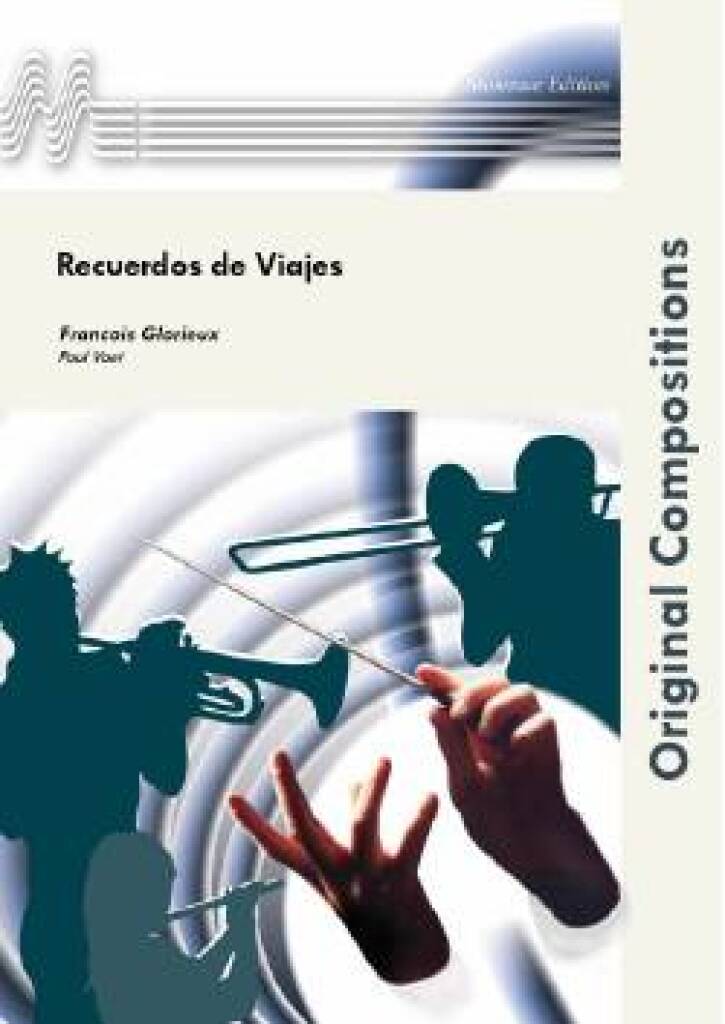
Recuerdos De Viajes - François Glorieux - Paul Voet
The Belgian piano virtuoso and composer Francois Glorieux (Kortrijk, 1932) has had a long international career as a concert pianist and conductor. As composer and arranger he worked, among others, with Stan Kenton and with the famous London brass ensemble 'Locke Brass Consort'. With that ensemble as well as with his own orchestra 'The Francois Glorieux Brass and Percussion Orchestra', he recorded many of his own compositions. His pupil trumpeter Paul Voet wrote an arrangement for brass band of these 'travel memories'. This is really a most fine original concert piece for brass band.
Estimated dispatch 5-14 working days
-
 £115.60
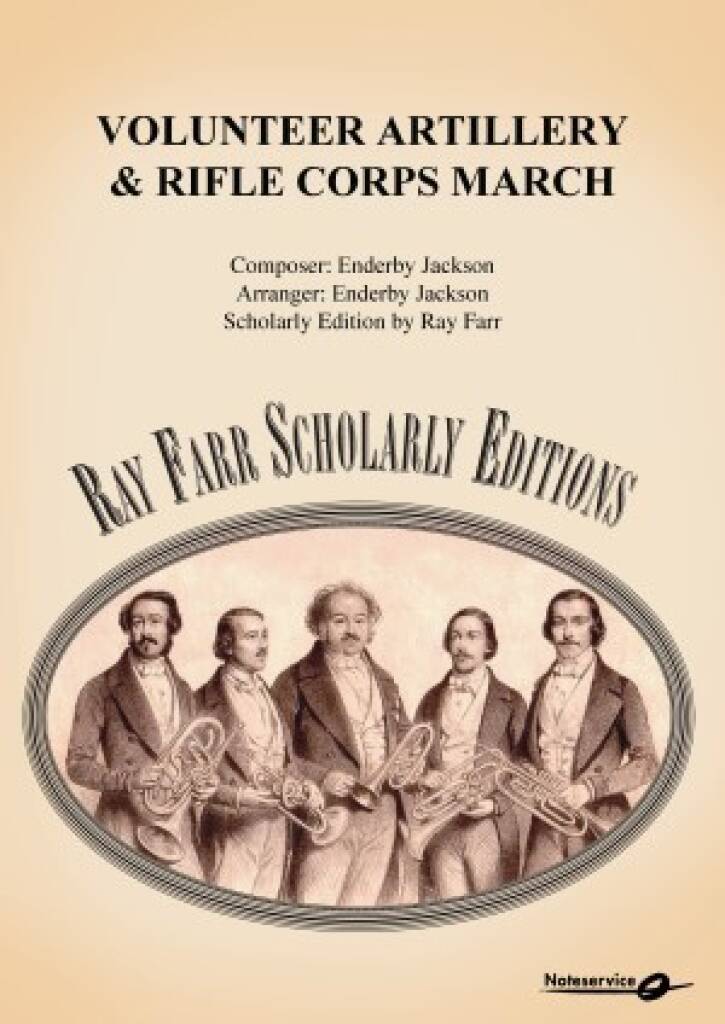
Voluntary Artillery & Rifle Corps March - Endeerby Jackson - Ray Farr
The march was written by Enderby Jackson and performed during a series of brass band events which took place at the Crystal Palace, London 1860 - 1863. Enderby Jackson was the organiser of these historically important events, and also conducted the massed band concerts. The Volunteer Force was a part-time, citizen army created in May 1859 by the British government as a result of increasing tensions between Britain and France. By 1862 more than 200,000 men had enlisted and were paid when on duty however, each member of the corps had to provide his own weapon and equipment.Some of the volunteer corps had bands which normally numbered between six and twelve players plus percussion1 and these bands became an important stimulant to the development of brass band.2 The corps were heavily subsidised by the government and considerable funding was spent on the bands3 which were often local brass bands. These bands were often provided with rehearsal rooms, instruments and uniforms,4 furthermore, the volunteer movement created and saved many brass bands.5Most of the musicians performing at the Crystal Palace Contests were affiliated to the Volunteer Force.
Estimated dispatch 5-14 working days
-
 £154.60
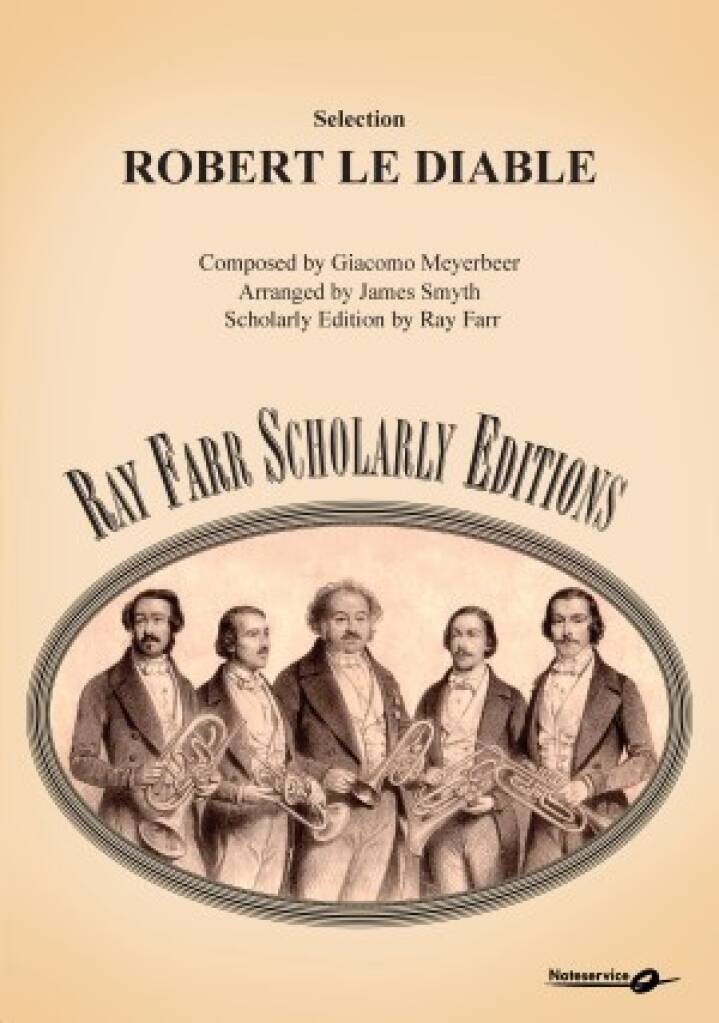
Selection Robert Le Diable - Giacomo Meyerbeer - Ray Farr
This Selection from Giacomo Meyerbeers opera Robert le Diable was arranged by James Smyth. Enderby Jackson commissioned the arrangement which was used as the test piece for the third National Brass Band Contest held at the Crystal Palace, London in 1862.The purpose of this scholarly edition is to produce a performing version, clearing ambiguities and errors, that can be enjoyed by today's performers and listeners, bearing in mind the original function and context. At the same time the edition is an analytical, musicological study of one of the rare treasures of the brass band repertory.
Estimated dispatch 5-14 working days
-
 £115.60
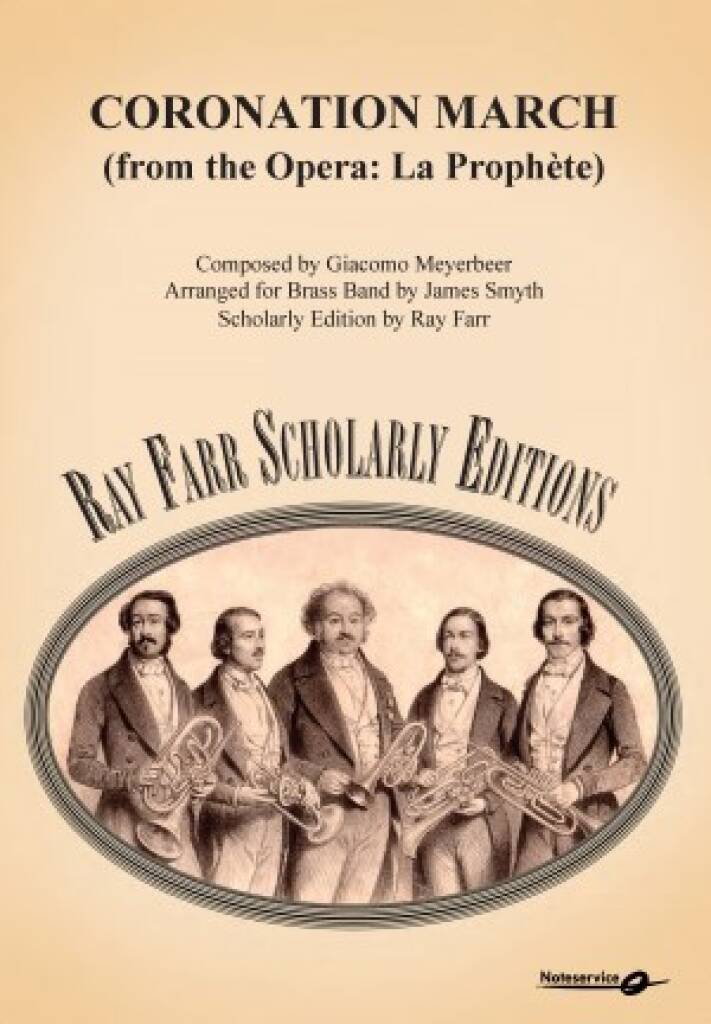
Coronation March - Giacomo Meyerbeer - Ray Farr
This Coronation March is from the opera Le Prophete (The Prophet) by Giacomo Meyerbeer and was arranged for brass band by James Smyth. The march was performed during a series of brass band events which took place at the Crystal Palace, London 1860 - 1863. Enderby Jackson was the organiser of these historically important occasions and also conducted the massed band concerts.The purpose of this scholarly edition is to produce a performing version, clearing ambiguities and errors, that can be enjoyed by today's performers and listeners, bearing in mind the original function and context. At the same time the edition is an analytical, musicological study of one of the rare treasures of the brass band repertory.
Estimated dispatch 5-14 working days
-
 £115.60
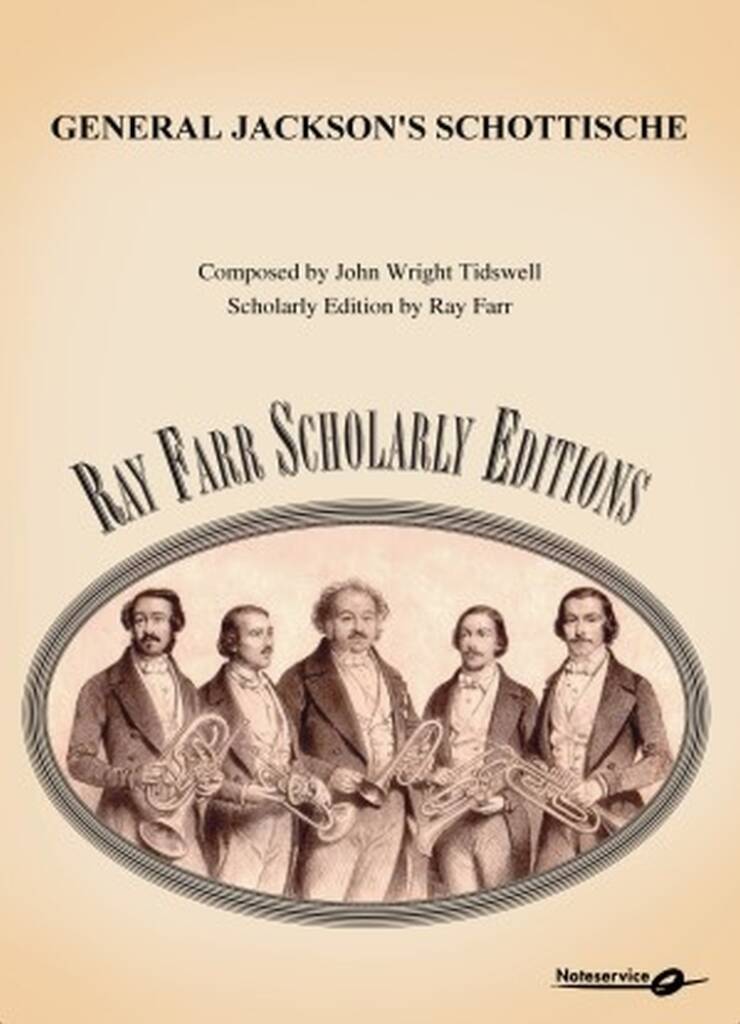
General Jackson's Schottische - John Wright Tidswell - Ray Farr
The piece was written by John Wright Tidswell and performed during Enderby Jackson's series of brass band events which took place at the Crystal Palace, London 1860 - 1863. Enderby Jackson was the organiser of these historically important occasions and also conducted the massed band concerts.The purpose of this scholarly edition is to produce a performing version, clearing ambiguities and errors, that can be enjoyed by today's performers and listeners, bearing in mind the original function and context. At the same time the edition is an analytical, musicological study of one of the rare treasures of the brass band repertory.
Estimated dispatch 5-14 working days
-
£24.95
La Sorrentina - London
Estimated dispatch 5-14 working days
 View Music