
Results
-
 £59.99
Winter Wonderland - Dick Smith - Philip Sparke
This enduringly popular seasonal song has long been a Christmas favourite, even though the lyrics don't mention 'Christmas' at all. The words were by Dick Smith (1901-1935) and the music by Felix Bernard (1897-1944). The inspiration was reportedly a visit by Smith to Honesdale's (his hometown) Central Park when it was covered in snow.The first recording was made by Richard Himber's Ritz-Carlton Orchestra in 1934. The same year Guy Lombardo and his band, The Royal Canadians, took the song to number 2 in the US Billboard Chart, where it stayed for 9 weeks. It has since been recorded by over 150 artists, the most successful versionsbeing by Perry Como and the Andrews Sisters, both released in 1946.
Estimated dispatch 5-14 working days
-
 £105.20
Optimist - John Teigen - Øystein Sjøvaag Heimdal
"Optimist" is one of the most well-known songs by Norwegian singer and composer Jahn Teigen. It was written for the Norwegian Eurovision in 1989. It did not win this competition, but is still one of the greatest Norwegian songs from the late 1980's. This arrangement is very close to the original in form, rhythmic- and melodic lines. The repeat at bar 65 may be played as many times as one wish, or it can be omitted.
Estimated dispatch 5-14 working days
-
 £54.99
Skyfall (arr. Sparke) (Score/Parts) - Paul Epworth - Philip Sparke
Skyfall, the title song for the latest Bond film, with its echoes of the original Bond theme, is perhaps the most archetypal Bond song of all. This up-to-the-minute arrangement by Philip Sparke makes it super easy to recreate on stage the exciting atmosphere of the most famous secret agent in the history of film.
Estimated dispatch 5-14 working days
-
 £115.60
Angels We Have Heard on High - Fredrick Schjelderup
"Angels We Have Heard" on High is one of the most famous Christmas carols all over the world. Of French origin, it's also entitled Les Anges dans nos campagnes. The Irish bishop James Chadwick has written lyrics to the melody. His lyrics are the most widely used also today. For this Brass Band arrangement there are also optional parts for SATB Choir and Organ.
Estimated dispatch 5-14 working days
-
 £54.95
Sonata - Derek Bourgeois
This work, composed in 1998, was commissioned by the American trombonist Don Lucas as a work for trombone and piano and first performed by him in Birmingham on 19th May 2000. Subsequently, I arranged the music for both solo trombone and brass band and solo trombone and wind band so that it now exists in three formats. The first movement, in B flat major, is brisk and energetic, and is cast in sonata form. The second subject is gentler and more lyrical. The second movement, a scherzo in C major, is the most complex of the four. Basically the structure is a rond. For a long time the music remains in the opening 5/8 time until a new theme introduces more broken rhythms in a more jazzy idiom. After a return of the opening theme the following episode is more tonally ambiguous. Finally, the main theme returns to round off the movement. The third movement, a lyrical adagio, is really one long extended melodic flow. The harmonies are lush and the textures simple and direct. The tonal center is A minor, but the music meanders through so many keys, that this key centre is heavily disguised. The finale is a fiery affair. G minor is really its home key, but throughout the movement the music moves about a lot and the second subject is first heard in A flat minor. The movement's underlying sonata structure is masked not only by its loose tonality but also by its frequently changing time signatures. Like the first movement the second subject is more lyrical in nature and for a while it seems that the music will end peacefully, but a final flurry heralds a triple forte unison on the home note of the first movement - B flat. Derek Bourgeois
Estimated dispatch 5-14 working days
-
 £109.99
Fantasy for Brassband and Organ - Jan Bosveld
When I was approached to compose a work for brassband and church organ I already envisioned the concept I would use. It would indeed literally become a work for brassband and organ. Without the traditional solos, the organ would form an addition to the brassband orchestration as would the brassband provide an extra register for the organ. In short a homogeneous entity. The most important reason for doing this is quite simple. Since this work can only be performed in a church and because of the specific acoustics of the church, the brassband would sound in al its tone colour like an organ. By using certain registers of the organ and combining these with the brassband a wonderfulsound palette can be created. The use of complementary or contrasting tone quality is also possible. The primary theme of this composition is based on these three methods of "colouring". As far as structure is concerned this work consists of two parts. slow fast. It is built on a number of motifs in which some behave like a consecutive canon. In the fast movement the primary motif develops into a fugue-like section. The canon and fugato are techniques frequently used in classical and contemporary organ literature. The liberal use of structure and motif has lead to the title. "Fantasy for Brassband and Organ".
Estimated dispatch 5-14 working days
-
 £59.99
Old Hundredth - Louis Bourgeois - Philip Sparke
The tune Old Hundredth is one of the best-known melodies in all Christian musical traditions and first appeared in the 1551 psalter "Pseaumes Octante Trois de David", where it is used as a setting for a version of Psalm 134; it is usually attributed to the French composer Louis Bourgeois (c.1510 - c.1560). The melody was then used in 1561 by the Scots clergyman, William Kethe in Sternhold and Hopkins' Psalter for his paraphrase of Psalm 100 - All People that on Earth do Dwell, which is still the most familiar hymn sung to this noble tune. When Tate and Brady's "New Version of the Psalms" was published in 1696, the melody became know as the 'old' version - henceits current title. This arrangement presents three contrasting verses and is effective as a concert piece as well as an instrumental interlude as part of a church service or wedding.
Estimated dispatch 5-14 working days
-
 £137.70
Why Not? - Michel A. Camilo - Lars Erik Gudim
"Why Not?" is the most well-known piece by Dominican Republic pianist/composer Michel Camilo. It appeared for the fist time on his 1984 album record "French Toast". He re-recorded it in 1985 for the "Why Not?"-album whoich is among his best-selling to date. The song has also been recorded by other artist like the vocal group The Manhattan Transfer. "Why Not?" ia a modern latin-jazz classic and this demaning arrangement for Brass Band captures the featureless and musical challenges of the original piece.
Estimated dispatch 5-14 working days
-
 £54.99
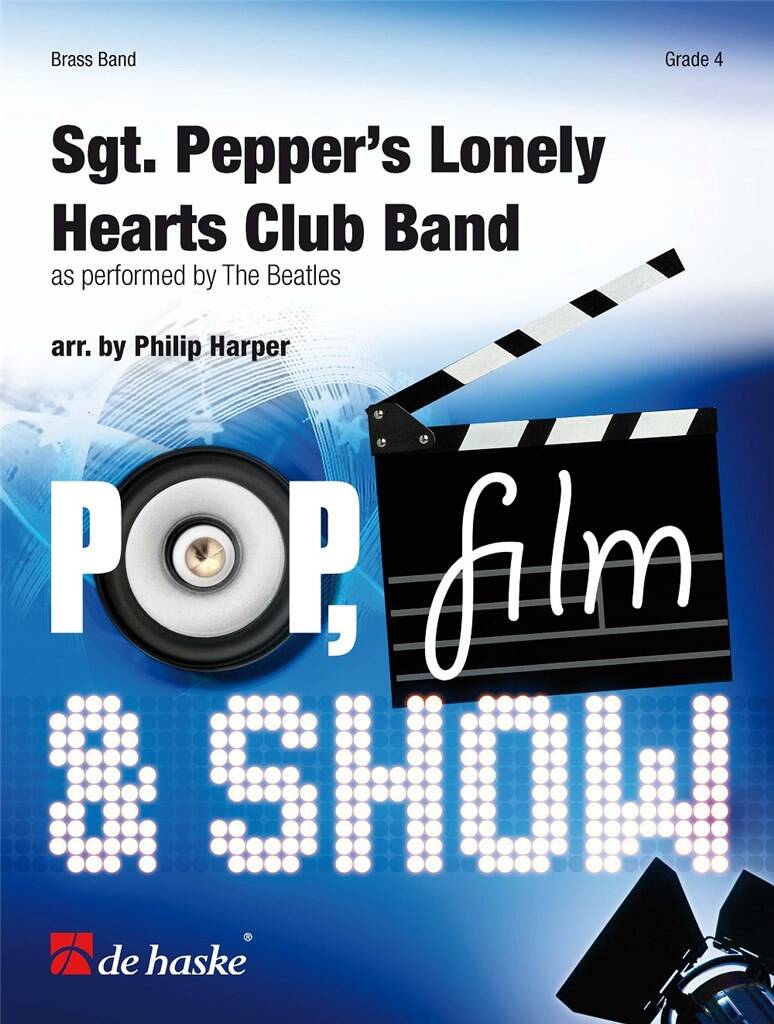
Sgt. Pepper's Lonely Hearts Club Band - John Lennon - Philip Harper
Sgt. Pepper's Lonely Hearts Club Band is the most famous album by The Beatles, and perhaps of all time. When it came out in 1967 it was remarkable not only for its many great songs, but also because of the innovative recording techniques that were used on the record for the very first time, setting a new standard for many decades to come. Conductor, arranger and composer Philip Harper is a huge Beatles fan himself and had a great time creating this grade 4 arrangement!
Estimated dispatch 5-14 working days
-
 £59.99
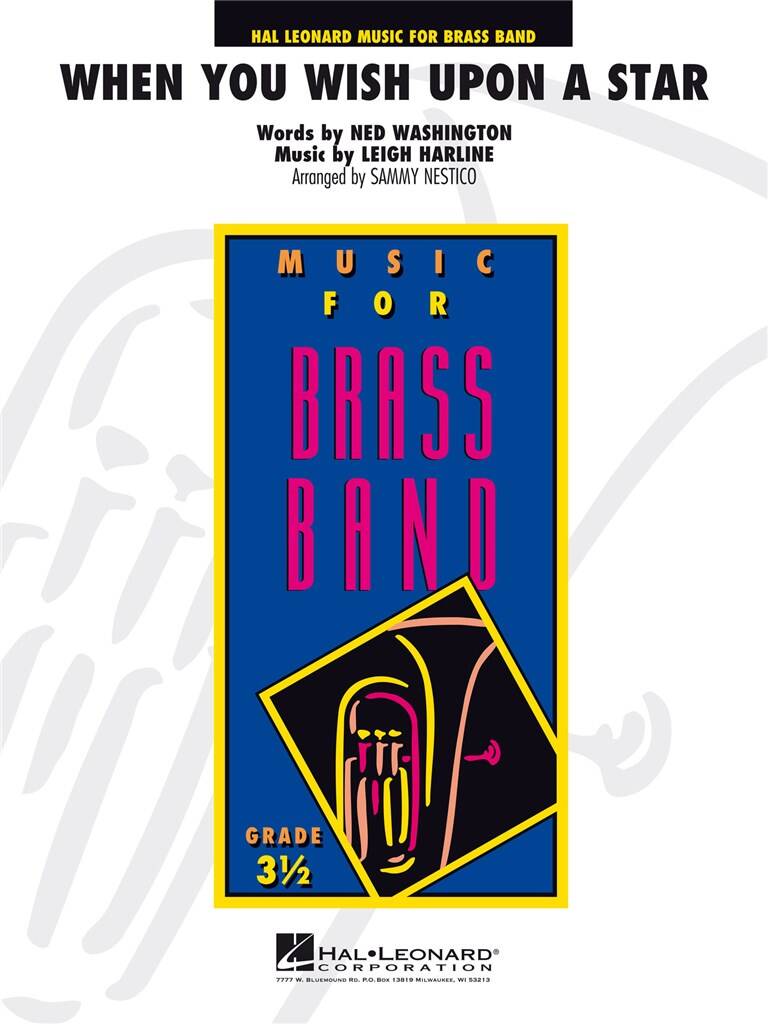
When you wish upon a Star - Sammy Nestico
Out of all Disney productions, 'Pinocchio' may be the most famous. The beautiful song When you wish upon a Star is not only popular from the animation film itself, but also as a separate song. It has been covered by many big artists throughout the years. It is perfect for brass band. Will your nose grow whilst playing?
Estimated dispatch 5-14 working days
 View Music