
Results
-
 £22.50
A Pastoral Symphony (Brass Band - Score only) - Redhead, Robert
This symphony for brass band seeks to explore the thought that 'the greatest need of any congregation is its pastor's personal holiness'. The first movement challenges the pastor 'to serve the present age', the tunes 'Majesty' and 'Lathbury' are used. The second movement expresses a priority to 'Seek...first the Kingdom of God'. The short third movement presents the question 'Except I am moved with compassion, how dwellest they Spirit in me?' before the triumphant finale reflects the desire of every Christian that his life and work will always be for the glory of God with the presentation of 'In my life Lord, be glorified'.
Estimated dispatch 7-14 working days
-
 £44.95
Glorified (Brass Band - Score and Parts) - Wainwright, Andrew
Glorified was composed for the Canadian Staff Band's 50th Anniversary celebrations. This work is based on two tunes, Lord, be glorified and Great is thy faithfulness. This song celebrates and signifies the faithfulness to all associated with the Canadian Staff Band, and the commitment shown by its members through the years.The first half of the work harkens back to those members of the band who tragically perished in the early days on RMS Empress of Ireland, which was en route to England for the 1914 International Congress when it was struck by another vessel and sank. The rhythmic ostinatos heard represent the passing of time over the years. After the somewhat dark introduction, the music settles into a reflective rendition of In my life, Lord, be glorified, before bursting into a rhythmic and jagged mixed-metre section. A yearning elegy pays tribute to those who lost their lives.The second half of the piece is celebratory in nature and commemorates the reformation of the band and the rich history which has ensued in the subsequent years. The rhythmic energy found in this section builds to a majestic presentation of the tune Lord, be glorified, which leads into the return of Great is thy faithfulness but in an optimistic fashion.
Estimated dispatch 7-14 working days
-
 £184.00
The Maestro - Andrew Pearce
The Maestro, a concertino voor trompet en band, was commissioned by Philip Cobb, principal trumpet of the London Symphony Orchestra. I spent most of Summer 2011 in Prague and London composing this demanding piece, for this was a wonderful opportunity to write a large scale work for one of the world's finest Trumpet virtuosos and I accepted the assignment with great enthusiasm. I also felt a great responsibility to deliver a tour de force for this world class player that was both challenging and enjoyable. Phil was seeking melodies and themes in the piece and had enjoyed my album 'Cinema Symphony', and the dramatic vistas it conjured up. Before writing began, I listened to his beautiful album 'Life Abundant' many times, ensuring I had his sound in my head while writing. The piece represents the many aspects of a contemporary trumpeter's musical life from; brass band chorale (a homage to Phil's musical roots), to the symphonic concert hall to the film recording studio. I am delighted to have had Phil and the International Staff Band record this work under the baton of Dr Stephen Cobb. Its a tour de force not only for the soloist but also for the band and should be an exciting challenge for the very best bands out there.
Estimated dispatch 5-14 working days
-
 £105.20
Riv i hjertet - Sondre Justad - John Philip Hannevik
The singer/ songwriter Sondre Justad was born in Lofoten in the north of Norway in 1990. His first album Riv i hjertet was released in 2015, and it became a huge success. He got very fine reviews in some of the largest norwegian newspapers, and the title-song was played frequently on the national radio-stations. The song title could loosely be translated as pulling at my heartstrings, and the song has a deep and dark meaning, with the opening lyrics sounding: If I knew - that I would be dying soon, would I be happy with the way I am living my life Please note that the repeating figures in upper cornets should never be dominant, they should only provide texture tothe accompaniment.
Estimated dispatch 5-14 working days
-
 £74.99
Bon Jovi - Rock Mix - Jon Bon Jovi - Wolfgang Wössner
Wolfgang Wssner has created yet another energetic and exciting medley for concert band, following in the footsteps of his previous successful medley, Bryan Adams - The Best of Me.This time Wssner has moulded four hits by the American rock band Bon Jovi into one sensational work. Combining Runaway, It's My Life, Livin' On a Prayer and You Give Love a Bad Name, creates an incredibly fun medley that will rock your next concert!
Estimated dispatch 5-14 working days
-
 £45.00
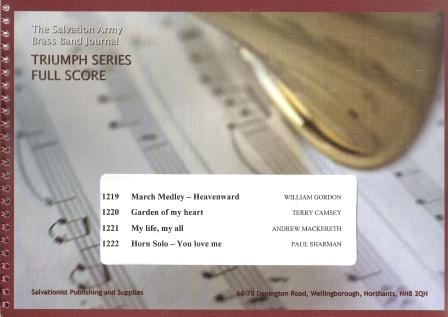
Triumph Series Band Journal November 2011 Numbers 1219-1222
No.1219 March Medley - Heavenward (William Gordon)A variety of songs are used in this up-tempo march medley which potrays the celebration of a life looking forward to an eternity in Heaven. The tunes used are 'When we all get to Heaven', 'When the roll is called up yonder' and 'We shall win'.No.1220 Garden of my heart (Terry Camsey)The publication of this music is, in a small part, a fitting tribute to Major Terry Camsey who was Promoted to Glory in June 2011. The title is taken from the refrain from a much-loved Sidney Cox song; 'Jesus, Jesus, Lily of the valley, Bloom in all thy beauty in the garden of my heart'.No.1221 My life, my all (Andrew Mackereth)This selection attempts to emphasise the personal nature of Christian commitment hence the emphasis given to the words 'my' and 'I' in the songs chosen. The tunes 'Rockingham', 'All I have I am bringing to thee' and 'At thy feet I bow adoring' are included.No.1222 Tenor Horn Solo - You love me (Brian Willetts arr. Paul Sharman)This arrangement was made at the request of David Lynch, Solo Horn player in The International Staff Band. Originally published in April 1993, the song speaks of the fact that, despite the wonder and vastness of God's creation, he still loves each one of us individually.
Estimated dispatch 7-14 working days
-
 £59.95
Aftershock (Brass Band - Score and Parts)
In this piece, the term "aftershock" serves as a metaphor for the Christian Church: commissioned by Jesus to carry forward the impact of his ministry and message. The Church is the spiritual aftershock of Christ's life, death, and resurrection - reverberating through history and into the present.Musically, the piece is constructed in three movements and built around motifs that pulse, echo, and resonate, symbolising the ongoing influence of Christ through his Church. Several well-known Christian songs are woven into its fabric, each contributing to the narrative of mission and worship. Build your Kingdom here (Rend Collective) affirms the Church's identity as "the hope on earth," while Major Leonard Ballantine's And you will be my witnesses (M.S. 1992-10) recalls Jesus' call to spread the gospel.The reflective central section features Matt Redman's I will offer up my life in spirit and truth, expressing personal devotion of a believer seeking to serive within the global Church.The finale draws on a traditional Salvation Army song by William Drake Pennick (S.A.S.B. 937), urging believers to proclaim the gospel far and wide: Tell the world, O tell the world!Make salvation's story heard;In the highways, in the byways,And in lands beyond the sea,do some witnessing for JesusWheresoever you may be.
Estimated dispatch 7-14 working days
-
 £19.99
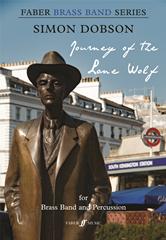
Journey of the Lone Wolf (Brass Band - Score Only)
Championship Section Test Piece for the 2016 National Finals of the British Brass Band Championship.The Lone Wolf of the title is the great Hungarian composer and folklorist Bla Bartok. Bartok's journey took him from the hills of the Balkans to the heart of the new world. His singular vision may have meant a life out in the cold, a life without warmth and love, a life without true happiness, a death mourned by a few in a strange land.The first of the three linked movements is capturing the Peasants' Song and follows the young Bartok and fellow composer Zoltan Kolday as they embark on Summertime adventures through the Hungarian countryside to collect and catalogue the astonishing variety of Gypsy and folk music heard in the Balkan hills. The arrival of WW1 plunges Bartok's beloved Hungary into chaos.Bartok was at times a cold man, aloof and lonely. The occasional moments of tenderness he showed are portrayed in Night Music. His brief but intense affairs speak of a love he could only long for. Jazz is my night music and here there are hints of what Bartok may have heard in the USA later in his life.Having been forced by the world's evils to leave his homeland of Hungary for America Bartok, the anti-fascist, felt isolated and angry. In the finale, Flight and Fight, we hear his longing for a simpler time of Gypsy folk dances as well as his maturity and depth as a composer finally exploring deeper colours and darker themes.Duration: 15.00
Estimated dispatch 7-14 working days
-
 £15.00
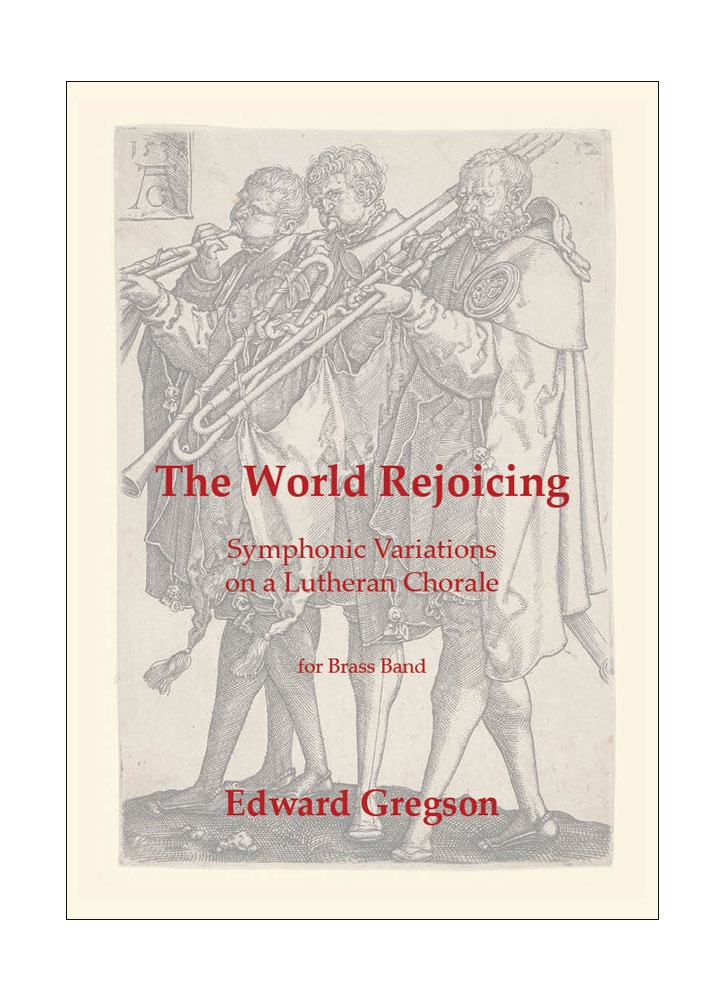
The World Rejoicing (Brass Band - Study Score)
In searching for a common link between the brass band traditions of the various European countries that commissioned this work, I considered the fact that hymns have always played an important role in the relationship that brass bands have with their particular communities; and thus I turned to a well-known Lutheran chorale, Nun danket alle Gott (Now thank we all our God), written around 1636 by Martin Rinkart, with the melody attributed to Johann Crger. A number of composers have incorporated this chorale into their music, most famously J.S.Bach in his Cantatas no. 79 and 192, and Mendelssohn in the Lobsegang movement of his 2nd Symphony (the harmonization of which is usually used when this hymn is sung).It seemed fitting therefore for me to return to a compositional form I have used many times before (Variations) and to write a work based on this hymn. I have used it in a similar way to that which I employed in my Variations on Laudate Dominum of 1976 - that is, rather than writing a set of variations using elaborations of the complete tune, I have taken various phrases from the chorale and used them within the context of other musical material, applying an overall symphonic process of continuous variation and development. The structure, or sub-divisions of the work, which is through composed and plays without a break, is as follows: Prelude, Capriccio, La Danza 1, Processional, La Danza 2, Arias and Duets, Fuga Burlesca, Chorale, and Postlude.The work is also partly autobiographical - in the manner say of Strauss's Ein Heldenleben - in that I have incorporated into the score brief quotations from many of my other major works for brass band. In that respect, The World Rejoicing sums up a particular facet of my life as a composer, and reflects the admiration I have always had for what is surely one of the great amateur music-making traditions in the world.The World Rejoicing is dedicated 'in loving memory of my brother', Bramwell Logan Gregson, who sadly passed away in the Autumn of 2018.Edward Gregson
Estimated dispatch 7-14 working days
-
 £183.00
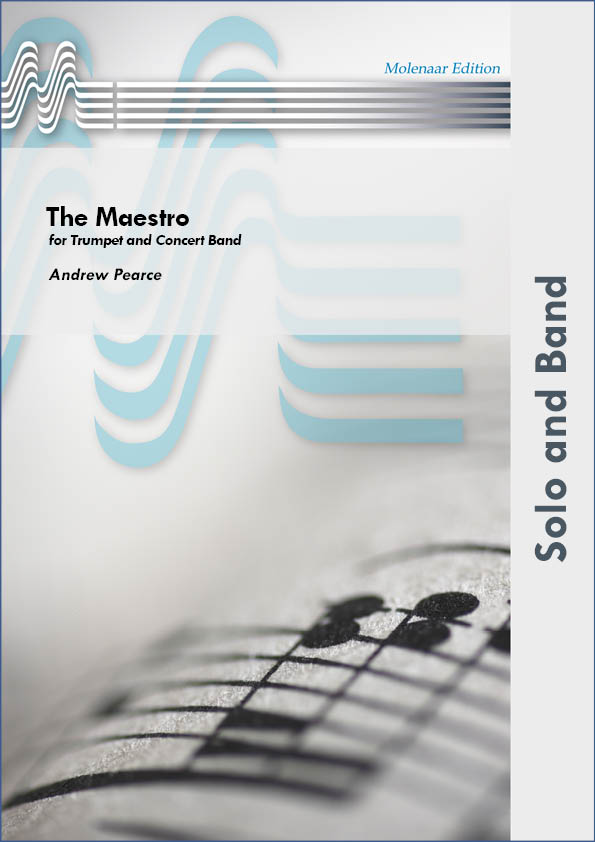
The Maestro - Andrew Pearce
The Maestro, a concertino voor trompet en band, was commissioned by Philip Cobb, principal trumpet of the London Symphony Orchestra. I spent most of Summer 2011 in Prague and London composing this demanding piece, for this was a wonderful opportunity to write a large scale work for one of the world's finest Trumpet virtuosos and I accepted the assignment with great enthusiasm. I also felt a great responsibility to deliver a tour de force for this world class player that was both challenging and enjoyable. Phil was seeking melodies and themes in the piece and had enjoyed my album 'Cinema Symphony', and the dramatic vistas it conjured up. Before writing began, I listened to his beautiful album 'Life Abundant' many times, ensuring I had his sound in my head while writing. The piece represents the many aspects of a contemporary trumpeter's musical life from; brass band chorale (a homage to Phil's musical roots), to the symphonic concert hall to the film recording studio. I am delighted to have had Phil and the International Staff Band record this work under the baton of Dr Stephen Cobb. Its a tour de force not only for the soloist but also for the band and should be an exciting challenge for the very best bands out there.
Estimated dispatch 10-14 working days
 View Music