
Results
-
 £59.95
Romans 8 Brass Celebration (Brass Band - Score and Parts) - Steadman-Allen, Ray
Based on the eighth chapter of Romans, this music was composed as a companion to a series of bible studies at the 1985 British National School of Music. The tunes of four songs are presented, each supporting the ideas of the chapter; 'This joyful Eastertide' 'We are born of the Spirit' 'Lord of all hopefulness' and 'In the Cross of Christ I glory'.
Estimated dispatch 7-14 working days
-
£59.95
Variations On Maccabeus (Brass Band - Score and Parts) - Norbury, Kevin
This set of variations was composed for the ISB's tour of Australia, New Zealand and Japan in 1995. Handel's majestic tune is associated with the great resurrection hymn 'Thine is the glory, risen, conquering Son' and melodic fragments of the tune form the basis of the four variations. The tune is heard in its entirety at the beginning and near the end and the piece finishes with a vigorous coda.
Estimated dispatch 7-14 working days
-
 £60.99
Hymn of Faith (Brass Band - Score and Parts) - Bourgeois, Louis T - Blanken, John
The French composer Louis Bourgeois lived from c.1510 to 1560. Bourgeois was cantor in Geneva and, commissioned by John Calvin, he composed melodies for metrical (rhyming) versions of the psalms. After completing about a hundred one-part psalms, he made some four-part arrangements, which were denounced and even resulted in his imprisonment for a day. Later, Bourgeois published a number of psalm collections, and judging from his book Le droict chemin de musique he was also an excellent educator. The melodies Bourgeois composed, are (contrary to Gregorian chants) particularly suitable for community singing. This applies to his hymn tune Saint Michael, which is why this melody has been used for various texts, written for many occasions. John Blanken made this arrangement for a wedding ceremony: an occasion in which faith and trust play a large - if not the largest - role. Hence the title Hymn of Faith. The arrangement contains four verses of the hymn. After a majestic opening the hymn follows twice, the second verse being embellished in the tenor register. After a short interlude verse three follows, played by a quartet. The majestic opening is then repeated as a modulation into the fourth verse, which concludes the work in a brilliant tutti.
Estimated dispatch 7-14 working days
-
 £59.99
Ukrainian Bell Carol (Brass Band - Score and Parts) - Leontovych, Mykola Dmytrovich - Sparke, Philip
The Ukrainian Bell Carol is part of a large choral work entitled Shchedryk by the Ukrainian composer Mykola Dmytrovich Leontovych (1877-1921). The tune is an adaptation of an old 'shchedrivka', a song traditionally sung on Ukrainian New Year's Eve (January 13th) which hopes for good fortune in the year to come. The tune has since been the inspiration for at least four different Christmas carols, of which Carol of the Bells is the most famous. Philip Sparke has sourced the original Ukrainian melody to create this stirring arrangement.Duration: 3:00
Estimated dispatch 7-14 working days
-
 £59.99
MacArthur Park (Brass Band - Score and Parts) - Webb, Jimmy - Sparke, Philip
Over a period of four decades Jimmy Webb (b. 1946) has written hits for a number of singers including Glen Campbell, Art Garfunkel, Frank Sinatra, Willie Nelson, Johnny Cash and Linda Ronstadt. His songs are often epic in character and include By the Time I Get to Phoenix; Up, Up and Away; Didn't We; Wichita Lineman and Galveston. MacArthur Park (1968) was unlike anything that had gone before it. Running at over 7 minutes, it is 2 or 3 times the length of most pop songs and has an extended orchestral interlude. Richard Harris' seminal recording topped the music charts in Europe, while peaking at number two on the U.S. charts. Philip Sparke has made this excellent arrangement for brass band, which is sure to become a regular feature on your concert programme.Duration: 07:30
Estimated dispatch 7-14 working days
-
 £152.99
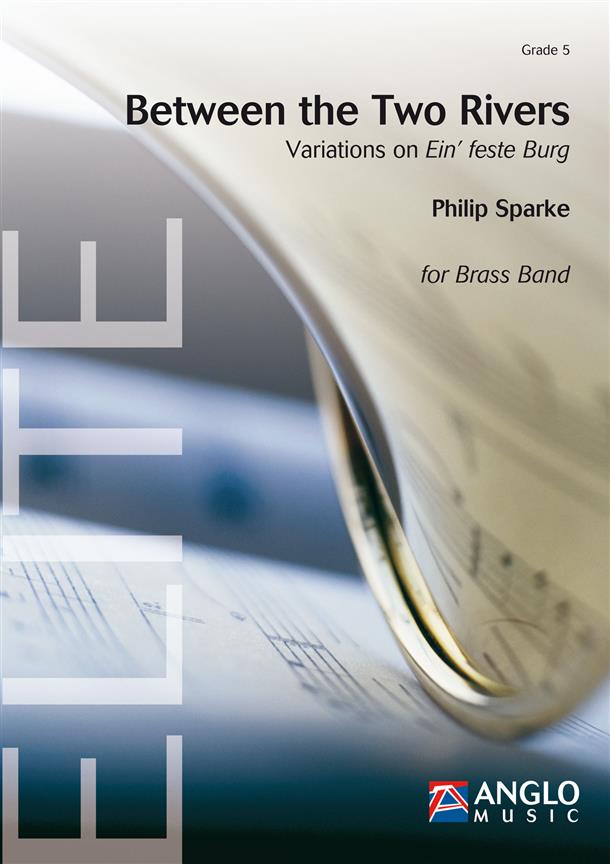
Between the Two Rivers (Brass Band - Score and Parts) - Sparke, Philip
Between the Two Rivers was commissioned by Fanfare Prins Hendrik, from Aalst in the Netherlands. The title derives from the fact that the town of Aalst lies between two tributaries of the River Dommel. The community is a highly religious one, so the famous Luther chorale, Ein' Feste Burg, was an obvious choice for Philip Sparke to use as the theme for this new work. It takes the form of a theme with four contrasting variations. Variation 1 is a moto perpetuo, variation 2 has a slower march like feel, variation 3 is a sinister slow movement and the final variation is in the form of a lyrical fugue. Between The Two Rivers is sure to become a major work in modern brass band repertoire.Duration: 15:00
Estimated dispatch 7-14 working days
-
 £59.99
Once in Royal David's City (Brass Band - Score and Parts) - Gauntlett, Henry - Sparke, Philip
Sparkling and majestic brass playing introduce this wonderful arrangement of the classic carol! Each of the four verses are treated differently, creating beautiful textures and a multi-faceted setting of the familiar tune. This fresh arrangement for developing bands is a great choice for both church and school!Duration: 4:30
Estimated dispatch 7-14 working days
-
 £75.00
Peterloo (Brass Band - Score and Parts) - Arnold, Malcolm - Duncan, Andrew
Peterloo is the derisive name given to an incident that happened on16th August 1819 in St Peter's Fields, Manchester, when an orderly crowd of some 80,000 people met to hear a speech on political reform. On the orders of the magistrates they were interrupted by the Yeomanry, who attempted to seize the banners they carried, and to arrest their speaker, Henry Hunt. Cavalry was sent in, and eleven people were killed and four hundred injured in the ensuing panic. This overture attempts to portray these happenings. Suitable for 1st Section Bands and above. Duration: 10.00
Estimated dispatch 7-14 working days
-
 £99.95
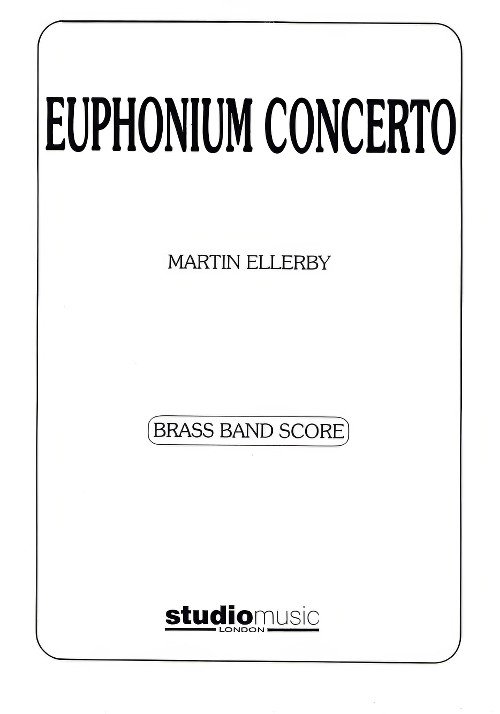
Euphonium Concerto (Euphonium Solo with Brass Band - Score and Parts) - Ellerby, Martin
This Euphonium Concerto was written between late 1994 and early 1995 in response to a commission from Steven Mead to whom the work is dedicated. It is cast in four movements and lasts a little over 22 minutes.Includes: FantasyCapriccioRhapsody (for Luis)DiversionsDuration: 22.30
Estimated dispatch 7-14 working days
-
 £60.99
On Stage (Brass Band - Score and Parts) - Ares, Rob
A collection of four simple entertaining pieces which can be performed together or separately.The Little MarchTango FlamencoChildrens WaltzHappy Cha Cha
Estimated dispatch 7-14 working days
 View Music