
Results
-
 £60.99
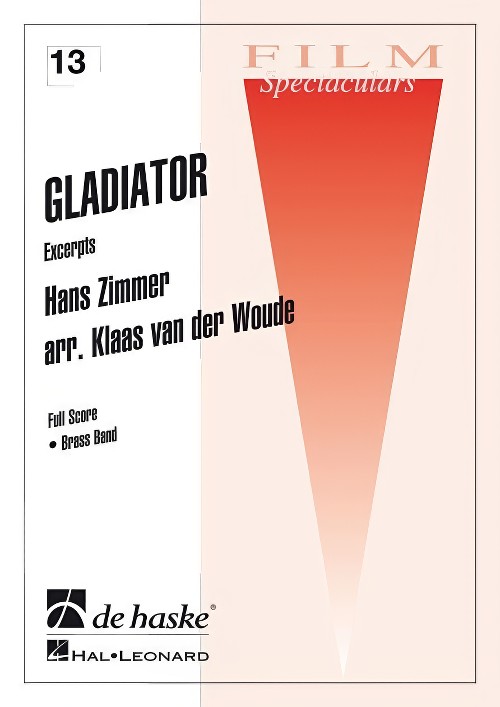
Gladiator (Brass Band - Score and Parts) - Zimmer, Hans - Woude, Klaas van der
The long list of musical film scores by the German composer Hans Zimmer includes such works as Armageddon, Rain Man, Speed and Thelma and Louise, showing he is at ease with many types of film music. Some of his best work was his music for the epic Gladiator. Klauss van der Wourde has created a great arrangement from this wonderful score.Duration: 5:30
Estimated dispatch 7-14 working days
-
 £119.95
Harrison's Dream (Brass Band - Score and Parts) - Graham, Peter
At 8.00pm on the 22nd of October 1707, the Association, flagship of the Royal Navy, struck rocks off the Scilly Isles with the loss of the entire crew. Throughout the rest of the evening the remaining three ships in the fleet suffered the same fate. Only 26 of the original 1,647 crew members survived. This disaster was a direct result of an inability to calculate longitude, the most pressing scientific problem of the time. It pushed the longitude question to the forefront of the national consciousness and precipitated the Longitude Act. Parliament funded a prize of �20,000 to anyone whose method or device would solve the dilemma.For carpenter and self-taught clockmaker John Harrison, this was the beginning of a 40 year obsession. To calculate longitude it is necessary to know the time aboard ship and at the home port or place of known longitude, at precisely the same moment. Harrison's dream was to build a clock so accurate that this calculation could be made, an audacious feat of engineering.This work reflects on aspects of this epic tale, brilliantly brought to life in Dava Sobel's book Longitude. Much of the music is mechanistic in tone and is constructed along precise mathematical and metrical lines. The heart of the work however is human - the attraction of the �20,000 prize is often cited as Harrison's motivation. However, the realisation that countless lives depended on a solution was one which haunted Harrison. The emotional core of the music reflects on this, and in particular the evening of 22ndOctober 1707.- Peter GrahamJuly 2000 Recorded on Polyphonic QPRL219D Master Brass (Volume Fifteen). Duration: 14'30"
Estimated dispatch 7-14 working days
-
£44.95
Harrison's Dream (Brass Band - Score only) - Graham, Peter
At 8.00pm on the 22nd of October 1707, the Association, flagship of the Royal Navy, struck rocks off the Scilly Isles with the loss of the entire crew. Throughout the rest of the evening the remaining three ships in the fleet suffered the same fate. Only 26 of the original 1,647 crew members survived. This disaster was a direct result of an inability to calculate longitude, the most pressing scientific problem of the time. It pushed the longitude question to the forefront of the national consciousness and precipitated the Longitude Act. Parliament funded a prize of �20,000 to anyone whose method or device would solve the dilemma.For carpenter and self-taught clockmaker John Harrison, this was the beginning of a 40 year obsession. To calculate longitude it is necessary to know the time aboard ship and at the home port or place of known longitude, at precisely the same moment. Harrison's dream was to build a clock so accurate that this calculation could be made, an audacious feat of engineering.This work reflects on aspects of this epic tale, brilliantly brought to life in Dava Sobel's book Longitude. Much of the music is mechanistic in tone and is constructed along precise mathematical and metrical lines. The heart of the work however is human - the attraction of the �20,000 prize is often cited as Harrison's motivation. However, the realisation that countless lives depended on a solution was one which haunted Harrison. The emotional core of the music reflects on this, and in particular the evening of 22ndOctober 1707.- Peter GrahamJuly 2000 Recorded on Polyphonic QPRL219D Master Brass (Volume Fifteen). Duration: 14'30"
Estimated dispatch 7-14 working days
-
 £60.99
Dances with Wolves (Main Theme) (Brass Band - Score and Parts) - Barry, John - Woude, Klaas van der
Along with John Williams, John Barry is probably one of today's greatest composer's of film scores. Dances with Wolves was one of his best with the music reflecting the truly panoramic nature of this Kevin Costner epic.Duration: 5:30
Estimated dispatch 7-14 working days
-
 £76.99
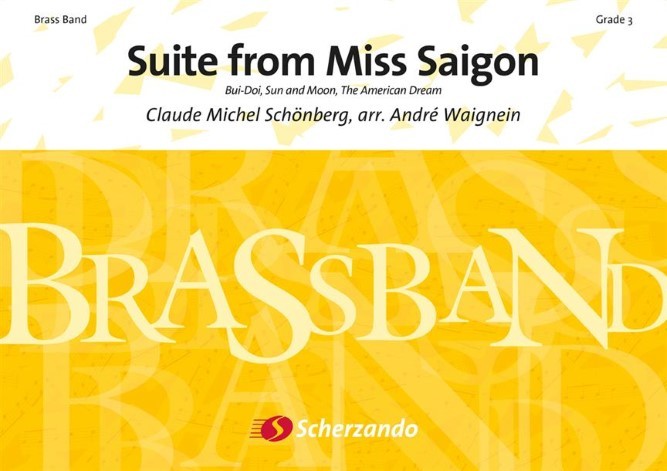
Suite from Miss Saigon (Brass Band - Score and Parts) - Schonberg, Claude-Michel - Waignein, Andre
The musical Miss Saigon was a massive hit in London, Broadway and throughout the world. Based on Puccini's opera, Madame Butterfly, this epic production centres on the romance between a strong-willed Vietnamese woman and an American soldier during the Vietnam War. The story tells of two young lovers torn apart by war yet still held together by a burning passion. This medley features three of the best songs from the musical and mixes desperate love with optimism and joy. Relive the hit show with this catchy medley.Duration: 10:30
Estimated dispatch 7-14 working days
-
 £60.99
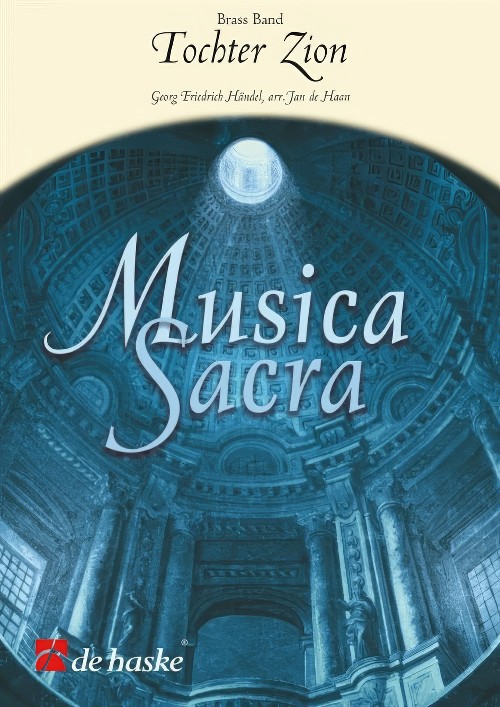
Tochter Zion (See the Conquering Hero Comes) (Brass Band - Score and Parts) - Handel & Tchaikovsky - De Haan, Jan
Tochter Zion, also known as See the Conquering Hero Comes, is the most famous chorus from the oratorio Judas Maccabaeus (1746) by the composer George Frideric Handel (1685-1759). The heroic epic based on the Biblical story about commander-in-chief Judas Maccabaeus, was used by Handel to celebrate the English victory over the rebellious Scottish. The first performance of this patriotic work - written in the pleasing, rich baroque style that Handel's music is known for - was conducted by himself; the success was huge. The chorus See the Conquering Hero Comes was added later, in 1748, drawn from another oratorio (Joshua).Duration: 2:30
Estimated dispatch 7-14 working days
-
 £60.99
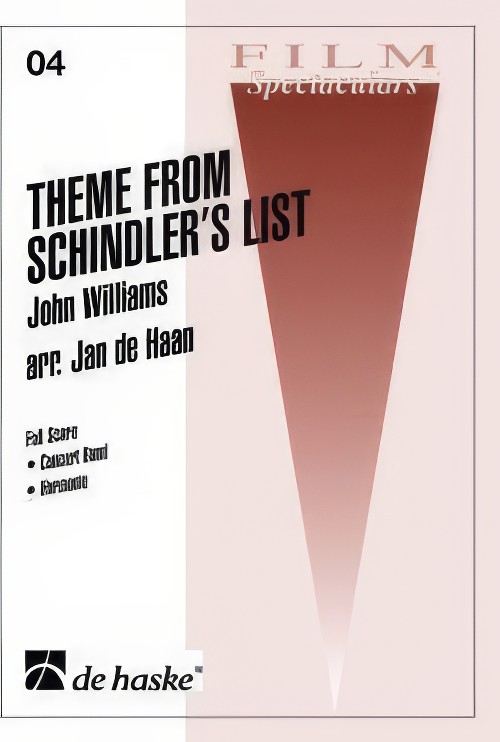
Schindler's List, Theme from (Brass Band - Score and Parts) - Williams, John - De Haan, Jan
What a stunning piece of cinematic history and what a stunning soundtrack. John William's wonderfully compassionate main theme is woven into this arrangement that will haunt both band and audience. The magnificently simple melody reflects both the sadness and hope portrayed in the epic Steven Spielberg film.Duration: 4:15
Estimated dispatch 7-14 working days
-
 £39.99
A Braveheart Suite (Brass Band - Score and Parts) - Horner, James - Duncan, Andrew
Mel Gibson's epic film Braveheart was a cinema hit and the music by James Horner was incredibly memorable. Andrew Duncan has taken some of these themes and created A Braveheart Suite for brass band.Suitable for Advanced Youth/3rd Section Bands and aboveDuration: 7.00
Estimated dispatch 7-14 working days
-
 £119.99
Albion (Brass Band - Score and Parts)
Albion was commissioned by the Swiss Brass Band Federation as the test piece for the National Brass Band Championships of England, Belgium, The Netherlands, and Switzerland in 2001, and for Norway in 2002. The composition is dedicated to Markus Bach.Albion, along with Excalibur and Stonehenge, is the third major piece for brass band in which Jan Van der Roost took his inspiration from the British Middle Ages. Although the work is not based on an actual story there are unmistakable epic elements found in this symphonic poem. The piece paints a picture of the conquest of Albion (the earliest known name of the British Island), in which the listener is taken back to the time of King Arthur and his legendary Knights of the Round Table. 13:00
Estimated dispatch 7-14 working days
-
 £34.95
HIGHLAND CATHEDRAL (Brass Band - arr. Kerwin) - Kerwin, Simon
This lovely melody was composed by two German musicians who tried to emulate the popularity of the famous Scottish tune Amazing Grace. The piece was an instant success and achieved a substantial degree of popularity after it was featured in the film, Four Weddings and a Funeral. It is usually performed with just pipes and drums, however this arrangement succeeds in joining this traditional classical melody with a steady drum beat, flowing contrapuntal descants and harmonies to create an epic opus. The arrangement is functional with or without Bagpipes.
Estimated dispatch 7-14 working days
 View Music