Results
-
£50.00
Ancient Temple - Ball, E
This work was commissioned specially for the Fourth Section of the 1971 series of Regional Qualifying Finals for the National Brass Band Championships of Great Britain4th Section +Duration 9 mins
In Stock: Estimated dispatch 1-3 working days
-
£33.00
Star Trek Deep Space Nine - McCarthy, D - Phillips, L
This "symphonic" concert version of the theme from Star Trek: Deep Space Nine was re-arranged for the fourth season of the TV series. More up tempo than the original, this brass band arrangement includes the main theme and the exciting Battle for the Station theme.2nd section +
In Stock: Estimated dispatch 1-3 working days
-
 £29.99
Titan's Progress (score only) - Hermann Pallhuber
Commissioned by Austria's leading brass band, Brass Band Oberoesterreich, Titan's Progress is a series of descriptive, virtuoso episodes based on the principal character of the novel by Jean Paul. This was also the original subject of Mahler's Symphony No.1, from which Hermann Pallhuber derives much of his material. The work has proved an exceptionally popular test piece all over the world.Titan's Progress was the selected test piece for the British Open Brass Band Championship, held at Symphony Hall, Birmingham on Saturday 12th September 2009.Suitable for Championship BandsDuration: 17 minutes
Estimated dispatch 7-14 working days
-
£33.00
Through the Darkened Streets
Through the Darkened Streets was written as part of Foden's Band's programme for the 2021 Brass in Concert Championships. Jack the Ripper, The Monster of Whitechapel who terrorised London with a series of unspeakably brutal murders provides the central focus in Through the Darkened Streets . Imagined within the foggy, grimy streets of the East End, the music opens as Jack closes in on his next
In Stock: Estimated dispatch 1-3 working days
-
£47.50
With Sweet Jubilation - James Curnow
Explore different settings of the Medieval Latin carol "In Dulci Jubilo" via this solid arrangement by James Curnow. Opening with an exquisite "Brass Choir" section a la Michael Praetorius (1571-1621) and progressing through a "Woodwind Choir" section in the later J.S.Bach style, WITH SWEET JUBILATION is wonderful "style study" material. The grace of the early masters and the clearly focused unifying concept of the arrangement by James Curnow combine to make this addition to the Curnow Music Press "Splendor of Christmas Series" a wonderful holiday experience for the young band.
Estimated dispatch 5-14 working days
-
£69.99
Variations on a Shaped Note Melody - James Curnow
Based on the American 'shaped-note' melody Saints Bound for Heaven, Variations on a Shaped Note Melody by James Curnow captures a feeling of joyful celebration through a series of unique and skilfully adapted variations. The opening strains are actually fragments of the first variation and occur before the main tune is introduced by low brass. The second variation features a euphonium solo and builds to a glorious climax with the full ensemble. The final variation is joyful and filled with energy, using flourishes and fanfares throughout the band for a grand conclusion to this marvellous work.
Estimated dispatch 5-14 working days
-
 £79.95
Lost Village of Imber, The - Christopher Bond
The village of Imber on Salisbury Plain had been inhabited for over one thousand years when it was evacuated in 1943 to make way for military training in the Second World War. At the time, with preparations for the Allied invasion of Europe underway, most villagers put up no resistance, despite being upset, with the belief that they'd return once the war had concluded. To this day, Imber and its surrounding land remain a military training ground. The villagers never returned, and just the shell of what was once a community remains. Structured in three movements, it is on this very real story that the work is based, setting out the series of events of 1943 in chronological order. The first movement, On Imber Downe, portrays a sense of jollity and cohesiveness - a community of individuals living and working together before news of the evacuation had broken. Sounds of the village are heard throughout, not least in a series of percussive effects - the anvil of the blacksmith; the cowbell of the cattle and the bells of the church. The second movement, The Church of St. Giles, begins mysteriously and this sonorous, atmospheric opening depicts Imber in its desolate state and the apprehension of residents as they learn they have to leave their homes. Amidst this is the Church, a symbol of hope for villagers who one day wish to return, portrayed with a sweeping melodic passage before the music returns to the apprehension of villagers facing eviction around their sadness at losing their rural way of life. In complete contrast, the third movement, Imemerie Aeternum, portrays the arrival of the military, complete with the sounds of the ammunition, firing and tanks - sounds which were all too familiar to those living in the surround areas. To close, the Church of St. Giles theme returns in a triumphant style, representing the idea that the church has always been, even to this day, a beacon of hope for the villagers and local community - both the centrepiece and pinnacle of a very real story. The work was commissioned by Bratton Silver Band in celebration of the band's 160th Anniversary, with funding from the Arts Council National Lottery Project Grants Fund and the Brass Bands England Norman Jones Trust Fund.
Estimated dispatch 10-14 working days
-
£44.00
Quizas, Quizas, Quizas - Osvaldo Farres - Inge Sunde
A fresh, powerful and breathtaking latin chart in the famous flexible series SHOWBLOW!The cha-cha-cha Quizas, quizas, quizas is one of the world most famous, composed by Cuban songwriter Osvaldo Farres in 1947.The first English version, Perhaps, perhaps, perhaps, was with Bing Crosby 1948, then Nat King Cole, and with Doris Day in 1964. The arrangement is for flexible instrumentation in the popular series SHOWBLOW, and it can therefore be played by a clean or mixed quintet, but also by a full brass/concert band.Ensure a steady beat and rhythm, and here we go: one-two-chachacha!
Estimated dispatch 7-14 working days
-
£100.00
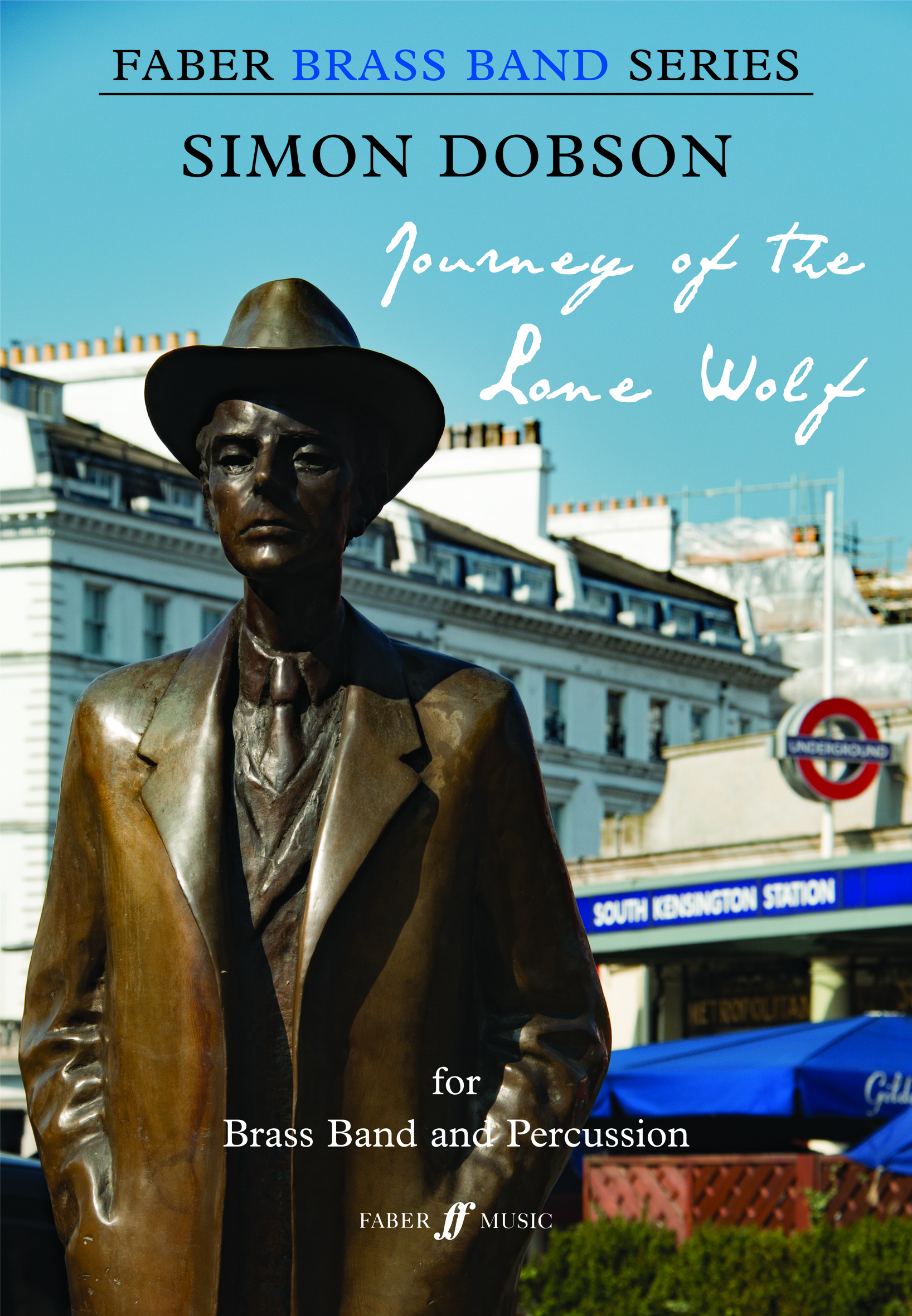
Journey of the Lone Wolf (score & parts) - Simon Dobson
Journey of the Lone Wolf tells the story of the hungarian composer Bla Bartk. It was commissioned by Dr. Nicholas Childs for Black Dyke Band, who gave the first performance on Sunday 26 January 2014 at the Bridgewater Hall, Manchester as part of the Royal Northern College of Music Festival of Brass.The composer's programme notes for each movement: 1. Capturing the Peasants' SongAfter the upheaval of moving to Budapest the young Bla Bartk meets Zoltn Kodly and the pair embark on summertime adventures throughout the Hungarian countryside to collect and catalogue the astonishing variety (both harmonically and rhythmically) of gypsy and folk music heard in the Balkans. The arrival of WW1 plunges Bartk's beloved Hungary into chaos.2. Night MusicBartk was at times a cold man, aloof and lonely. The odd moments of tenderness he showed are portrayed here in a series of evocative solos. His brief but intense affairs speak of a love he could only long for. Jazz is my night music and here there are hints of what Bartk may have heard in the USA later in his life.3. Flight and FightHaving been forced by the world's evils to leave his homeland of Hungary for America, Bartk, the anti-fascist, felt isolated and angry. In this movement we hear his longing for a simpler time of gypsy folk dances as well as his maturity and depth as a composer finally exploring deeper colours and darker themes. Duration: 15 minutes.Level: Championship
In Stock: Estimated dispatch 1-3 working days
-
 £34.95
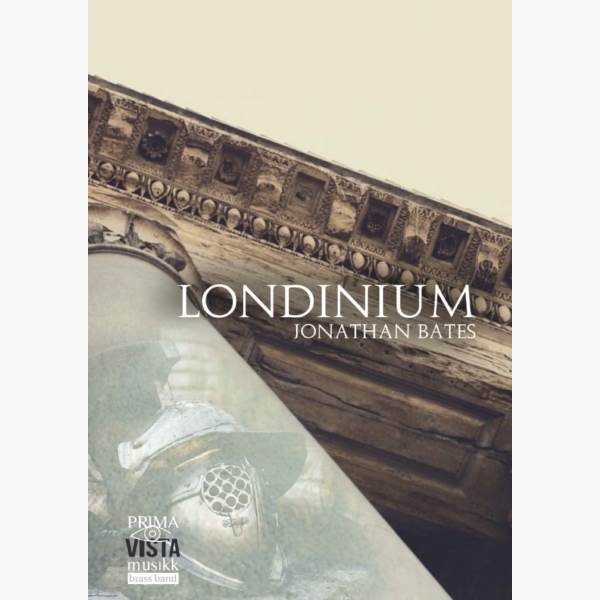
Londinium - Jonathan Bates
Londinium was commissioned by Paul Holland and the Flowers Band as the opening item of their 2016 Brass in Concert programme. The music portrays the Roman settlement of Londinium through a series of bold, off-stage, horn and baritone calls. The...
Estimated dispatch 5-7 working days
 View Music