
Results
-
 £55.00
The Millionaire Waltz
ABOUT THIS PIECE: Bring the theatrical brilliance of Queen to your brass band with this dazzling arrangement of The Millionaire Waltz. Written by Freddie Mercury and featured on the band's 1976 album A Day at the Races, this whimsical and dynamic piece showcases Mercury's love for classical and operatic influences, blending waltz rhythms with rock elements in a truly unique style. Renowned for its intricate structure and playful shifts in mood and tempo, The Millionaire Waltz is a standout example of Queen's innovative approach to songwriting. This arrangement captures the piece's exuberance and charm, offering a delightful addition to your brass band's repertoire. "The Millionaire Waltz is quite outlandish, really. It's the kind of track I like to put on every album. Something way outside Queen's format." Freddie Mercury; Circus magazine, 31 January 1977 ENSEMBLE: Standard British Brass Band WHEN YOU BUY THIS PRODUCT, YOU GET: High-quality printed score and parts LEVEL: 3 - 4 LISTEN: DURATION: 5-minutes EXAMPLE SCORE: Click here LEVEL GUIDE: Level 1- Accessible to all Level 2 - c. UK third section and higher Level 3 - c. UK second section and higher Level 4 - c. UK first section and higher Level 5 - c. UK championship section level
Estimated dispatch 5-7 working days
-
 £39.99
Facade
ABOUT THIS PIECE: Experience the gripping energy of Jekyll & Hyde with Adam Taylor's stunning brass band arrangement of "Facade." This dramatic piece captures the tension and complexity of Frank Wildhorn's iconic composition, perfectly suited for bands seeking a bold and dynamic item - perhaps as part of a screen and show concert. With its driving rhythms, this arrangement maintains the intensity to the original score, making it an ideal addition to any band library. Add drama and excitement to your next performance--get your copy today! ENSEMBLE: Standard British Brass Band WHEN YOU BUY THIS PRODUCT, YOU GET: High-quality printed score and parts LEVEL: 3 LISTEN: Click here (note that the ending of this recording differs to the published version) DURATION: 3-minutes, 30 secondsEXAMPLE SCORE: Click here LEVEL GUIDE: Level 1- Accessible to all Level 2 - c. UK third section and higher Level 3 - c. UK second section and higher Level 4 - c. UK first section and higher Level 5 - c. UK championship section level
Estimated dispatch 5-7 working days
-
 £55.00
Don't Rain on my Parade
ABOUT THIS PIECE: Add a touch of Broadway magic to your programme with this stunning arrangement of Don't Rain on My Parade. Originally performed by Barbra Streisand in the classic musical Funny Girl, this song has become synonymous with bold, confident performances and a spirit of resilience. Perfect for energising any concert programme, this arrangement maintains the song's signature flair and dynamic intensity, capturing the essence that has made it a favourite for generations. This piece is sure to captivate audiences and bring a sense of theatrical excitement to your performance. ENSEMBLE: Standard British Brass Band WHEN YOU BUY THIS PRODUCT, YOU GET: High-quality printed score and parts LEVEL: 3 LISTEN: Click here DURATION: 3-minsEXAMPLE SCORE Click here LEVEL GUIDE: Level 1- Accessible to all Level 2 - c. UK third section and higher Level 3 - c. UK second section and higher Level 4 - c. UK first section and higher Level 5 - c. UK championship section level
Estimated dispatch 5-7 working days
-
£100.00
Journey of the Lone Wolf (score & parts) - Simon Dobson
Journey of the Lone Wolf tells the story of the hungarian composer Bla Bartk. It was commissioned by Dr. Nicholas Childs for Black Dyke Band, who gave the first performance on Sunday 26 January 2014 at the Bridgewater Hall, Manchester as part of the Royal Northern College of Music Festival of Brass.The composer's programme notes for each movement: 1. Capturing the Peasants' SongAfter the upheaval of moving to Budapest the young Bla Bartk meets Zoltn Kodly and the pair embark on summertime adventures throughout the Hungarian countryside to collect and catalogue the astonishing variety (both harmonically and rhythmically) of gypsy and folk music heard in the Balkans. The arrival of WW1 plunges Bartk's beloved Hungary into chaos.2. Night MusicBartk was at times a cold man, aloof and lonely. The odd moments of tenderness he showed are portrayed here in a series of evocative solos. His brief but intense affairs speak of a love he could only long for. Jazz is my night music and here there are hints of what Bartk may have heard in the USA later in his life.3. Flight and FightHaving been forced by the world's evils to leave his homeland of Hungary for America, Bartk, the anti-fascist, felt isolated and angry. In this movement we hear his longing for a simpler time of gypsy folk dances as well as his maturity and depth as a composer finally exploring deeper colours and darker themes. Duration: 15 minutes.Level: Championship
In Stock: Estimated dispatch 1-3 working days
-
£27.00
Clarion Alarum (Score & Parts) - Simon Dobson
Clarion Alarum: Fanfare No.1 for Brass Band is a short fanfare for brass band, contrasting the brilliance of the sound of cornets and trombones with the warmer tones of horns, euphoniums and tubas.Brass Band Grade 5: 1st SectionDuration: 2.5 minutes
In Stock: Estimated dispatch 1-3 working days
-
 £11.50
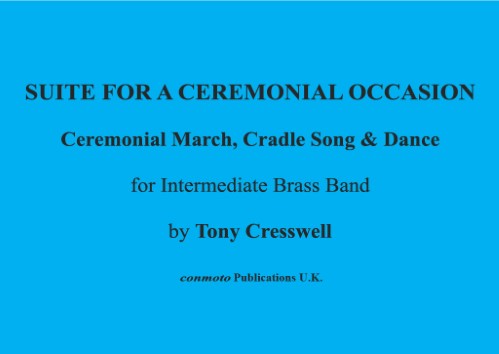
SUITE FOR A CEREMONIAL OCCASION (score) - Cresswell, Tony
1. Ceremonial March: the family gather. 2. Cradle Sing: the child is baptised. 3. Dance: shows the high spirits of the children present.Contents / Comments:
In Stock: Estimated dispatch 1-3 working days
-
 £37.50
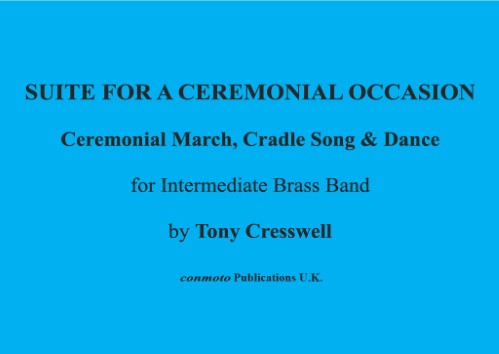
SUITE FOR A CEREMONIAL OCCASION (score & parts) - Cresswell, Tony
1. Ceremonial March: the family gather. 2. Cradle Sing: the child is baptised. 3. Dance: shows the high spirits of the children present.Contents / Comments:
In Stock: Estimated dispatch 1-3 working days
-
 £30.00
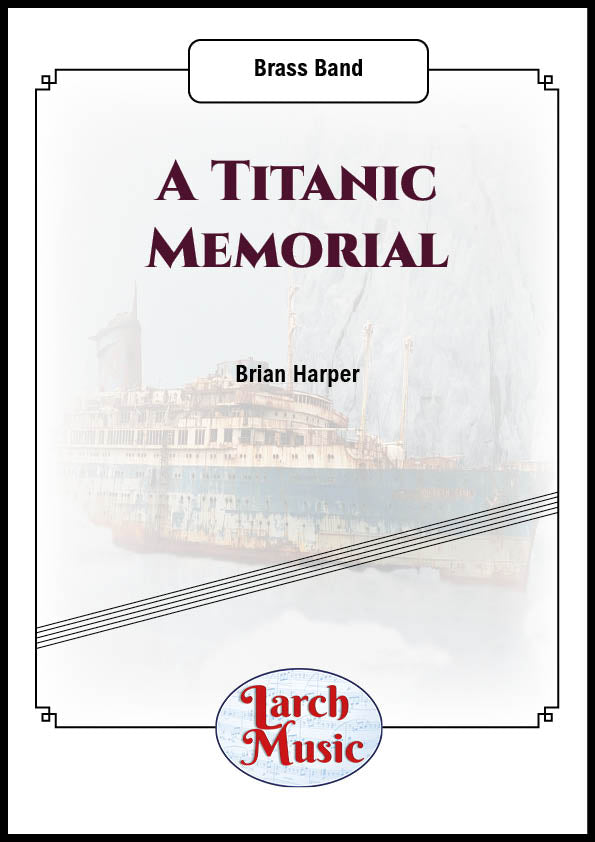
A Titanic Memorial - Brass Band Sheet Music Full Score & Parts - LM393
COMPOSER: Brian HarperRMSTitanicwas a British passengerliner, operated by theWhite Star Line, thatsank in the North Atlantic Oceanon 15 April 1912 after striking anicebergduring her maiden voyage fromSouthampton, England toNew York City, United States.Of theestimated 2,224 passengers and crewaboard, more than 1,500 died, making itthe deadliest sinking of a single shipup to that time.It remains the deadliest peacetime sinking of anocean linerorcruise ship.The disaster drew public attention, provided foundational material for thedisaster filmgenre, and has inspired many artistic works.LM393 - ISMN : 9790570003938
In Stock: Estimated dispatch 3-5 working days
-
 £30.00
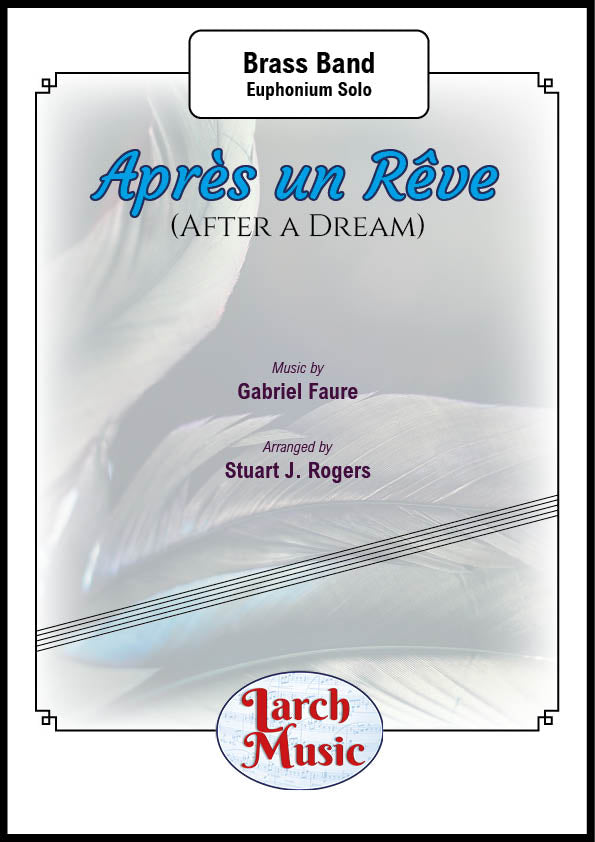
Apres un Reve - Euphonium & Brass Band Sheet Music Full Score & Parts - LM563
COMPOSER: Gabriel FaureARRANGER: Stuart J. RogersTrois melodiesis a set ofmelodiesfor solo voice and piano, byGabriel Faure.It consists of "Apres un reve" (Op. 7, No. 1), one of Faure's most popular vocal pieces,"Hymne" (Op. 7, No. 2), and "Barcarolle" (Op. 7, No. 3).The songs were written between 1870 and 1877, and published in 1878.They were not, however, originally conceived together as a set of three;theopus number7 was imposed on them retrospectively in the 1890s,almost 20 years after their first publications.In "Apres un Reve" (After a Dream),a dream of romantic flight with a lover,away from the earth and "towards the light", is described.However, upon awakening,the dreamer longs to return to the "mysterious night"and the ecstatic falsehood of his dream.LM563 - ISMN : 9790570005635
In Stock: Estimated dispatch 3-5 working days
-
 £97.00
From Scratch - Ennio Salvere
From Scratch is a very simple new work by Ennio Salvere in flexible setting consisting of the 3 movements: 1. A Fresh Start, 2. Blank Canvas, 3. A Solid Foundation. Perfect for the beginners (youth) orchestras!
Estimated dispatch 10-14 working days
 View Music