
Results
-
 £49.99
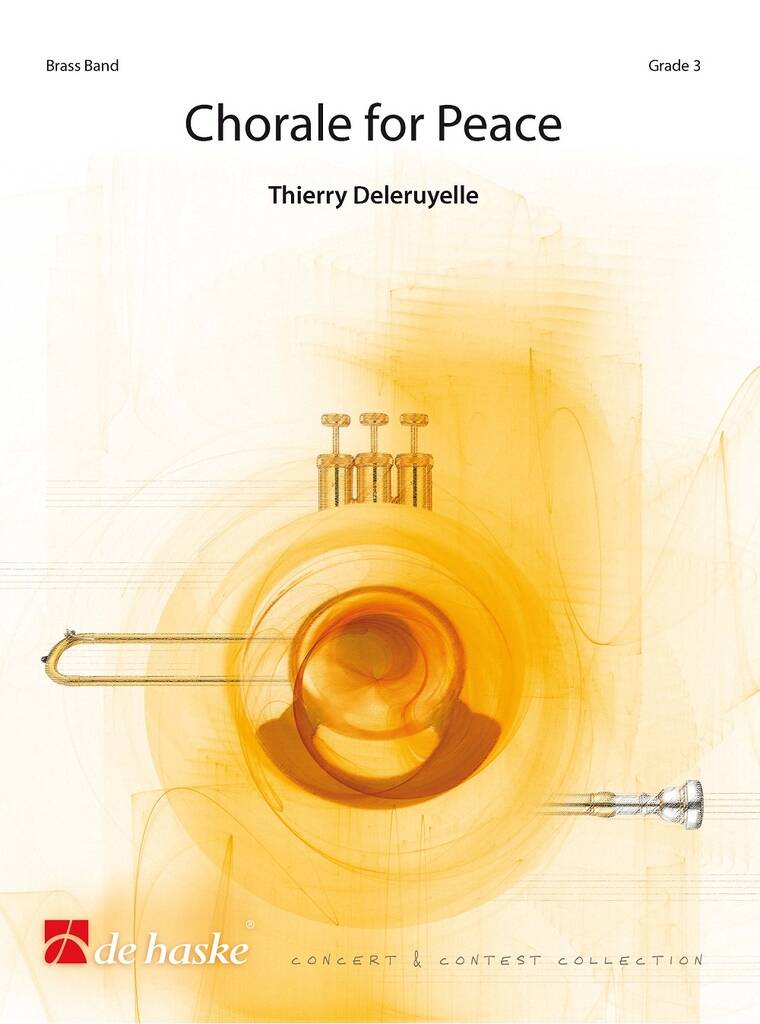
Chorale for Peace - Thierry Deleruyelle
Chorale for Peace is a song of hope and peace for humanity. In commissioning this work, the wind band of Le Portel (France) wanted to pay tribute to the victims of 8 September 1943, when around 100 Allied planes dropped more than 5,000 bombs on the town of Boulogne and the surrounding area. In fact, this operation was nothing more than a diversion to make the enemy believe that a landing was imminent in the north of France. This music is slow, an adagio commemorating the human sacrifice of this operation. But more broadly, the composer also wanted to express his support for the peoples who, even today, suffer oppression. This set includes an optional choir part that offers the possibility of making an even deeper impression on the listener.
Estimated dispatch 5-14 working days
-
 £79.95
Lost Village of Imber, The - Christopher Bond
The village of Imber on Salisbury Plain had been inhabited for over one thousand years when it was evacuated in 1943 to make way for military training in the Second World War. At the time, with preparations for the Allied invasion of Europe underway, most villagers put up no resistance, despite being upset, with the belief that they'd return once the war had concluded. To this day, Imber and its surrounding land remain a military training ground. The villagers never returned, and just the shell of what was once a community remains. Structured in three movements, it is on this very real story that the work is based, setting out the series of events of 1943 in chronological order. The first movement, On Imber Downe, portrays a sense of jollity and cohesiveness - a community of individuals living and working together before news of the evacuation had broken. Sounds of the village are heard throughout, not least in a series of percussive effects - the anvil of the blacksmith; the cowbell of the cattle and the bells of the church. The second movement, The Church of St. Giles, begins mysteriously and this sonorous, atmospheric opening depicts Imber in its desolate state and the apprehension of residents as they learn they have to leave their homes. Amidst this is the Church, a symbol of hope for villagers who one day wish to return, portrayed with a sweeping melodic passage before the music returns to the apprehension of villagers facing eviction around their sadness at losing their rural way of life. In complete contrast, the third movement, Imemerie Aeternum, portrays the arrival of the military, complete with the sounds of the ammunition, firing and tanks - sounds which were all too familiar to those living in the surround areas. To close, the Church of St. Giles theme returns in a triumphant style, representing the idea that the church has always been, even to this day, a beacon of hope for the villagers and local community - both the centrepiece and pinnacle of a very real story. The work was commissioned by Bratton Silver Band in celebration of the band's 160th Anniversary, with funding from the Arts Council National Lottery Project Grants Fund and the Brass Bands England Norman Jones Trust Fund.
Estimated dispatch 10-14 working days
-
 £34.99
Submerged... (Cornet Concerto No.2) - Jonathan Bates
'Submerged..' is a virtuoso concerto for Cornet composed as a response to the 'lost' Derbyshire villages of Ashopton & Derwent,. both of which were drowned in the early 1940's to make way for a new reservoir to aid the ever-increasing water demand from nearby. Sheffield and it's steel industry during World War 2. The work is through-composed but is defined by 3 clear main sections, 'The . Packhorse Bridge, Derwent', 'Ashopton Chapel' and 'Operation Chastise'. Much of the melodic and harmonic material throughout the. concerto is inspired by 3 contrasting sources; an original motif of towering block chords which opens the concerto, the famous opening. fragment of Eric Ball's 'High Peak' (1969) which was composed as a tribute to the district of Derbyshire where Ashopton & Derwent lie, . and finally Claude Debussy's haunting 'La Cath drale Engloutie' or 'The Sunken Cathedral', which was composed in 1910 around the legend of. the submerged cathedral of Ys. . I. Packhorse Bridge, Derwent (1925). One of the most striking features of the former village of Derwent was it's Packhorse Bridge, which spanned the River Derwent. adjacent to the Derwent Hall - a grand, picturesque Jacobean country house. In 1925, the renowned impressionist artist Stanley. Royle painted a striking image of the two in midwinter, with the partially frozen river sat quietly underneath the snow-topped. bridge in the foreground, while the old hall sits peacefully and dark in the background. The opening setion of this concerto paints. this picture in a quite schizophrenic manner; with frosty, shrill march-like material picturing the villagers crossing the narrow icy. bridge, combined with wild and frenzied waltz music of the grand hall and it's masquerade balls laying, for now, quietly mysterious. across the river. . II. Ashopton Chapel (1939). Ashopton was much the smaller and less-populated of the 2 'lost' villages, but still bore home to a Roman Catholic Chapel which was. the focal point of the village. The chapel - along with the rest of Ashopton - was drowned in 1943, but the final service to take place there. was held in 1939, with the final hymn being 'Day's Dying in the West'. This hymn forms a haunting coda to the 2nd section, with firstly the . piano leading the melody before an audio track containing an old recording of the hymn is accompanied by the sound of flowing water and . the rumble of storms as the village hypothetically disappears from existence with the hymn tune still echoing around the valley, before . subsiding into the growing roar of the engine of a Lancaster Bomber as it soars overhead towards Derwent to practise it's 'Dam-Buster' raid. . III. Operation Chastise (1943). The Derwent Reservoir lies adjacent to Ladybower Reservoir (of which Ashopton & Derwent were flooded to make way for) in the . Derbyshire High Peak, and during the 2nd World War was used as one of the central low-atitude practise areas of the 617 Squadron - more . commonly known affectionately as the 'Dambusters'. Before the destruction of Derwent, it's 'Packhorse Bridge' was dismantled stone by stone . and re-assembled upstream at Howden Dam to the north end of Derwent Reservoir. This is where the music begins, with a reconstruction of . the opening material before taking flight into a whirlwind tour of virtuosity from the soloist. .
In Stock: Estimated dispatch 1-3 working days
-
 £41.09
Verklarte Nacht (Brass Band) Arnold Schoenberg arr. Rob Bushnell
Composed in just three weeks in 1899, Verklarte Nacht (Transfigured Night) is a string sextet in one movement by Arnold Schoenberg. Whilst known better for tone rows, his dodecaphonic music and the Second Viennese School, Schoenberg was a master of harmony (writing a number of books on the subject) and, in his early life, was inspired by the music of Brahms and Wagner. This is his best-known tonal work. Its description as a tone poem is not surprising given it takes its inspiration from Richard Dehmel's poem of the same name, as well as Schoenberg's strong feelings towards his future wife, Mathilde Zemlinsky, sister of his teacher, Alexander von Zemlinsky. The work is said to have five sections, one for each of the stanzas in the poem. The poem, from 1896, describes a man and woman walking through a dark forest on a moonlit night. The woman shares a secret with him, that she is pregnant but not with his child. The man reflects upon this before warmly accepting (and forgiving) the news. The work premiered on 18 March 1902 in the Vienna Musikverein by the Rose Quartet. As was normal at the time, Schoenberg produced a string orchestra version that was premiered on 29 November 1916 in Prague, conducted by Zemlinsky, which was later revised in 1943 to better support the soloists, also adding more articulation and tempo markings. Whilst the piece was controversial at the time, both musically and due to the poem's "inappropriate" subject matter, Richard Dehmel himself was impressed, writing "I had intended to follow the motives of my text in your composition, but soon forgot to do so, I was so enthralled by the music." This arrangement is for the British-style brass band, with alternative parts for horns in F and bass-clef lower brass. To view a recording of the original composition please visit www.youtube.com/watch?v=vqODySSxYpc. Difficulty Level: 2nd Section + Duration: approx. 6.40 minutes Sheet music available from www.brassband.co.uk Instrumentation: Soprano Cornet Eb Solo Cornet Bb Repiano Cornet Bb 2nd Cornet Bb 3rd Cornet Bb Flugel Horn Bb Solo Horn Eb 1st Horn Eb 2nd Horn Eb 1st Baritone Bb 2nd Baritone Bb 1st Trombone Bb 2nd Trombone Bb Bass Trombone Euphonium Bb Bass Eb Bass BbTimpani Percussion 1-3
In Stock: Estimated dispatch 1-3 working days
-
 £30.00
Down By The Salley Gardens
A new brass band release for 2023 which also welcomes Fiona Neary as a new member of our ever-growing family of writers!This traditional Irish folk tune has been beautifully arranged for brass band, offering a tranquil moment to your programme with a memorable jaunty jig section to keep your listeners on their toes!Every concert needs that 'Aaahhhh' element, and Down By The Salley Gardens certainly brings all the qualities required to meet that need.This original traditional Irish melody has been referred to by a variety of titles: 'Mourne Shore', 'Moorlough Shore' and 'The Maids of Mourne Shore', and is believed to have dated back to the 17th-18th century.In 1889, William Butler Yeats had his poem 'Down By The Salley Gardens' published in The Wanderings of Oisin and Other Poems. The verse was then later set to the Irish melody by Herbert Hughes in 1909. Since this combining, the music has become synonymous with the poem and naturally adopted the poem's title.Due to the beauty of the melody and the emotive words of the associated poem, both elements of this work has been embraced by a variety of artistes, including recordings by The Corrs and Sinead O'Connor; John Ireland (1879-1962) set the words to an original melody in his song cycle Songs Sacred and Profane, written in 1929-31; there is a vocal setting by the poet and composer Ivor Gurney, which was published in 1938; and Benjamin Britten published a setting of the poem in 1943.
In Stock: Estimated dispatch 3-5 working days
-
You'd be so nice to come home to - Cole Porter - Len Jenkins
This sideways glance at the Cole Porter masterpiece written for the 1943 film 'Something to shout about', is arranged to feature the flugel and tenor horns, and comprises an up-tempo romp through several variations upon the main theme. Everyone in the Band is kept busy throughout, and a strong rhythmic pulse keeps the music very definitely alive!
-
 £95.00
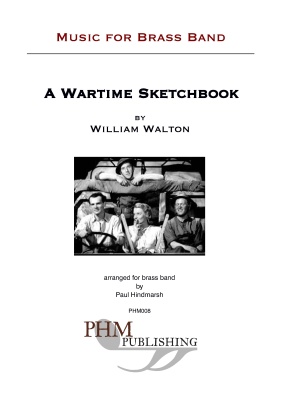
A Wartime Sketchbook (Brass Band - Score and Parts)
Early in 1941 William Walton, 39, received his call-up papers. He was by then one of the most eminent of British composers and was exempted from military service on condition that he provided music for films deemed to be of 'national importance'. Scoring Lawrence Olivier's Shakespeare epic Henry V in 1943 was the most substantial of these wartime projects. His role in patriotic films from 1941 and 42 like The Foreman went to France, Next of Kin, Went the day Well and The First of the Few was to provide appropriate title music and some underscoring at key moments. Walton extracted the most substantial portions of the latter as the popular Spitfire Prelude and Fugue for orchestra. The remaining music remained unpublished until 1990, when Christopher Palmer assembled the highlights into A Wartime Sketchbook. I was intrigued to hear these examples of Walton's wartime music and having discovered that they would fit naturally and idiomatically onto the brass band, I arranged six of the numbers into a suite for Besses o' th' Barn Band, which I was conducting at the time.In 1995 the brass band suite was recorded by the famous Black Dyke Mills Band as part of an all Walton album which I produced for the ASV label (ASV CD WHL 2093). This award- winning CD also included Walton's First Shoot, in the edition by Elgar Howarth, my transcription of movements from Music for Children and two substantial brass versions by Edward Watson of the suite from Henry V (with narrator) and the March and Siegfried Music from The Battle of Britain music.Prologue: This is the stirring title music from Went the day Well, a screen play by Graham Greene about a German airborne invasion of an English village. The main theme leads toBicycle Chase: Characteristic musical high-jinks for J.B.Priestley's The Foreman went to France.Refugees: From the same film, this is a poignant accompaniment to the long march of refugees. As Ernest Irving, the film's musical director, put it, "this really makes your feet sore and your knees sag."Young Siegfrieds: This lively movement comes from the music that Walton composed for The Battle of Britain in 1968, with the assistance of Malcolm Arnold, but which the film's producer rejected. It portrays first the Berliners, cheerfully ignoring the black-out and then, in the trio, the Young Siegfrieds of the Luftwaffe, courtesy of a parody of Siegfried's horn call from Wagner's opera.Romance: A soldier and a Dutch refugee snatch a few tender moments together in Next of Kin.Epilogue: At the end of The Foreman went to France, the French look forward with hope and optimism to eventual liberation.- Paul HindmarshDuration: 14.00
Estimated dispatch 7-14 working days
-
£40.00
A Wartime Sketchbook (Brass Band - Score only)
Early in 1941 William Walton, 39, received his call-up papers. He was by then one of the most eminent of British composers and was exempted from military service on condition that he provided music for films deemed to be of 'national importance'. Scoring Lawrence Olivier's Shakespeare epic Henry V in 1943 was the most substantial of these wartime projects. His role in patriotic films from 1941 and 42 like The Foreman went to France, Next of Kin, Went the day Well and The First of the Few was to provide appropriate title music and some underscoring at key moments. Walton extracted the most substantial portions of the latter as the popular Spitfire Prelude and Fugue for orchestra. The remaining music remained unpublished until 1990, when Christopher Palmer assembled the highlights into A Wartime Sketchbook. I was intrigued to hear these examples of Walton's wartime music and having discovered that they would fit naturally and idiomatically onto the brass band, I arranged six of the numbers into a suite for Besses o' th' Barn Band, which I was conducting at the time.In 1995 the brass band suite was recorded by the famous Black Dyke Mills Band as part of an all Walton album which I produced for the ASV label (ASV CD WHL 2093). This award- winning CD also included Walton's First Shoot, in the edition by Elgar Howarth, my transcription of movements from Music for Children and two substantial brass versions by Edward Watson of the suite from Henry V (with narrator) and the March and Siegfried Music from The Battle of Britain music.Prologue: This is the stirring title music from Went the day Well, a screen play by Graham Greene about a German airborne invasion of an English village. The main theme leads toBicycle Chase: Characteristic musical high-jinks for J.B.Priestley's The Foreman went to France.Refugees: From the same film, this is a poignant accompaniment to the long march of refugees. As Ernest Irving, the film's musical director, put it, "this really makes your feet sore and your knees sag."Young Siegfrieds: This lively movement comes from the music that Walton composed for The Battle of Britain in 1968, with the assistance of Malcolm Arnold, but which the film's producer rejected. It portrays first the Berliners, cheerfully ignoring the black-out and then, in the trio, the Young Siegfrieds of the Luftwaffe, courtesy of a parody of Siegfried's horn call from Wagner's opera.Romance: A soldier and a Dutch refugee snatch a few tender moments together in Next of Kin.Epilogue: At the end of The Foreman went to France, the French look forward with hope and optimism to eventual liberation.- Paul HindmarshDuration: 14.00
Estimated dispatch 7-14 working days
-
 £79.95
The Lost Village of Imber (Brass Band - Score and Parts) - Bond, Christopher
The Lost Village of Imber was commissioned by Bratton Silver Band in 2019 in celebration of 160 years of the band; 1859-2019. Structured in three movements, the complete work was premiered by Cory Band at Wiltshire Music Centre in February 2020.The village of Imber on Salisbury Plain had been inhabited for over one thousand years when it was evacuated in 1943 to make way for military training in the Second World War. At the time, with preparations for the Allied invasion of Europe underway, most villagers put up no resistance, despite being upset, with the belief that they'd return once the war had concluded. To this day, Imber and its surrounding land remain a military training ground. The villagers never returned, and just the shell of what was once a community remains.Structured in three movements, it is on this very real story that the work is based, setting out the series of events of 1943 in chronological order.The first movement, On Imber Downe, portrays a sense of jollity and cohesiveness, a community of individuals living and working together before news of the evacuation had broken. Sounds of the village are heard throughout, not least in a series of percussive effects, the anvil of the blacksmith; the cowbell of the cattle and the bells of the church.The second movement, The Church of St. Giles, begins mysteriously and this sonorous, atmospheric opening depicts Imber in its desolate state and the apprehension of residents as they learn they have to leave their homes. Amidst this is the Church, a symbol of hope for villagers who one day wish to return, portrayed with a sweeping melodic passage before the music returns to the apprehension of villagers facing eviction around their sadness at losing their rural way of life.In complete contrast, the third movement, Imemerie Aeternum, portrays the arrival of the military, complete with the sounds of the ammunition, firing and tanks, sounds which were all too familiar to those living in the surround areas. To close, the Church of St. Giles theme returns in a triumphant style, representing the idea that the church has always been, even to this day, a beacon of hope for the villagers and local community, both the centrepiece and pinnacle of a very real story.Duration: 13.30
Estimated dispatch 7-14 working days
-
 £49.99
Chorale for Peace (Brass Band - Score and Parts) - Deleruyelle, Thierry
Chorale for Peace is a song of hope and peace for humanity. In commissioning this work, the wind band of Le Portel (France) wanted to pay tribute to the victims of 8 September 1943, when around 100 Allied planes dropped more than 5,000 bombs on the town of Boulogne and the surrounding area. In fact, this operation was nothing more than a diversion to make the enemy believe that a landing was imminent in the north of France. This music is slow, an adagio commemorating the human sacrifice of this operation. But more broadly, the composer also wanted to express his support for the peoples who, even today, suffer oppression.This set includes an optional choir part that offers the possibility of making an even deeper impression on the listener.Duration: 6.00
Estimated dispatch 7-14 working days
 View Music