
Results
-
 £24.50
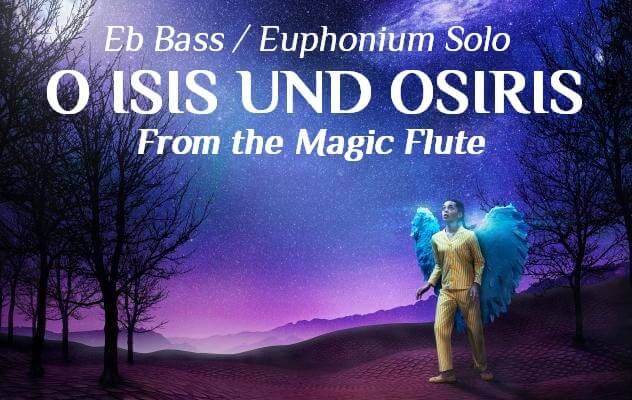
O Isis Und Osiris - W.A. Mozart - Andi Cook
The Magic Flute (Die Zauberflote) is one of Mozart's most successful operas, premiered only 2 months before the composer's early death. Skilfully arranged now as an Eb Tuba solo (with an Euphonium solo part as an alternative option), this is a chance for your band's tuba player to show the instruments in a new light, not often seen on the concert stage. The Aria O Isis Und Osiris is performed at the start of the second act of the opera and allows the soloist to show off the more lyrical and operatic side of the instrument.
In Stock: Estimated dispatch 1-3 working days
-
 £24.50
Rondo - Allegretto (from Clarinet Concerto) - Von Weber - Andi Cook
Born in Oldenburg, Germany, Weber composed his first two operas aged just 16. Being one of the finest pianists around, his music is filled with vigour and spirit. Weber wrote three concertos for clarinet in 1811 at the age of 25, for the Munich clarinettist, Heinrich Barmann. The most famous movement from the first concerto has been skilfully arranged for solo cornet and brass band. A perfect showcase of a piece.
In Stock: Estimated dispatch 1-3 working days
-
£24.50
Wedding Music (Selections For A Wedding) - Various - Gavin Somerset
With more and more brass bands performing at weddings, having the correct music is essential for the couple's perfect day. With most of the traditional wedding music coming from large overtures & operas etc, this unique pack of music has been specially designed to minimise fuss (all 4 pieces are printed on just one sheet per part) and have just the "famous" bits included. Specially arranged by Gavin Somerset so that the pieces included can be performed from anything ranging from a full brass band to a brass quintet group and with repeats that can be cut or performed to tailor to each event. The pieces areaABRIDAL CHORUS (from Lohengrin) By Richard Wagner"Here comes the bride"aA is the standard march played for the bride's entrance at many formal weddings. The wedding between Elsa and Lohengrin however was almost an immidiate failure!PACHELBEL'S CANON By Johann PachelbelFormally known as the Canon & Gigue in D and originally composed for a string quartet, the Canon part of the composition has become a favorite at weddings, either as an alternative to the Bridal Chorus (above) or used during the signing of the register. The convention in the Baroque era would have been to play a piece of this type in the moderate to fast tempo, however at weddings it has become fashionable to play the work at a slow tempo.WEDDING MARCH (from "A Midsummer Night's Dream") By Felix MendelsshonPopularized by Princess Victoria's wedding to Prince Frederick William of Prussia and coupled with the Bridal Chorus for the entry of the bride, this Wedding March is often for the recessional at the end. Prelude to "Te Deum" By Charpentier Another item now popular in its use during weddings for its bright fanfares. Many composers have written music to the "Te Deum" text (Te Deum being an early Christian hymn of praise, used still regularly in the R.C Church). The prelude by Charpentier is by far one of the most famous
In Stock: Estimated dispatch 1-3 working days
-
 £55.00
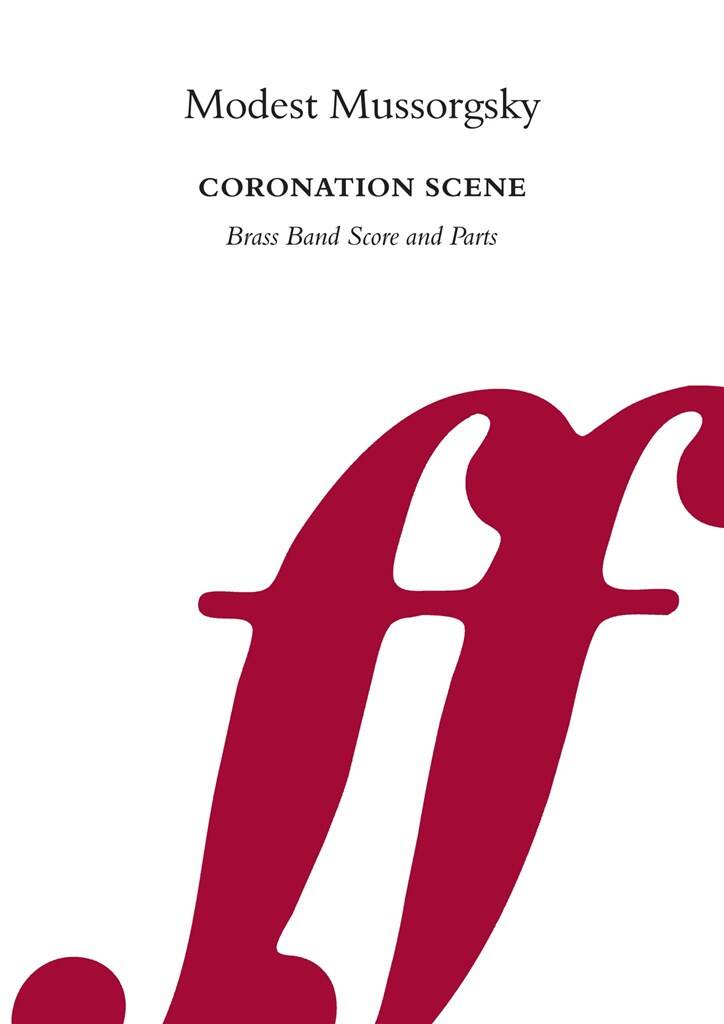
Coronation Scene. - Modest Mussorgsky
Few operas have had such a remarkable history as Mussorgsky's masterpiece Boris Godunov. It exists in no less than three complete versions by the composer himself, as well as posthumous editions andorchestrations by Rimsky-Korsakov (from which this arrangement is taken), Shostakovich and others.The Coronation Scene is set in the Square of the Moscow Kremlin, between the Cathedral of the Assumption and theCathedral of Archangel Michael, the year is 1598. After being crowned as Tsar, Boris Godunov acknowledges the people's acclamations and the bells of the two cathedrals, as well as many churches within the vicinity, canbeheard ringing out across St Petersburg.Available here are the score and parts for Mussorgsky's Coronation Scene (Boris Godunov), as arranged for Brass Band by Phillip Littlemore.
Estimated dispatch 5-14 working days
-
£105.20
Marche pour la ceremonie des Turcs - Jean-Baptiste Lully - Haakon Esplo
Jean-Baptiste Lully (1632-1687) moved from Italy to Paris and started as a kitchen boy. Alongside he also composed music and was a dancer and actor. He soon became leader of the court orchestra, and wrote music for the parties at the court. At aconcert in 1687 he hit his foot with his conductor pole, got gangrene in the wound and died three months later. Lully is the first known composer of French baroque operas and had great influence on the development of the European musictowards the end of the 1600s.Turkish march is used in the 1991 movie "All the mornings of the world" (Tous les matins du monde) starring Gerard Depardieu. The action takes place in France in seventeenthcentury where we follow the relationshipbetween the viol player Marin Marais and his mentor Sainte Colombe.
Estimated dispatch 5-14 working days
-
£60.99
Charming Salzburg - Wolfgang Amadeus Mozart - Henk Hogestein
Salzburg, birthplace of Wolfgang Amadeus Mozart, inspired Dutch composer Henk Hogestein to write this musical tribute. Mozart was born in this charming Austrian town in January 1756. He was a musical prodigy - at the age of four he began receiving lessons from his father Leopold and at the age of six he was composing smart minuets and other short pieces. The composition Charming Salzburg is based on a theme from Mozart's opera Die Zauberflote, which he completed in 1791. The greatest composer of his day - the greatest of all time according to some - the brilliant Mozart wrote some of the world's best operas with Die Zauberflote was his last.
Estimated dispatch 5-14 working days
-
£60.99
Nessun Dorma - Giacomo Puccini - Robert van Beringen
The Italian composer Giacomo Puccini (1858-1924) composed many operas which made him world-famous, with La Boheme, Tosca, Madame Butterfly and Turandot considered as some of the greatest works ever written in this genre.
Estimated dispatch 5-14 working days
-
 £12.00
Ave Maria
DescriptionJohann Sebastian Bach (1685 - 1750) was a German composer and musician of the Baroque period. Bach's compositions include the Brandenburg Concertos, the Goldberg Variations, the Mass in B minor, two Passions, and over three hundred cantatas of which approximately two hundred survive. His music is revered for its technical command, artistic beauty, and intellectual depth. Bach's abilities as an organist were highly respected during his lifetime, although he was not widely recognised as a great composer until a revival of interest in and performances of his music in the first half of the 19th century. He is now generally regarded as one of the greatest composers of all time.Charles-Francois Gounod (1818 - 1893) was a French composer, best known for his Grand Operas, most famously 'Faust', written in 1859 and his 'St Cecilia Mass' written in 1854. However possibly his most performed work is his arrangement of the latin text Ave Maria based on a work by Bach.You can listen to a computer realisation of the score while following the music below:
Estimated dispatch 7-14 working days
-
 £49.95
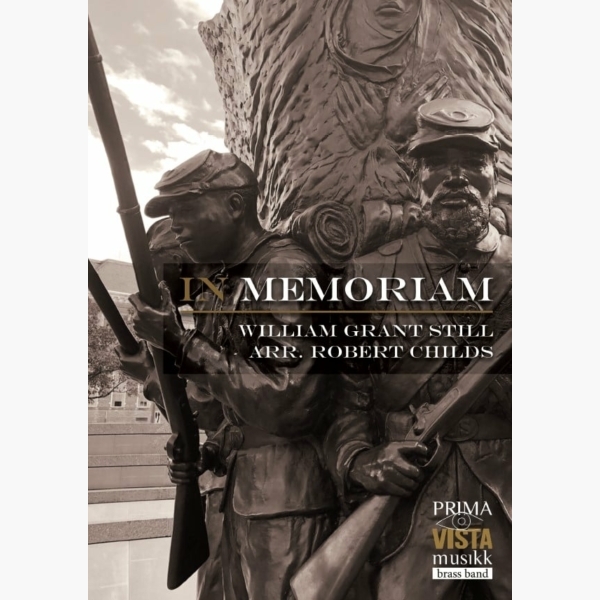
In Memoriam - William Grant Still - Robert Childs
William Grant Still Jr. (1895 - 1978) was an American composer of nearly two hundred works, including five symphonies, four ballets, nine operas, over thirty choral works, art songs, chamber music, and solo works. Born in Mississippi and growing up...
Estimated dispatch 5-7 working days
-
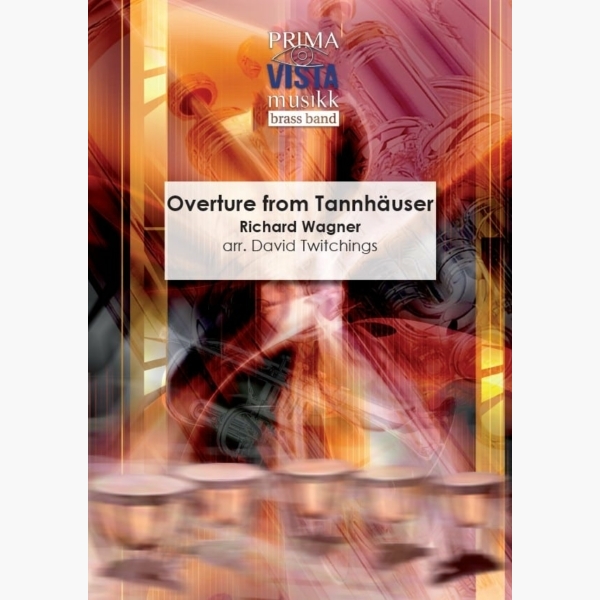 £54.95
Overture from Tannhauser - Richard Wagner - David Twitchings
Tannhauser, or to give it its full title Tannhauser und der Sangerkrieg auf der Wartburg (Tannhauser and the Singers' Contest on the Wartburg) is one of Richard Wagner's most famous operas. The story centres on the struggle between sacred and...
Estimated dispatch 5-7 working days
 View Music