
Results
-
 £60.99
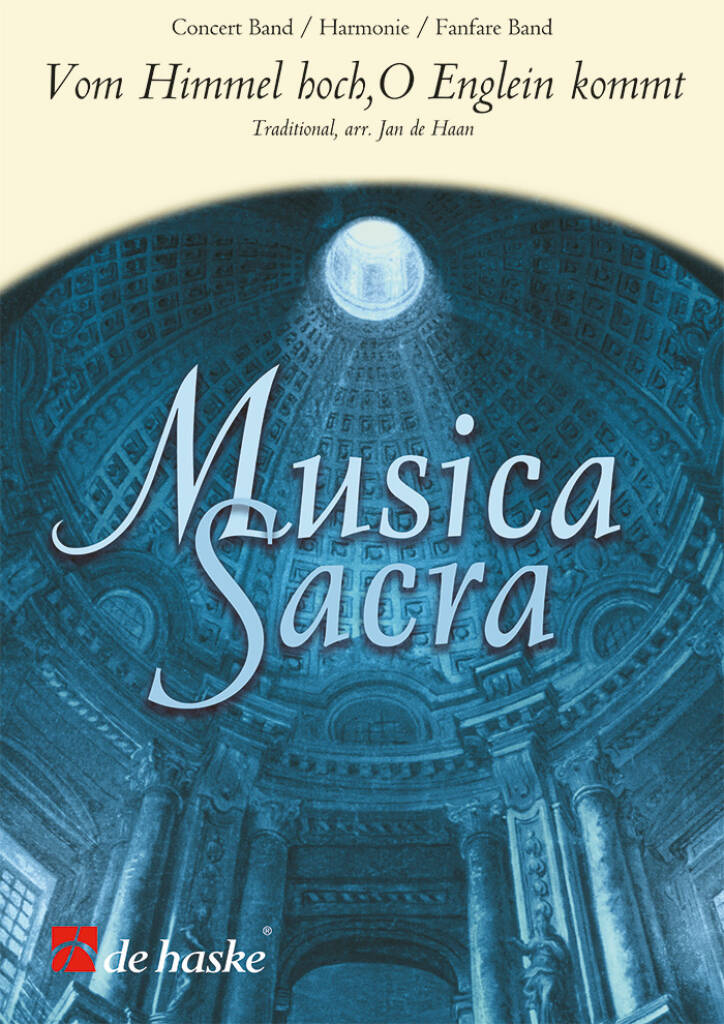
Vom Himmel hoch, O Englein kommt - Traditional - Jan de Haan
The German Christmas song Von Himmel hoch, O Englein kommt is one of the oldest known German carols, with the earliest versions, also known as Susani, going back to the 14th century. This exceptional arrangement by Jan de Haan works extremely well for brass band and will make an ideal work for any Christmas concert.
Estimated dispatch 5-14 working days
-
£60.99
All I Ask Of You - Andrew Lloyd Webber - Peter Kleine Schaars
Andrew Lloyd Webber was born in London, England in 1948 and has become probably the most well respected of all composers of musicals, with many of his works being household names. All I Ask of You is one of the main songs from his award winning musical Phantom of the Opera.
Estimated dispatch 5-14 working days
-
 £115.60
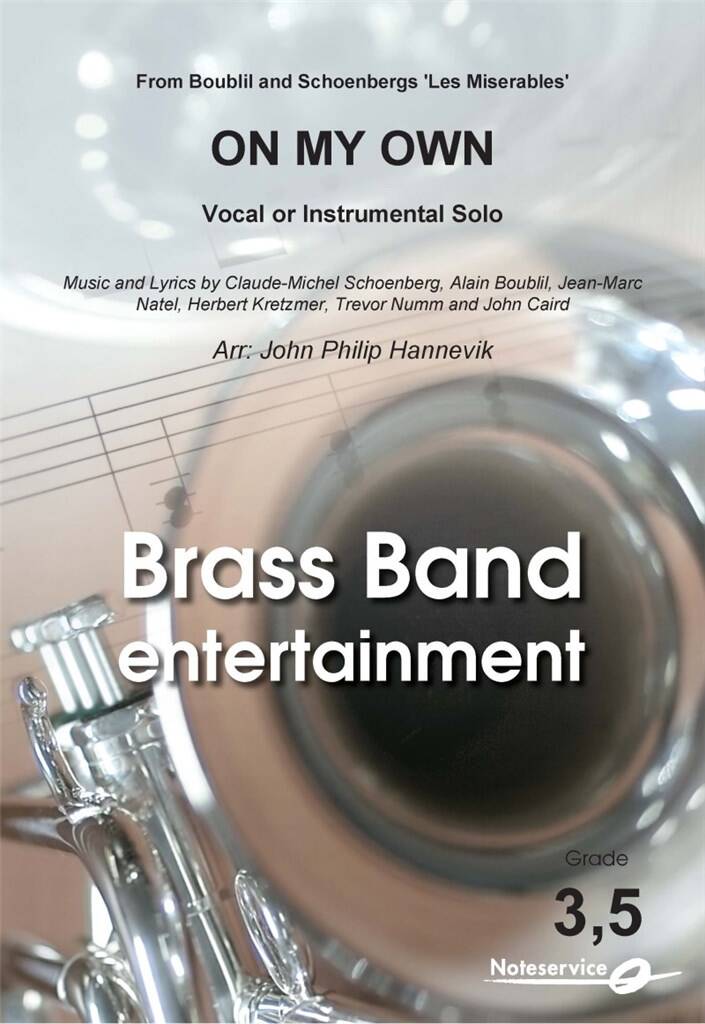
On My Own - Boublil - John Philip Hannevik
"On my Own" is now regarded as one of the most famous songs from "Les Miserables", the incredibly popular musical by Claude-Michel Schonberg and Alain Boublil. The story is based on a novel by Victor Hugo. In the song, Eponine sings about her love for Marius, and she dreams about having a life with him. Solo-Options in this arrangement: Vocal. Bb-Instruments, Eb-Instruments
Estimated dispatch 5-14 working days
-
 £115.60
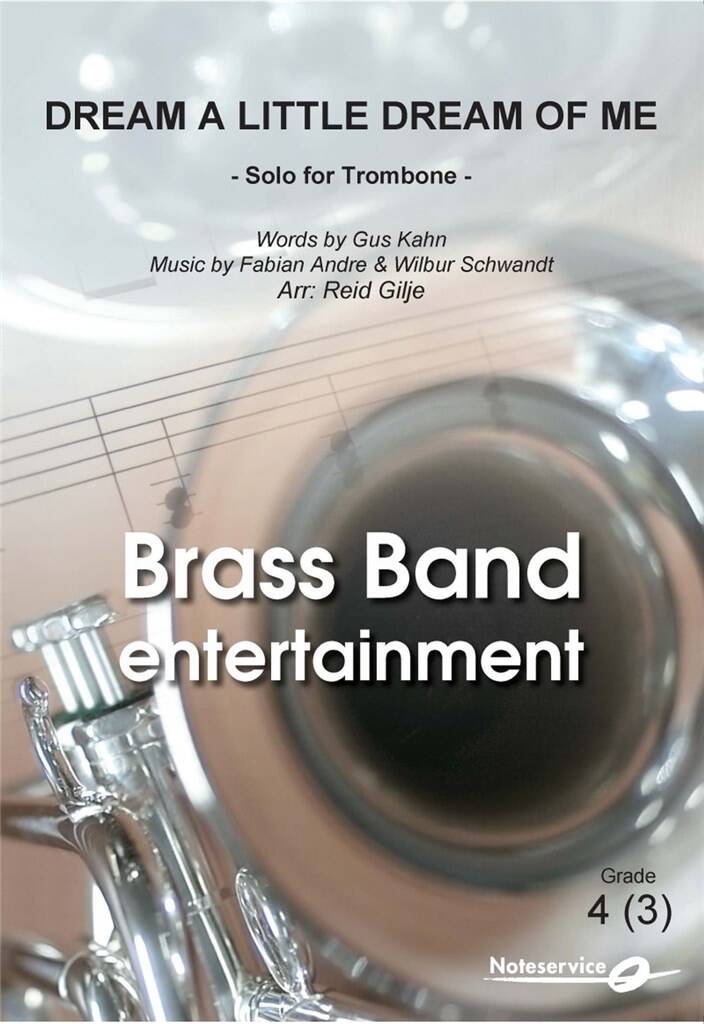
Dream a Little Dream of Me - Gus Kahn - Reid Gilje
This song was written in 1931 by Fabian Andre and Wilbur Schwandt with lyrics by Gus Kahn. It's now one of the most popular songs from the Great American Songbook and it's also recorded in many versions. Ella Fitzgerald, Louis Armstrong and Nat King Cole are among the most famous ones that have recorded it. In later years singers like Michael Buble, Diana Krall land Robin Williams have all recorded "Dream a Little Dream of Me". This arrangement is inspired by the version by American band Chicago from their 1995 album release "Night & Day".
Estimated dispatch 5-14 working days
-
£69.99
Selections from Mary Poppins - Richard M. Sherman - Ted Ricketts
Mary Poppins, starring Julie Andrews and Dick van Dyke, is one of the most endearing musicals of all time. From start to finish, the quality and appeal of the music is unparalleled. This medley is guaranteed to be a hit with your audience without two spoons of sugar! Includes: Step in Time, Supercalifragilisticexpialidocious, Chim Chim Cher-ee, Feed the Birds, and A Spoonful of Sugar.
Estimated dispatch 5-14 working days
-
£60.99
Last Christmas - George Michael - Andrew Watkin
George Michael has been in the pop charts for may years, initially with the group Wham and later as a solo artist. Last Christmas was one of the last songs written whilst still in Wham and has now become a Christmas classic.
Estimated dispatch 5-14 working days
-
£67.50
Tone Builders for Developing Bands - James Curnow
Exceptionally useful! This collection of 24 etudes is specifically designed to help develop good individual and ensemble tone production and intonation. Citing tone production as one of the most important facets of good playing, Jim Curnow starts beginning players with material they have learned in their beginning method books, and then moves on to new and more advanced concepts. A great aid for your program!
Estimated dispatch 5-14 working days
-
 £22.50
Edward Gregson: Concertante for Piano and Brass Band
DescriptionProgramme NoteThe Concertante for Piano and Brass Band was written in 1966, when the composer was an undergraduate student at the Royal Academy of Music in London. It received its first public concert performance in 1967 at the Royal Festival Hall, London, when the composer was the soloist with the International Band of the Salvation Army, conducted by Bernard Adams. It was one of the first major works to be written for this particular combination.The Concertante is unashamedly romantic in idiom and is in three movements: Prelude, Nocturne and Rondo. The Prelude is cast in sonata form and opens with a short cadenza-like flourish from the soloist, followed by two main ideas - the first sweepingly dramatic, the second highly lyrical. The interplay between these two themes forms the main focus of the movement, and after a return to the opening theme, an exuberant codetta brings the music to a close, albeit a quiet one. https://morthanveld.com/wp-content/uploads/2017/09/Gregson-Concertante-1st-movt-clip.mp3The tender Nocturne opens with an introduction from the band that contains precursors of the two main ideas to follow. The solo piano announces the main theme, which has a slightly 'bluesy' character with its flattened third and seventh notes of the scale, and is a love song dedicated to the composer's wife-to-be. The band enters with phrases of a chorale already hinted at in the introduction - Ray Steadman-Allen's hymn tune 'Esher' - but never quite presented in its complete state. Both ideas are developed alongside each other, with eventually the first theme returning, this time with piano and band together, and building to a majestic climax, before subsiding to a peaceful coda - a return to the very opening of the movement. https://morthanveld.com/wp-content/uploads/2017/09/Gregson-Concertante-movt-2-clip.mp3The final Rondo is full of energetic rhythms and changing time patterns. The main theme is playful in character, with much interplay between soloist and band, whilst the middle section presents a new theme, and one that has more than a hint of the hymn tune 'Onward Christian Soldiers', in what amounts to a good humoured parody. The opening Rondo theme returns, this time leading to a powerful and dissonant climax from the band. This is followed by an extended piano cadenza, underlying the virtuoso aspect of the work, and leading to an energetic and life-affirming coda, which brings the work to a triumphant conclusion. https://morthanveld.com/wp-content/uploads/2017/09/Gregson-Concertante-movt-3-clip.mp3Duration: 18 minutesInstrumentation:Please note that there is no 1st/Repiano Cornet part in this work. The 1st/Repiano Cornet player should join the Solo Cornet bench. As such an extra Solo Cornet part is provided in the set of parts.Version for two pianosA version of the Concertante for two pianos is available for rehearsal purposes. Piano 1 is the solo part and Piano 2 the band reduction. However, for those pianists not needing to rehearse the work in this way, a solo piano part is also provided with the main set of band parts.To view a preview of the solo part for the first movement click here.The youthful Gregson (his work was written as a third year undergraduate) was seemingly a bit of a musical magpie - but one heck of a skilful one at that.These were shiny baubles of poise, panache and pastiche, with affectionate, remarkably mature nods of appreciation towards Gershwin, Rachmaninov, Ireland and even Elmer as well as Leonard Bernstein.The rich colour palette and flowing lines (with the tenderest of central Nocturnes) were a joy - as were the little buds of motifs that dotted the score like seeds ready to be planted on a future fertile brass band compositional field. - Iwan Fox, 4Barsrest.com, June 2019For more information on Edward Gregson's music please visit the composer's website: www.edwardgregson.com
Estimated dispatch 7-14 working days
-
 £15.00
Perseverance
DescriptionPerseverance was commissioned by Middleton Band to mark their 140th anniversary in 2016, supported using public funding by the National Lottery through Arts Council England, and featured on Middleton Band's CD of the same name.The title is taken from the original name of the 1876 band, the Middleton Perseverance Drum and Fife Band. According to the band's historical records, the Drum and Fife band was formed by six Middleton youngsters eager to learn music but short of funds. Following a whip round, they visited a music shop in Oldham where they purchased a 'one key flute' for six shillings and sixpence, and ('later on') a drum.This determination to make music despite the odds has been a characteristic of the band ever since; at the end of the second world war the band was again down to six players, who rebuilt the 'Middleton Borough Band' back to twenty-six players. After a period of some considerable success throughout the sixties and seventies culminating in winning the National Third Section title in 1983 the band hit hard times again in the late eighties and was down to only four members in 1987 before again being brought back to life. In recent decades the band has built a strong relationship with the East Lancashire Railway, another organisation which has battled sometimes mighty obstacles in its struggle to survive, and has maintained a thriving and successful youth band.The band's will to survive through adversity is reflected in the music, which builds from a sextet of four brass and two percussion players three times, only to fall back to the sextet twice. In the central slow movement the bass drum plays a 'heartbeat' rhythm as the remaining players remember those lost in the war. The relentless pace of the final section culminates in the band triumphing over the adversity which has curtailed the previous two sections. As a former member of Middleton Band (and one of the team that regained the National Third Section title in 2007) it is my pleasure to dedicate this work to the 'Pop and Ale Boys', Middleton Band.You can read more about the piece here.To view the accompanying video by Andy Marshall, designed to precede the piece, clickhereand find out more about the link between the video and the music here.Recording with Score VideoPerformance NotesIn performance the four brass members of the sextet (soprano, solo horn, solo trombone and solo euphonium) should stand at the sides of the band - soprano and horn behind the cornets, trombone and euphonium behind the trombones. Percussion may stand with them at the conductor's discretion, but only if the band has TWO snare drums and TWO concert bass drums available, as these are also needed at the back of the band in the tutti sections. In the second sextet snare drum should be muffled with a heavy cloth OR have the snares turned off (not both).Percussion and mutesPercussion required:snare drum (muffled with a heavy cloth at one point)concert bass drum, kit bass drum, hi-hat, suspended (crash) cymbal2 x tom-tomswood blockclash cymbals3 x timpanitam-tamglockenspielSoprano cornet, repiano and 2nd cornets, flugel and all trombones require metal straight mutes. Soprano, Solo Cornet 3/4, Repiano 2nd and 3rd cornets require cup mutes. Solo Cornet 1/2, Repiano, 2nd and 3rd cornets require harmon mutes.
Estimated dispatch 7-14 working days
-
 £77.00
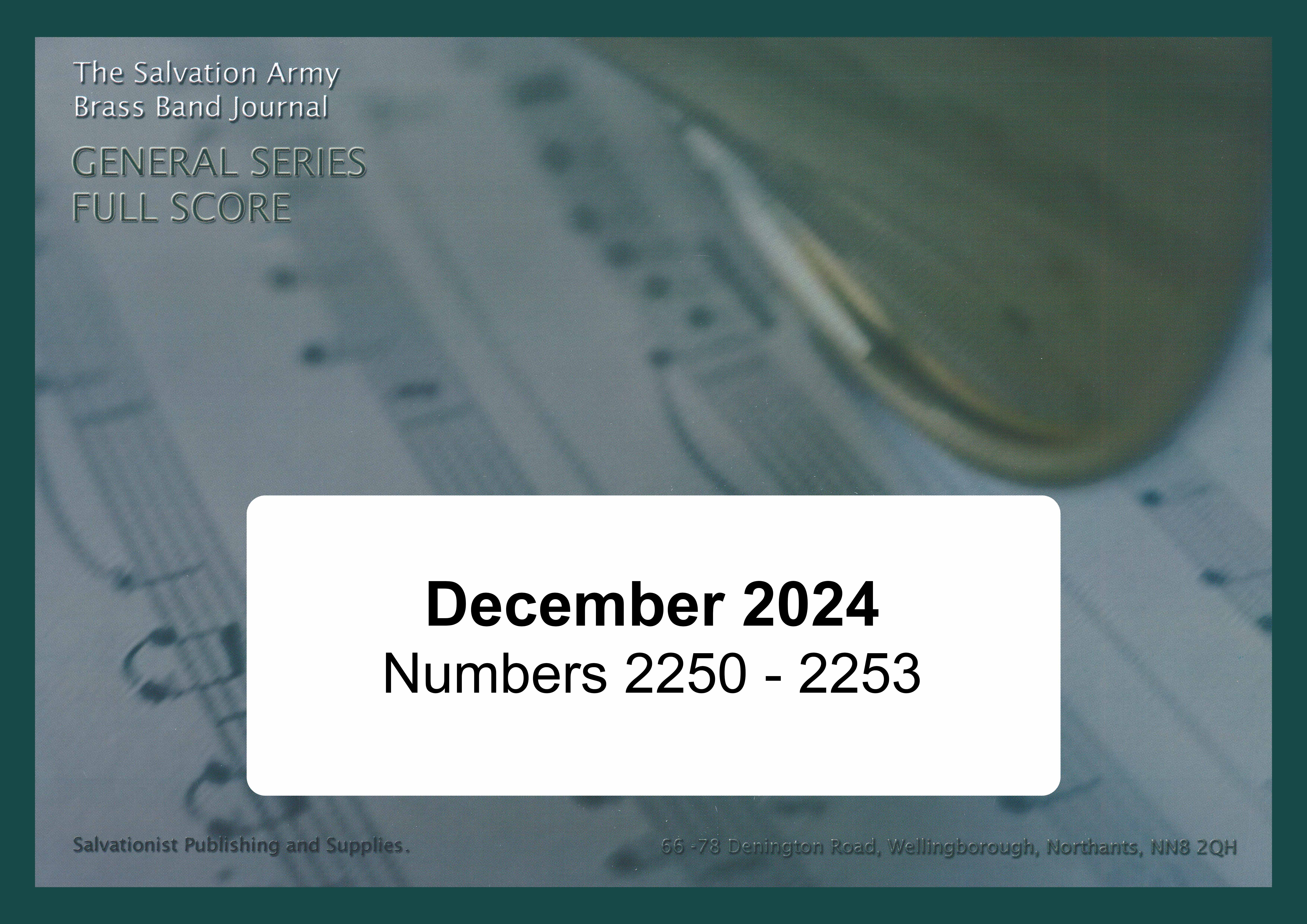
General Series Brass Band Journal, Numbers 2250 - 2253, December 2024
2250: Prelude on 'Rhosymedre' (Ralph Vaughan Williams trs. Douglas Engle)The English composer Ralph Vaughan Williams' work Three Preludes (founded on Welsh Hymn Tunes) was published for the organ in 1920. This is a transcription of the second movement of that work. The words associated with the hymn tune are by Samuel Crossman, My song is love unknown (S.A.S.B. 149), and vividly depict the events of Holy Week. The music is gentle and solemn and would be appropriate for a Good Friday service or as a moment of repose in a concert. 2251: Hosanna Shuffle (Sam Creamer)The half-time shuffle groove is a popular feel developed by alternative rock/pop bands of the 1980s. It marries elements of rock and swing styles together to form a new and infectious feel - Hosannah Shuffle being written as a tribute to this fusion of musical styles. Contrary to a swing style, shuffle brings the pulse back onto the beat while maintaining the swung quaver rhythms to create a rock-type rhythmic drive. 2252: Everlasting Love (Keith Manners)This piece was written for the London North East Music School in 2004. The theme of the week was 'Making a stand for Christ', reminding the school that it only takes one person to make such a stand before others follow. The music starts with a lone Solo Cornet playing the melody of Graham Kendrick's song Such Love (S.A.S.B. 199). One by one, other parts join in with the theme.2253: Festival March (Michael Cooper)This piece represents the first published brass composition of Bandmaster Michael Cooper, who is the Bandmaster at Brisbane City Temple Corps. This imposing festival march features the tunes I want to be a soldier (T.B. 683), Lift up the banner (T.B. 90) and My Jesus, I love thee (T.B. 506). These tunes depict the idea that spiritual warfare is an essential component of one's faith, success of which is articulated in the final verse of My Jesus, I love thee (S.A.S.B. 878).
Estimated dispatch 7-14 working days
 View Music
 Listen to MP3