
Results
-
 £29.50
Classical Brass - Various - Gavin Somerset
This medley of famous classical music is the perfect addition to any concert. Beginning with the 'Barber of Seville' before the piece sets off on a journey with tongue placed firmly in cheek! Let your audience here the great classical works of Rossini, Grieg, Liszt, Mendelssohn (& others) as they've never heard them before. The various famous melodies all stay around long enough for your audience to recognize them before being moved off in another direction completely. This work is a musical journey that is perfect for formal proms concerts, yet certainly would not be out of place on a bandstand either. The piece has many opportunities for bands to add their own choreography if desired. A toe tapping, audience pleasing, journey that leaves the audience wanting more. Whilst rehearsals are suspended due to Covid-19, we are making some parts available to download FREE for home use and practice, alongside a downloadable backing track to play along to. To download the Solo Cornet part, please CLICK HERE . To download the Solo Horn part, please CLICK HERE . To download the Solo Euphonium part, please CLICK HERE . To download the playback audio to play along to, please RIGHT CLICK HERE & Save As .
In Stock: Estimated dispatch 1-3 working days
-
£24.50
Christmas Intrada - Traditional - Stephen Tighe
Give your audiences the welcome they deserve for your Christmas concert. This short, musical fanfare of an introduction is based upon the melody of "Coventry Carol" and makes the perfect opening to a concert of second half. The piece opens with the traditional carol as we all know it, before exploding to life and sets the tone for a entertaining concert to follow
In Stock: Estimated dispatch 1-3 working days
-
 £29.50
Hushabye Mountain - R & R Sherman - Jonathan Bates
Originally arranged for Owen Farr, Hushabye Mountain is a well-loved and cherished song by the renowned Sherman Brothers from the 1968 motion picture, Chitty Chitty Bang Bang. The work is undoubtedly one of the most popular songs from the show. The song acts as an idyllic lullaby, sang by Caracatus Potts as he sends his children to sleep. This arrangement, as a tenor horn solo by Fodens Band's Principal horn Jonathan Bates, features the tuned percussion throughout, and sets the melody initially over a music-box-like idea, before more dreamy and tranquil soundscapes enter.
In Stock: Estimated dispatch 1-3 working days
-
 £29.50
Mad World - Roland Orzabal - Gavin Somerset
Recently brought back into the limelight by its use in the Lloyds Bank TV advert, this song was originally released by the British band Tears For Fears, but it was not until it was covered by Gary Jules for the soundtrack of Donnie Darko that it became a number one hit. The re-scoring of the original gave the music a much darker feel and its melody became haunting with a slower tempo. Now finally available for band, this arrangement allows bands the chance to show off their soft, lyrical playing before a heavier ending sets in. The work is a great choice for any concert programme if you're after something different, yet popular at the same time this is a must have for any occasion.
In Stock: Estimated dispatch 1-3 working days
-
 £29.50
Sibelius Fantasy - Gavin Somerset
Composed in 2003 for a composition competition, this work uses elements of three major work by the Finnish composer Jean Sibelius (1865-1957). The three being... Symphony No.5, Finlandia, Karelia Suite (March) The piece starts with an atmospheric opening before setting of in bar 10 with a tempo that will remain for most of the piece. The main original theme is brought in at A before the famous sequence from Sibelius' Symphony No.5 enters at B and then very distinctly at C. The music then rollercoasts through keeping all sections of the band busy, until we reach J when the solo Euphonium can shine, helped along by Flugel and Repiano. The Molto Vivo before K sets off with dazzling trills from the cornet section, and bringing with it the theme from Finlandia in bar 165, followed shortly by the March from the Karelia Suite. From N to the end, all three pieces are brought to a final climax together. A rousing piece and makes an interesting change to a direct transcription.
In Stock: Estimated dispatch 1-3 working days
-
 £29.50
Ye Morning Stars of Light - Andi Cook
This composition takes the well-known hymn tune Diadem and turns it into an epic concert work that all bandsmen will enjoy getting their teeth stuck into. Big organ like chords fill the opening stanza's before the work sets off full of life with fragments of the familiar tune hinted at throughout. There is a great energy to this piece and makes a great way to begin or finish a concert. Certainly one not to be missed.
In Stock: Estimated dispatch 1-3 working days
-
 £59.99
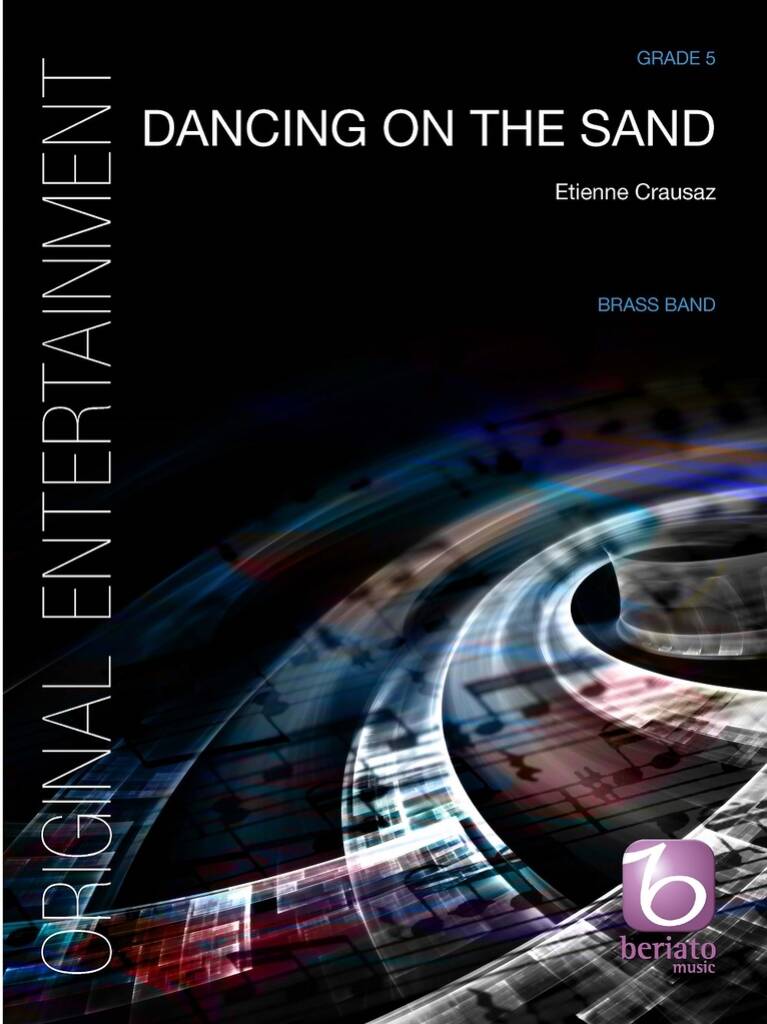
Dancing on the Sand - Etienne Crausaz
Dancing on the Sand immerses us in an unmistakable oriental atmosphere. A moderate introduction underscored by percussions sets the scene. A short alto cadenza leads to the second part of the piece, during which an oriental dance built upon irregular rhythms develops, accelerating continuously to reach a dazzling finale. This work will undoubtedly set your concert on fire! This music forms part of the musical tale La Malediction d'Aragne (Aragne's Curse), commissioned by the Lyre de Courtion (conductor Dominique Morel) on the occasion of its 100th anniversary.
Estimated dispatch 5-14 working days
-
 £69.99
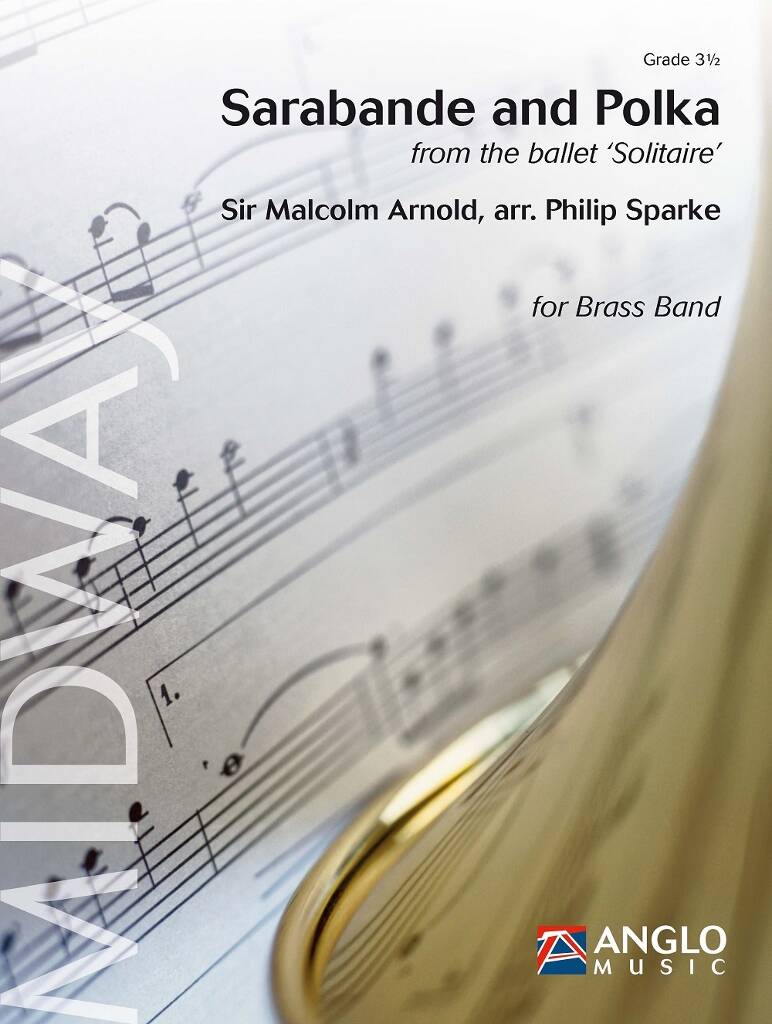
Sarabande and Polka - Sir Malcolm Arnold - Philip Sparke
In 1956 Sir Kenneth MacMillan created a one-act ballet for the Sadler's Wells Theatre Ballet, London. He selected the music from the two sets of English Dances which Sir Malcolm Arnold had written in 1950 and 1951 to great acclaim. The composer wrote two new dances, a Sarabande and a Polka, especially for the ballet, which was premiered at Sadler's Wells Theatre in June 1956. The two new dances have taken on a life of their own in the concert hall and are typical Arnold: the Sarabande contains one of his most memorable melodies and the Polka shows him at his quirky, tongue-in-cheek best.
Estimated dispatch 5-14 working days
-
 £54.99
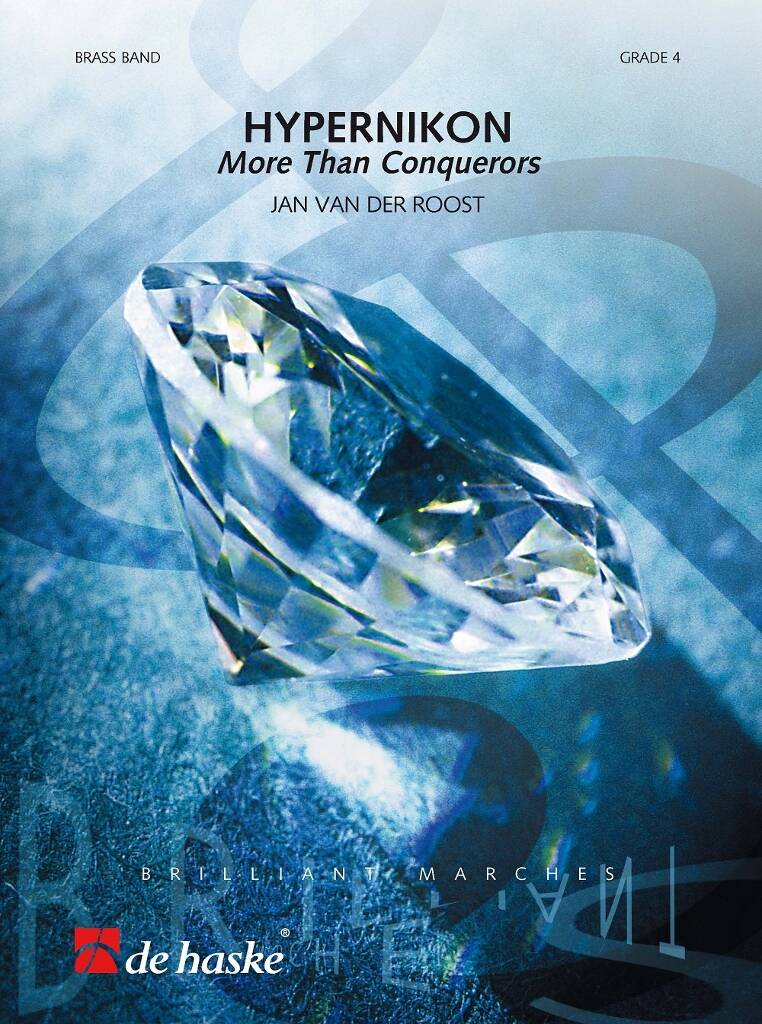
Hypernikon - Jan Van der Roost
The Greek word 'hypernikon' roughly translates as 'More Than Conquerors', the motto of Gordon College in Wenham, Massachusetts - the commissioner of this piece. The work is inspired by David Rox's very own name - the first two letters of his name, D and A, sets the first theme is in D major, with these notes being the tonic and dominant of the scale. After the stately intrada, the tempo accelerates and the festive feel of the march emerges. The trio melody serves as a beautiful contrast before finally ending with the opening theme in a grand tutti.
Estimated dispatch 5-14 working days
-
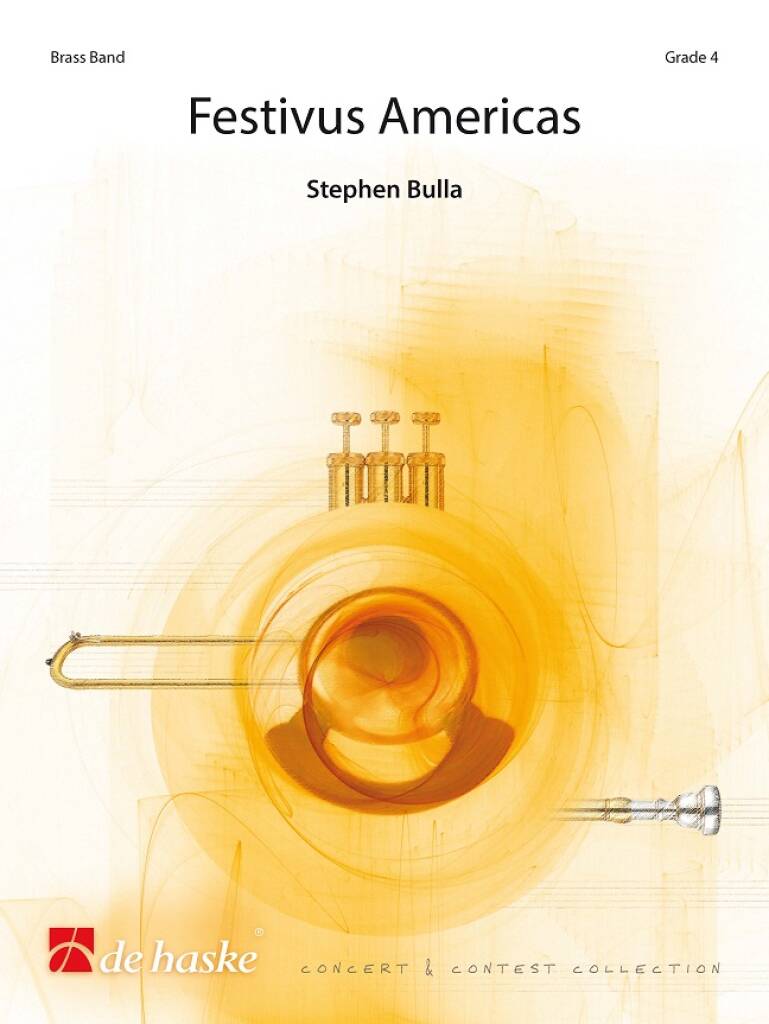 £84.99
Festivus Americas - Stephen Bulla
Dedicated to the North American Brass Band Association, this is music that is full of energy and dynamic extremes. In form it draws from the overture style, although the themes are self-existing and the piece is programmatic. Working well asa festival opener, it sets a mood of excitement. Following the rhythmic fanfares of the opening, the first theme is presented in the cornets followed by a return to the same rhythmic material. A second theme appears in the horn section and isdeveloped, changing into a darker and sinister form of the same motif. Eventually a Maestoso section is reached, full of sustained block chords in the cornets and trombones, as the rest of the band counters with cascading lines that weavestraight through the brighter instruments.
Estimated dispatch 5-14 working days
 View Music