
Results
-
Walk, Don't Run - Johnny Smith - Len Jenkins
"Walk, Don't Run" is an instrumental composition written and first recorded by jazz guitarist Johnny Smith in 1954. Chet Atkins also recorded it. However, the most well-known version is by a rock band called The Ventures from Tacoma (near Seattle) who released their version of the tune as a single in spring 1960. It was an instant success. In 1964, The Ventures released an updated version called "Walk Don't Run '64," which also made the Top 10 in the US, and there were 4 further editions up until 2000. In the UK, the tune was covered by the John Barry Seven. Rolling Stone magazine rated the Ventures' version of "Walk, Don't Run" as number 82 on their list of the 100 Greatest Guitar Songs of All Time.
-
£44.00
Don't Sit Under the Apple Tree - Stept-Brown-Tobias - Bjorn Morten Kjaernes
"Don't Sit Under the Apple Tree (With Anyone Else but Me)" is a popular song that was made famous by Glenn Miller and by the Andrews Sisters during World War II. Its lyrics are the words of two young lovers who pledge their fidelity while one of them is away serving in the war. Originally titled "Anywhere the Bluebird Goes", the melody was written by Sam H. Stept as an updated version of the nineteenth-century English folk song "Long, Long Ago". Lew Brown and Charles Tobias wrote the lyrics and the song debuted in the 1939 Broadway musical Yokel Boy. After the United States entered the war in December 1941, Brown and Tobias modified the lyrics to their current form, with the chorus ending with "...'till I come marching home".In 1942 the song was featured in the film Private Buckaroo as a performance by the Andrews Sisters with the Harry James orchestra and featuring a tap dancing routine by The Jivin' Jacks and Jills. It was featured in the films Twelve O'Clock High (1949), With a Song in My Heart (1952), Kiss Them for Me (1957), A Carol for Another Christmas (1964), In Dreams (1999) and The Master (2012). It also featured in the mini-series The Pacific. You can use the song both on musical concerts, movie concerts or just as a happy jazz tune on your next concert. On the sections (like from bar 25), please work carefully to make a good balance with all parts, and that each chord is balanced. With 4-part harmonies sometimes you need to hold back certain notes to make the accord sound good. If you want to open up for a longer improvisation, you can repeat 65 to 81, but then change the part 2 in bar 80 from Eb to a D on the repeat. The accord will be an F6 instead of F7 (on beat 3 and 4 in bar 80) Have fun and enjoy!
Estimated dispatch 7-14 working days
-
 £55.00
Don't Rain on my Parade
ABOUT THIS PIECE: Add a touch of Broadway magic to your programme with this stunning arrangement of Don't Rain on My Parade. Originally performed by Barbra Streisand in the classic musical Funny Girl, this song has become synonymous with bold, confident performances and a spirit of resilience. Perfect for energising any concert programme, this arrangement maintains the song's signature flair and dynamic intensity, capturing the essence that has made it a favourite for generations. This piece is sure to captivate audiences and bring a sense of theatrical excitement to your performance. ENSEMBLE: Standard British Brass Band WHEN YOU BUY THIS PRODUCT, YOU GET: High-quality printed score and parts LEVEL: 3 LISTEN: Click here DURATION: 3-minsEXAMPLE SCORE Click here LEVEL GUIDE: Level 1- Accessible to all Level 2 - c. UK third section and higher Level 3 - c. UK second section and higher Level 4 - c. UK first section and higher Level 5 - c. UK championship section level
Estimated dispatch 5-7 working days
-
 £59.99
Don't Stop Me Now - Christopher Bond
Although this tune by iconic band Queen met with a rather cool reception when it was first released in 1979, over the years it has become one of the bands most popular songs thanks in part to frequent use in advertising, television and film. Featuring trademark tight harmonies and a dramatic style shift from moderate ballad to double rock time, this arrangement will sound terrific even with young players. Note: whilst the demo video demonstrates the concert band arrangement, the version available to purchase on this website is the brass band transcription by Christopher Bond.
Estimated dispatch 10-14 working days
-
 £60.99
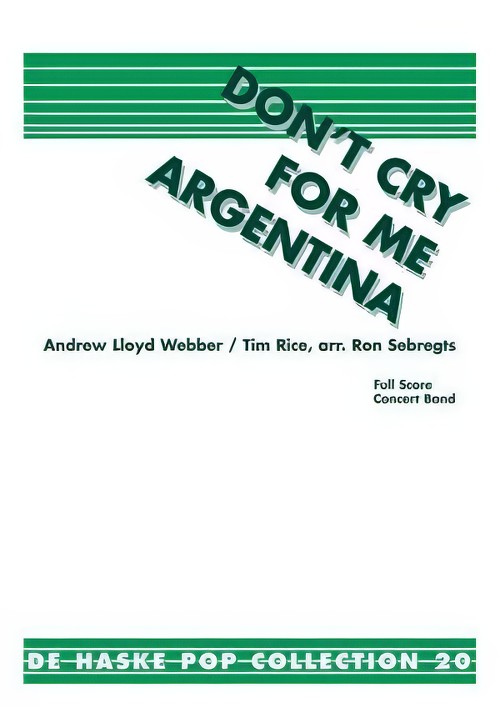
Don't Cry for Me Argentina (from Evita) (Brass Band - Score and Parts) - Lloyd Webber & Rice - Sebregts, Ron
Don't Cry for me Argentina is the best-known song from the 1976 musical Evita. It was sung by Eva Peron when she was addressing the crowds amassed in the square below her balcony. More recently it was a hit for Madonna, who sang it in the 1996 film version of Evita. This arrangement for brass band retains the broad emotive melody of the original together with its intense emotion.Duration: 4:45
Estimated dispatch 7-14 working days
-
 £59.99
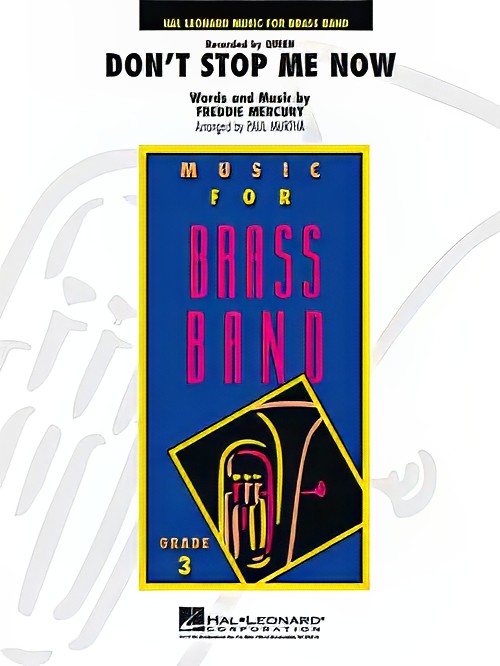
Don't Stop Me Now (Brass Band - Score and Parts) - Mercury, Freddie - Bond & Murtha
Although this tune by iconic band Queen met with a rather cool reception when it was first released in 1979, over the years it has become one of the bands most popular songs thanks in part to frequent use in advertising, television and film. Featuring trademark tight harmonies and a dramatic style shift from moderate ballad to double time rock, this arrangement will sound terrific even with young players. Duration: 3.15
Estimated dispatch 7-14 working days
-
£37.95
Don't It Make My Brown Eyes Blue - Darrol Barry
Estimated dispatch 5-14 working days
-
 £19.50
Don't It Make My Brown Eyes Blue
Estimated dispatch 7-14 working days
-
 £37.95
DON'T IT MAKE MY BROWN EYES BLUE (Flugel Horn Solo with Brass Band) - Barry, Darrol
Arranged for Flugel Horn & Brass Band
Estimated dispatch 7-14 working days
-
 £115.60
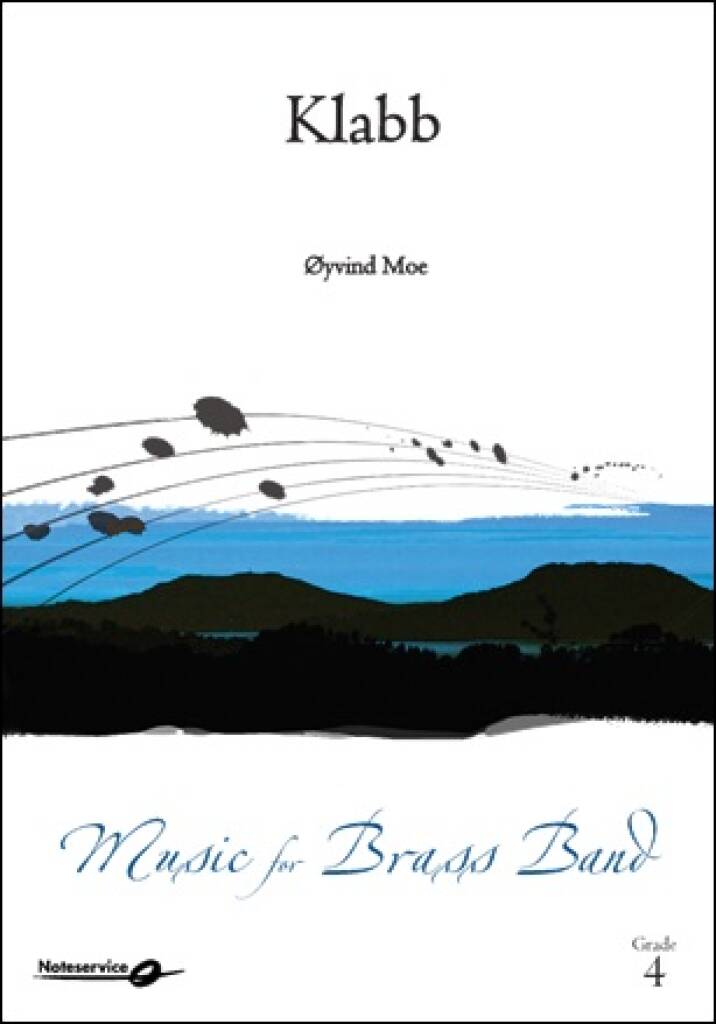
Klabb - Øyvind Moe
Klabb was written in 2010 for the brass band at Manger Folkehogskule and conductor Bjorn Sagstad. The piece consists of a series of short related episodes based on the whole-tone scale, but intermittently tending towards traditional "major" tonality. "Klabb" can refer to punching someone - and the piece is certainly meant to pack a punch - but the common meaning of the word comes from snow clumping to the undersides of skis, or more generally, something that makes for laborious progress. The whole-tone scale is directionless in that it has no implicit pull towards a tonal center, complicating the creation of meaningful and believable harmonic development. In thisrespect, the title can be seen as the composer's expression of frustration with his own choice of basic material (it seemed like a good idea at the time ...). For the performers, the unusual fingering combinations are what constitute the "klabb". Good luck, and don't forget to wax!
Estimated dispatch 5-14 working days
 View Music